Gota Soghayr (Small St. John's)
Also known as: Small St. John
Compact 200m egg-shaped reef in the southern St. John's system with walls past 70m, a small dome cavern at 10m, and a coral garden at 5m.
Last updated May 2026
The dive
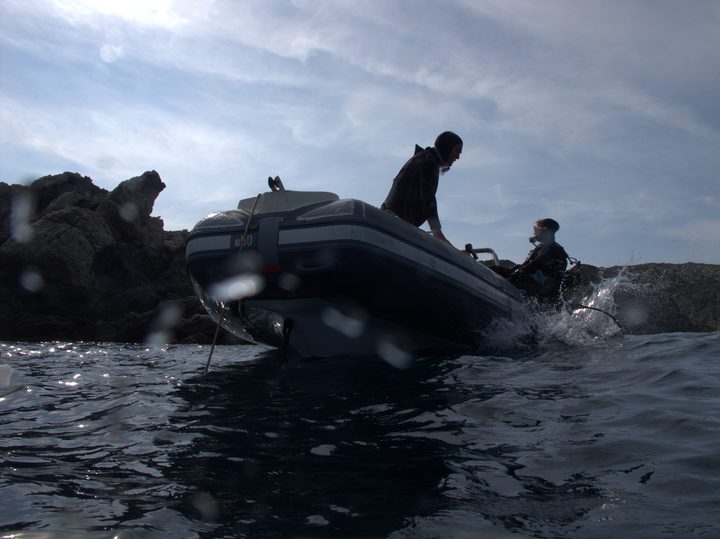
Most operators set divers off the boat over the deep face and drop along the wall. Gorgonian groups appear from around 40m and continue into the blue, with sea whips bending in the moderate current. Track the wall up shoreward and the topography changes around 10m: on the western face the wall folds into overhangs where groupers and shy reef fish hold, and the small dome-shaped cavern opens a few metres into the reef. Sources differ on whether the cavern sits on the western or southern side, but both place it at this depth. Cross the reef top and the dive ends at the coral garden at 5m below the southern moorings, the operator-designated safety-stop area. Soft corals and juvenile fish populate the shallows, with shoals of snappers, cornetfish and barracudas working the upper water. To the south of the reef, divers can hit circulations in the current that make the swim back to the boat awkward — a logistical detail rather than a hazard, but worth knowing before descending.
What makes it special
In the company of the St. John's reefs, Gota Soghayr is the small, calmer counterpoint to its current-swept neighbours. The complete vertical sweep is what distinguishes it: walls dropping past 70m, gorgonian groups from 40m, overhangs and a dome cavern at 10m, and a coral garden at 5m for the safety stop, all on a 200-metre egg-shaped reef. That combination of wall, cavern, overhangs, and shallow garden on one reef is rare in a system better known for exposed pinnacles and drift profiles. The dedicated operator description notes that oceanic whitetip sharks sometimes gather below the moorings, which is a meaningful line because oceanic whitetips at moorings are a Red Sea-wide draw and this is one of the southern sites where it is reported. The compactness also keeps the dive uncrowded: multiple boats moor here at once and groups spread across the wall, the overhangs, and the cavern instead of bunching on the same feature.
Know before you go
This is a daytime-only site. The reef is too small and exposed for overnight mooring, so boats arrive in the morning and move on at dusk; night diving is not on the table here. Expect moderate currents rather than the strong drift of Habili Ali, but watch for circular flow to the south on the return swim. The wall makes it easy to drop below a planned profile if depth discipline slips, so plan the maximum depth before descent and let the gorgonians come to you rather than chasing them down. Bring a torch for the cavern and the overhangs, an SMB for ascent through liveaboard traffic, and consider Nitrox for the deeper sections — most Deep South vessels run EANx as standard. The hyperbaric chamber support fee in the southern Red Sea is around 7 EUR per diver and is normally collected through the operator.
Why Dive Gota Soghayr (Small St. John's)
What makes this dive site stand out.
- 1Compact egg-shaped reef
Up to 200m across, so multiple boats moor without crowding the dive
- 2Wall past 70m
Steep coral-covered walls plunge well beyond recreational depth before flattening to sand
- 3Small dome cavern at 10m
A few-metre-deep opening on the reef wall, accessible without cave certification
- 4Shallow coral garden at 5m
Below the southern moorings, a sheltered safety-stop area in juvenile-rich shallows
- 5Mid-trip easier slot
Operators schedule it as the relaxed dive between current-heavy St. John's sites
Depth & Profile
Location
23.5200°N, 35.8200°E
Conditions
Difficulty & Certification
Within the St. John's system this is the easier dive — moderate currents rather than the strong drift of Habili Ali — but the wall makes excursion below planned depth easy if attention slips.
Frequently Asked Questions
Can I see oceanic whitetips at Small St. John's?▾
What does the cavern look like?▾
How does Small St. John's compare to Big St. John's (Gota Kebira)?▾
What certification do I need?▾
Why is night diving not available?▾
How do I get to the site?▾
Log your dives
Track every dive with depth, duration, conditions, and marine life sightings. Join a club and share your underwater experiences.
Try DiveLog — it's free