
Ocean Dive Centre Dusit Thani
PADI Five-Star dive centre at Dusit Thani Maldives on Mudhdhoo Island, Baa Atoll's UNESCO Biosphere Reserve, 12 minutes by boat from Hanifaru Bay.
Resort dive centrePADI6 services6 languages
UNESCO Biosphere Reserve where reef mantas feed in snorkel-only Hanifaru Bay, with gentle, quiet thila reefs for scuba.
Last updated October 2026
Reef mantas, and now and then a whale shark, stack into spiralling feeding trains near the surface of Hanifaru Bay, and you meet them in a mask and snorkel, because scuba is banned there. The rest of diving Baa is the quieter half of the trip: submerged pinnacles called thilas, haas and reef walls, dived in warm water with mostly gentle current, often with few or no other boats on the site.
Scuba here means the thilas. Dhigali Haa is a walled thila with canyons and grey reef sharks, and Dhonfan Thila adds a swim-through and, in manta season, reef mantas at diving depth. Two more thilas go steeper and deeper, and the coral across the atoll shows storm damage in places beside healthy patches.
The whole atoll is a UNESCO Biosphere Reserve, designated in June 2011 and zoned into nine no-take core areas, buffer zones and a transitional area, with 250 coral species and 1,200 fish species recorded.1 Hanifaru is one of the core zones: it was declared a Marine Protected Area on 8 June 2009, and scuba has long been banned there. In October 2023 the government announced four more Baa areas for protection under Law 04/93, Huraafaru, Dharavandhoo Thila, Nelivaru and Innafushi, with no restrictions set out.2
Hanifaru snorkelling runs on a paid token, bought online, through your operator or at the Hanifaru Visitor Centre on Dharavandhoo, and each guide carries a Hanifaru Bay Guide License from the Biosphere Reserve. The visitor and vessel caps are why timing matters. Aim for May to November, and best from late July to early October around the full and new moons; the manta months are the wet southwest monsoon, so expect short, sharp rain. For the clearest reef water, dive from December to April.
The Open Water part of Baa is the house reef off Dharavandhoo, with a top near 6 m, among the easier dives in the atoll, and Hanifaru itself needs only a snorkel. Dhigali Haa and Dhonfan Thila are graded moderate, and the current at Dhonfan is the thing to respect. Nelivaru Thila and Madu Thila are graded advanced even though their crowns sit at 14 m and 7 m: the rating comes from what lies below, walls and passages running to about 30 m, and from tide-driven current that can pick up. The bases of both sit at the deepest depth a recreational diver is allowed here.
Water stays at 26 to 29 C all year, so a 3 mm suit does the job. Fly from Malé to Dharavandhoo airport in about 20 minutes, or take a speedboat in about two hours; resort islands are reached by seaplane in roughly 30 to 40 minutes. You can base at a one-island resort with its own dive centre, or on Dharavandhoo or Maalhos for budget stay-and-dive packages and short taxi-boat runs to the bay. Northern liveaboard routes include Baa in manta season.
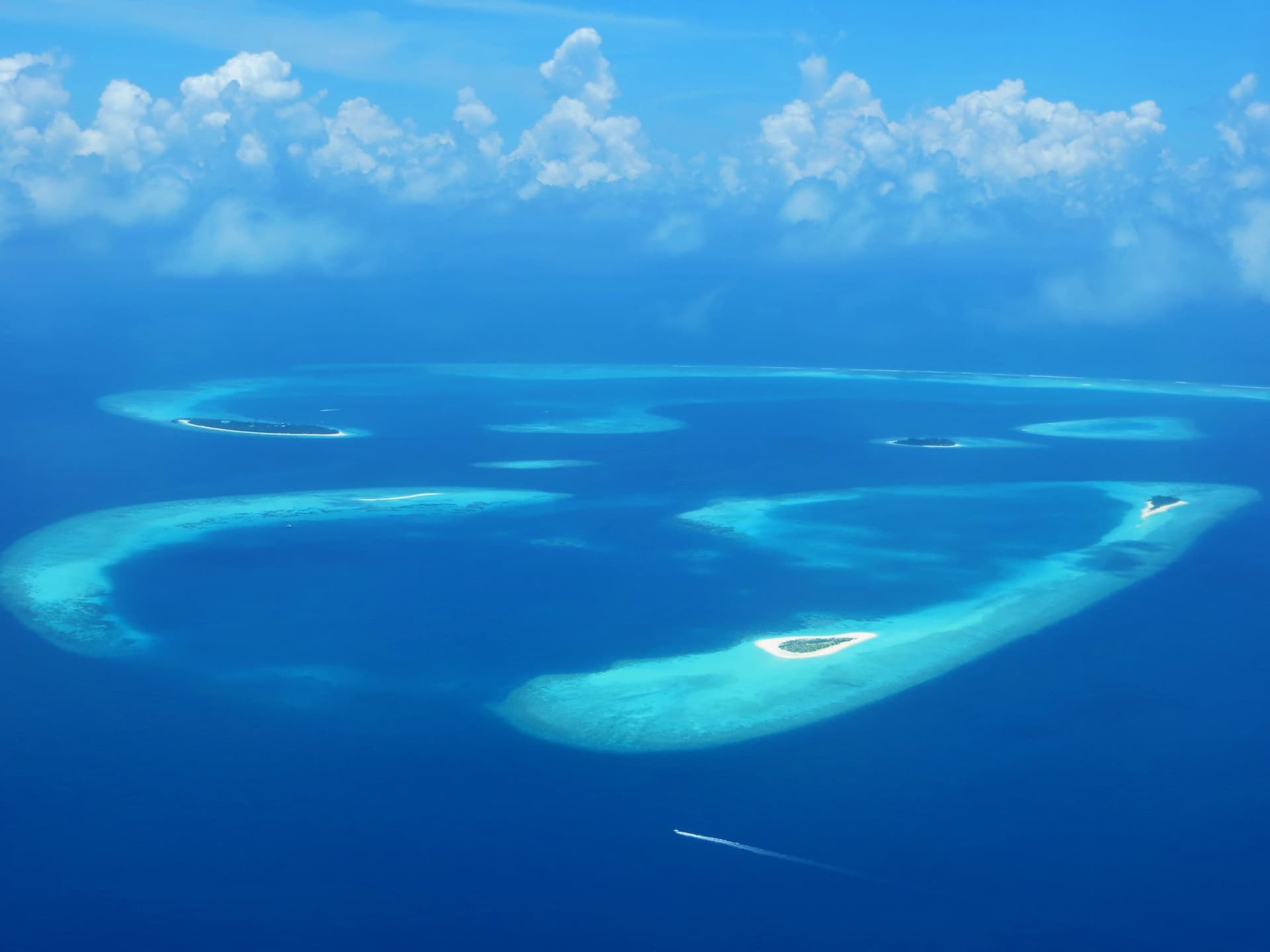
Three natural atolls enclosing one large lagoon, with submerged pinnacles (thilas), reef knolls (giris), channels and Acropora-dominated reef, plus seagrass and mangrove.
The diving here splits into 2 zones:
Small-scale macro reef and fusilier schools in the Baa lagoon
Baa's quieter thila, where a through-reef passage shares one pinnacle with eagle rays
Canyon-and-overhang thila where reef mantas stop to be cleaned in season
Book online or contact a centre that dives this area.
PADI Five-Star dive centre at Dusit Thani Maldives on Mudhdhoo Island, Baa Atoll's UNESCO Biosphere Reserve, 12 minutes by boat from Hanifaru Bay.
Get in touch to add or claim your dive center listing on DiveCodex.
Safari boats based elsewhere that run itineraries to these dive sites.

42m, 24-guest Blue Force Fleet liveaboard with 12 cabins including junior and master suites, running the operator's Spanish-and-English Maldives programme: the year-round Central Atolls loop, the Baa manta season, and Deep South seven-atoll crossings.

42m, 26-guest Blue Force Fleet liveaboard launched in 2018, running Spanish-and-English Maldives weeks: the year-round Central Atolls loop, the Baa manta season around Hanifaru Bay, and Deep South seven-atoll crossings to the far southern hemisphere.

35-metre, 20-guest liveaboard - the original hull of Carpe Diem Cruises Maldives, refitted in 2022, running the fleet's shared catalogue from central manta and reef weeks to the Baa Hanifaru snorkel season and seasonal southern shark charters, out of Male.

43-metre flagship of the Carpe Diem Cruises Maldives fleet - 12 cabins and 22 guests across three decks, with a dedicated camera room - running the shared Maldives catalogue from Male, from central Best-of and Ari weeks to the Baa Hanifaru snorkel season and seasonal southern shark charters.

38-metre, 20-guest sister in the Carpe Diem Cruises Maldives fleet, with a jacuzzi and a broad 10-metre beam, running the same shared catalogue - central Best-of and Ari weeks, the Baa Hanifaru snorkel season, and seasonal southern shark charters - from Male.

36m, 11-cabin, 22-guest wooden liveaboard (2010) running Luxury Yacht Maldives' full atoll catalogue - North to Lhaviyani, Baa & Hanifaru, central Best-5 to Laamu, and northeast-season Extreme South weeks - with free nitrox and rebreather support.

A comfortable 35-metre wooden liveaboard for up to 24 divers in 12 cabins, with a main-deck jacuzzi and bar, running Emperor's shared Maldives catalog from Male.

Emperor's 40-metre Maldives flagship, a 13-cabin, 26-guest fiberglass liveaboard running the year-round Best of Maldives week from Male plus the fleet's seasonal shark, northern-manta and Deep South charters.
The manta months fall in the wet southwest monsoon, with grey skies and short rain bursts, and visibility can drop to 10-15 m where plankton is thick. The dry northeast monsoon brings calmer seas and visibility often past 25 m.
What can go wrong here, and what divers do about it. Conditions change - take the briefing from the operator on the day.
National rules also apply: Rules and permits in Maldives
Yes, in season, though not on a schedule. Reef mantas use cleaning stations on the thilas and on the house reef off Dharavandhoo, and Dhonfan Thila and Nelivaru Thila are the thilas that draw them in the southwest monsoon, May to November. Treat a manta on a tank as a bonus; the bay is where the numbers gather.
Liveaboards cannot visit the bay directly and stop at Dharavandhoo instead. After that the descriptions of the arrangement differ: one has guests taking a taxi boat from Dharavandhoo to the bay, another has liveaboards using designated drop-zones to enter the water. Ask your operator which applies to your itinerary and who buys the token.
Feeding aggregations run from May to November, sometimes into December, and peak from late July to early October around the full and new moons, when stronger tides push plankton into the bay. If the bay is quiet, the cleaning stations from a dive boat are the fallback.
Yes, for the right mix. The scuba is easy thila diving in warm water: grey reef sharks along the edges, a swim-through at Dhonfan Thila, soft-coral walls and a macro layer beneath the big animals. The coral shows storm damage in places beside healthy patches. The trip works best as snorkel days at Hanifaru plus thila dives.
Grey reef sharks patrol the thila edges, with Dhonfan Thila the usual place to meet them, and a whale shark now and then joins the Hanifaru feeds. Baa is not known for big-shark action.
Both work. One-island resorts run in-house dive centres with guided boat dives and Hanifaru excursions, several tied to marine-biology programmes. On the local islands of Dharavandhoo and Maalhos, guesthouses sell stay-and-dive packages and taxi-boat runs to the bay, and Dharavandhoo has the airport and the visitor centre.
July sits in the wet southwest monsoon, so expect grey skies and short, sharp rain, and visibility that can fall to 10-15 m where plankton is thick. Manta numbers build towards the late-July to early-October peak, and the current stays mostly mild on the thilas.
Also known as: Baa, South Maalhosmadulu Atoll
Log your dives - notes, photos, conditions and the marine life you saw - and share them as one public diver profile. What you share helps the next diver, too.
Log every detail
Depth, duration, conditions, gear, buddy, notes — all in one place. Import from Suunto and other dive computers.
Track marine life
Record species sightings on each dive. Build a personal catalogue of everything you've seen underwater.
Your public dive profile
Share your dive history, stats, and experiences with a profile page you control. Show the world where you've been.