Hanifaru Bay

Snorkel-only protected bay in Baa Atoll where reef mantas feed in spiralling cyclones and whale sharks join. Scuba banned, ranger-controlled access.

Last updated June 2026

The dive

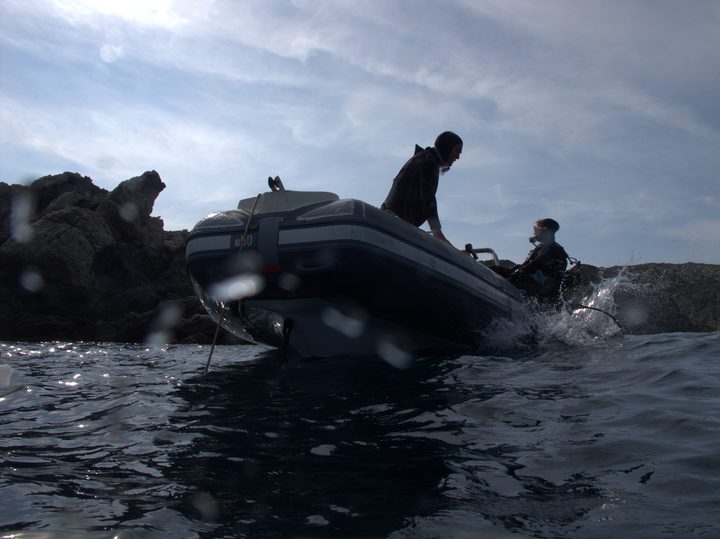
This one happens at the surface, face-down, watching the water below. After buying a token you board a boat from a resort, a Dharavandhoo guesthouse, or a liveaboard's shuttle, and a licensed guide leads a small group to a drop point and into the bay. There is no descent, no route, no depth profile. You float and you watch.

On a quiet day there is nothing. The bay can be empty, and groups leave without a single ray. On a good day reef mantas glide in beneath you to feed, mouths wide, sometimes a few, sometimes dozens. On the best days, with dense plankton and the right tide around the full or new moon, the rays barrel-roll and stack into spiralling feeding trains directly below the snorkellers, and a whale shark may cruise through the same patch. Each in-water session is short and fixed, after which your group exits to make room for the next under the rangers' watch. The whole experience is a patient wait over a feeding frenzy that may or may not arrive.

What makes it special

The bay is barely larger than a football field, yet it is the largest known reef-manta feeding aggregation on Earth. The geography does the work. The reef is roughly twice as wide at its mouth as at its inner lagoon, forming a funnel. When monsoon tides drive clouds of plankton toward that funnel, the food is trapped and pushed close to the surface, and the denser the plankton, the more mantas pour in to feed. No other site in the Maldives reproduces this at the same scale.

It is also worth being honest about what this is. It is a snorkel, not a dive, and it draws first-time snorkellers alongside seasoned manta-chasers. And it is unpredictable in a way that defines the whole trip. People who hit the cyclone feed talk about it for years. People who hit an empty bay shrug and try again the next day.

Know before you go

Scuba is banned here, and that is the single most important thing to know. Hanifaru is snorkel only and has been for well over a decade, so leave the tank on the surrounding reefs. Access is controlled. A paid conservation token, currently around 20 to 30 US dollars, buys you a 45 minute in-water slot with a licensed guide, and the rules are tightly held: numbers in the bay are capped, only a handful of vessels are allowed in at once, and each guide leads a small group. Liveaboards cannot enter directly. They dock at Dharavandhoo and shuttle guests in.

Time it with the moon. The full or new moon in the late-July to early-October peak gives the best odds, and basing yourself on Dharavandhoo or a nearby island lets you make several attempts. Conditions are environmental, not technical: monsoon chop, current through the funnel, reduced visibility in dense plankton, and the emotional gamble of seeing nothing. On photography, the rules are firm. No flash, keep your distance from the animals, and never touch or feed them. Stay with your guide and on the surface.

Why Dive Hanifaru Bay

What makes this dive site stand out.

  1. 1
    Snorkel only, no scuba

    Scuba is banned in the bay. The feeding happens at the surface, so no tank is needed.

  2. 2
    Reef manta feeding cyclones

    In season, dozens of rays barrel-roll and stack into spiralling feeding trains below you.

  3. 3
    Whale sharks join the feeds

    Plankton draws whale sharks to the same surface feeds at the height of the season.

  4. 4
    Ranger-controlled access

    A paid conservation token buys a 45 minute slot with a licensed guide, numbers capped.

  5. 5
    A genuine lottery

    The bay can be empty for days, then fill with hundreds of mantas on the right tide.

Depth & Profile

0m
Min depth
20m
Max depth
0–8m
Typical range
ReefCoralSand

Location

5.1748°N, 73.1419°E

Conditions

Temperature
29°C
Visibility
5–30m
Current
Variable

Marine Life

Liveaboards visiting this site

View all

Multi-day safari boats with this site on their itinerary.

Emperor Serenity logo

Emperor Serenity

Emperor's 40-metre Maldives flagship, a 13-cabin, 26-guest fiberglass liveaboard running the year-round Best of Maldives week from Male plus the fleet's seasonal shark, northern-manta and Deep South charters.

Liveaboard26 guestsMale
Emperor Virgo logo

Emperor Virgo

The fleet's most intimate hull: a 35-metre wooden liveaboard for up to 18 divers in 9 cabins, with ocean-view upper-deck cabins, running Emperor's shared Maldives catalog from Male.

Liveaboard18 guestsMale
Emperor Voyager logo

Emperor Voyager

Emperor's value-focused 30-metre wooden liveaboard, 10 cabins for up to 20 divers, built around the diving and running the fleet's shared Maldives catalog from Male.

Liveaboard20 guestsMale
Honors Legacy logo

Honors Legacy

10-cabin, 22-guest Maldivian-built wooden liveaboard running Honors Holidays' central Best of Maldives and Hanifaru-and-Ari weeks plus seasonal Deep South Huvadhoo-Addu equatorial safaris, diving from a dedicated 60-foot dhoni.

Liveaboard22 guestsMale
Ocean Divine logo

Ocean Divine

34m, 8-cabin, 16-guest liveaboard led by Spanish divers in the Maldives since 1998, running year-round Central, northeast-season Deep South and summer Northern routes with enriched air and full English and Spanish service.

Liveaboard16 guestsMale
Scubaspa Yang logo

Scubaspa Yang

Identical 2014 sister to Scubaspa Yin - the same 50m luxury spa liveaboard, PADI 5-Star diving off a dedicated dhoni, running the same Best of Maldives, Far North manta and Deep South shark catalogue.

Liveaboard36 guestsMale
Scubaspa Yin logo

Scubaspa Yin

50m luxury spa liveaboard - the original Scubaspa (2013) - pairing PADI 5-Star diving from a dedicated dhoni with an onboard spa, across the Maldives' central atolls, Far North manta season and Deep South shark channels.

Liveaboard36 guestsMale
Emperor Leo logo

Emperor Leo

A comfortable 35-metre wooden liveaboard for up to 24 divers in 12 cabins, with a main-deck jacuzzi and bar, running Emperor's shared Maldives catalog from Male.

Liveaboard24 guestsMale

Centres that dive here

View all

Book a guided dive at this site.

Difficulty & Certification

Easy

Easy snorkelling from a boat. The real challenges are monsoon chop, current, crowding in a small bay, and the chance of seeing nothing.

Regulations

Marine reservePermit required

Frequently Asked Questions

Can you scuba dive at Hanifaru Bay?
No. Scuba diving has been banned in the bay since it became a protected area. Hanifaru is strictly snorkel only, and that is by design. The reef mantas and whale sharks feed in the top few metres of water, so the action plays out at the surface where bubbles and tanks would only disturb the animals. Certified divers still get plenty of tank time on Baa Atoll's surrounding reefs and pinnacles, then add a snorkel session here.
How much does it cost to visit Hanifaru Bay?
Entry runs on a paid conservation token, currently around 20 to 30 US dollars per person, which funds the Baa Atoll Conservation Fund. You can buy it online or at the visitor centre on Dharavandhoo, and most resorts, guesthouses and liveaboards will arrange it for you. On top of the token, the boat excursion itself from a guesthouse typically costs more, depending on the operator and how far you travel to reach the bay.
When is manta season at Hanifaru Bay, and does the moon matter?
Feeding aggregations run roughly May to November, with the reliable peak from late July to early October. The moon matters a lot. Stronger tidal currents around the full and new moon push the most plankton into the funnel-shaped bay, which is what concentrates the mantas. Trip leaders deliberately target those lunar windows, and basing yourself nearby for several days improves your odds.
Are manta sightings guaranteed at Hanifaru Bay?
No. Even in peak season it is a genuine lottery. Divers describe being in the area for a week and never seeing a manta inside the bay, then hitting a single day with thirty or more rays in a full cyclone feed. The spectacle depends on tide, plankton and luck lining up. The honest plan is to give yourself multiple attempts rather than counting on one visit.
What is cyclone feeding, or a manta train?
When plankton is dense enough, reef mantas stop feeding alone and start feeding in formation. A handful link nose-to-tail into a spiralling column, looping through the thickest food in a slow vortex that can stack dozens of rays. That is the cyclone, or manta train. It is the behaviour that made Hanifaru world famous, and it only happens when the food is concentrated enough to be worth the coordination.
Can liveaboards go into Hanifaru Bay?
Not directly. Liveaboards are not allowed to enter the bay itself. They dock at Dharavandhoo, the inhabited island just across the channel, and shuttle guests in by smaller boat for the snorkel. Vessel numbers inside the bay are capped, and access is controlled by the on-site rangers, so even liveaboard guests join the same token-and-slot system as everyone else.
Where should I stay to visit Hanifaru, a resort or Dharavandhoo?
Both work. Baa Atoll resorts run their own excursions to the bay, while the local island of Dharavandhoo has guesthouses across the channel, roughly ten minutes away by boat, and is the budget-friendly base for manta season. Staying nearby on Dharavandhoo or neighbouring islands lets you make repeated attempts around the right tides, which matters when sightings are a lottery.
What should I bring to snorkel Hanifaru Bay?
Bring your own mask, snorkel and fins for a reliable fit, plus a rash guard or thin shorty for sun and warmth in the 27 to 29 degree water. Reef-safe sunscreen, a hat and sunglasses help on the boat. A brightly coloured tow float makes you easier to spot in chop. Flash photography is not allowed, and you must keep a respectful distance from the animals and never touch or feed them.
DDIVECODEXLOG

Every dive has a story. Share yours.

Log your dives - notes, photos, conditions and the marine life you saw - and share them as one public diver profile. What you share helps the next diver, too.

Log every detail

Depth, duration, conditions, gear, buddy, notes — all in one place. Import from Suunto and other dive computers.

Track marine life

Record species sightings on each dive. Build a personal catalogue of everything you've seen underwater.

Your public dive profile

Share your dive history, stats, and experiences with a profile page you control. Show the world where you've been.

Create your free dive log