

Discovery Divers
PADI 5-Star Dive Center at the Amari Koh Samui Resort, running its own boats to Sail Rock and Chumphon Pinnacle since 1999.
PADI2 services8 languages
Gulf of Thailand resort island with its own airport, a comfort base for day trips to Sail Rock and Koh Tao's reefs, plus two sites of its own inside Ang Thong.
Last updated September 2026
Koh Samui sells comfort, not proximity. It has its own international airport, direct flights and a much larger resort base than neighbouring Koh Tao, which has neither, and its dive centres are honest about the trade this creates: every Samui-based operator checked, Discovery Divers, Silent Divers and The Life Aquatic among them, sells the same short list of offshore day trips, none an exclusive local site. Two decades of diver discussion converge on the same arithmetic: most Samui boats reach the same Koh Tao sites after an hour or more at sea, against under 20 minutes from Koh Tao itself, and Samui-based diving is consistently reported as pricier for it. Sail Rock, Chumphon Pinnacle and Koh Tao's own reefs are sold from Samui but stay researched and published as Koh Tao's sites, not Samui's.
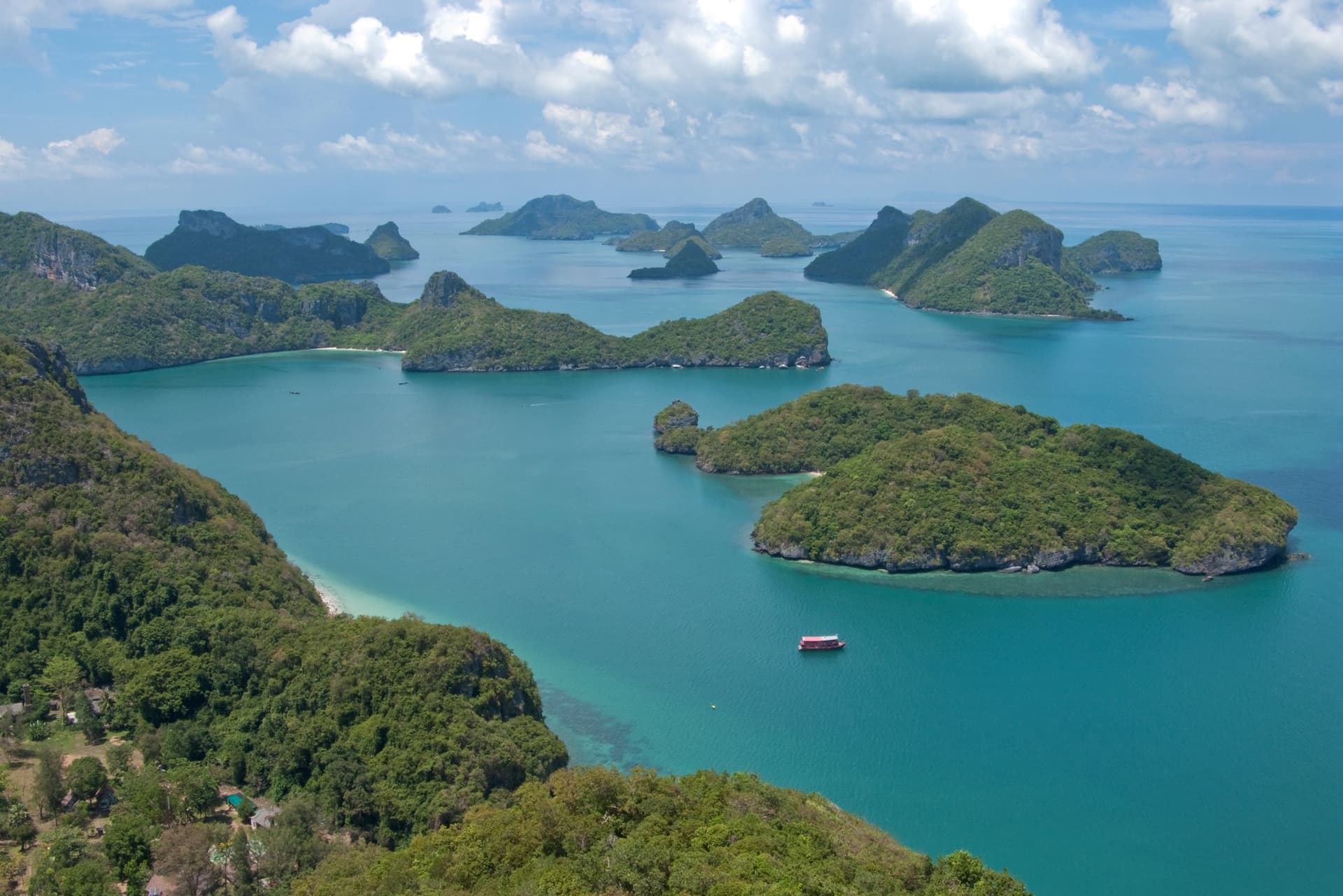
Samui does hold one genuine access advantage: Ang Thong National Marine Park, a limestone island group closer to Samui than to Koh Tao. Most of the park is marketed as scenic limestone-island snorkelling, shallow and affected by river sediment, over anything a certified diver would call a signature dive, but two sites in its northern reaches, Hin Yippon and Ko Wao, are independently called the park's most popular dives. Hin Yippon's boulders and hard coral form caverns and swim-throughs to 30 m with generally mild current; Ko Wao starts in a sheltered bay at a gentler 20 m, its hard coral gardens holding resident clownfish, banded sea kraits and stingrays. Neither carries the pelagic draws of the offshore circuit: no whale shark or leopard shark has been reported at either site, and both stay reef and macro dives, not big-animal ones.
Chaweng, Bophut and Choeng Mon are the main dive-centre hub towns, all PADI-affiliated and pricing within about 10-15% of each other for the same course: a competitive training market, not a differentiated one. Best season runs January to May, some sources extend it to September, with the Gulf diveable year-round at 27-30 C and visibility the variable that actually swings: 15-30 m offshore in the dry months, down to 8-20 m and murkier after heavy rain in the wet season, while Ang Thong's own two sites hold a narrower 5-20 m regardless. Koh Samui's own waters carry no marine-reserve designation; Ang Thong does, and its entrance fee is advertised at around 300 THB for a foreign adult plus a boat-entry charge, on top of whatever the dive trip itself costs.
Ang Thong's limestone islands continue underwater as boulder slopes and low reef, cloaked in hard coral gardens of staghorn, vase and table coral around barrel sponges and sea fans.
The diving here splits into one zone:
Book online or contact a centre that dives this area.
What can go wrong here, and what divers do about it. Conditions change - take the briefing from the operator on the day.
National rules also apply: Rules and permits in Thailand
Not really, and Samui's own dive centres do not pretend otherwise. Every operator checked sells the same short list of offshore day trips, and an automated check of the island's own diving reputation independently reached the same conclusion: Samui is a base for reaching Gulf of Thailand sites, not a site-spectacle destination in its own right. The one exception is Ang Thong Marine Park, closer to Samui than to Koh Tao, where two named sites are open to certified divers.
Both. Most of the park is sold as scenic limestone-island snorkelling, with average depths around 10 m and visibility affected by river sediment, but two sites in its northern reaches, Hin Yippon and Ko Wao, are independently named by two sources as the park's most popular dives for certified divers.
Koh Tao, according to the diver community's own long-running consensus. Threads sixteen years apart make the same point: most Samui boats reach the same Koh Tao sites after a boat ride of an hour or more, against under 20 minutes from Koh Tao itself, and Samui-based diving has been described as noticeably pricier for the same sites, attributed to the longer run and fuel cost. Samui's trade-off is the airport, resort comfort and direct flights Koh Tao does not have.
Sources genuinely disagree, not just on detail: one puts it at 5-20 m, a second independent source at 10-20 m. Treat it as a variable, murkier-than-offshore site, plan on the lower end, and don't expect a fixed number if visibility matters to your trip.
They are sold from Samui, along with Koh Tao's own reefs, but they are researched and published as Koh Tao's sites, not Samui's: every Samui-based centre checked runs the same offshore circuit without an exclusive Samui-side alternative on its own menu. See Koh Tao's own page for what each of those sites is actually like.
One diver reports that it can't be done locally, since all the diving is an hour or more away by speedboat, but no operator page confirms or denies a night-dive product at the offshore sites themselves. Ask directly if a night dive matters to your trip.
Also known as: Ko Samui, Ko Samui District, เกาะสมุย
Log your dives - notes, photos, conditions and the marine life you saw - and share them as one public diver profile. What you share helps the next diver, too.
Log every detail
Depth, duration, conditions, gear, buddy, notes — all in one place. Import from Suunto and other dive computers.
Track marine life
Record species sightings on each dive. Build a personal catalogue of everything you've seen underwater.
Your public dive profile
Share your dive history, stats, and experiences with a profile page you control. Show the world where you've been.
