
Diving in Panglao
Bohol's dive launchpad, with the airport ten minutes from the beach, shore-entry walls at Doljo and Napaling, and the boat to Balicasag.
Last updated August 2026
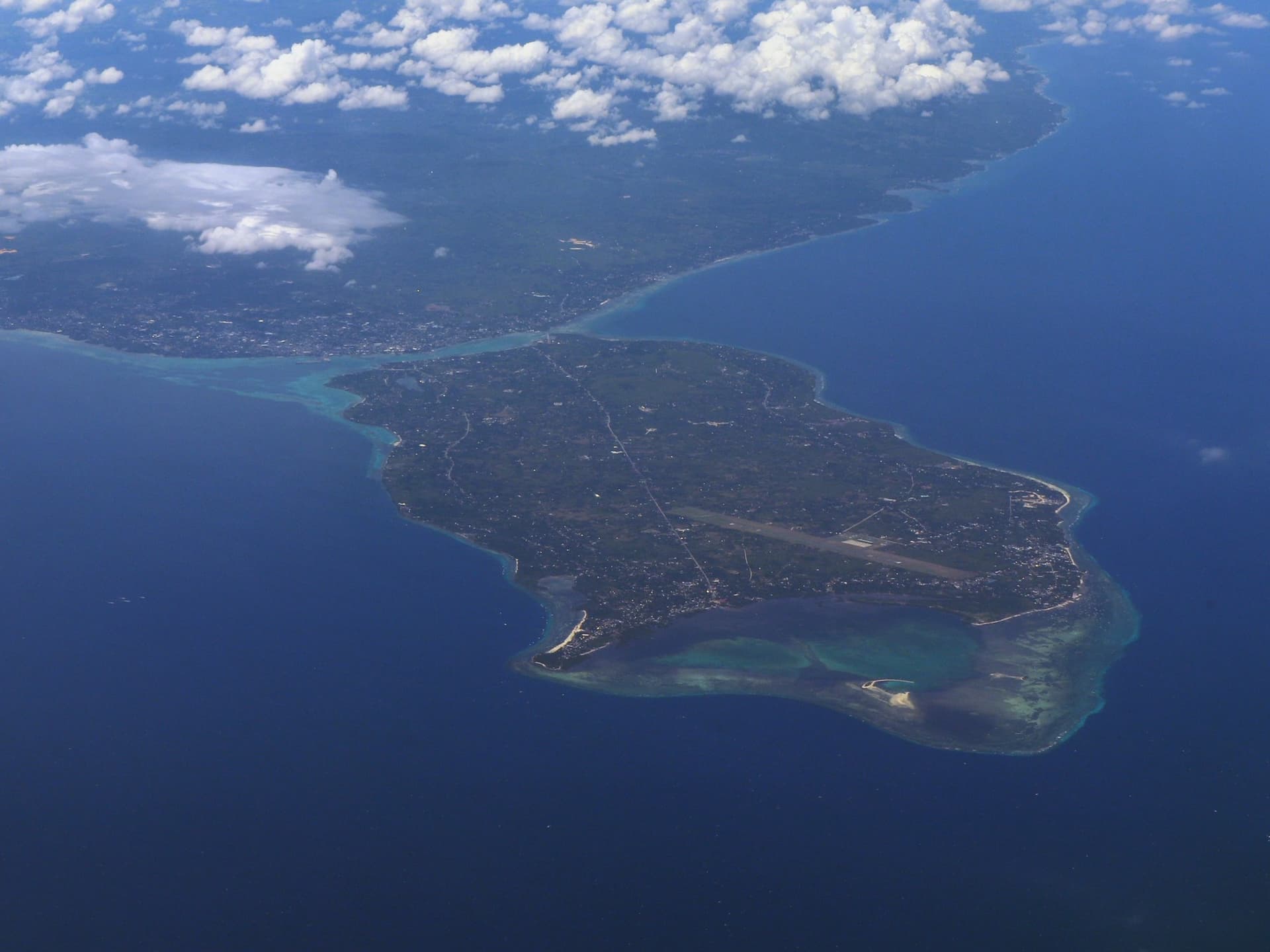
Overview
Panglao sells access before it sells reef. The international airport is on the island, ten minutes from the Alona dive strip, and the boat to Balicasag leaves from the same beach. What the convenience buys on the south coast is honest without being exciting: shallow reefs, a house-reef wall eight metres off the sand, and the shaft at Arco Point that drops through the reef top and comes out in the wall at sixteen to eighteen metres, which anyone can decline.
The better diving is on the coast most visitors never reach. Doljo Point at the northwest tip is a sunlit plateau that ends in a vertical face, with gorgonians the size of a car door between 18 and 30 metres and visibility that regularly beats 30. Napaling, reached down cliff steps, puts a 25 metre drop-off a few kicks from shore, with a cordoned section where the sardine shoal usually sits and jacks and barracuda working it. Divers in 2026 name the jacks first. Further out, Cervera Shoal carries banded sea kraits in numbers and gets called off whenever the current runs. Frogfish turn up across the island, and the macro outlasts the coral.
Planning your visit
Which coast you dive is decided by the wind, not the calendar. From November into April or May the northeast amihan blows and everything runs off the sheltered south, which is also the busy peak. From June to October the southwest habagat makes the south choppy and shops move west and north, where Doljo is sheltered and July to September is its best window.
Panglao's own sites carry no permit and no diver quota1. What they carry is an Environmental User's Fee of 100 pesos per diver on top of the dive price, and at Napaling a second, unposted fee collected at the cliff. Balicasag is the exception, half an hour out on pre-booked slots that weather cancels often enough to be worth spare days. Operators have set per-site carrying capacities through their own association since 20142.
Settle the emergency chain before you dive. Plan for evacuation off the island. No chamber can be assumed operational on Bohol: as of February 2025 the country had three working ones, at the Lung Center in Manila, at Mandaue City on Cebu and at Puerto Princesa in Palawan3, and the nearest of those to Panglao is the Cebu chamber, roughly 87 kilometres north across the strait. A chamber does exist at Panglao and was still counted in the national network in June 20264, but a 2023 government report described it as sitting unused and needing parts and trained staff5 and nothing since confirms it entered service. Ask your operator where it stands on the day, and carry insurance with hyperbaric cover. The hospital is Gov. Celestino Gallares Memorial Medical Center in Tagbilaran, across the bridges6, and the coast guard station covering the island is in Barangay Tawala on 0927-350-54847.
Geology & underwater terrain
A low limestone island joined to Bohol by two bridges, soluble enough that its land surface carries caves and sinkholes. Underwater the reef is largely continuous around the dived coast: shallow platforms at five or six metres that drop into coral walls, sandy slopes, overhangs and short tunnels. The south coast is shallow and gentle. The northwest tip at Doljo falls away vertically to well below recreational limits, and Napaling on the north coast reaches a 25 metre drop-off within a few kicks of the shore.
Dive sites in Panglao
Arco PointTop dive
Open Water divers ready for a short overhead they can also swim around
Cervera ShoalTop dive
Experienced drift divers who want sea kraits in numbers, not coral
Doljo PointTop dive
The Panglao wall that dives when the southwest monsoon shuts the south coast
Garden EelsTop dive
Night diving three minutes from Alona Beach, with the macro on the wall top
NapalingTop dive
Walk-in wall with immediate depth, shared with freedivers and snorkellers
Alona Beach
Shore-entry macro on the Alona strip, and the reef most Panglao trips start on
Bohol Beach Club
Open Water divers who want vehicles on the bottom without a deep wreck dive
Habagat Wreck
The wreck dive on Panglao, for divers who want one without going to Coron
Kalipayan
Alona's easy macro dive, where the seagrass beats the wall
Pungtud Wall
Open Water divers after a full coral wall dive within their depth
Safety considerations
What can go wrong here, and what divers do about it. Conditions change - take the briefing from the operator on the day.
- Current: Doljo Point can run strong and is dived as a drift, Arco Point's drift runs steadily south, and Cervera Shoal is exposed and swept.Take Doljo and Cervera as guided drifts, enter Arco Point in small groups from the wall side, and carry an SMB.
- Overhead: Arco Point's shaft runs from about 5 to 9 metres down to an exit in the wall at 16 to 18, and the north-coast caves at Twin Caves are siphons that operators advise against entering.Take the Arco shaft behind a guide, or decline it and be led around the outside of the arch, and do not penetrate the north-coast caves at all.
- Depth: The Doljo wall has no natural floor inside recreational range, Napaling's face keeps going below the sandy slope at about 40 that meets its foot, and both sunken boats off the south coast sit between 31 and 37 metres.Set a hard depth before descending a wall with no bottom in sight, and watch no-decompression time on the wreck dives.
- Surface and boat traffic: The Napaling entry is a set of cliff steps that can be slippery with full kit, and Doljo's entry and exit are difficult when the amihan blows.Let the centre pick the coast by the wind, and treat the Napaling walk down as part of the dive plan.
- Remote location: No hyperbaric chamber can be assumed operational on Bohol. One exists at Panglao and is still counted in the national network, but a government report described it as unused and needing parts and trained staff, and no source confirms it entered service. As of February 2025 the country had three working chambers, at the Lung Center in Manila, at Mandaue City on Cebu and at Puerto Princesa in Palawan; the nearest to Panglao is the Cebu one, roughly 87 kilometres north across the strait. The provincial hospital is in Tagbilaran across the bridges.Plan for evacuation off the island, carry dive insurance with hyperbaric cover, confirm the chamber position with your operator on the day, and know the hospital and coast guard numbers before the boat leaves.
Frequently Asked Questions
Is Panglao worth diving, or is it just the base for Balicasag?▾
Both, and the order matters. Balicasag is the region's headline dive and it is reached from here, but it runs on a quota with rationed slots and weather cancels trips regularly, so a trip built only around it can lose days. Panglao's own reef is pleasant without being spectacular on the crowded south coast, and considerably better on the west and north: the Doljo wall and Napaling are the sites divers come back for. Allow spare days for Balicasag and treat the island's own coast as the reason the spare days are fine.
Where do you stay on Panglao, Alona or somewhere quieter?▾
Alona Beach is the dive strip and the holiday town at once, with restaurants, hawkers and live music into the evening, which several divers have found more than they wanted. Danao Beach, two kilometres south, is the working side: the main mooring point for the boat fleet and a growing set of resorts, without the beachfront scene. Napaling on the north coast is a third thing again, a cliff-edge road and a set of stairs into the water. They are not interchangeable, and choosing between them is the real accommodation decision here.
Is there a hyperbaric chamber on Panglao, and where would you go in an emergency?▾
One exists, and the short answer is not to count on it. It was established through an agreement between the municipality, the tourism infrastructure authority and the national scuba council, and it was still listed among the agency's ten chamber centres in June 2026, which is a listing and not a working status. In 2023 the provincial disaster council approved funding to repair and operationalise a facility it described as resting unused, needing spare parts and trained personnel, and nothing since confirms it entered service. The three chambers the country had operational in February 2025 were in Manila, at Mandaue City on Cebu and at Puerto Princesa in Palawan: the nearest is roughly 87 kilometres north across the strait. Plan on that basis, ask your operator where it stands on the day, and carry insurance with hyperbaric cover. The hospital to know is Gov. Celestino Gallares Memorial Medical Center in Tagbilaran City, across the bridges, which runs a named emergency department on (038) 411-4868 and 411-4869. The coast guard station covering the island is in Barangay Tawala, on 0927-350-5484.
When is the best time to dive Panglao?▾
December to May is the settled peak, and it gets busy enough that booking dives ahead saves time. The more useful question is which coast, because the island turns with the wind. From November through April or May the northeast amihan blows and the sheltered south coast carries the diving. From June to October the southwest habagat makes the south choppy and operators shift to the west and north, where Doljo is geographically sheltered and July to September is described as its best window. Water sits at 26 to 30°C all year.
Can you see the sardines at Napaling?▾
Sometimes, and no honest answer is stronger than that. A shoal holds inside a cordoned section of about fifty metres a few metres off the shore, and divers, freedivers and snorkellers share it. How dependable it is on a given morning is genuinely unsettled: one operator puts the sardine run at Neptune Garden further along the same coast and calls it seasonal there, a diver reported the school fished out in 2023, and a jackfish school that arrived around 2025 is what several 2026 divers name first. Treat the shoal as a possibility and not as a booking, and the drop-off itself as the reason to go.
Is Panglao a marine reserve, and do you need a permit to dive it?▾
No permit, and the reserve label needs unpacking. A 1978 national proclamation placed Panglao Island under the tourism authority in a list of tourist zones and marine reserves, and it names Panglao, Cabilao and Balicasag as three separate entries, which is why the three are treated as distinct destinations. What that instrument does is control development: no diver quota, no permit and no no-take zone, so Panglao maps to a protected area and not to a reserve. A protected seascape was created on the island in 2003, but its four surveyed blocks sit on the north and west shores around Dauis and Doljo, well away from most of the dived coast. Smaller sanctuaries do exist inside all of it, off Alona at Tawala, at Doljo, and as a cordoned section at Napaling. What you actually pay is an Environmental User's Fee of 100 pesos per diver, on top of the dive price.
Which Panglao sites need Advanced Open Water?▾
Four, and depth is only half the reason. The Doljo wall runs its interest at 18 to 30 metres over a face that continues past 60 with nothing to stop a descent, and it carries the island's strongest currents. The two sunken boats off the south coast sit between 31 and 37 metres, which is a gas and no-decompression problem and not a skills one. What gates Cervera Shoal is drift experience: an exposed seamount 10 km out with a current that runs hardest at the surface. Everything else on the island, Arco Point and Napaling's reef included, is Open Water diving, and the short overhead at Arco Point is optional, with anyone who declines it led around the outside of the arch.
Are there wrecks on Panglao?▾
Two small sunken boats sit off the south coast between about 31 and 37 metres, and operators disagree about which is called what. One is a cabin cruiser of around 14 metres off Danao Beach, sunk in 2000 by a local dive centre. The other lies off Alona and was sunk in 2011. Some shops call the Alona one the Habagat wreck; others hold that the Habagat is a different boat, further along the coast. Ask an operator which of the two you are booking. Neither is a wreck-diving destination in its own right, though the shallow south coast is quietly full of dumped objects, including two jeepney bodies at 8 and 14 metres.
How do you get to Panglao?▾
You fly in. Bohol-Panglao International Airport is on the island itself, five to ten minutes from the Alona strip, with domestic connections and scheduled international flights from several Asian hubs. That is the island's main competitive claim, and it needs no comparison to land: you can be in the water within an hour of the aircraft door. Ferries connect Cebu and Dumaguete for anyone arriving overland, and ride-hailing works on the island alongside tricycles.
Panglao or Anda for a Bohol dive trip?▾
Anda is about 120 kilometres away, close to three hours by private car, so they are separate trips and not a day out from one another. Panglao gives you the airport, the widest choice of operators and the Balicasag connection, at the price of a busy holiday town and a crowded south-coast reef. Divers who want quieter water and better coral generally point to Anda or Cabilao. A common shape is a few days on Panglao at the start or end of a trip, built around Balicasag and the Doljo wall.
References
- 1.Office of the President, Republic of the Philippines (Lawphil Project reproduction), November 10, 1978 — Proclamation No. 1801: Declaring Certain Islands, Coves and Peninsulas in the Philippines as Tourist Zones and Marine Reserve
- 2.Cebu Daily News, November 2022 — Bohol: PADO hopes to bring divers to also explore other dive spots outside Panglao
- 3.The Freeman (philstar.com), February 8, 2025 — More hyperbaric chambers coming soon
- 4.Philippine News Agency, June 26, 2026 — P60-M hyperbaric chamber seen boosting tourism, healthcare in NegOr
- 5.Philippine Information Agency (PIA7 Bohol), April 10, 2023 — PDRRMC to fund operation of 'unused' hyperbaric chamber
- 6.Governor Celestino Gallares Memorial Medical Center — Contact Us
- 7.Philippine Coast Guard — Coast Guard District Central Visayas
- 8.Office of the President of the Philippines (Lawphil Project transcription), July 22, 2003 — Proclamation No. 426, s. 2003
Every dive has a story. Share yours.
Log your dives - notes, photos, conditions and the marine life you saw - and share them as one public diver profile. What you share helps the next diver, too.
Log every detail
Depth, duration, conditions, gear, buddy, notes — all in one place. Import from Suunto and other dive computers.
Track marine life
Record species sightings on each dive. Build a personal catalogue of everything you've seen underwater.
Your public dive profile
Share your dive history, stats, and experiences with a profile page you control. Show the world where you've been.