
Haliotis Peniche
PADI 5 Star CDC dive centre near Peniche, Portugal, running Berlengas Natural Reserve boat trips from its own two RIBs, Lascaris and Necora.
PADI9 services
Portugal's oldest marine reserve, a granite archipelago about 30 minutes by boat from Peniche, with Vapor do Trigo's wreck to 30m and a beginner cave circuit.
Last updated October 2026
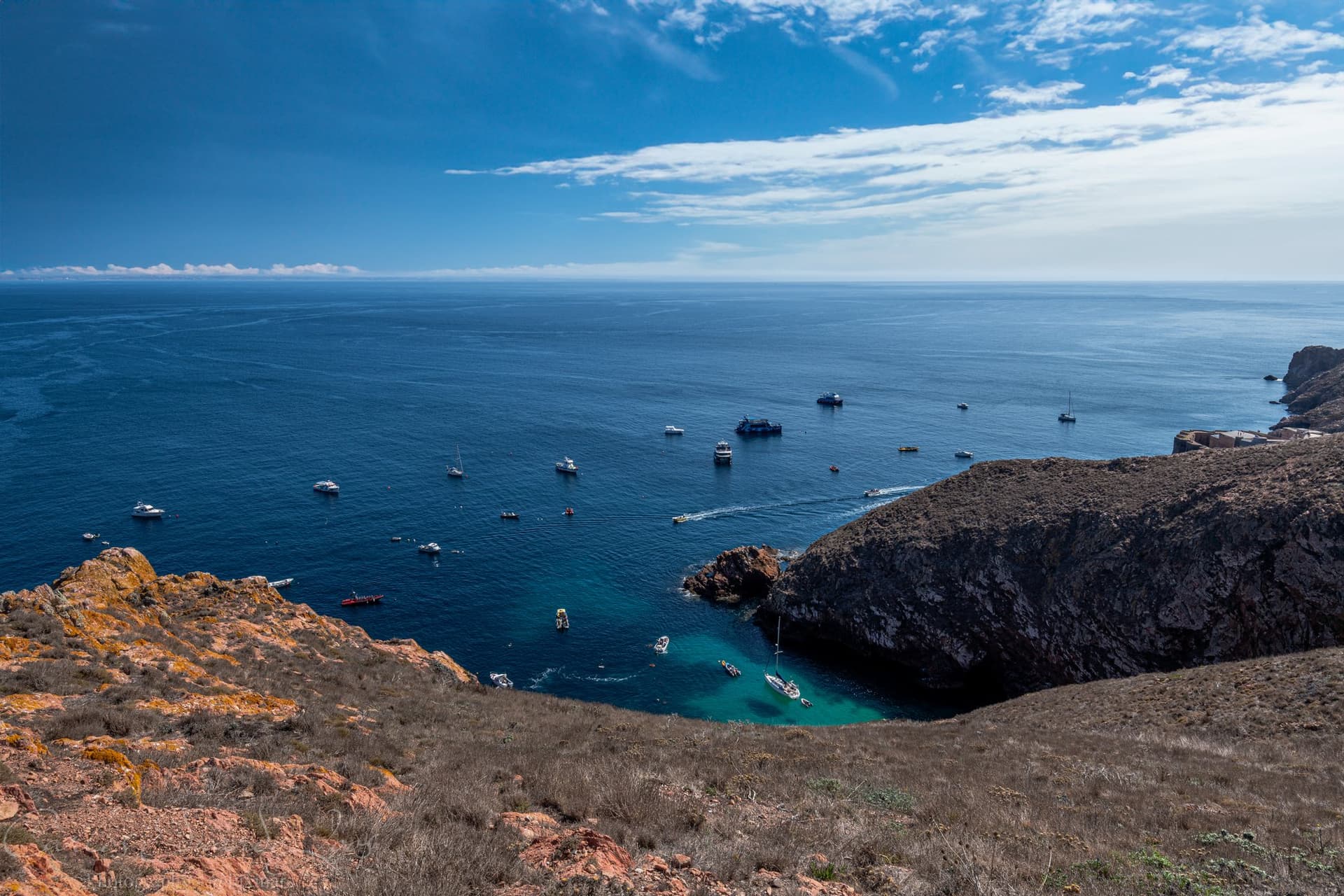
Two decades of community discussion single out this stretch of coast, unprompted, as a benchmark for diving on mainland Portugal, built on an unusually dense wreck inventory for a reserve this size. Reaching the archipelago means an open-Atlantic RIB run out of the fishing port of Peniche, landing at Portugal's oldest marine nature reserve, a granite archipelago protected since 1981 and later a UNESCO Biosphere Reserve; a separate, gentler inventory sits off the Peniche mainland itself, no crossing required.
Primavera, an accessible 1902 Italian steamer that operators place anywhere from 15 to 24 metres, is the classic first-wreck dive here. Deeper, the three intact boilers of Vapor do Trigo shelter lobster and conger eel at 26 to 30 metres. For a shallower profile, the Cova do Sono circuit strings together the Lagosteira cave, the Furado Grande tunnel and a sheltered bay, low-current and beginner-friendly throughout, while the more exposed Estelas islets are the natural step up; beyond them, the current-swept Rinchao seamount adds a deeper wreck-and-reef profile for more experienced divers, its depth running past the recreational Advanced Open Water ceiling. On the mainland side, Portinho da Areia Sul beach and the Fortress inlets run their own shallower inventory. Groupers and moray eels work the reef, lobster and conger the wreck structure, and late summer draws divers for ocean sunfish sightings specific enough that regulars travel from Germany and France for it. Fort Sao Joao Baptista still stands over the crossing, built to defend the islands from pirate raids and, as local history tells it, a 1666 Spanish assault that cost the attackers hundreds of dead against a single Portuguese defender.
Fly into Lisbon's Humberto Delgado Airport, about 90 minutes north, or Porto's Sa Carneiro, roughly three hours south; there's no train into Peniche, only a bus change at Caldas da Rainha. Every operator here runs day boats only, typically a two-tank morning and afternoon slot; one Peniche centre prices its Berlengas trip at EUR 85, rising to EUR 95 for the pricier, more advanced Farilhoes day, current as of September 2026; treat that as one centre's rate rather than a fixed area price. No liveaboard serves the area. Sites inside the Berlengas reserve fall under its own access and conduct rules, so ask your operator how a landing on Berlenga fits the day before you book. June to October is the reliable window for the Atlantic crossing itself; operators and community accounts disagree on winter, so treat a December-to- February booking as a maybe, not a given, and confirm directly before you book. Open Water certification, with its 18m limit, covers the Cova do Sono cave circuit and the mainland Portinho da Areia Sul dives; Primavera's 16-24m range crosses that ceiling, so Advanced Open Water is the practical minimum there too, alongside Vapor do Trigo's 26-30m boilers and the deeper reaches of Estelas. Start with the sheltered Berlenga Grande sites and the cave circuit before stepping up to the more exposed Estelas and Farilhoes grounds.
Red and whitish alkali-granite roughly 280 million years old, fractured by tectonic movement into the caves, caverns and slopes that shape the diving; the outer Farilhoes-Forcadas group is older banded gneiss.
The diving here splits into 2 zones:
The Berlengas' calmest dive: a cave, tunnel and bay in one route
The most sheltered wreck dive in the Berlengas, diving when others cannot
Sheltered from swell, swept by current, and a Mola mola convergence point
A seamount pairing a fish-busy reef top with a deep, contested 1899 wreck
Berlengas' outer islet group: several dive points on one shared boat trip
Berlengas' deepest reef-and-wreck pairing, run only when the current allows it
Fish density over wreck interest among the harder Berlengas/Estelas sites
A named wreck-dense zone, not a single ship, in Peniche's Farilhões sector
Peniche's best-documented shipwreck, dived only on the harder Farilhões trip
A gorgonian wall and through-cave on the Farilhões' harder, pricier day trip
An intact-hull Greek wreck near Estelas, on the standard Berlenga trip tier.
Named for the elephant-trunk rock that breaks the surface above the wall
Book online or contact a centre that dives this area.
PADI 5 Star CDC dive centre near Peniche, Portugal, running Berlengas Natural Reserve boat trips from its own two RIBs, Lascaris and Necora.

SSI Instructor Training Center in Peniche, running boat trips to Berlengas, Farilhões and Estelas plus a mainland site.

Get in touch to add or claim your dive center listing on DiveCodex.
Visibility on the named sites typically runs 10 to 20m; the 'up to 30m' figure in tourism copy describes an occasional ceiling, not the everyday water. The crossing itself is the real gauge of the season: the open-Atlantic run from Peniche gets far less predictable outside the June-October window, and operators frame winter diving as possible rather than routine.
What can go wrong here, and what divers do about it. Conditions change - take the briefing from the operator on the day.
Marine reserve
BerlengasPass FAQReserve management planBerlenga landing rulesChecked: Oct 2026
National rules also apply: Rules and permits in Portugal
Accounts disagree. Peniche's dive centres generally frame it as possible year-round with a weather-limited window from December to February, while at least two recent community accounts describe the area as effectively summer-only, comparing it to Porto. Treat June to October as the reliable season and confirm directly with an operator before booking outside it.
Depth estimates vary: one catalogue puts it at 16 to 24 metres, one operator gives 22 metres specifically, and it's sometimes listed at 15 metres elsewhere. Whichever figure is closest, it's graded easy to moderate and stays well within recreational limits.
About 30 minutes each way by RIB in typical conditions; at least one diver account puts it closer to 40 minutes each way when the sea is rougher, so treat 30 minutes as a starting point, not a guarantee. It crosses open Atlantic swell, and the crossing itself, not the diving, is what most divers report struggling with. Bring a seasickness remedy if you're prone to it.
The dives are made from the boat, and whether a trip also lands on the island is the operator's plan for the day. Landing on Berlenga is regulated, so ask when booking whether your itinerary includes it and how that changes the timing. Mainland Peniche dives involve no crossing at all.
No. Every operator runs day boats out of Peniche harbour, and a targeted search found no liveaboard product serving the archipelago.
Yes. Portinho da Areia Sul beach and the inlets around the Peniche Fortress run as a separate, shallower inventory independent of the archipelago crossing, used mainly for beginner and speciality diving.
Both run on the same day-boat model, but Farilhoes is the outer, more exposed islet group, geologically older than Berlenga's granite, and at least one operator sells it as a pricier, more advanced trip.
Sesimbra dives from a sheltered bay a short boat ride out; Berlengas trades that shelter for an open-Atlantic crossing, and pays it back with clearer water and the feel of a genuine offshore reserve, at the cost of more exposure to wind and swell.
Late summer. One long-running Peniche centre reports divers travelling from Germany and France specifically for the sunfish encounters at that time of year.
Also known as: Berlengas, Leiria, Peniche e Berlengas, The Burlings
Log your dives - notes, photos, conditions and the marine life you saw - and share them as one public diver profile. What you share helps the next diver, too.
Log every detail
Depth, duration, conditions, gear, buddy, notes — all in one place. Import from Suunto and other dive computers.
Track marine life
Record species sightings on each dive. Build a personal catalogue of everything you've seen underwater.
Your public dive profile
Share your dive history, stats, and experiences with a profile page you control. Show the world where you've been.