
Diving in Apo Reef
Two atoll-like reefs and a sand channel alone in the Mindoro Strait, off Sablayan, where whitetip reef sharks are the usual sighting.
Last updated October 2026
Overview
Whitetip reef sharks are the usual sighting on a dive at Apo Reef, a 34 square kilometre coral platform that stands alone in the Mindoro Strait, 30 to 35 kilometres west of Sablayan. Grey reef and blacktip sharks, and the occasional hammerhead, are reported in deeper water.
The platform is a northern and a southern reef split by a channel that opens to the west, running from 1.8 to 30 metres over fine white sand with mounds and patches of branching coral1. Whale sharks and short-finned pilot whales are reported in the channel between Apo Island and Apo Menor2. Three islands break the surface: Apo Island, 22 hectares of mangrove with a shallow lagoon, a boardwalk and a lighthouse; rocky Apo Menor, also called Binangaan; and Cayos del Bajo, a couple of hundred square metres of bare coralline rock. Published centre-point coordinates for the park differ by about 9.5 kilometres across a park roughly 15 kilometres wide.
The dive map names eleven sites, and they sort by where you are on the platform. Shark Ridge lies off Cayos del Bajo at the north end, mapped at 5 to 40 metres, and Shark Encounter on the east side starts at 25. Around Apo Island, Ego Wall runs along the west side from 10 to 40 metres, Aladin along the east from 5, and the southeast corner from the surface down. The south carries Apo 5 and Apo 29, the latter at 30 to 40 metres, and San Antonio, a shallow wreck at 5 to 12. Current is the thing to respect: strong at times, able to turn mid-dive and hardest along the north side.
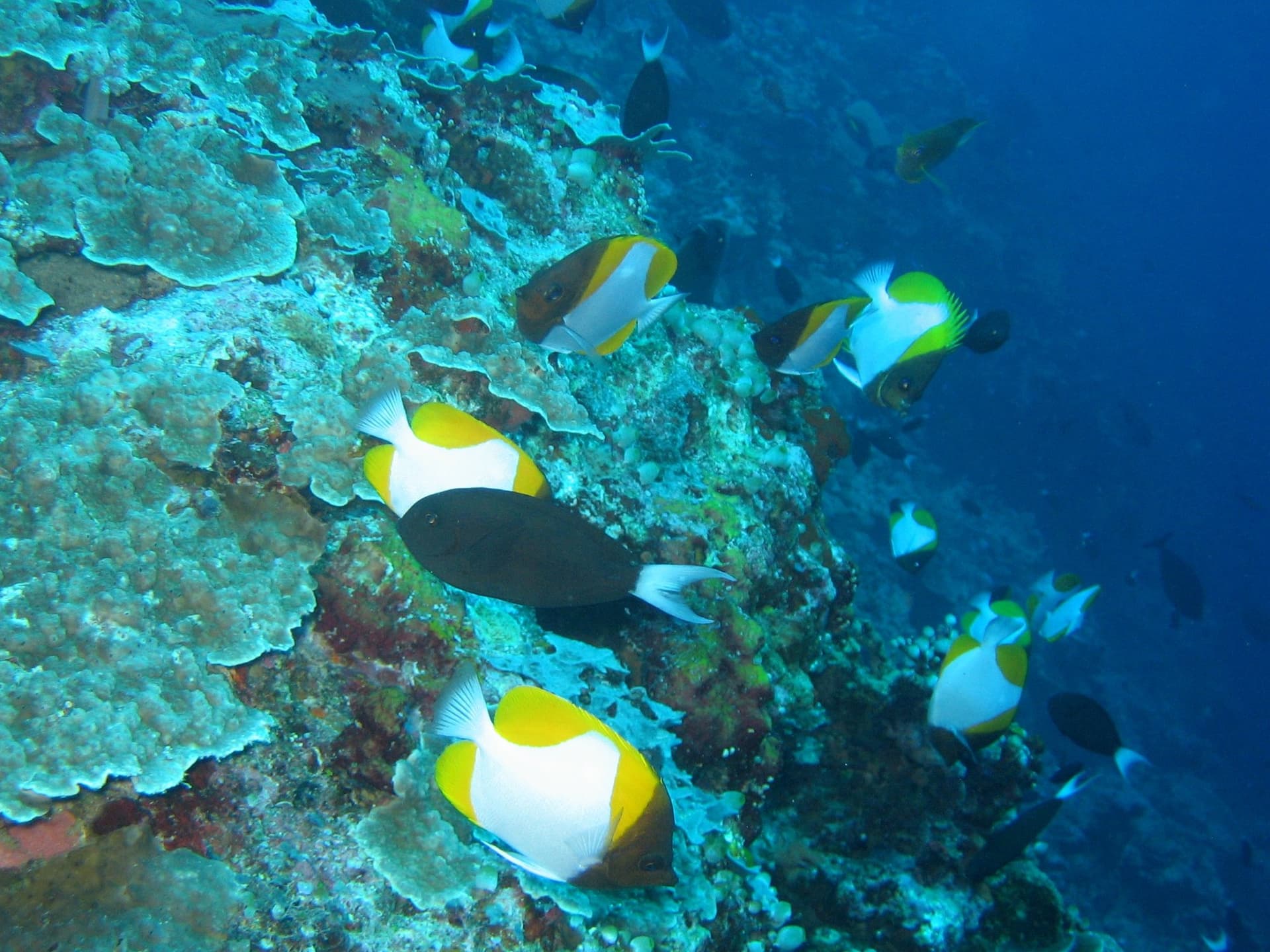
Coral cover runs to 63 genera, about half of those recorded worldwide, alongside 481 fish species2. Napoleon wrasse, known locally as mameng, and bumphead parrotfish are among the larger residents, and green and hawksbill turtles are reported on the reef. Mantas are reported and are not reliable.
The park has been a Protected Area in the Natural Park category since a proclamation of 6 September 1996, and the Expanded NIPAS Act of 2018 wrote it into statute as one of 113 protected areas2. It went onto the UNESCO World Heritage Tentative List on 16 May 2006 and has never been inscribed as a World Heritage Site, and the line about the second largest contiguous coral reef in the world is the nomination's own claim1.
Planning your visit
Every trip starts at the Sablayan Tourism Office, where all visitors register on arrival under the town's 2021 eco-tour ordinance3. Press coverage reports that visitors cannot enter the park without an accredited guide. Park fees are collected in cash at the environment department station on Apo Island, usually after the day's diving, cards and transfers are not taken, and the fee sits on top of whatever the boat charges. Boat hire is quoted per booking through the tourism office.
Two park rules change what you pack. Everything living is protected, with fishing, collection and harvesting banned park-wide since 2007. Single-use plastics have been out since 13 June 2023 under a management board ordinance, with a one-year ban from the park at a fourth offence4; the full list is in the questions below.
Our minimum for Apo Reef is Advanced Open Water. Dives commonly reach 17 to 30 metres and the current can reverse mid-dive, a combination that suits a diver with some depth and current behind them.
Sablayan is the base, and reaching it costs a day. Fly Manila to San Jose in about 45 minutes and continue roughly three hours by bus or van, or take a bus to Batangas, the roll-on ferry to Abra de Ilog and a few hours by road. Puerto Galera centres sell the trip as a multi-day package with long transfers each way. From Sablayan the bangka crossing takes two to three hours, often a little quicker coming back. A few operators run day trips; the usual shape is two or three days, camping on Apo Island or sleeping on the boat's top deck, and liveaboards call in as one stop on routes between Busuanga and Puerto Galera or Anilao. Nothing on the reef offers a bed indoors or a shore dive, so every dive starts from a boat. December to May is the dry season and March to May the calmest part of it. Briefing standards on budget bangka trips vary, so ask for the site, the depth and the plan before you kit up.
Geology & underwater terrain
A submerged sub-triangular platform of about 34 square kilometres, made of a northern and a southern atoll-like reef split by a 30 metre channel that opens to the west, with three small islands at the surface. The protected area covers 15,792 hectares with a further 11,677 hectares of buffer, 27,469 in all.
Dive sites in Apo Reef
The diving here splits into 3 zones:
- Northern reef
- — The northern half of the platform, marked at the surface by Cayos del Bajo. Shark Ridge drops away off it, and the current runs hardest on this side.
- Southern reef
- — The southern half, with the deepest mapped profiles, Apo 29 at 30 to 40 metres, and the shallow San Antonio wreck at 5 to 12.
- Apo Island and the channel
- — The 22 hectare mangrove island with its ranger station and campsite. Ego Wall runs along its west side, Aladin along the east and a corner site at the southeast, with a sand-floored channel between the island and Apo Menor.
Marine life
When to dive
- Best season
- December to May
- Water temperature
- 27 to 29 C measured on dives in late May, 3 mm full suit
The dry season runs December to May, with March to May the calmest. Operators say the reef dives all year while a 2025 freediver advises against the habagat months, and what stops a day is sea state on the open crossing, not conditions underwater.
Safety considerations
What can go wrong here, and what divers do about it. Conditions change - take the briefing from the operator on the day.
- Current: Current can be strong and can reverse during a dive, and it runs hardest along the northern side of the reef.Deploy an SMB before leaving the reef, keep the guide in sight and let the crew choose the order of sites for the day.
- Remote location: The park lies 30 to 35 kilometres offshore with nothing on it but a ranger station, a lighthouse and a campsite, and the ride back to Sablayan takes well over an hour.Dive well inside your limits, check that your cover pays for a chamber and ask what oxygen the boat carries before you board.
- Surface and boat traffic: The trip depends on a 30 kilometre open crossing in a bangka, and sea state can cancel a day in the wet season.Build a spare day into the itinerary and treat a cancelled crossing as part of the wet-season price.
- Conditions: Briefing standards on budget bangka trips vary.Ask for the site name, maximum depth and plan before kitting up, and agree a turn pressure with your buddy.
Rules and permits
National rules also apply: Rules and permits in Philippines
Frequently Asked Questions
Is Apo Reef a World Heritage Site, and is it really the second largest reef in the world?▾
It has been on the World Heritage Tentative List since 16 May 2006 under reference 5033, which is a national nomination and not an inscription, even though some trip pages call it a World Heritage Site. The second largest claim is the nomination's own wording, the second largest contiguous coral reef in the world and the largest in the Philippines, so read it as the nominator's description. It circulates shortened to second largest reef in the world, a much bigger claim. The platform itself covers about 34 square kilometres, an area and not a width.
Can you dive Apo Reef in a day, or from Coron?▾
A few operators run day trips from Sablayan, and the common budget shape is two or three days with nights in tents on Apo Island or on the boat's top deck. Liveaboards take the reef as a stop between Busuanga and Puerto Galera or Anilao. Coron is a long way from the reef, and a Coron connection is a liveaboard itinerary rather than a day trip. Day trips offered from Coron or Dumaguete are unconfirmed, so ask the operator for the departure point and crossing time before you pay a deposit.
What does it cost to enter Apo Reef Natural Park, and is that fee set by law?▾
The Municipality of Sablayan publishes the schedule: PHP 2,860 for a local diving visitor and PHP 3,530 for a foreign one, PHP 470 and PHP 940 for local and foreign picnic visitors and snorkellers, PHP 145 for a Sablayan resident, PHP 320 for a dive master or tour guide and PHP 1,320 per day for a group tour guide fee. That was the page on 19 August 2026, and a visit means 48 hours or less. The page names the registration ordinance but gives no ordinance for these amounts, so they are what the municipality publishes on a date, and worth confirming with the tourism office before travel. Older figures around PHP 650 and PHP 2,450 are a superseded schedule. Bring cash for the station on the island.
Can you dive Apo Reef all year, or only in the dry season?▾
The two accounts disagree. A liveaboard operator says weather does not affect visibility and the reef can be visited all year round, while a 2025 freediver says to avoid the habagat months and to treat February and early March with caution. Since the two disagree on which months, the dry season from December to May, and March to May in particular, is the safer plan. The risk in the wet season is a cancelled or rough crossing on 30 kilometres of open water, and the forecast on the morning should decide whether you go.
What can you not bring into the park, and what happens if you break the rules?▾
Single-use plastics have been banned since 13 June 2023 under park management board Ordinance AR 23-001. The list is specific: plastic bags, disposable cutlery, straws, stirrers, cups, bowls, plates, clingwrap, clamshell containers, small bottled water and soft drinks, doypacks and tetra packs, balloons, plastic cotton buds and plastic-based wet wipes. A fourth offence and any after it carries a one-year ban from entering the park. Fishing, collecting and harvesting of any living thing have been banned park-wide since 2007.
Do you need Advanced Open Water for Apo Reef, with dive maps showing 40 metres?▾
We would treat Advanced Open Water as the minimum. The profiles on the dive maps in circulation run from 5 to 40 metres, which would cross the 30 metre Advanced limit, while most dives stay shallower than that, and the current can reverse at any depth. Treat 40 as the extent of a site, put any deeper dive early in the day and plan gas for three or four dives a day.
Will you see mantas at Apo Reef?▾
Maybe. Mantas are reported now and then and some trips see none; no account names the species, so treat a manta as luck. The animals you can plan around are the whitetip reef sharks, with grey reef and blacktip sharks in deeper water, Napoleon wrasse and a school of bumphead parrotfish.
Is Apo Reef worth the journey?▾
Divers are split. Some who stop here on a Coron liveaboard find a pleasant reef dive and not a reason to lose a dive day, one thought it overrated and the park fee poor value, and a couple chasing healthy hard coral rated the south end better than they had expected. The reliable draw is open-water sharks, and the cost is a long approach by road and sea. If sharks are not what you came for, weigh the travel days carefully.
Also known as: Apo Reef Marine Natural Park, Apo Reef Natural Park, ARNP
References
- 1.UNESCO World Heritage Centre, May 16, 2006 — Apo Reef Natural Park, World Heritage Tentative List Ref. 5033
- 2.Department of Tourism, 7641 Islands of the Philippines — Visiting Apo Reef Natural Park
- 3.Municipality of Sablayan, March 22, 2023 — Apo Reef Natural Park
- 4.Oceana Philippines, March 26, 2024 — Single-use plastic phase out in Apo Reef Natural Park ordered
Every dive has a story. Share yours.
Log your dives - notes, photos, conditions and the marine life you saw - and share them as one public diver profile. What you share helps the next diver, too.
Log every detail
Depth, duration, conditions, gear, buddy, notes — all in one place. Import from Suunto and other dive computers.
Track marine life
Record species sightings on each dive. Build a personal catalogue of everything you've seen underwater.
Your public dive profile
Share your dive history, stats, and experiences with a profile page you control. Show the world where you've been.