
Diving in Coron
Japanese supply ships sunk by US carrier aircraft on 24 September 1944, mostly at recreational depth, plus a karst lake dive on Coron Island.
Last updated October 2026
Overview
Coron's dive map was drawn in one morning. On 24 September 1944 US Navy carrier aircraft found Japanese supply ships at anchor around Coron Bay and Busuanga, where they had gone to shelter from the raids on Manila Bay1, and the ships that sank that day are the reason divers fly here. Most of the hulls lie between 10 and 35 metres, so wreck diving at Coron is mostly recreational-depth diving, with one deep exception.
The wrecks come in four grades. The Lusong gunboat bottoms at about 12 metres with one end breaking the surface at low tide, and the East Tangat gunboat lies inclined on the reef from 3 metres down: shallow steel with open swim-throughs. The Okikawa Maru, a tanker off Concepcion, is the long shallow big-ship dive, her decks at 10 to 16 metres and covered in coral. The Akitsushima, a seaplane tender on her port side, is the one real warship among the hulls divers usually visit, her crane still reaching out across the sand, and munitions still lie on and inside her. The Irako is the deep one. This provision store ship has her bottom at 40 to 43 metres by report and her deck at about 28 to 35, and bomb damage squeezed some decks to about 1.5 metres of headroom.
Several hulls have changed name since divers first visited them. The freighter now called the Olympia Maru was dived for years as the Tangat wreck, the ship once called Olympia is now the Morazan, and the tanker off Concepcion was dived as the Taiei Maru for decades before it became the Okikawa Maru. The Morazan is still argued over, published elsewhere as the Ekkai Maru, and the two gunboats carry no established name at all.
Away from the steel, Barracuda Lake on Coron Island is the dive some divers name as the one not to skip: a short climb over the karst, then a descent through layers where the water is reported to warm as you go down, past bare rock walls with almost nothing living on them. Cathedral Cave, at the island's southern tip, is entered through a cliff face and is for calm seas only, because surge can injure a diver. Siete Pecados is the shallow reef day, and the Kyokuzan Maru off northeast Busuanga is a full-day trip for two dives. On the wrecks themselves look for black coral on the Olympia Maru and the Lusong gunboat, a shoal of bigeye trevally pouring round the Irako, batfish, lionfish and turtles. Dugongs feed on seagrass off Calauit in north Busuanga and are watched through an organised programme, not met on a dive.
Planning your visit
Plan around the tide as much as the month. It sets visibility and current, the current runs hardest around full and new moon, and the operator orders the sites by it, so the sequence is not yours to choose. Diving runs all year in water of 27 to 30 C, with December to April the settled window and July to September the wettest and least reliable. Bay visibility is often mediocre and the lake and the open-ocean sites are clearer. A 3 mm suit does the job, and 5 mm suits repetitive deep wreck days in February. Nitrox suits repetitive 25 to 35 metre days, and not every shop stocks it.
Boats are wooden outrigger bancas. The run to the main group of wrecks is about 90 minutes from Coron Town and 15 to 30 minutes from a resort nearer the wrecks, so basing is a choice between the town's range of shops and shorter boat rides. Busuanga's airport is about an hour from Manila and 30 to 50 minutes from town by road. Ferries from El Nido get cancelled often enough that divers advise flying or budgeting a spare day.
Certification follows the shallowest depth you have to dive. The two gunboats, the Morazan (25 metres at most) and the Okikawa Maru's decks (10 to 16) suit Open Water divers from the outside. Every other wreck lies mostly below 18 metres with overhead, and the usual recommendation is at least Advanced Open Water plus a wreck specialty: that covers the Olympia Maru, Kogyo Maru, Akitsushima and Irako. Entering any big hull takes the wreck specialty, the Akitsushima allows no swim-through without it, and the Irako's engine room is for trained, equipped divers. Some shops take freshly certified Open Water divers into wrecks anyway, so ask what an operator will and will not take you into, and be ready to refuse an entry underwater.
Nothing comes off these wrecks. Under Republic Act No. 10066 anything on an underwater site more than fifty years old is state-owned cultural property2. Coron Island has older protection too, declared a national reserve in 1967 and a tourist zone and marine reserve in 19783. The island, its lakes and a large area of the surrounding sea are Calamian Tagbanwa ancestral domain4, so Barracuda Lake and the shore sites are visited on the community's terms. Expect an entry fee at the lakes on top of the dive price; the amounts change.
Settle the evacuation plan before you book. No working recompression chamber is confirmed in Coron. The state tourism agency has had a chamber on order to Coron from Zamboanga since October 2025, testing and commissioning included, and no opening has been announced. The nearest chamber reported working is Ospital ng Palawan in Puerto Princesa, in the same province, but no airline flies Busuanga to Puerto Princesa direct, so the scheduled route runs through Manila. Coron District Hospital has no recompression capability. Carry insurance that pays for hyperbaric treatment and evacuation, and ask your operator where the plan stands on the day you dive.
Geology & underwater terrain
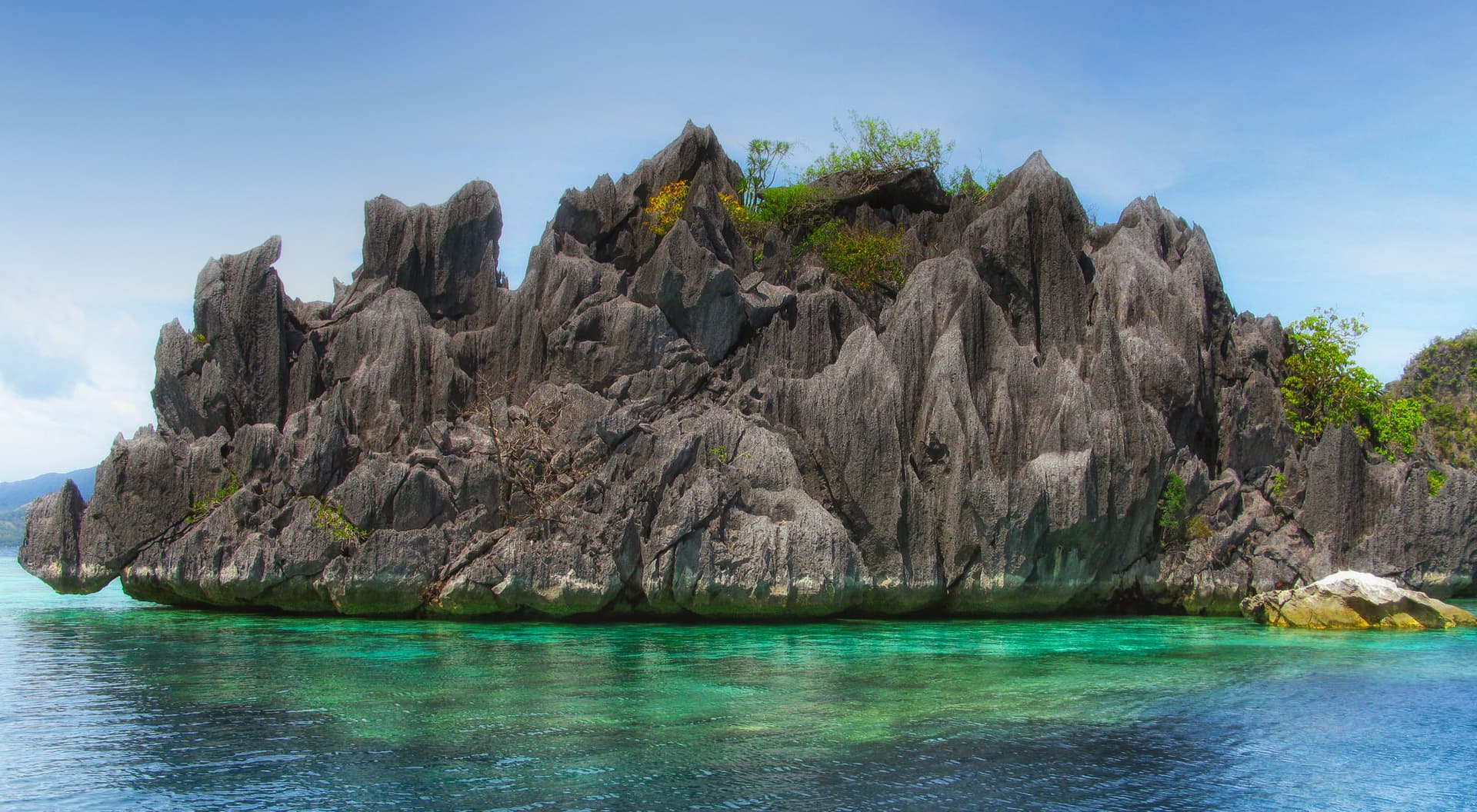
Coron Island is a wedge of Permian limestone karst: sheer cliffs, submerged walls and inland lakes reached by climbing over the rock. The wrecks lie on the seabed around it.
Dive sites in Coron
The diving here splits into 3 zones:
- Coron Bay wrecks
- — The main body of steel around Tangat, Lusong and Lajo islands and the mouth of the bay. Dived in the order the tide allows.
- Concepcion and northwest Busuanga
- — A longer run the other way, to the tanker off Concepcion and the seaplane tender toward Culion.
- Coron Island and the outliers
- — The karst island opposite town, with Barracuda Lake, Cathedral Cave and the shore sites, plus the Kyokuzan Maru off northeast Busuanga as a full-day trip.
Coron Bay wrecks
IrakoTop dive
A deep wreck with a galley, machine shop and corridors to explore
Lusong GunboatTop dive
A shallow war wreck on a reef, with one end breaking the surface at low tide
East Tangat Gunboat
The shallow end of a Coron wreck day, on a hull a snorkeller can see too
Kogyo Maru
The Coron wreck where the cargo is the dive, in open and lit holds
Olympia Maru
An upright Army repair ship once dived as the nameless Tangat wreck
Concepcion and northwest Busuanga
Coron Island and the outliers
Barracuda LakeTop dive
The one dive in Coron where the water gets hotter as you go down
Kyokuzan Maru
A near-intact cargo ship with vehicles in her holds, as an all-day two-dive trip
Siete Pecados
A shallow sanctuary reef whose coral and fish have both been counted
Marine life
When to dive
- Best season
- December to April
- Water temperature
- 27 to 30 C all year
Diveable year round. July to September is the wettest and least reliable stretch, and the tide moves visibility and current more than the month does.
Safety considerations
What can go wrong here, and what divers do about it. Conditions change - take the briefing from the operator on the day.
- Overhead: Penetration is where Coron hurts people. A doorway can silt out behind a guide, divers get separated from their group inside a hull, and bomb damage left some Irako decks with about 1.5 metres of headroom.Match the wreck to your training, agree before the dive what you will and will not enter, and decline an entry underwater if it is offered beyond your level.
- Structure and sharp edges: Munitions still lie on and inside the Akitsushima.Touch nothing and stay off the structure. Removal is also illegal under RA 10066.
- Depth: The Irako's bottom, at 40 to 43 metres by report, sits at or past the recreational limit before any overhead is added.Plan the deck as the dive, treat the bottom as a gas and no-stop problem, and use nitrox where the shop stocks it.
- Current: Currents are tide-driven and can run hard on any day, hardest around full and new moon.Let the operator set the site order by the tide, and carry a surface marker buoy.
- Current: Cathedral Cave, at the southern tip of Coron Island, is entered through a cliff face, and wave surge in bad weather can cause serious injury.Dive it only in calm seas, and accept the operator's call if it is off.
- Visibility: Bay visibility is often mediocre and drops after high water and in rain-season runoff.Treat poor visibility as a reason not to enter a hull.
- Remote location: No working recompression chamber is confirmed in Coron. Busuanga is an island about an hour's flight from Manila, and no airline flies it to Puerto Princesa direct.Settle the evacuation plan before you book. Hold insurance that pays for hyperbaric treatment and the flight, and ask the operator where the chamber question stands on the day.
Rules and permits
Marine reserve · Managed by Municipality of Coron, the National Museum of the Philippines for the wrecks, and the Calamian Tagbanwa for Coron Island
Entry fees apply at the Coron Island lakes on top of the dive price, and the amounts change, so ask the operator what the trip already covers.
Frequently Asked Questions
Can I dive the Coron wrecks with only an Open Water certification?▾
Yes, on four wrecks: the East Tangat gunboat (rated for Skin Diver and Open Water, starting 3 metres down with a maximum of 22), the Lusong gunboat (about 12 metres at the deepest), the Okikawa Maru (decks at 10 to 16 metres, from the outside) and the Morazan (25 metres at most, around 15 on average, from the outside). The rest lie mostly deeper: the Olympia Maru's deck is at 18 to 24 metres, the Kogyo Maru averages 24 to 26, the Akitsushima starts around 22 and the Irako's deck is at 28 to 35. Those are Advanced Open Water dives, with a wreck specialty added for the overhead. A newly certified diver is best served by planning a week of the four shallow wrecks, and many add Advanced and nitrox on site.
What do I need to go inside a Coron wreck?▾
Wreck training, and for the big hulls Advanced Open Water as well. The shallow gunboats have short swim-throughs that divers describe as not real penetration, and they are the only exception. Entry into the Okikawa Maru, Olympia Maru or Morazan is an Advanced-plus-wreck-specialty activity, and the Akitsushima allows no swim-through at all without a wreck certification. Silt is the usual failure: divers describe a doorway clouding behind a guide and others separated from their group inside a ship. If an entry is offered beyond your training, refuse it underwater, whatever the guide does.
Can a recreational diver dive the Irako?▾
On the deck, if Advanced; inside, only with training. Reports put the bottom at 40 to 43 metres, which is at or past the 40-metre recreational limit, and the deck at about 28 to 35, so whether you stay on the deck decides which side of the limit you are on. Operators recommend Advanced Open Water plus Deep and Wreck specialties, and the engine-room route is a deep penetration for trained, experienced and properly equipped divers only. Some decks are crushed to about 1.5 metres of headroom. Nitrox earns its cost here.
Why do dive shops give the same wreck different names?▾
Identifications changed as research caught up, and not every shop list followed. The freighter now called the Olympia Maru was dived for years as the Tangat wreck, the ship once called Olympia is now the Morazan, and the tanker off Concepcion was dived as the Taiei Maru for over fifty years before it became the Okikawa Maru. Two cases are still open. The naval record leaves a doubt over the Okikawa, because one convoy list names a tanker Taiei Maru and not the Okikawa. The Morazan is published elsewhere as the Ekkai Maru, and one researcher argues the Ekkai Maru was sunk at Manila on 22 September 1944, which would make the Coron hull a different ship. The ship names some lists attach to the two gunboats rest on nothing in the naval record.
What is the visibility really like on the Coron wrecks?▾
Often mediocre. Divers report plenty of particles in the water, and in the rainy season a ship can appear as no more than a shadow on the way down. The tide does most of the work: visibility is better in the run-up to high water and worse after it, which is part of why operators set the order of sites around the tide. Rain-season runoff and the full and new moon make it worse. Open-ocean sites and Barracuda Lake are the clearer ones.
Which months are best for diving Coron?▾
December to April is the most reliable window. The dry season is drawn at December to June by some guides and October to May by others, and the overlap is December to April, with the busiest tourist months inside it. July to September is the wettest stretch, and storms cost whole days as well as visibility. In any month the tide matters more than the date on the calendar.
How hot does Barracuda Lake get, and is it safe to dive?▾
Divers report the water warming sharply below about 14 metres, with readings as high as the upper 30s Celsius. Treat the exact numbers as approximate. The water changes in salinity and temperature in layers as you descend, so check your weighting, and the bare rock walls cloud with fine sediment if you kick. The cave at the bottom is dark, takes one diver at a time and is a technical dive. The ordinary lake dive is manageable with decent buoyancy.
Coron or El Nido for a diving trip?▾
Coron, if you are choosing on the diving. Divers who have done both call El Nido a topside town with fine but unremarkable reef diving and Coron's wrecks very good diving. Palawan as a whole is better on land than underwater, so reef divers do better elsewhere in the Philippines. If you plan to see both, fly between them or build in a spare day, because the ferry is cancelled often enough that divers routinely warn about it.
How do I choose a dive operator in Coron?▾
Ask what the shop will refuse. Operators here differ in what they let an inexperienced diver do, and a shop that names its limits unprompted, asks about your logged dives and briefs an exit plan is telling you something useful. Group size is the other test, so ask how many divers share a guide and whether levels are mixed on the boat. Wreck certification is a local staple, so if you want to go inside properly, take the course here.
Can you dive with dugongs near Coron?▾
Not reliably. Dugongs feed on seagrass off Calauit in north Busuanga, about 30 animals reported, and the organised Dugong Watch programme there is how most people see them. A dugong on a wreck dive would be luck, not a plan.
Also known as: Busuanga wrecks, Calamian Islands, Coron Bay, Coron, Palawan
References
- 1.National Museum of the Philippines, February 2, 2026 — NMP Receives Six Scale Models of Historical Shipwrecks in Coron, Palawan
- 2.Supreme Court of the Philippines E-Library, March 26, 2010 — Republic Act No. 10066: An Act Providing for the Protection and Conservation of the National Cultural Heritage
- 3.Tourism Infrastructure and Enterprise Zone Authority for the Asian Development Bank — Initial Environmental Examination: Philippines, Sustainable Tourism Development Project (Coron)
- 4.The Ocean Defenders Project — Ancestral Waters: Calamian Tagbanwa People reclaim title and revitalize governance over land and sea territories in Palawan, the Philippines
Every dive has a story. Share yours.
Log your dives - notes, photos, conditions and the marine life you saw - and share them as one public diver profile. What you share helps the next diver, too.
Log every detail
Depth, duration, conditions, gear, buddy, notes — all in one place. Import from Suunto and other dive computers.
Track marine life
Record species sightings on each dive. Build a personal catalogue of everything you've seen underwater.
Your public dive profile
Share your dive history, stats, and experiences with a profile page you control. Show the world where you've been.