

Scuba Total Cancun
Family-run dive centre in Cancun's Marina AquaFun running reefs, MUSA, the C-55 and C-58 wrecks, cenotes and Cozumel at four divers per guide.
PADI / SSI / SDI / TDI7 services3 languages
Two ex-navy wreck dives and a line of low-relief drift reefs off the Cancún hotel zone, inside a national marine park.
Last updated October 2026
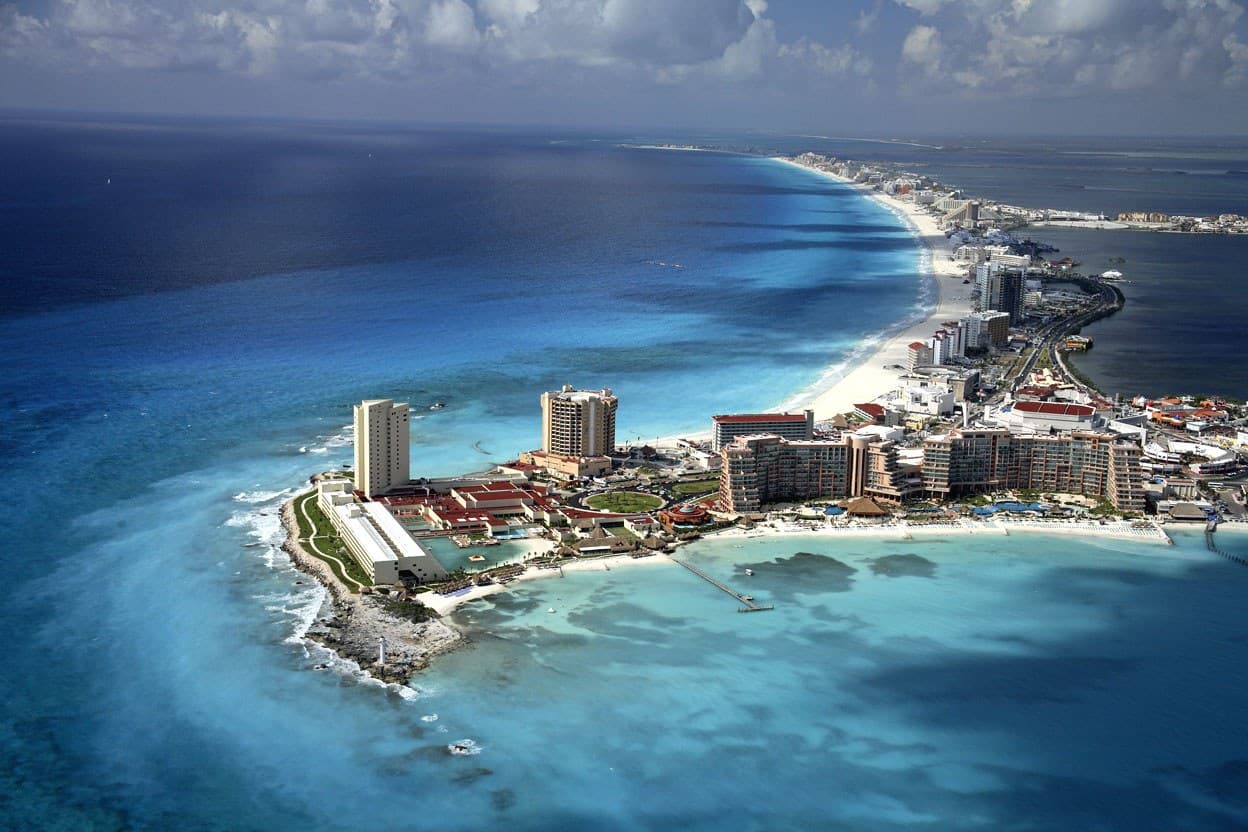
Cancún's headline dives are two navy minesweepers, the C-58 and the C-55, that Mexico sank in 2000 on the instruction of President Zedillo to create new dive sites and take pressure off the reefs.1 They lie in the Punta Cancún part of the national park, about 40 minutes by boat from the hotel zone. The C-58 is generally given as the former USS Harlequin, later the ARM General Pedro María Anaya, and the C-55 as the ex-USS Ransom, the ARM Teniente Juan de la Barrera. The Felipe Xicoténcatl that some write-ups attach to this coast is a different hull, the C-53 off Cozumel. Hurricanes have broken the C-58 into sections. The park's management programme puts it at 24 m, operators quote 25 to 26 m, and the C-55 sits shallower at about 22 m. Spotted eagle rays pass over the C-58 from late November to February.
Outside the wrecks runs the reef line the park programme calls Arrecifes Profundos, a set of low-relief coral sites at 12 to 18 m, with individual sites running a little shallower or deeper. Grampin has swim-throughs and coral heads, El Túnel has coral tunnels, and Punta Negra, San Toribio and Cuevas de Afuera complete the line. Operators usually run them as the second drift of a two-tank morning, in current that ranges from mild to strong, with nurse sharks, turtles and barracuda among the regulars.
Divers who have dived both generally rate Cozumel's reef above this one, and the park's own assessment records a large loss of live coral at Chitales, an inside-bay reef, after Hurricane Wilma in 2005. One recent diver calls the reef dives and MUSA beginner friendly. Cancún works best as a base, with Cozumel, the cenotes and Playa del Carmen's winter bull sharks all sold as day trips from its shops.
MUSA, the sculpture museum most visitors associate with Cancún, is mostly an Isla Mujeres dive: its diver gallery, Salón Manchones at 8 m, lies in Isla Mujeres water, and the Cancún-side gallery, Salón Nizuc at 4 m, is open to snorkellers only.
The park was decreed on 19 July 1996, and its 2016 management programme sets the diving rules.1 Only an accredited guide may lead a dive, and operators display the park's wristband, passport or badge, which you wear visibly. The programme's minimum certification applies to the natural reefs. The wreck zone is a harder call, since the programme records strong to moderate currents there and does not recommend it to beginner divers.
Operators recommend Advanced Open Water, ideally with the Wreck course, for the C-58, and they usually run it as a drift with often no descent line, in small groups of about four. Several local operators work from the hotel zone and most pair a wreck with a reef on one morning, so name the dive you want when you enquire. Boats leave from the hotel-zone marinas and take about 40 minutes to the wrecks and the outside reefs alike, which makes a hotel-zone base the shortest start to the day.
Whale-shark tours sold from Cancún, from May to August, are snorkel trips and not dives.
A limestone shelf with low-relief coral formations along old shorelines, a deeper outside reef line at 12 to 18 m, and sand, seagrass and patch reefs inside the bay.
The diving here splits into 3 zones:
Coral tunnels and archways at fifteen metres
Coral corridors and arches you drift through rather than over
A clean drift along a continuous reef edge with overhangs
Coral swim-throughs on the outer edge, with long bottom times
An unidentified wreck grown into a reef of ledges and arches
Book online or contact a centre that dives this area.
Family-run dive centre in Cancun's Marina AquaFun running reefs, MUSA, the C-55 and C-58 wrecks, cenotes and Cozumel at four divers per guide.
Get in touch to add or claim your dive center listing on DiveCodex.
Calmer seas and the eagle rays come between November and February, while hurricane season runs June to November with the highest storm risk in September and October. Visibility is roughly 10 to 25 m, best on calm winter days, and strong wind cancels boat dives more often than rain does.
What can go wrong here, and what divers do about it. Conditions change - take the briefing from the operator on the day.
National park
Park rules and zonesPark entry fees (Federal Law on Fees)Park visitor pageChecked: Oct 2026
National rules also apply: Rules and permits in Mexico
Accounts differ. Two say Hurricane Wilma broke it into two pieces in 2005, while a third says Hurricane Ivan split it in 2004 and Wilma then pulled the sections further apart. Either way the wreck now lies in two sections with swim-throughs through the hull, and neither date changes how it is dived.
The wreck lies at 24 to 26 m, below the 18 m an Open Water course trains to. Operators recommend Advanced Open Water, ideally with the Wreck course, yet at least one operator's page also lists the required level as Advanced or Open Water, which is why you may hear both answers. The park programme advises against beginners in the wreck zone because of the current. Ask what the operator will accept before you book.
The winter bull-shark dive is run off Playa del Carmen, from about November to February or March. Cancún shops sell it as a day trip, so you dive in a different area from the reefs on this page.
Shops here sell it as one, but the transfer is a bus and a ferry that one diver puts at about 90 minutes each way. Divers who compare the two usually rate Cozumel's reefs higher, which is the reason people make the crossing.
On the beaches it runs from about April to October and peaks between June and August, with clear water from November to March; a record season was forecast for Quintana Roo in 2026. That calendar describes the shore, so ask your operator how the boat sites look in the week you travel.
Also known as: Cancun
Log your dives - notes, photos, conditions and the marine life you saw - and share them as one public diver profile. What you share helps the next diver, too.
Log every detail
Depth, duration, conditions, gear, buddy, notes — all in one place. Import from Suunto and other dive computers.
Track marine life
Record species sightings on each dive. Build a personal catalogue of everything you've seen underwater.
Your public dive profile
Share your dive history, stats, and experiences with a profile page you control. Show the world where you've been.