

Scuba Total Cancun
Family-run dive centre in Cancun's Marina AquaFun running reefs, MUSA, the C-55 and C-58 wrecks, cenotes and Cozumel at four divers per guide.
PADI / SSI / SDI / TDI7 services3 languages
Easy, shallow diving off an island near Cancún, built around an underwater sculpture museum and a national marine park's rules.
Last updated October 2026
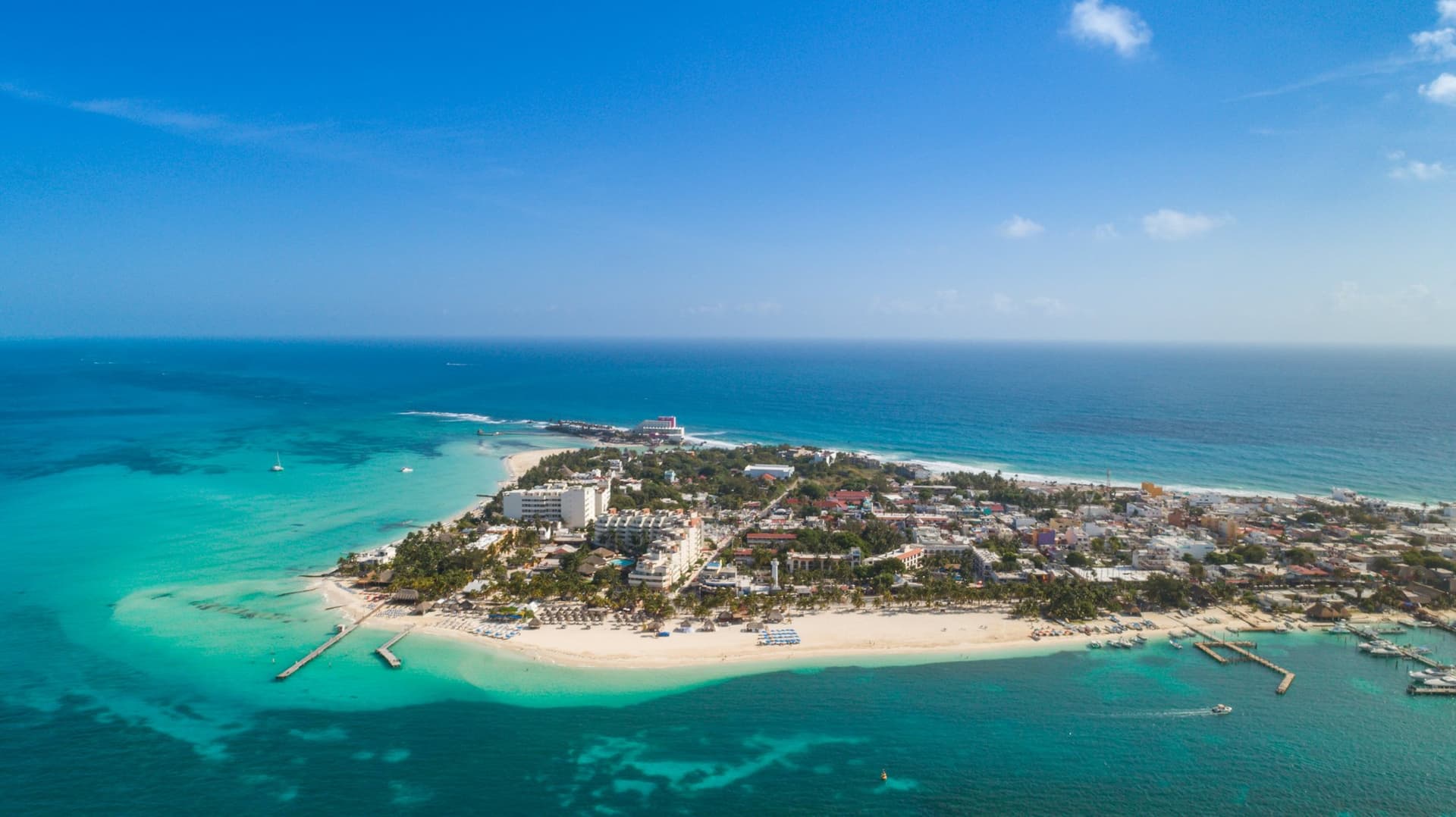
Divers report that most of the diving on Isla Mujeres goes to two neighbouring sites, MUSA and Manchones, both shallow and about ten minutes from the island by boat. MUSA is Jason deCaires Taylor's sculpture museum: over 500 life-size figures across the whole museum, commissioned by the national marine park and the Cancún Nautical Association and installed from 2009.1 The gallery on this side, Salón Manchones, stands at 8 m on sand; the second, Salón Nizuc, lies off Cancún at 4 m. The park's management programme describes the project as a way to draw visitors off the natural reefs onto artificial habitat.
Manchones is the natural reef beside it, two patches, Grande and Chico, averaging 10 m. Hurricane Wilma struck it in 2005 and the park still records it as heavily affected by storms; loose limestone slabs lift in a heavy swell, and coral cover on Manchones Grande was estimated at about 7% in 2011.2 Divers who know Cozumel describe the reefs here as beaten up, and the fair case for the island is easy, warm, shallow diving with a museum attached. Chitales, inside the bay at up to 10 m, has long been the reef chosen for teaching open-water dives, and the bay has green turtles working the seagrass between coral heads.
Beyond the bay the diving deepens. Bandera and the reefs grouped with it are sold as mild drifts at around 15 m, Pailas pairs with the Sleeping Shark cave and its swim-throughs at 18 to 20 m, and at the southern point a fast drift to about 13 m gathers turtles from May, into June or July by different operators' accounts. The two ex-navy gunboats, C-58 and C-55, lie in Cancún-side water and are run from both shores; the park records C-58 at 24 m when it was sunk, while operator pages give 26 m. Ultra Frizz, a 30 m wreck, is sold to Advanced divers and above. Eagle rays visit the wrecks between November and about March. Whale sharks gather offshore in summer on a snorkel-only boat trip.
The reefs sit inside Parque Nacional Costa Occidental de Isla Mujeres, Punta Cancún y Punta Nizuc, decreed on 19 July 1996 and administered by CONANP.2 Diving is guided: the guide must be accredited, a group is capped at 6 divers per guide by day and 4 at night, and everyone keeps at least 2 m from coral. A diver on the natural reefs needs at least an entry-level certification, which opens the bay sites to anyone newly qualified. Night scuba is allowed only in the artificial-habitat zones and ends at 22:00.
At least one island operator includes the park fees in its dive prices, so ask what a quote covers. The outside sites and wrecks are about a half-hour run. Ferries from Cancún cross in 25 to 30 minutes. November to May is the usual recommendation; surf can cancel days, so leave slack in a short trip.
A low limestone island at the northern end of the Mesoamerican Barrier Reef, with patch reef over sand and seagrass in the sheltered bay and deeper rocky reef offshore.
The diving here splits into 3 zones:
Twin patch reefs where the bay has long taught first dives
Easy shallow patch reefs with sculpture and a long history
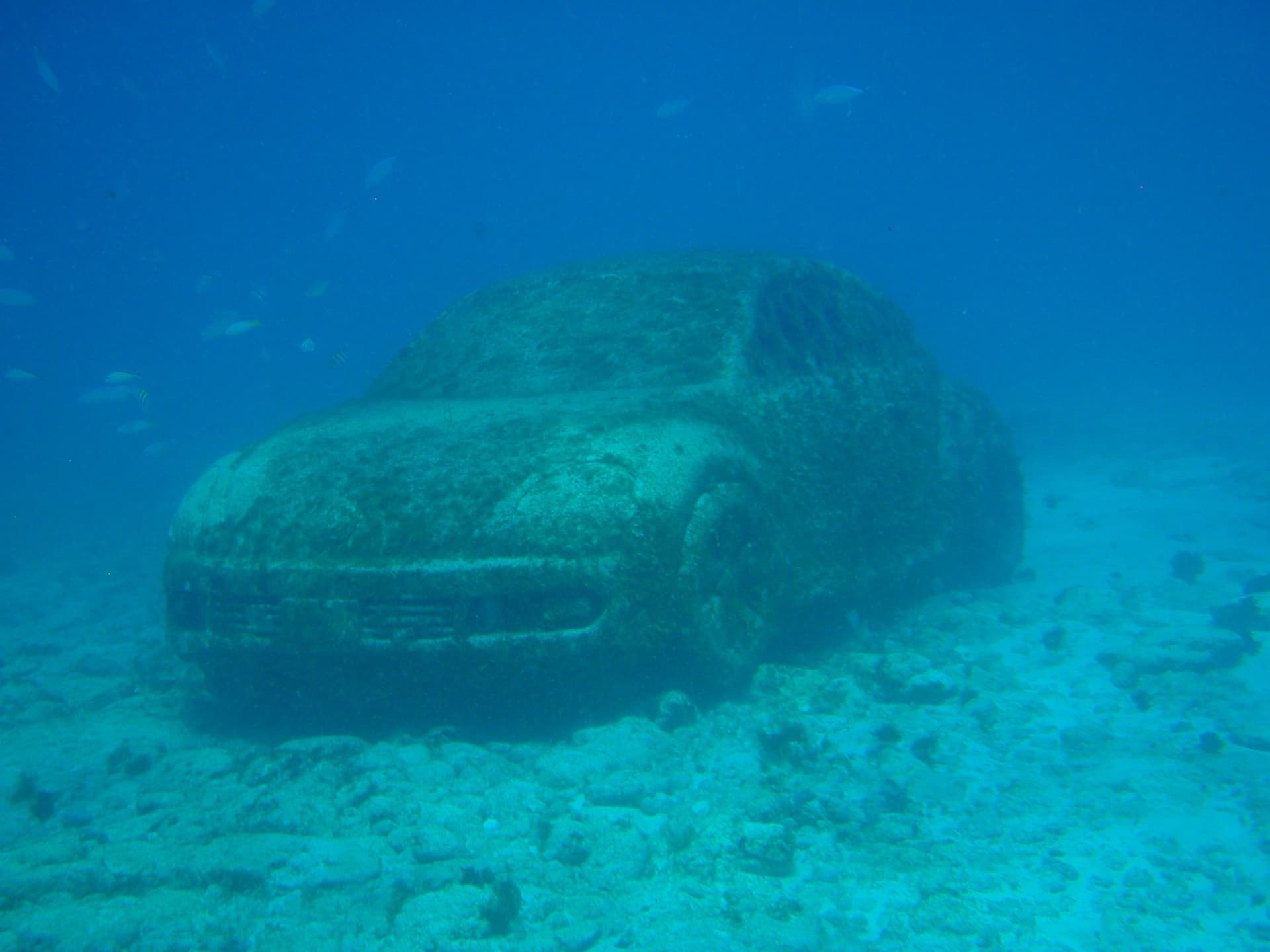
A sculpture gallery created to draw divers off damaged reef
Book online or contact a centre that dives this area.
Family-run dive centre in Cancun's Marina AquaFun running reefs, MUSA, the C-55 and C-58 wrecks, cenotes and Cozumel at four divers per guide.

Get in touch to add or claim your dive center listing on DiveCodex.
Eagle rays come to the wrecks from November to about March, and turtles gather at the southern point in late spring. Surf can cancel boat days, and operators give no guarantee of going out every day.
What can go wrong here, and what divers do about it. Conditions change - take the briefing from the operator on the day.
National park
Park rules and zonesPark entry fees (Federal Law on Fees)Park visitor pageChecked: Oct 2026
National rules also apply: Rules and permits in Mexico
Divers who know both rate Cozumel higher for the reef, and most describe Isla Mujeres as a pleasant place to visit that also gives a few easy dives. The island earns its dives with the sculpture museum, warm shallow water and a calm place to learn. Some divers combine the two in one trip.
No. Divers are told the encounter is snorkelling only, because the bubbles unsettle the animals. The season runs from May or June to September and peaks in July and August, on a separate boat trip well offshore, not at the island's reefs.
The park asks for at least an entry-level certification on its natural reefs, so a newly certified diver can dive the bay sites. Operators generally ask for Advanced Open Water on the wrecks and the cave, and the 30 m Ultra Frizz wreck is sold to Advanced and above only.
Divers split on it. Some call it a nice thing to do once, and the nearby Manchones Chico reef often draws more praise, for its fish and a friendly turtle. The gallery on this side stands at 8 m and suits divers and snorkellers; Salón Nizuc, at 4 m, is on the Cancún side.
Yes. The ferry crosses in 25 to 30 minutes, and Cancún-based shops run to the same sites. Staying on the island saves the crossing and puts the pier close to the shallow reefs.
Divers who have asked report there are no shore sites. Diving is by boat from the island's piers.
The story is told two ways: one account credits Ramon Bravo and Jacques Cousteau, another a local fisherman who found it around fifty years ago. Operators still run it as swim-throughs at 18 to 20 m, and a shark sighting is a bonus, not a given.
Log your dives - notes, photos, conditions and the marine life you saw - and share them as one public diver profile. What you share helps the next diver, too.
Log every detail
Depth, duration, conditions, gear, buddy, notes — all in one place. Import from Suunto and other dive computers.
Track marine life
Record species sightings on each dive. Build a personal catalogue of everything you've seen underwater.
Your public dive profile
Share your dive history, stats, and experiences with a profile page you control. Show the world where you've been.