
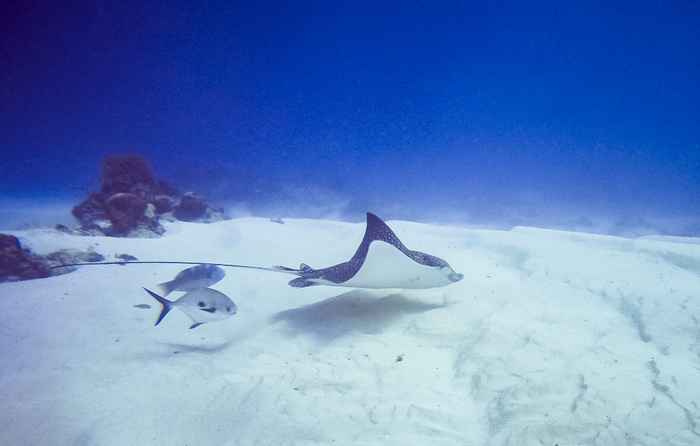
Cozumel
Drift the wall; the current does the work
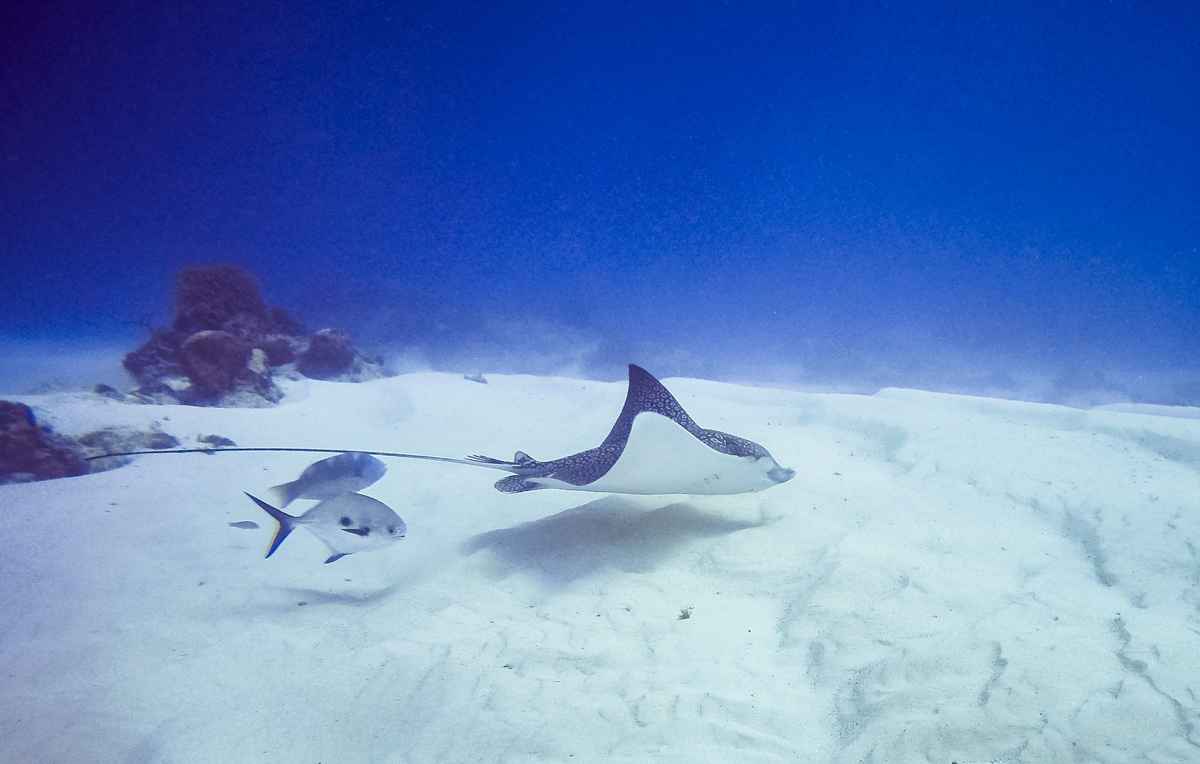
A 22 km line of wall and drift diving down the leeward coast of a Mexican Caribbean island, inside a national park that rests its reefs in rotation.
19 dive sitesBoat
Four dive coasts in one country: Caribbean drift walls and sculpture, freshwater caves, the Sea of Cortez, and open-ocean giants at Socorro.
Last updated October 2026
The decision that shapes a Mexico trip is which kind of diving you are after, because the country holds four, each on its own coast and its own calendar: Caribbean reef and wall, freshwater caves, animal-driven diving on the Pacific and the Sea of Cortez, and the open-ocean giants of Socorro. Each is a trip of its own, and a first visit is best spent on one.
The Caribbean splits in two. Cozumel is the reef: a leeward wall where the current does the work, inside a national park that rests its reefs in rotation. North of it the diving turns shallow and gentle. Isla Mujeres is built around the underwater sculpture museum and easy shallow reefs, while Cancún is dived for two ex-navy minesweepers sunk as reef near 25 m. Further south, Banco Chinchorro is an atoll reef with at least nine reported shipwrecks. Two animal encounters sit outside the reef routine: the bull-shark dives are based at Playa del Carmen, and the whale sharks off Isla Mujeres and Holbox are a summer snorkel season, reported for June to September.
Behind the coast, the cenote belt is a different discipline. These are flooded limestone caverns and caves, dived for light falling through the ceiling, rooms of stalactites and a halocline where fresh water meets salt. Marine life is minimal, so the trip is about architecture and light. Cenotes are dived with a guide from bases such as Playa del Carmen and Tulum, and a cenote day slots in beside a reef week.
Cross to the Pacific and the product turns from terrain to animals. La Paz is reported for sea lions, hammerheads and schooling mobulas. Cabo Pulmo, a national park since 1995 and part of a UNESCO serial site, is the reef you can watch recover and is valued for its big schools of fish. Socorro, in the Revillagigedo archipelago and a World Heritage Site since 2016, is reached by liveaboard. Isla Guadalupe is off the white-shark list: its caged white-shark diving was banned, and the ban was reported as permanent in January 2023.
The 4 highlighted areas have full dive guides. Grey markers show more of the country's dive regions, with new guides on the way.
Our handpicked selection of the best diving areas in Mexico.
Drift wall down 22 km of leeward coast, and a navy wreck at 24 m
Divers after terrain and light more than fish, and photographers
Shallow sculpture and reef dives, and learning to dive
A wreck morning and reef drifts from a hotel-zone base
Cancún is the usual gateway to the Caribbean coast. Playa del Carmen is about two hours away by bus, Cozumel a further 45-minute ferry, and Tulum about an hour and a half south of Playa. Cabo Pulmo is a drive from Los Cabos, and Socorro takes 26 to 30 hours by sea from the nearest land point.
Federal rules apply on every coast. NOM-012-TUR-2016, published in the Diario Oficial on 2 September 2016 and cancelling NOM-05-TUR-2003, is the federal standard for tourist diving services, mandatory nationwide for anyone who provides them, cenote operators included. It caps operator-led dives by card: 12 m on an introductory programme, 18 m at basic level, 30 m at intermediate and 39 m at advanced, where at least 60 logged dives are required. A customer with no certification takes an introductory programme, valid for 30 days, or the operator must refuse the dive. Operators must hold civil-liability insurance, carry first aid and oxygen, and keep a written contingency plan naming the nearest medical care. The standard sets no cave- or cenote-specific depth or training rule, so ask a cenote operator which limits it applies.
Dives in federal protected areas carry a daily per-person duty set by Article 198 of the Ley Federal de Derechos, in a different band for each park. The licensed provider owes it and collects it through the booking; a diver pays directly only when no provider is involved. For 2026 Cozumel's band is about 225 MXN. Revillagigedo and Isla Guadalupe sit in the highest band, 3,622.02 MXN per person per day in the statute and about 3,760 MXN after 2026 indexing, roughly seventeen times Cozumel's. Mexican nationals and foreign residents pay half on proof of status.
Season depends on the coast. The Caribbean reefs run November to May. Socorro is reported to run November to May as well. The cenotes dive all year. Sargassum is the planning factor for Quintana Roo in 2026, reported as one of the most intense seasons since 2015, with the south around Mahahual and Xcalak hit harder than the north.
Cozumel's hospital-based hyperbaric chamber, Costamed, opened in November 2013 and is a DAN Preferred Provider. Elsewhere, ask the operator where the nearest chamber is before the first dive.
What makes this country a world-class diving destination.
The Caribbean reefs, the Sea of Cortez and Socorro are reported to peak in different months, so there is no single best time to dive Mexico
The cenote belt is a guided discipline of its own, with a level system for its caverns and caves
Revillagigedo is about 26 to 30 hours by sea from the nearest land point, in a federal fee band roughly seventeen times Cozumel's
Cabo Pulmo has been a national park since 1995
Set by statute, collected through the operator, in a different band for each park
Drift the wall; the current does the work
A 22 km line of wall and drift diving down the leeward coast of a Mexican Caribbean island, inside a national park that rests its reefs in rotation.
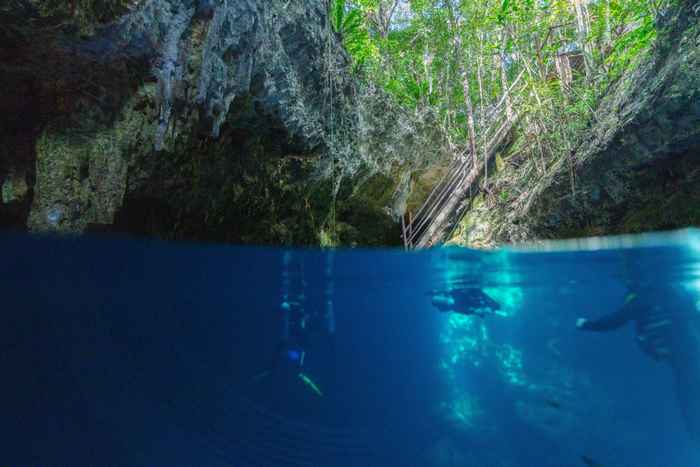
Flooded caves, light and a visible halocline
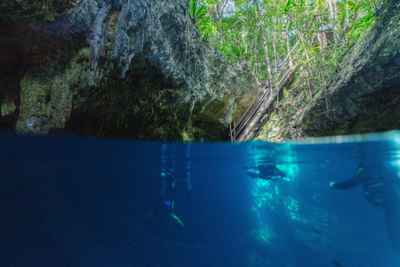
Flooded limestone caves under the jungle behind the Riviera Maya, dived for stalactite rooms, columns of daylight and a halocline you can see.
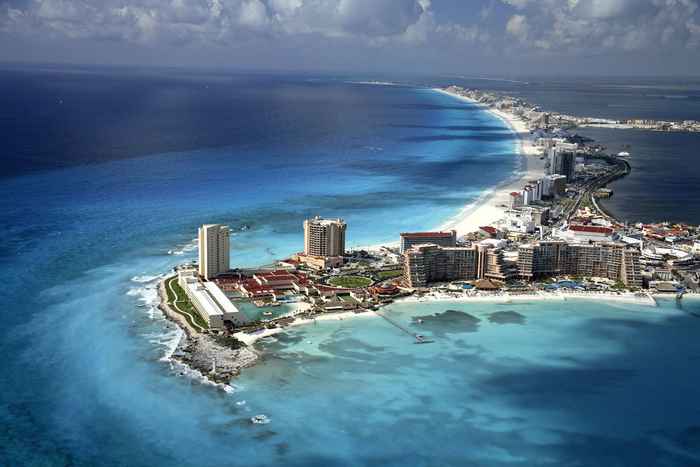
Two navy wrecks and an easy reef line
Two ex-navy wreck dives and a line of low-relief drift reefs off the Cancún hotel zone, inside a national marine park.
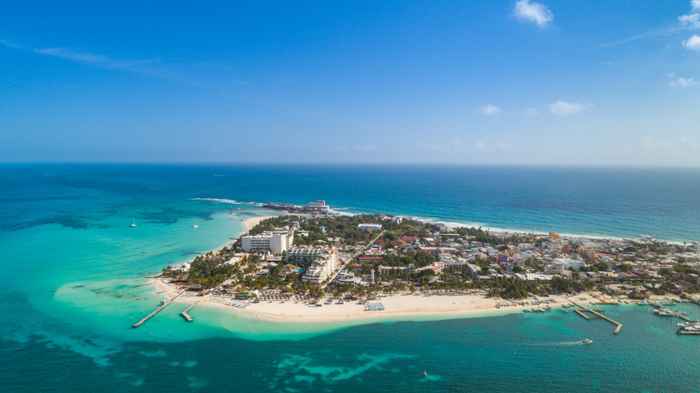
The sculpture museum, shallow and easy
Easy, shallow diving off an island near Cancún, built around an underwater sculpture museum and a national marine park's rules.
Book online or contact a centre for your trip.
Downtown Cozumel operator running six-diver boats on high-pressure steel tanks, with gear set up before divers board and cleaned after.
Cozumel dive centre inside a north-shore beach club, running boats south to the park reefs, with coral and fish identification taught on ordinary dives.
Boat diving from San Miguel de Cozumel with a stated ceiling of two divers per guide, at an SSI Diamond centre that also teaches coral identification.
Beachfront hotel-and-dive-shop resort on Cozumel's south road, boat trips to Palancar and Santa Rosa reefs plus house-reef night dives from its own dock.

Beachfront dive centre at Hotel Playa Azul in Cozumel's north hotel zone, running a six-diver boat that also sells the northern reefs most operators skip.
Cozumel centre on the Casa del Mar dive dock in the southern hotel strip, where divers pick the sites, with a house reef off the end of its own pier.
SSI-affiliated small-boat operator near Cozumel's Ferry Pier since 1995, reviewers crediting named instructors for patient, safety-first guiding.
Get in touch to add or claim your dive center listing on DiveCodex.
Official diving services standardCurrent status of the standardFederal fees law, protected areasChecked: Oct 2026
They are different dives from different bases. Cozumel is the drift wall, a flight or a 45-minute ferry from Playa del Carmen. Playa del Carmen is the mainland base, where the bull-shark dives are based and from where cenote days are sold.
For coral and fish, the Caribbean. Baja trades that for more variety of terrain and bigger animals: La Paz is reported for sea lions, hammerheads and schooling mobulas, and Cabo Pulmo for huge schools of fish. The two sit on different coasts and need separate trips.
Yucatán is widely described as one of the country's safer states, provided you choose your locations sensibly. The risk that matters for a diver is in the water: tourists with no cavern or cave training have accidents in cenotes. Dive with a guide and within the training you hold.
Isla Mujeres, where the diving is shallow and rated easy to moderate, and which suits courses. A visitor with no certification starts with an introductory programme, valid for 30 days and limited to 12 m; without one the operator must refuse the dive.
Cozumel, where December to March brings the strongest current and the clearest water, along with El Norte winds that can close the port. Socorro is reported to run from November to May, with January to April best for humpback whales.
Log your dives - notes, photos, conditions and the marine life you saw - and share them as one public diver profile. What you share helps the next diver, too.
Log every detail
Depth, duration, conditions, gear, buddy, notes — all in one place. Import from Suunto and other dive computers.
Track marine life
Record species sightings on each dive. Build a personal catalogue of everything you've seen underwater.
Your public dive profile
Share your dive history, stats, and experiences with a profile page you control. Show the world where you've been.