

Dimensions Bleues-Ducks Safaga
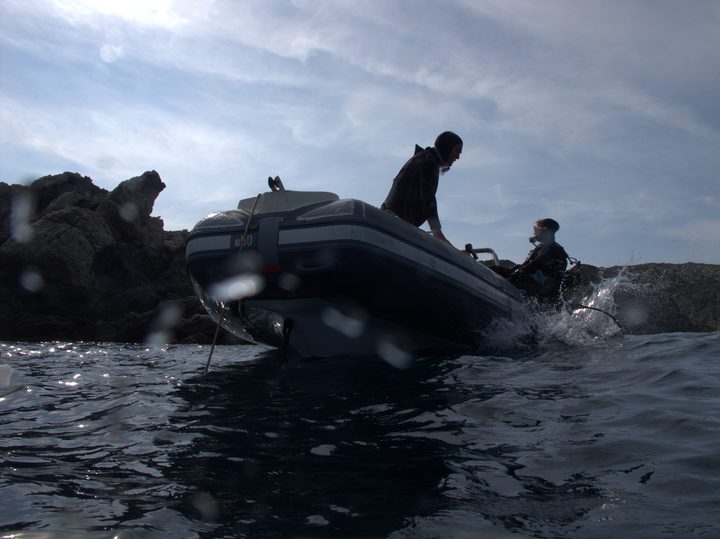
German-speaking PADI and SSI dive base on the Abu Soma strip in Safaga, sharing its base with a French team, with large day boats, a house reef and zodiac drop-offs.
PADI / SSI5 services3 languages
Mainland Red Sea day-boat base south of Hurghada: the Salem Express memorial wreck, exposed walls at Abu Kafan and Panorama, and sheltered pillar reefs.
Last updated October 2026
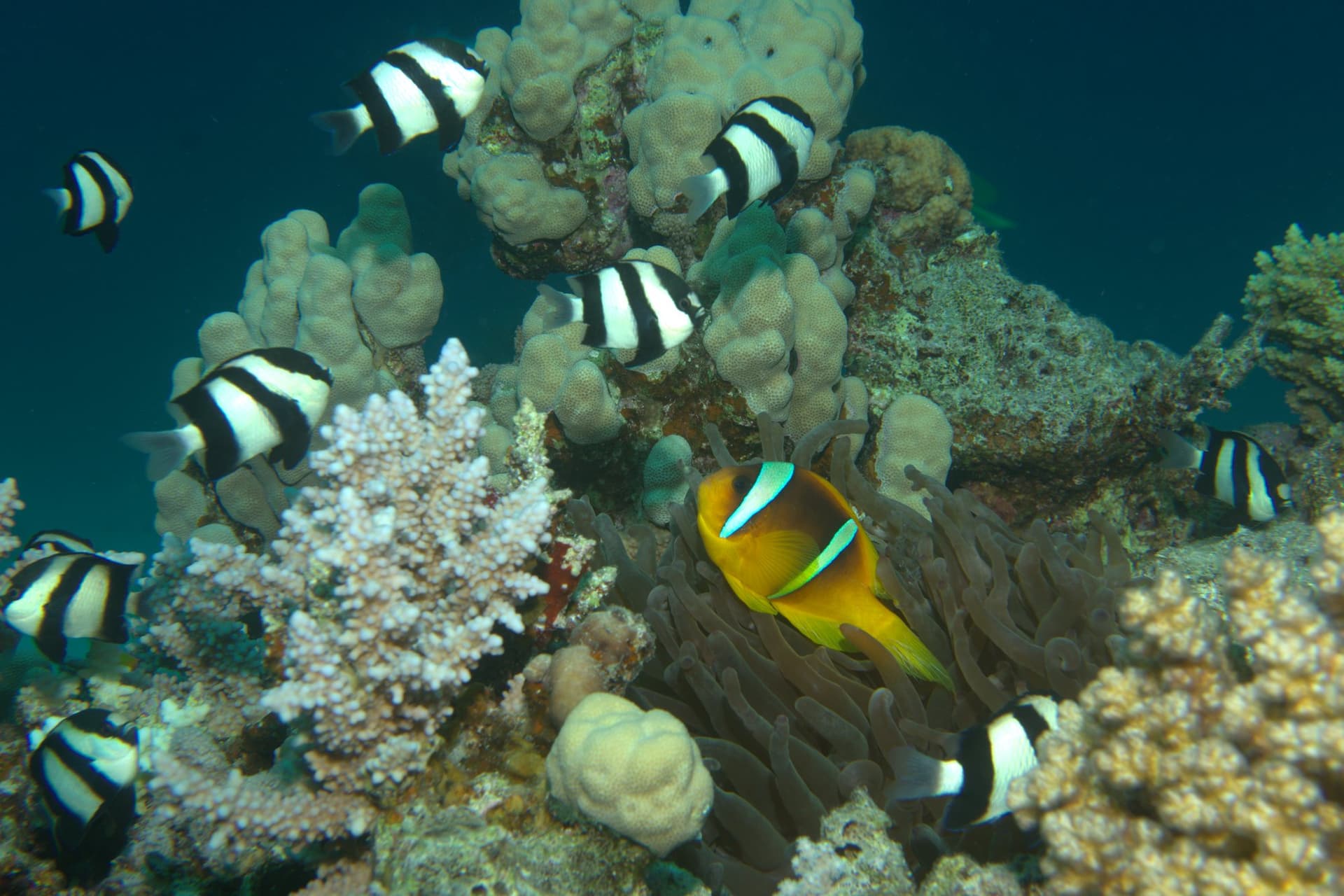
Safaga's diving divides along one line. In the bay behind Safaga Island sit sheltered pinnacle reefs such as Tobia Arbaa, the Seven Pillars, 15 minutes from the marina, with glassfish and anthias around the coral towers and a good name for night dives. Beyond them lie exposed walls and a wreck in open water, 75 minutes or more by day boat, where current and wind decide whether the boats go.
Abu Kafan is the demanding wall: an open-sea reef, sometimes called a small Elphinstone, where the current can be brutal, a plateau at 10 to 30 m gives way to the abyss, and experience is needed for the deep wall. Reef sharks patrol the walls, and hammerheads are said to pass in late spring. Panorama Reef is a drift along a wall hung with gorgonians below a plateau of anthias, with napoleon wrasse, often juveniles, on the south plateau. Its current can be ripping and the sea rough on a windy day, so it asks for experienced divers too. Abu Kafan lies 75 to 100 minutes from Safaga and Panorama about 75. Sha'ab Sheer, a separate shallow reef, is another night-dive name.
The Salem Express is a passenger ferry that struck a reef off Port Safaga at about 11:13 pm on 14 December 1991 and sank with the loss of at least 470 lives, a toll and a passenger count that remain disputed. The hull lies on Hyndman Reef, with depths given anywhere from 12 to 32 m. Because of the tragedy, divers treat it as a memorial: quiet, from the outside, touching nothing.
Safaga's reefs are not part of a named marine reserve and fall under Egypt's general Red Sea reef-protection rules.
Fly into Hurghada International; Safaga is about an hour's drive south, and divers stay in town or on the Soma Bay resort strip to the north. Several local dive centres run the day boats, which are two-tank trips from the marina, and safari boats on southern routes also stop at these reefs in transit.
Match the site to your level. Open Water is enough for the inshore reefs. Plan on Advanced Open Water with drift experience for Abu Kafan and Panorama Reef. The Salem Express is dived from the outside, and the centre that takes you sets the level it asks for. A small Governorate environmental fee is normally included in the price of a day trip.
Wind sets the programme more than the season. The same breeze that draws kitesurfers can close the offshore sites, and the boats then go to the sheltered reefs, so allow a spare day for the walls. Spring and autumn are the seasons often suggested, and visibility typically runs 20 to 30 m. A 3 mm suit does in summer and 5 mm in winter, when the water falls to around 21 to 24 C.
A bay partly sheltered by Safaga Island, fringed by coral gardens and shallow pinnacles and facing a line of exposed offshore reefs whose walls drop hundreds of metres.
The diving here splits into 2 zones:
Experienced drift divers after an open-sea wall, black coral and shark chances
Drift divers after a Red Sea wall, gorgonians and reliable napoleon wrasse
Experienced divers paying respects at the Red Sea's most solemn wreck
Book online or contact a centre that dives this area.
German-speaking PADI and SSI dive base on the Abu Soma strip in Safaga, sharing its base with a French team, with large day boats, a house reef and zodiac drop-offs.
PADI 5 Star IDC Resort running full-day boat dives from Safaga marina, with its own air and Nitrox fills and hotel pickup in Safaga.

SSI Instructor Training Center in the Amarina Abu Soma Resort at Safaga, with its own jetty, a house reef and boat trips to the Tobia and outer reefs.

German-speaking SSI dive base at the Abu Soma Beach Resort in Safaga, with a shore-entry house reef, two-dive day boats and a hotel jetty.
Get in touch to add or claim your dive center listing on DiveCodex.
Safari boats based elsewhere that run itineraries to these dive sites.

26-guest sister of Superior with Junior and Executive suites, ranging across Emperor's Egypt catalogue from northern wrecks and offshore Brothers, Daedalus and Elphinstone to the Deep South.

13-cabin, 26-guest wooden liveaboard running Emperor's northern Red Sea wreck-and-reef weeks from Hurghada, plus offshore Brothers, Daedalus and Elphinstone.

Red Sea Explorers' largest liveaboard: 37.5m, 28 guests across 14 cabins, running the same GUE-leaning offshore and deep-south Egypt route catalogue.

36m, 22-guest steel liveaboard with a dedicated camera room and gas-blending deck, running the Brothers, Daedalus, Deep South and Fury Shoal weeks.

Red Sea Explorers' tech flagship: a 37m, 22-guest steel liveaboard with a full trimix/CCR fill station and scooters for offshore and deep-south Egypt safaris.

42m steel liveaboard released 2018, the Spanish-operated Blue Force Fleet's Egypt boat, running week-long Red Sea routes from Hurghada and Port Ghalib, with English and Spanish spoken on board.

44m, 28-guest wooden liveaboard and the Sea Serpent Fleet's technical flagship, running the fleet's shared Egyptian Red Sea route pool: offshore Brothers-Daedalus-Elphinstone, northern wrecks and the Strait of Tiran, and southern St John's and Fury Shoals.

Teak-finished 42m, 24-guest liveaboard running Seawolf's full Egypt catalog from Hurghada and Port Ghalib, from northern wrecks and the Strait of Tiran to the Brothers, Daedalus, Elphinstone and the Deep South.
Wind matters more than the calendar: the breeze that makes Safaga a kitesurfing bay can close the exposed walls, and the boats then run to the sheltered reefs.
What can go wrong here, and what divers do about it. Conditions change - take the briefing from the operator on the day.
National rules also apply: Rules and permits in Egypt
Accounts disagree. One says the entryways were welded shut after the sinking so that the wreck stays undisturbed as a tomb, while another diver describes entering through a hatch into the cargo hold. Plan the dive as an exterior tour: the hull is an overhead environment, passengers' belongings still lie around it, and the 1991 tragedy is why divers treat the site with deep respect. Going inside needs wreck-penetration training and is discouraged here.
At least 470 were lost, and the true figure is uncertain because the number aboard is itself disputed. The shipping company's manifest reportedly listed 658 people, including the crew, while the port security department at Safaga listed 589. Treat any single figure with caution.
Figures differ. One dive portal gives 12 to 30 m, and another account puts the seabed at 32 m, with 12 m at the side of the wreck. Ask your guide for the day's planned depth and stay within your certification and the briefing.
Safaga is the quieter base: you stay in town or on the Soma Bay strip, dive from day boats and give up nightlife and resort density for calm. Hurghada is the bigger resort hub, about an hour north, and its airport serves both. Underwater, Safaga's own draws are the Salem Express and the open-water walls of Abu Kafan and Panorama Reef.
Yes, on the inshore reefs. Tobia Arbaa is about 12 m deep and 15 minutes from the marina, and is used for training and night dives. The open-water walls call for Advanced Open Water and current experience, and the Salem Express is better kept for later in a trip.
Diving runs all year, and spring and autumn are the seasons often suggested. Summer water is 28 to 31 C and suits a 3 mm suit, while winter water falls to around 21 to 24 C and calls for 5 mm. Wind is the bigger variable, since it decides which sites the boats can reach.
Also known as: Bur Safaga, Port Safaga
Log your dives - notes, photos, conditions and the marine life you saw - and share them as one public diver profile. What you share helps the next diver, too.
Log every detail
Depth, duration, conditions, gear, buddy, notes — all in one place. Import from Suunto and other dive computers.
Track marine life
Record species sightings on each dive. Build a personal catalogue of everything you've seen underwater.
Your public dive profile
Share your dive history, stats, and experiences with a profile page you control. Show the world where you've been.