
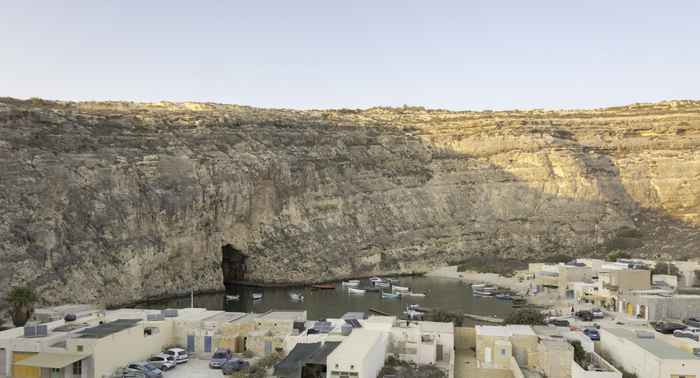
Gozo
The archipelago's cavern and scuttled-ferry island
Limestone island diving: scuttled ferries and a tanker at Xatt l-Aħmar, Dwejra's Blue Hole and Inland Sea, caverns and walls on the north coast.
16 dive sitesBoat & shore
Wreck-and-cavern diving across three Mediterranean islands: shore-accessible wrecks off Malta, a scuttled ferry trio and caverns off Gozo, boat-only Comino.
Last updated July 2026
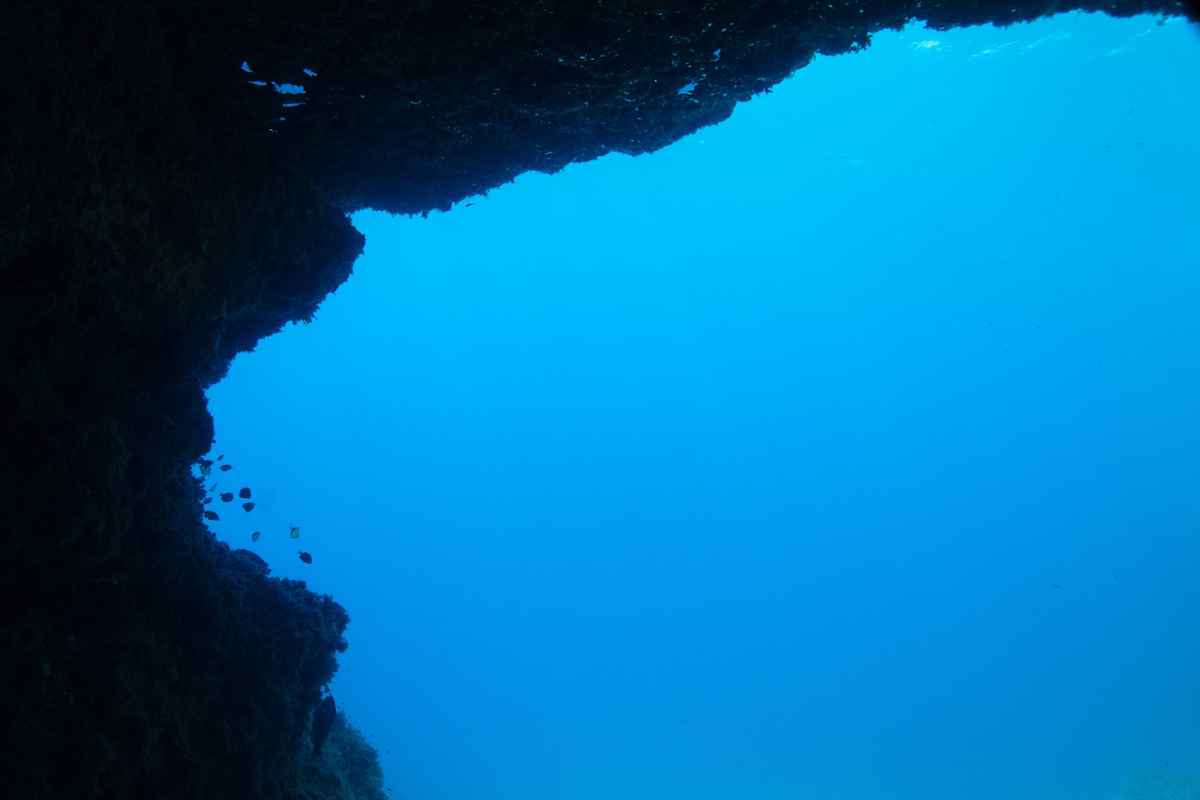
Malta's diving splits cleanly into three islands, and each does something different. Malta itself is the wreck capital: Um El Faroud, a 115-metre tanker deliberately scuttled off Wied iz-Zurrieq, is reached on foot from a slipway, no boat required. At Cirkewwa on the northwest tip, the patrol boat P29 and the tug Rozi lie a short swim apart, paired with a natural limestone arch. HMS Maori, a genuine WWII destroyer bow at just 14 metres in Valletta's harbour, is gentle enough for a first wreck dive. The coast here is hard limestone rather than coral, carved into arches and shelving reefs that hold grouper, moray, octopus and circling barracuda.
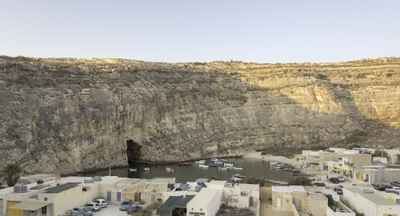
Gozo, the calmer neighbour, pairs its own wreck trio with dramatic natural formations. Off Xatt l-Ahmar, the scuttled ferries Karwela, Cominoland and the upside-down Xlendi sit together on one shore entry. At Dwejra on the west coast, the Blue Hole drops through a limestone shaft and an underwater arch onto an open wall, next to the boulder field left when the Azure Window collapsed in 2017. A short fin away, the Inland Sea's tunnel is Gozo's gentlest overhead dive, open to Open Water divers. The north coast adds Reqqa Point's wall and long, lit caverns at Cathedral and Billinghurst.
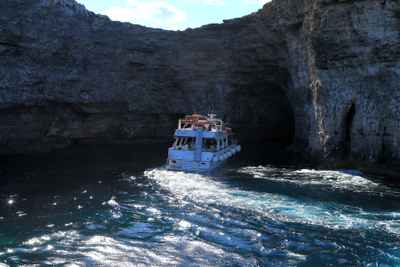
Comino, the smallest island, has no resident dive centre: every dive starts on someone else's boat from Malta or Gozo. Santa Marija's shallow cavern maze suits beginners and photographers alike, the training wreck P31 sits well inside Open Water limits, and Lantern Point's chimney drops onto a wall running past fifty metres for advanced divers.
Choosing between them comes down to what you want most. Malta gives shore-accessible wrecks and the easiest logistics. Gozo adds its own ferry trio alongside caverns found nowhere else in the archipelago. Comino trades a resident dive base for a boat day mixing the two. All three share the same limestone geology, the same warm Mediterranean water, and English as the working language of the dive industry.
The 3 highlighted areas have full dive guides. Grey markers show more of the country's dive regions, with new guides on the way.
One rule governs independent diving across all three islands: a 30-metre certification, Advanced Open Water or CMAS two-star, lets you dive unguided. Below that, a licensed instructor must accompany you. In practice this barely changes a typical trip, since most visitors already dive with a local centre for site knowledge and weather calls. The Malta Tourism Authority licenses every operator across Malta, Gozo and Comino.
Much of the coastline, including Dwejra on Gozo and all of Comino, lies within Natura 2000 habitat conservation zones. These protect seabirds and marine habitat rather than functioning as no-take reserves, so there is no dive permit, quota or reserve fee anywhere in the archipelago. You pay only for a centre's services.
Weather, not season, decides which coast is diveable on a given day. Wind and swell close one side while the opposite stays calm, so local centres route divers to whichever access point works that morning rather than following a fixed itinerary. This holds especially for Comino, reached entirely by boat, and for the exposed sites on Gozo's west and north coasts.
May to October brings the warmest water and calmest seas, September the most-cited month across all three islands. The archipelago dives year-round, though: winter surface water drops to the mid-teens, and a 7mm semi-dry or drysuit is the sensible choice for the deeper wrecks and walls whatever the season. Getting between islands means flying into Malta International Airport and, for Gozo or Comino day trips, taking the short Gozo Channel ferry from Cirkewwa.
What makes this country a world-class diving destination.
Scuttled ships and WWII losses reachable by fin off Malta and Gozo, not only by boat
Coralline and Globigerina limestone carves caves and tunnels, not coral reef
Official English from British rule; centres teach and brief in English
Commonly 15 to 30m across all three islands, among the region's clearest water
AOW or CMAS two-star lets you dive unguided; below that an instructor is required
The archipelago's cavern and scuttled-ferry island
Limestone island diving: scuttled ferries and a tanker at Xatt l-Aħmar, Dwejra's Blue Hole and Inland Sea, caverns and walls on the north coast.
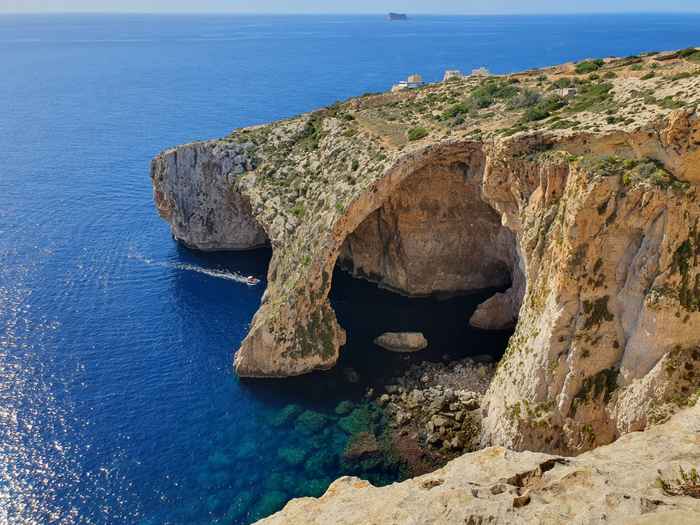
Europe's shore-accessible wreck capital
Wreck-led Mediterranean shore diving off Malta: scuttled tankers and tugs, WWII war wrecks, and limestone caves in 20-30m visibility.
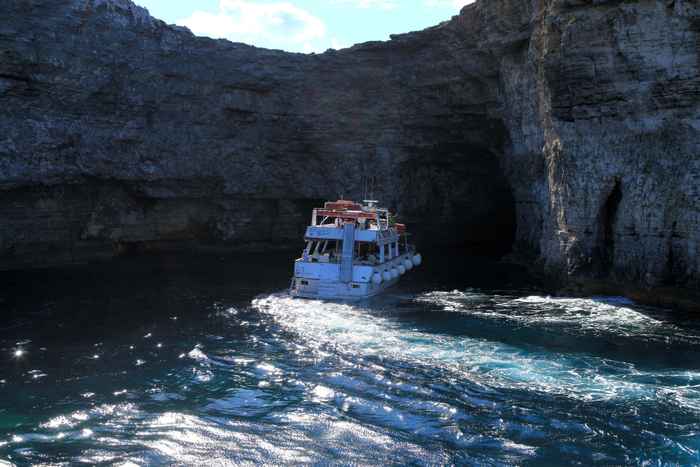
Boat-only caverns, a training wreck and a wall past 50m
Boat-only day diving off tiny Comino: shallow lit caverns, a beginner wreck and a wall past 50 m, with the wind choosing the coast.
Book online or contact a centre for your trip.

Family-run PADI 5 Star Career Development Centre in Bugibba, Malta, guiding daily shore and boat dives to Cirkewwa, Um El Faroud and the Ghar Lapsi coast.
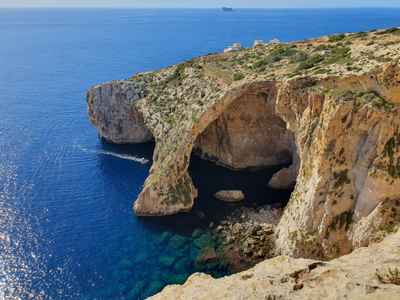
Owner-run PADI 5 Star centre at Cresta Quay, St Julian's, Malta, covering Cirkewwa, the Blue Grotto and the island's wreck circuit with free area pickup.

PADI 5-star training academy in Qawra, Malta, running shore-dive courses from first breath to rescue diver with a small, hands-on instructor team.

PADI 5 Star Instructor Development Centre in St Paul's Bay, Malta, covering recreational-to-technical training and the Malta wreck circuit plus Gozo.
SSI dive school at Ghar Lapsi on Malta's quieter southwest coast, opened 2024, with shore diving from the shop and boat trips to the Um El Faroud wreck.

By its own account, Malta's largest dive centre, family-run in Sliema since 1978, now an SSI Diamond Dive Centre with technical and CCR diving.

PADI 5 Star centre at the Westin Dragonara Resort, St Julian's, Malta, with a full recreational course ladder and technical sister brand Techwise on site.
Get in touch to add or claim your dive center listing on DiveCodex.
Malta and Gozo both run deliberately scuttled wreck fleets. Malta's Um El Faroud, P29 and Rozi are largely shore dives, while Gozo's own trio at Xatt l-Ahmar, Karwela, Cominoland and the upside-down Xlendi, sits deeper at 30 to 44 metres. For caverns, Gozo and Comino lead: Dwejra's Blue Hole and Inland Sea tunnel and the north coast's long Cathedral and Billinghurst caverns sit on Gozo, while Comino's Santa Marija Caves offer a shallower, gentler cavern maze. Malta's cavern equivalent, Ghar Lapsi, is smaller in scale.
All three have Open Water-friendly options. Malta's shallow harbour wrecks, HMS Maori and X127, plus its training bays, suit beginners who also want easy logistics near Valletta. Comino's Santa Marija Caves and the snorkelable P31 wreck are two of the gentlest dives in the archipelago, though every Comino trip runs as a guided boat dive. Gozo's Inland Sea tunnel is its easiest overhead dive, but its headline sites, the Blue Hole and the wreck trio, run deeper and want Advanced Open Water.
May through October brings the warmest water and calmest seas across Malta, Gozo and Comino, and September is the month most often singled out for warm water with thinning crowds. All three islands dive year-round: winter surface temperatures fall to the mid-teens, and a 7mm semi-dry or drysuit becomes the practical choice, especially on the deeper wrecks and walls that stay cool below the summer thermocline regardless of season.
The same rule applies across the archipelago: you need a 30-metre certification, Advanced Open Water or CMAS two-star, to dive unguided. Below that level, a licensed instructor must accompany you. It rarely changes a visiting diver's plans in practice, since most people already book with a local centre for site knowledge and weather calls, and every Comino trip already runs as a guided boat dive regardless of certification.
No. Natura 2000 habitat designations cover Dwejra on Gozo, all of Comino and parts of Malta's coast, but these protect seabirds and marine habitat rather than functioning as no-take reserves. There is no diving permit, quota or reserve fee anywhere in the Maltese Islands. Dive centres must be licensed by the Malta Tourism Authority, but that licensing does not translate into a charge for divers.
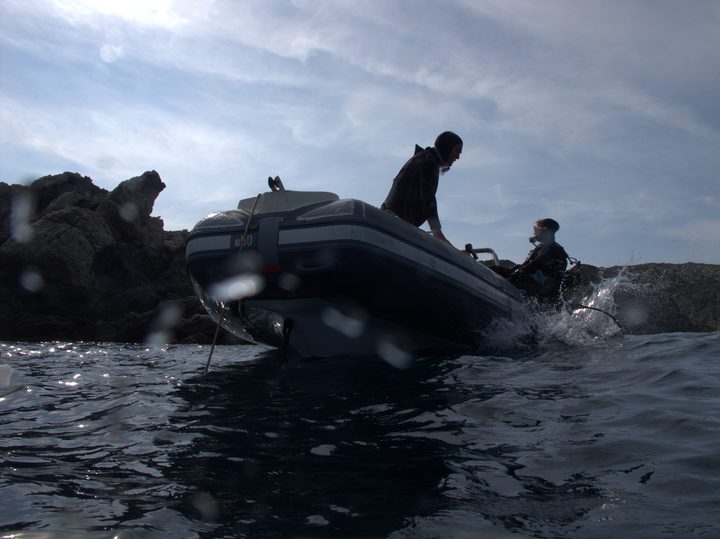
Malta and Gozo are mostly shore-dive destinations: the signature wrecks on both islands are reached by walking in from a slipway or rocky entry. Comino flips that pattern entirely. No dive centre is based there, so every dive, from the shallow caves to the deep wall at Lantern Point, starts on a boat from Malta or Gozo.
Log your dives - notes, photos, conditions and the marine life you saw - and share them as one public diver profile. What you share helps the next diver, too.
Log every detail
Depth, duration, conditions, gear, buddy, notes — all in one place. Import from Suunto and other dive computers.
Track marine life
Record species sightings on each dive. Build a personal catalogue of everything you've seen underwater.
Your public dive profile
Share your dive history, stats, and experiences with a profile page you control. Show the world where you've been.