

Blue Water Diving
PADI 5-Star IDC dive center in Puerto Rico, south Gran Canaria, running boat and shore trips to seven local sites since 2015.
PADI6 services
Also known as: Arguineguín Reef, Arrecife de Arguineguín
Long volcanic-rock reef on sand just outside Arguineguín port, Gran Canaria, with octopus nests in its crevices and a drift dive when the current runs.
Last updated October 2026
The first view underwater is sand, with a low volcanic reef stretching away beside it, reached by following the anchor line down. Divers move along the rock and look into its cracks, crevices and openings, where morays hide. Above the reef, shoals of sardines and roncadores work the water, and barracuda sometimes hunt there for food.
The sandy flats beside the rock hold stingrays, and angelsharks are sometimes found in the sandy areas. When the current is favourable the same reef is flown as a drift dive.
Animals raise their young on this reef. Octopus keep nests in the crevices, and young trumpetfish use the reef as a nursery, so the small animals in the rock are the ones to look for.
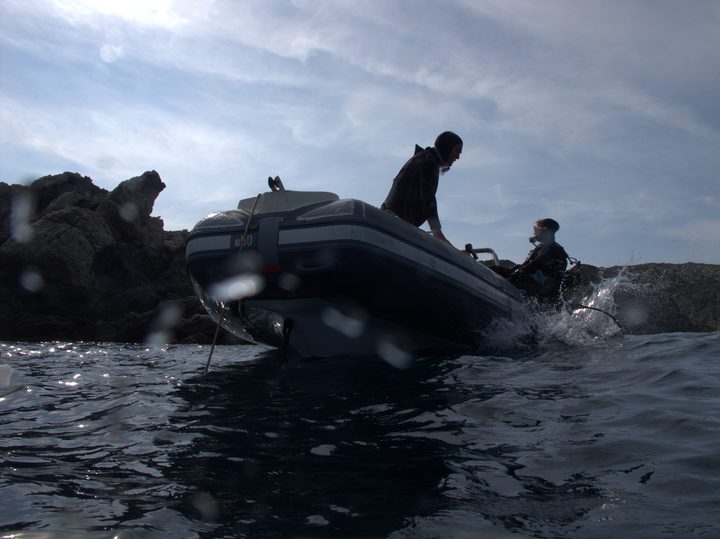
The reef is usually dived on the morning boat as one half of a two-dive trip. The 14:00 afternoon dive only reaches it when that boat carries certified divers only.
Pleasure craft can pass over the site, so launch a surface marker buoy and surface under control.
What makes this dive site stand out.
Cracks, crevices and openings in the rock hold octopus nests and moray hideouts.
Stingrays and the occasional angelshark use the sandy flats next to the reef.
With a favourable current the reef is flown as a drift dive.
Young trumpetfish use the reef as a nursery.
27.7486°N, 15.6864°W
The reef starts at 12 m and the operator advertises the dive for all levels, so Open Water divers can join.
Summary
Advertised for all levels; the current is variable.
Safety considerations
What can go wrong here, and what divers do about it. Conditions change - take the briefing from the operator on the day.
Book a guided dive at this site.
PADI 5-Star IDC dive center in Puerto Rico, south Gran Canaria, running boat and shore trips to seven local sites since 2015.

PADI 5-Star IDC dive center inside Taurito Princess Hotel, established in 1998, running two-tank trips across SW Gran Canaria's reefs, wrecks, and caves.

Hotel-based PADI 5-Star center inside Hotel Cordial Mogán Playa, running daily two-boat-dive trips across SW Gran Canaria since 2007.

PADI 5-Star IDC centre in Maspalomas running small-group two-dive trips on Atlantis, which it bills as Gran Canaria's only rigid-hulled dive boat.

PADI 5-Star centre in Arguineguín, Gran Canaria, teaching small-group courses in a private training pool it bills as the island's only one.

Owner-run centre at Anfi del Mar marina running south-coast boat dives, capped at 2 students per instructor.
Get in touch to add or claim your dive center listing on DiveCodex.
Dive centres in the Canary Islands check that you hold the certification the dive needs.
Operators advertise the reef as Arguineguín Reef in English and Arrecife de Arguineguín in Spanish, and a baja is a shoal in Spanish, hence Baja de Arguineguín. All three names point to one reef off the port of Arguineguín, so use whichever the operator lists when you search or book.
At 18 m. The reef starts at 12 m and one operator has it ending near 16 m, and another gives a 20 m maximum, which sits past the Open Water limit. An Open Water diver can join the dive and keeps the plan within 18 m.
Log your dives - notes, photos, conditions and the marine life you saw - and share them as one public diver profile. What you share helps the next diver, too.
Log every detail
Depth, duration, conditions, gear, buddy, notes — all in one place. Import from Suunto and other dive computers.
Track marine life
Record species sightings on each dive. Build a personal catalogue of everything you've seen underwater.
Your public dive profile
Share your dive history, stats, and experiences with a profile page you control. Show the world where you've been.