
7 Mares
PADI 5-Star Instructor Development Center by Las Canteras beach in Las Palmas de Gran Canaria, with twice-daily boat and van trips.
PADI6 services4 languages
Subtropical Atlantic diving on a volcanic island: lava arches, caves and wrecks, a Natura 2000 shore reef at El Cabron, and angel sharks.
Last updated October 2026
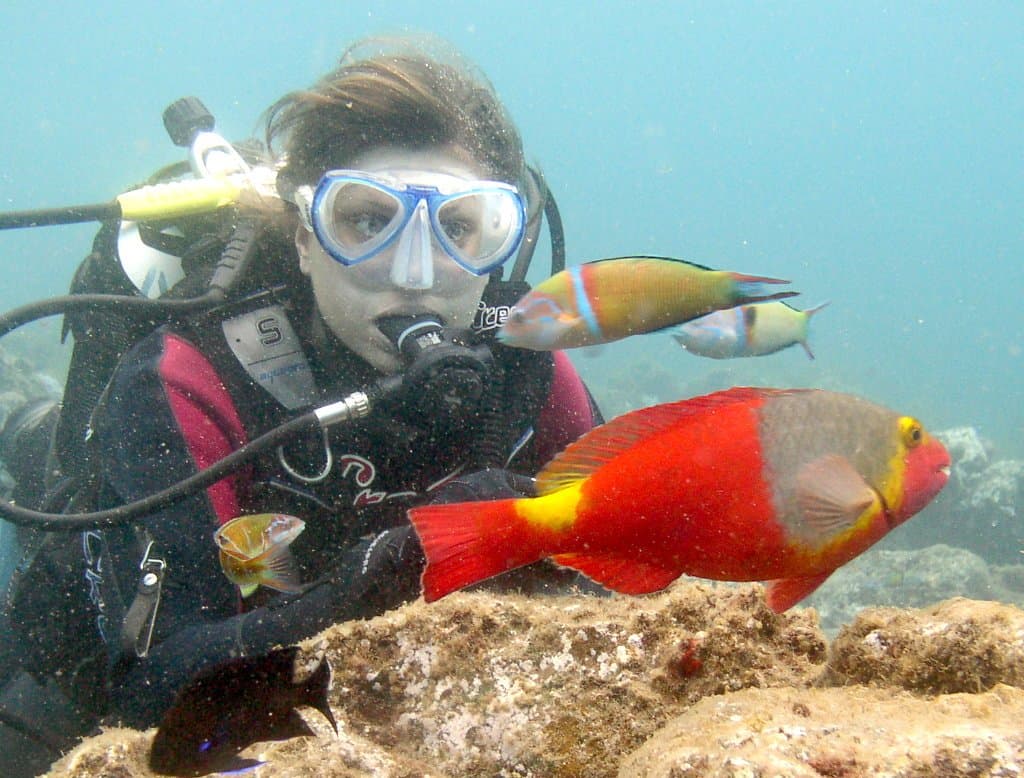
Gran Canaria is dived by port. The island's sites sit on five stretches of coast, each worked from its own harbour or fishing town, and the stretch you pick sets the kind of dive: a shore walk over lava at Arinaga, a short boat ride from a southern resort, the capital's wrecks and cavern, or a sheltered bay in the northwest.
El Cabron, off Arinaga on the east coast, is the benchmark. Volcanic reef with arches, caves and drop-offs spreads around a central area at about 18 to 21 metres, and sand between the rock is where angel sharks lie. The site is a Natura 2000 conservation zone, ZEC ES7010053, declared in 2011; Gran Canaria has no fishing reserva marina. Of 271 angel sharks logged by a local centre over 1,709 dives between 2006 and 2008, 244 were at El Cabron. Operators look for them from early November to the end of March, and sightings peak when the sea falls below 21 C. Next door, La Gerardia is an advanced shore dive named for a colony of false black coral, with yellow and red gorgonians.
Sardina del Norte, in the northwest, is an old fishing refuge whose routes run between 10 and 18 metres across maerl beds and rock formations, with a night dive and garden eels and seahorses on the sand. Caleta de Abajo along the coast adds caverns, blowholes and lava formations, all graded advanced, including a route that starts down an L-shaped tube.
Wrecks are the second theme. The Arona, about 100 metres long and lying at 35, is the boat dive deep divers come for. Off Las Palmas, Kalais and the Angela Pando lie close to the city, and La Catedral drops from 6 to 40 metres. The south is the gentle side: natural reef off Pasito Blanco with morays and grunts, a concrete artificial reef at 21 to 24 metres where barracuda school, and shallow training reefs by Arguineguin.
Which coast you base on is the main decision. Gran Canaria Airport (LPA) is on the east coast between Las Palmas and the southern resorts. Arinaga is the base for El Cabron and mostly means shore diving; the southern bases, Puerto Rico, Arguineguin, Pasito Blanco and Puerto de Mogan, run boat dives to the artificial reef and the wrecks. Las Palmas has its own schools around Las Canteras, and the city publishes dive maps for Las Canteras, Kalais, La Catedral, Baja Fernando and the Arona. Sardina del Norte is about 25 km from the capital.
Operators grade La Gerardia, the Arona and Caleta de Abajo's routes advanced, and Tufia intermediate because of the fitness needed to carry kit to the water. Arinaga's entry and the southern reefs suit all levels. Operators here dive in wetsuits, mostly 5 mm, with 7 mm or semi-dry for winter and repeat dives. Night dives run at El Cabron and in the Sardina del Norte bay.
Volcanic: lava tongues, arches, tunnels, caverns and drop-offs cut into rocky reef, with sand plains between the rock and maerl beds in the northwest.
The diving here splits into 5 zones:
Arches and caves on a shore dive, with angel sharks on the sand
A shore dive built around one large gold-coral colony
A walk-in shore dive from promenade steps, good after dark
A 30m gorgonian garden reached from the shore, with a moray boulder field on the way down
A bulk carrier split at the bridge, lying where it grounded
The most accessible eroded-rock maze dive, right next to Las Canteras beach.
Cave start, vaulted volcanic rock and light beams for cameras
A fire-lost 1968 cargo ship under a resident barracuda shoal
Eight shore routes in one fishing-village bay, from lava arches to a maerl bed
A cavern, a blowhole tube and a rock cut from one shore entry
Rock passages and a small swim-through beneath the Dedo de Dios
A state-authorised 1991 reef of 84 concrete modules on white sand
A crevice-rich volcanic reef, drift-dived when the current runs
A cigar-shaped volcanic rock on white sand, with rays and morays
A small wreck dived under a passing tourist submarine
A 2003 Russian hydrofoil wreck broken up on sand, an easy boat dive
A lone fishing-boat hull on open sand at 30m, ringed by garden eels
Book online or contact a centre that dives this area.
PADI 5-Star Instructor Development Center by Las Canteras beach in Las Palmas de Gran Canaria, with twice-daily boat and van trips.
PADI 5-Star IDC dive center in Puerto Rico, south Gran Canaria, running boat and shore trips to seven local sites since 2015.

SSI Diamond dive center in San Agustín, Maspalomas, run by a multinational trio since 2022, diving El Cabrón, Sardina del Norte, and Las Palmas wrecks.

Dive centre operating since 1996 from the Muelle Deportivo marina in Las Palmas de Gran Canaria, teaching SSI and PADI and running marina wreck dives.

SSI Instructor Training Center at Puerto de Sardina, Galdar, guiding about twenty mapped shore and boat dives on Gran Canaria's northwest coast.
French-run family dive center at Playa de Arinaga, next to El Cabrón, running small (max 3 divers/instructor) shore and boat dives all around Gran Canaria.
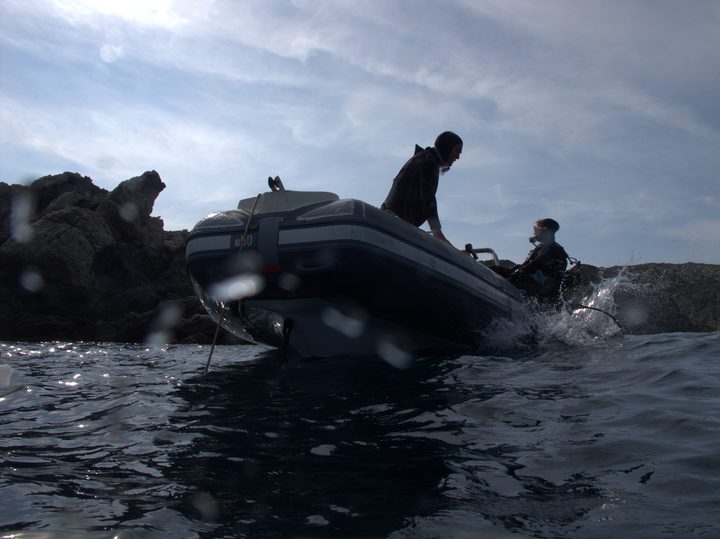
PADI 5-Star centre in Sonnenland, Maspalomas since 1996, house-diving El Cabrón and Risco Verde by day and night with dive-and-stay apartments.
Get in touch to add or claim your dive center listing on DiveCodex.
Angel-shark sightings peak when the sea drops below 21 C. The northwest bay at Sardina del Norte stays diveable almost all year, including when other coasts of the island are not.
What can go wrong here, and what divers do about it. Conditions change - take the briefing from the operator on the day.
Official decree on dive centresDive-centre authorisation procedureCompiled decree PDF with annexesChecked: Oct 2026
National rules also apply: Rules and permits in Spain
El Cabron is ZEC ES7010053, Playa del Cabron: a Natura 2000 conservation zone of 956 hectares off the Aguimes coast, declared in September 2011. Gran Canaria has no fishing marine reserve; the Canary Islands' three are at La Graciosa, La Restinga on El Hierro and La Palma. Some dive-centre pages still describe El Cabron as a marine reserve. In 2022 the island Cabildo's plan proposed making it part of a seventh Reserva Natural Especial, which is a proposal and not in force.
A five-day September trip found none by day, and the only shark was a juvenile on a night dive. Operators look for angel sharks from early November to the end of March, and sightings climb as the sea drops below 21 C, so the cooler months are the safer bet. The animals lie buried in sand and no month is a promise.
The Risco Verde entry at Arinaga and the natural reef off Pasito Blanco harbour are both graded for all levels by the operators who dive them, and the south has a shallow training reef at Arguineguin. In Las Palmas the beach dive zones at Las Canteras rarely go deeper than 2 m. Most dives on the island are from shore or a short boat ride.
Yes, by road: El Cabron is about 40 minutes from Puerto Rico. Centres at Arinaga run it as a shore dive, with a short drive from the base and a scramble over rock to the entry.
The Arona, a ship about 100 m long and 15 m wide at around 35 m, is graded advanced with low current. Closer to the capital, Kalais is a 110 m former merchant ship beside the Reina Sofia breakwater, and the Angela Pando is known for an almost intact propeller. The Cermona II, purpose-sunk off Mogan, lies around 20 m.
Divers who have worked several Canary Islands tend to call the diving here reliable and varied, though not the most dramatic, with most dives from shore or a short boat ride. The draws that set it apart are El Cabron, the angel sharks in the colder months and the wrecks.
Also known as: Grand Canary
Log your dives - notes, photos, conditions and the marine life you saw - and share them as one public diver profile. What you share helps the next diver, too.
Log every detail
Depth, duration, conditions, gear, buddy, notes — all in one place. Import from Suunto and other dive computers.
Track marine life
Record species sightings on each dive. Build a personal catalogue of everything you've seen underwater.
Your public dive profile
Share your dive history, stats, and experiences with a profile page you control. Show the world where you've been.