
Big Blue Diving
Big Blue Diving, Palmanova: SSI and PADI center founded 1997, operating year-round from two RIBs across SW Mallorca's El Toro marine reserve and surrounding sites.
SSI / PADI7 services8 languages
Also known as: Cala Monjo, Caló des Monjo
Sheltered SW Mallorca cove with 30m tunnels, a cave with air pocket, and walls to 18m — cave diving away from the reserve crowds.
Last updated June 2026
The L-shaped tunnel entry at 5m is Caló d'en Monjo's first commitment — wide enough for a small group, it opens with natural light from the cove and narrows briefly into the rock before releasing divers into a rocky chamber. From here, the cave with the air pocket lies a short swim away: the ceiling breaks the waterline inside, and you can surface briefly in a space lit only by torchlight and reflected water light. The echo of bubbles against the rock ceiling is the distinctive detail divers remember. Back outside, the outer wall builds toward 18m where arches interrupt the rock face and the site opens into blue water. A full tank covers the tunnel, cave pocket, and a circuit of the outer wall; those who move slowly through the overhead sections often find they have air remaining for a second look at the arches. The 18m ceiling on the main profile keeps bottom time manageable and makes this a reasonable follow-up to a deeper morning at the Ponent reserve sites. Experienced pairs can extend into a narrower inner cave beyond the main chamber.
In the SW corner of Mallorca — a zone defined by El Toro's open-water buoyed points — Caló d'en Monjo stands apart by going underground. The tunnel through solid rock and the chamber where divers briefly surface offer a different kind of engagement: navigation rather than just observation. Morays coil in the tunnel crevices, groupers hang in the wall shadows, and scorpionfish occupy the arches almost invisibly. The inlet sees far lighter diver traffic than the reserve quota points. On a calm spring morning the water inside the tunnel is blue-green and exceptionally clear. The inner cave extension — darker and tighter — rewards overhead-experienced pairs with crustaceans and bryozoans that casual reef traffic never reaches.
A torch is mandatory — the tunnels and cave chamber require one, and the inner extension is completely dark without a reliable light. Shore access exists via a forest path from the Cala Fornells parking area (roughly 2km walk); most visiting divers arrive by boat from Peguera or Camp de Mar. The inlet faces south-east, so sirocco and SE wind can make conditions rough with little warning — check the forecast on the day. Good buoyancy control matters in the overhead sections, both for personal safety and to avoid disturbing the encrusting life on the tunnel walls.
What makes this dive site stand out.
Divers surface briefly inside a rock chamber — unusual in the SW Mallorca portfolio.
L-shaped tunnel starts at 5m, wide enough for a small group, lit at the opening.
Outer wall with arches at around 18m after the cave exit.
Natural inlet with buoy protection; lighter traffic than nearby reserve sites.
39.5253°N, 2.4319°E
Spring for clearest water; avoid SE wind conditions.
OW for the main tunnel and outer wall. The inner cave extension requires more experience.
Summary
Good buoyancy essential in the overhead sections; the inner cave extension is advanced.
Safety considerations
What can go wrong here, and what divers do about it. Conditions change - take the briefing from the operator on the day.
Book a guided dive at this site.
Big Blue Diving, Palmanova: SSI and PADI center founded 1997, operating year-round from two RIBs across SW Mallorca's El Toro marine reserve and surrounding sites.

PADI dive center in Camp de Mar bay, seasonal May-Oct; Polish instructor team serving European package guests through TUI, ITAKA, and direct bookings.

SSI Instructor Training Center and PADI 5-Star at Port Adriano, SW Mallorca, founded 2011; boat access to El Toro reserve with fully published dive pricing.

PADI 5-Star IDC dive resort in Torrenova, SW Mallorca; since 2005; multilingual Scandinavian-market specialist with free hotel transfers across 14 SW zones; year-round.

PADI 5-Star IDC centre in Santa Ponsa since 1997, diving the Illes del Ponent marine reserve with day trips to Dragonera and Cabrera.
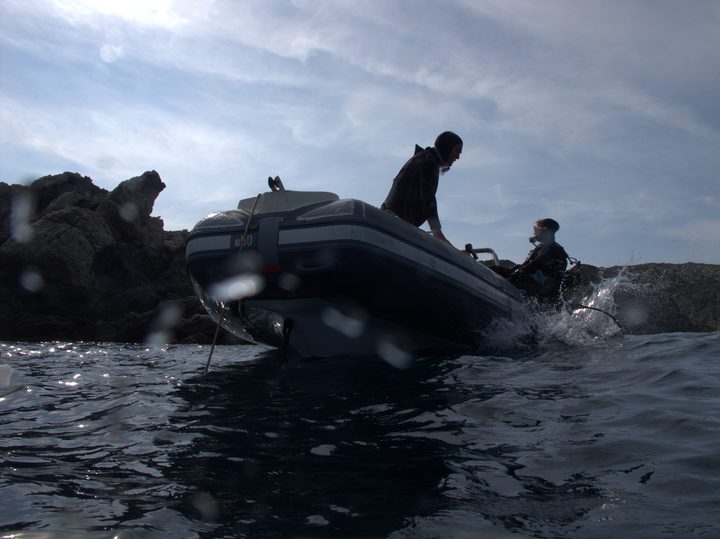
Get in touch to add or claim your dive center listing on DiveCodex.
Diving here needs certification and accident insurance; course dives and dives an authorised centre runs that give no certification need no card.
No permit is currently required. The site has no confirmed marine reserve designation; general Spanish regulations apply. Surface navigation buoys protect the cove, but there is no authorisation fee or quota system.
Experienced OW divers with a buddy can handle the main tunnel and outer wall independently. A torch is mandatory. The inner cave extension should only be attempted by divers with genuine overhead-environment experience — for that section, a guide familiar with the site adds real value.
Yes — it is a natural air space where divers routinely surface briefly. It is not a deep enclosed cavern requiring gas management, but good buoyancy and a functioning torch are needed to enter safely.
April through October for warmest water and best visibility. Avoid days with SE or sirocco wind — the natural inlet faces south-east and conditions deteriorate quickly when that wind picks up.
El Toro is an open-water reef inside a busy marine reserve with quotas and a paid authorisation. Caló d'en Monjo is a cave and tunnel site with no confirmed reserve designation, no quota system, and lighter diver traffic — a different kind of dive that suits those who want overhead-environment variety without reserve admin.
Log your dives - notes, photos, conditions and the marine life you saw - and share them as one public diver profile. What you share helps the next diver, too.
Log every detail
Depth, duration, conditions, gear, buddy, notes — all in one place. Import from Suunto and other dive computers.
Track marine life
Record species sightings on each dive. Build a personal catalogue of everything you've seen underwater.
Your public dive profile
Share your dive history, stats, and experiences with a profile page you control. Show the world where you've been.