

Acqua Life Dive Center
SSI Diamond Center with two SE Mallorca bases at Calas de Mallorca and Cala d'Or, diving the Migjorn marine reserve with all-inclusive transparent pricing.
SSI5 services6 languages
Reef, wall, cave and wreck diving on a large Mediterranean island, with a recovering grouper reserve off Calvià and a wreck cluster in Palma Bay.
Last updated October 2026
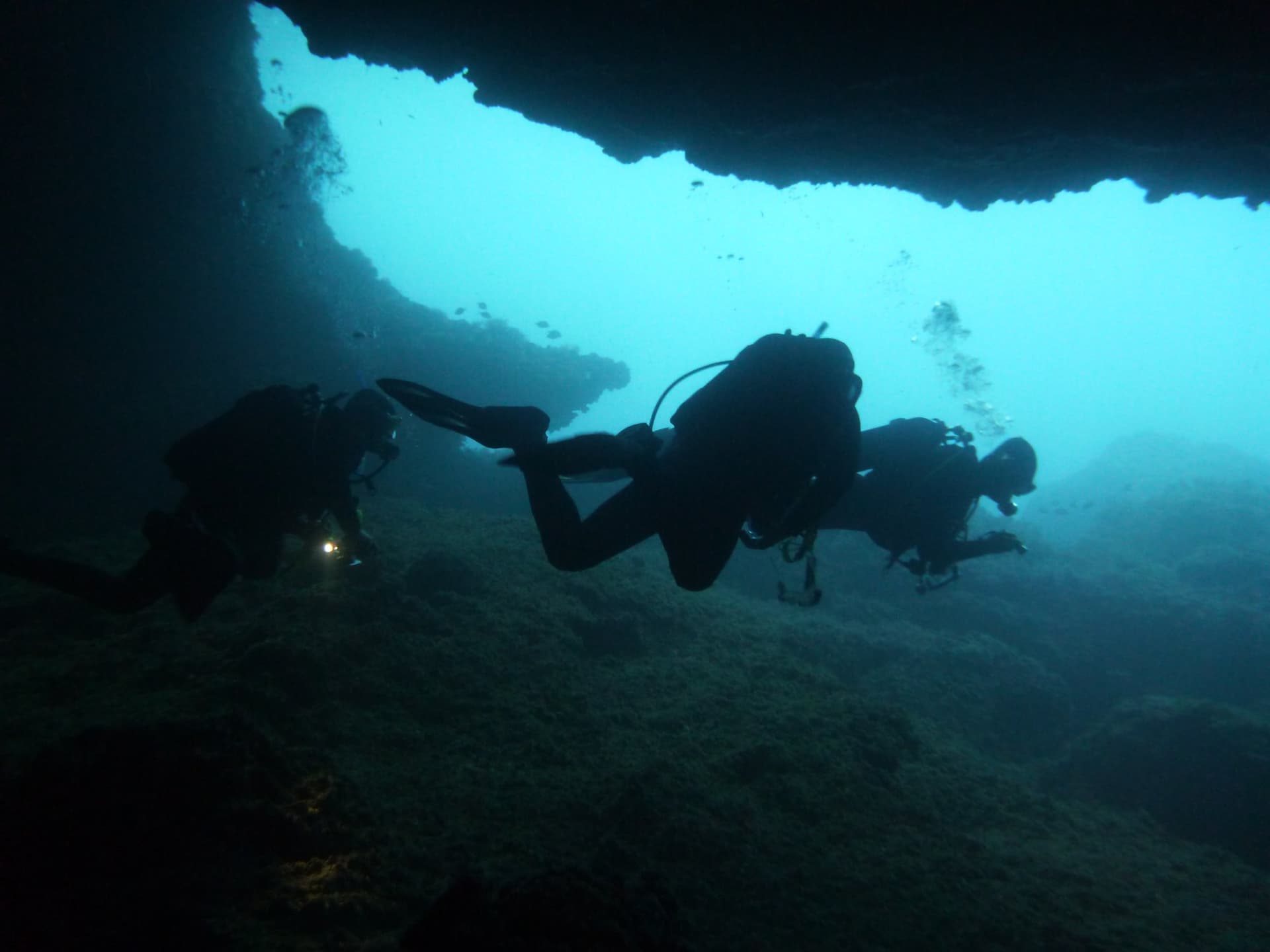
Mallorca's diving grew from two starting points. In the north-east, a local diver explored the caves around Cala Ratjada between 1967 and 1969, and that coast has been cave country since. In the south-west, the 2004 declaration of El Toro and the Malgrats as marine reserves ended decades of fishing pressure; at Isla del Toro, dusky grouper biomass has reached up to 52 times its 2004 level and brown meagre 284 times.1 A 2022 decree merged the two reserves and enlarged them roughly thirteen-fold to almost 3,000 ha, and in 2025 the Govern re-established the reserve as the Islas del Ponent de Mallorca, keeping the separate regime of the two special diving zones.
El Toro is the dive that organises a trip: a 5 m platform, a slope at 15 to 20 m where groupers, morays and octopus gather, and a wall beyond 35 m, run from six buoyed points. The Malgrats islands add a wall from about 10 to 36 m and schooling barracuda. Across the channel, Sa Dragonera is a protected island of steep walls, boulders and tunnels, and an operator there recommends Advanced level for its reserve dives. Palma Bay holds a cluster of modern wrecks at 28 to 35 m, and Isla del Sec has a plateau, a sloping wall and three small wrecks.
The north and north-east are about caves and rock. Pollença bay has Cave of Jeronimo, with stalactites and blue light, and Formentor, with a swim-through arch where barracuda and octopus gather. Around Cala Ratjada, the Cathedral and its neighbouring caves sit beside the rocky landscape of Cap des Freu and the La Mula pinnacle. In the south-east, Cala Egos is a boulder slope to about 24 m where lobsters, stingrays and cuttlefish live. Morays and congers favour the caves and wrecks across the island, and the life is abundant by Mediterranean standards, modest against the tropics.
Palma de Mallorca airport (PMI) is the gateway, and every zone is reachable by road: El Toro lies around 40 minutes from the airport, and Cala Ratjada about 70 km north-east of Palma. Most diving is from boats with 5 to 15 minutes to the site, and shore options exist at Illetes, The Bridge and the south-east calas. German, English, Dutch, French and Spanish are commonly spoken on the boats.
Every reserve dive needs a personal Balearic authorisation, which requires a valid certification and insurance;2 centres commonly arrange it and fold it into the dive price, though that varies, so ask when you book. The two special zones run on a daily quota with no night diving, so book those dives through a centre in advance. The Cala Ratjada sites, including Bajo de La Mula, sit inside the Levante-Cala Rajada reserve with its own cap on daily dives, and its daily authorisation is valid only in autonomic waters.3 Sites outside every reserve perimeter need no reserve permit.
Match the site to the level. Training platforms, calas and The Bridge suit newly certified divers; the deep walls and the wrecks call for Advanced. September and October give the clearest water, and a drysuit or a 7 mm suit with a hood carries a diver through the winter months.
A limestone coast of cliffs, caves, arches and vertical walls, with Posidonia oceanica meadows in the sheltered bays.
The diving here splits into 7 zones:
Recovered dusky groupers at a reserve islet dived from six official buoys
A wall dropping into boulders and deeper seabed, with barracuda schools
Easy shore cove at Peguera with an intermediate S-tunnel to a surfaceable cave
Three sunken ships and barracuda swarms at a protected Palma Bay islet
A two-metre natural pool for a first Discover Scuba dive
First-time and course divers wanting a sheltered, easy shore dive in SW Mallorca
The signature dive of Pollença bay — an intermediate-accessible sea cave with a stalactite air chamber and a 30m exterior wall
Swim up through a 14m arch, then out through the eye of the needle
Pollença bay's easiest dive — shore entry to a natural arch, suited for beginners and OW students
Book online or contact a centre that dives this area.
SSI Diamond Center with two SE Mallorca bases at Calas de Mallorca and Cala d'Or, diving the Migjorn marine reserve with all-inclusive transparent pricing.

Mallorca's first PADI Eco Center in Cala Bona, founded 1993, with 25 east-coast sites and Conservation Diver ecological monitoring programmes.
Big Blue Diving, Palmanova: SSI and PADI center founded 1997, operating year-round from two RIBs across SW Mallorca's El Toro marine reserve and surrounding sites.

Family-run PADI and SSI school in Cala Santanyí, SE Mallorca: first dives in the cove, Zodiac dives along 25 sites, Cabrera day trips.
IAC, PADI, SSI and CMAS dive centre at Font de Sa Cala, NE Mallorca, running year-round boat dives to Cap Freu and La Mula in the Levante marine reserve.

PADI 5-Star IDC centre in Port d'Andratx founded 1987; daily Sa Dragonera natural park diving; 30+ SW Mallorca sites; year-round; German-primary market.

Family dive centre by Carles and Marga; small groups; boat departs from Sant Elm (SW Mallorca) to Sa Dragonera marine reserve and El Toro; Observadores del Mar sentinel centre.
Get in touch to add or claim your dive center listing on DiveCodex.
July and August are the warmest and calmest weeks; September and October bring the best visibility, typically 15 to 25 m in open water and nearer 10 m at the Palma wrecks. The island dives all year, with a drysuit or a 7 mm suit and hood from December to April.
What can go wrong here, and what divers do about it. Conditions change - take the briefing from the operator on the day.
Marine reserve
Outer waters: state orderInner waters: permits orderInner waters: scuba permit decreeChecked: Oct 2026
Marine reserve
Reserve decreeRules for diving in reservesApply for a dive permitChecked: Oct 2026
Marine reserve
Inner waters: Balearic dive permit rulesOuter waters: state reserve orderOuter waters: responsible divingChecked: Oct 2026
Balearic diving decree2026 amendment to the decreeRegister of dive centresChecked: Oct 2026
National rules also apply: Rules and permits in Spain
The daily one is 5.24 EUR and works in most reserves, the fortnightly one is 10.47 EUR, and the weekly one at 15.71 EUR is listed for the Ponent reserve only. The annual authorisation at 52.82 EUR covers the island's other reserves but not the El Toro and Malgrats special zones, which keep their own regime. Most centres arrange the authorisation as part of the booking, so ask which one they will issue.
No. Recreational diving inside the underwater caves is not permitted in the El Toro special zone. The dives there run on the slope, the platform and the outer wall instead. Caves you may dive lie elsewhere on the island, on the Pollença and Cala Ratjada coasts.
Not in the El Toro and Malgrats special zones, where night diving is prohibited. Inside the Levante-Cala Rajada reserve night and shore dives are banned too, apart from the zones of Cala Lliteras and Cala Gat. Elsewhere on the coast, outside those perimeters, a centre can tell you which sites it runs after dark.
Under the 2022 decree the El Toro special zone allowed six buoyed dive points, four visits per point a day and 12 divers per visit, up to 290 dives a day and 48 divers in the water at once. The Malgrats zone was set at four points and 192 divers a day. The 2025 reserve kept the separate regime for both zones, so confirm the current limits and your slot with the centre when you book.
The shallow platform and upper slope at El Toro suit newly certified divers, while the wall below it is a separate, deeper profile. The Bridge at Pollença, with a channel at around 16 m, and the boulder calas of the south-east, such as Cala Egos, are easy shore or short-boat dives.
The wrecks of Palma Bay start at 28 m and run to about 35 m, with visibility often near 10 m, so they suit Advanced divers. The Josephine MS in the Dragonera channel lies at about 33 m and is dived on calm days only. The smaller wrecks at Isla del Sec are shallower, with an average depth around 18 m. Depths come from operator descriptions, so check them with your guide.
Cave of Jeronimo in Pollença bay, at up to about 30 m with stalactites and blue light, and the arch and cave at Formentor, at up to 22 m, are the northern options. The Cala Ratjada coast has been cave country since a local diver explored it between 1967 and 1969, and those sites lie inside the Levante-Cala Rajada reserve. Go with a guide, and only as far as your training allows.
A 5 to 7 mm suit covers the summer, when the surface reaches 25 to 27 C. Below the thermocline, at the deeper walls and the wrecks, the water is 15 to 18 C, which is when 7 mm earns its keep. From December to April the surface falls to 14 to 15 C and a drysuit or a 7 mm suit with a hood is the usual choice.
Yes. The island dives all year, with water around 14 to 15 C in winter and calm winter days among the clearest. The reserve walls, the wrecks and the caves stay open to diving. Bring a drysuit or a 7 mm suit with a hood and ask your centre which sites it runs in winter.
Also known as: Illa de Mallorca, Majorca
Log your dives - notes, photos, conditions and the marine life you saw - and share them as one public diver profile. What you share helps the next diver, too.
Log every detail
Depth, duration, conditions, gear, buddy, notes — all in one place. Import from Suunto and other dive computers.
Track marine life
Record species sightings on each dive. Build a personal catalogue of everything you've seen underwater.
Your public dive profile
Share your dive history, stats, and experiences with a profile page you control. Show the world where you've been.