Colombia Shallows

Also known as: Bajos de Colombia, Colombia Somero, Columbia Shallow, Columbia Shallows, Shallow Columbia

Coral heads standing off a white sand floor at Cozumel's far south, with no wall anywhere on the dive and turtles that do not move away.

Last updated August 2026

The dive

Most of what you can see is sand. Coral heads stand out of it three to nine metres, separate from one another, with wide white channels running between them, and the water over the whole thing is six to eleven metres deep. Nothing joins the heads into a reef line and nothing falls away on the seaward side. You circle one, cross a channel, circle the next. Sergeant majors, wrasses, angelfish and butterflyfish hold around each head, and the schools of grunts and snappers move between them.

The water moves south to north here as it does the length of this coast, so this is still a drift and the boat still follows the group. What is different is that you can get out of it. The water behind a coral head is slack, so you can stop, look at something properly, and rejoin the flow when you are done. On a wall you go where the water goes.

Depth stops being the constraint at this profile. Divers who live on the island describe struggling to find anywhere on the reef deep enough to hold a safety stop, and diving the whole reef as an hour-long safety stop instead. The tank ends the dive.

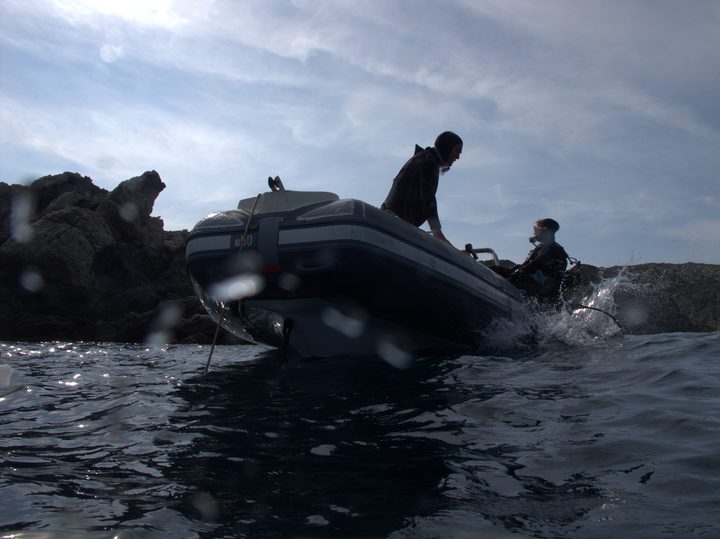
What decides whether you get the dive at all is the ride down. This is about as far south as the boats go, the run is exposed to the easterly trades, and a southeast wind cancels it outright on the morning. One diver reports losing it to a southeast wind for an entire trip.

What makes it special

Cozumel's west coast is one long wall, and this reef is not part of it. What lies here is a platform reef: low, isolated masses of coral sitting out on the shelf instead of a continuous crest, with a base that rarely passes twelve metres1. Nearly every reef of that kind on the island lies inshore, tucked behind the main line. Colombia is the exception, out on the outer platform off Punta Sur1. So the shallow and the deep Colombia are not two depths of one feature. They are two kinds of reef that happen to share a name.

Then the turtles. Hawksbills and greens both work this stretch, and the point divers make is not that they are here but that they do not leave. They carry on feeding while a group settles around them, and a hawksbill in January 2026 swam past a group of divers without altering course. The explanation offered is the same one that explains the quiet: the reef is graded for beginners, it sits at the far end of a long run, and beginners get taken somewhere closer, so the fish here see fewer divers than the fish on the walls do.

That leaves an odd population on a reef built for novices. The people who dive it are mostly advanced divers coming up off a thirty or forty metre wall on the first tank, dropping into eight metres of sand for the second. They come back for it deliberately. One Cozumel regular puts it at or near the top of his list and dived it five times on a single trip.

History and origin

The name came off the land. A ranch called Colombia de los Santos stood behind this shore and gave its name to the lagoon behind the beach, and the reef took the name from the lagoon. English-speaking divers have written it Columbia for so long that most operator copy now spells it that way, which is why the same reef appears under two spellings in every search.

The lagoon is not just a naming footnote, because it still reaches the dive. Low-salinity water from it and the wetlands behind it enters this sector of coast through the mouth called the boca de Colombia. That is what the cold, cloudy patches on the reef are, and it is why clarity here drops well below the island norm on some days. Fresh water off the land, not a thermocline, and an ordinary condition of this corner of coast. The lagoon and its mangrove sit inside the national park under a restricted-use designation of their own.

Know before you go

Getting there is the expensive half of this dive. It rides on a far south trip, which no shop treats as an ordinary morning boat, several shops charge a per-person fuel supplement for the distance while others charge nothing extra, and enough divers have to want the trip before a boat will commit the day to it. Raise it when you arrange the week, and get the supplement quoted at the same time.

The reef is shut through August and September, and has been in every rest cycle made public since 202023. The park closes reef complexes two months at a time so the coral can recover, and this one goes into the block with the deep and middle Colombia and two of the Palancar sections. Nothing is published a year ahead on any government page, so the answer for your own dates comes from the centre you book with.

Colombia sits in the park's restricted-use zone, which changes two things on the day. Groups are capped at six divers to a guide, against eight elsewhere in the park1, and the park can close the zone to the public for as long as it decides to. The rest is the park baseline and it applies from the moment you go in: an authorised guide in the water with you, 1.5 m of clearance from the coral, no gloves and no knives, and no feeding, chasing or disturbing an animal, least of all one in its den.

One more thing is worth knowing about the reef itself. It holds more of the coral most vulnerable to the disease the closures exist to slow than most reefs in the park do2. That is what the two months of closure protect.

Why Dive Colombia Shallows

What makes this dive site stand out.

  1. Coral heads on white sand

    Freestanding heads rise 3 to 9 m off a sand floor, with wide sand channels between them

  2. Turtles that hold still

    Hawksbills and greens on this reef are described as unusually tolerant of divers

  3. No drop-off anywhere

    A platform reef out on the open shelf, with a base that rarely passes 12 m

  4. A drift you can steer

    The heads are separate, so you can duck behind one, circle it and rejoin the flow

  5. Schools over the sand

    Big schools of snappers and grunts, with barracuda and bar jacks over the same ground

Depth & Profile

5m
Min depth
12m
Max depth
6–11m
Typical range
ReefSandy bottomDriftSandCoral

Location

20.3200°N, 87.0242°W

Conditions & difficulty

Temperature
25°C – 30°C
Visibility
20–35m
Current
Mild
EasyMin cert: Open Water

Summary

The diving is easy and getting to it is not. The run down is long and exposed, several shops charge extra for the fuel, and enough divers have to want the trip before a boat commits to it.

Safety considerations

What can go wrong here, and what divers do about it. Conditions change - take the briefing from the operator on the day.

  • Current: Mild but continuous, running south to north. This is still a live-boat drift and the group moves whether or not you do.Carry a marker buoy and stay with the guide. Ducking behind a head to look at something works; staying there while the group leaves does not.
  • Surface and boat traffic: Pickup happens in open water wherever the drift has left you, at the far south of the island where the boats are spread thin.Deploy the marker buoy before you leave the safety stop and surface as a group.
  • Visibility: Fresh water off the Colombia lagoon reaches this corner of coast and can pull clarity a long way below the island norm.Expect it. Milky water here is the lagoon at work, and it is a reason to keep the group in sight, not a reason to write off the reef.
  • Remote location: The furthest the boats routinely go down this coast, and the sea state that gets you there can also strand the trip.Leave slack in the week; pinning this reef to a single day is how people miss it. Dive the profile you briefed.
  • Site rules: Low coral heads at six to eleven metres, on a reef the park rests in rotation because the corals here are worth protecting.Stay 1.5 m off the coral and hold position with trim, never by settling. Gloves and knives are prohibited across the park, so buoyancy is the only tool you have.

Marine Life

BarracudaSphyraena barracudaTrumpetfishAulostomus maculatusGreen sea turtleChelonia mydasHawksbill sea turtleEretmochelys imbricataSpotted eagle rayAetobatus narinari· RareGreen morayGymnothorax funebris· RareBlack grouperMycteroperca bonaci· RareNurse sharkGinglymostoma cirratum· Rare

Centres that dive here

View all

Book a guided dive at this site.

Regulations

Marine reserve

Parque Nacional Arrecifes de Cozumel

Colombia lies in the park's restricted-use zone, the most tightly regulated of the three. Groups are capped at six divers to a guide, against eight elsewhere in the park by day; anchoring is prohibited, and the park may close the zone to the public for as long as it determines. An authorised guide has to supervise every dive and run a buoyancy check first, and the rules accredit the guide while saying nothing about what card a diver holds. Sport diving anywhere in the park is capped at 45 m. Divers keep 1.5 m off the coral; gloves and knives are prohibited, as is feeding, chasing, harassing or moving any marine animal, especially one in its refuge. The park rests reef complexes in rotation and publishes no calendar for the year. One federal duty covers a day inside the national park, charged per person and collected by the operator with the wristband that goes with it.

Frequently Asked Questions

How deep is Colombia Shallows?

Twelve metres is the honest maximum and most of the dive happens between six and eleven. Shop listings put it anywhere from fifteen to fifty feet, which describes how deep each shop chooses to take you. The shallow end of that spread is nearer the truth than the deep end. Divers who live on the island say the deepest sand they can find is around thirty feet, shallow enough that finding somewhere to hold a safety stop takes some looking.

Can a newly certified diver dive Colombia Shallows?

On the diving, comfortably. Twelve metres is inside an Open Water card, there is no wall beside you to drift over, nothing closes overhead and the current is mild. Getting on the boat is the harder part. The trip runs a long way south, several shops price the distance as an extra, and it needs enough divers aboard to want it, so a beginner who asks for this reef is usually offered one nearer town. That is a scheduling problem, not a comment on their diving.

Colombia Shallows, Colombia Deep, Columbia Reef: which is which?

Two dives are sold on this stretch and they are genuinely different. The shallow is a platform reef of coral heads on sand at six to twelve metres. The deep is a wall on the fore-reef ridge outside it, thirty metres and more, and it is the one most operators mean when they write Columbia Reef. The park rests three stretches of Colombia, one more than the two that are sold, including a middle one, but nobody sells a middle Colombia as a dive and the few people who name it cannot agree what to call it.

Why do half the shops spell it Columbia?

Because it has been misspelled locally for generations. The reef is named after Colombia de los Santos, the ranch that stood behind this shore, and the lagoon that carries the same name. English-language dive copy settled on Columbia early and stayed there, while the official name of the reef is Colombia. Search either spelling and you reach the same water.

Is the current strong at Colombia?

Not on this reef. Cozumel's far south has a reputation for fast and unpredictable midwater current, and it is earned, but it belongs to the walls at Punta Sur, Maracaibo and the deep Colombia. The shallow platform sits inshore of them and every operator who sells it calls the current mild or gentle. The set still runs north and it is still a drift, so nobody swims back to the boat.

When is Colombia Shallows closed?

August and September, in every rest cycle that has been made public since 2020. The park closes reef complexes two months at a time to let the coral recover, and this reef goes into the block with the deep and middle Colombia and two Palancar sections. Nothing is published a year ahead anywhere, so the only reliable answer for your own dates comes from the centre you book with. Settle that before you commit a day to one particular reef.

Can you night dive at Colombia Shallows?

No. The reef is in the park's restricted-use zone and night diving is prohibited there. You may still come across Colombia on a night-dive schedule, which is worth knowing only so you can ask the question, because the zoning rule is what binds. A boat working after dark off Cozumel needs the harbour authority's permission, not the park's, and what runs changes with it. Ask the centre you book with.

Is Colombia Shallows worth the boat ride?

The divers who go back repeatedly are the ones who have already done the walls, and one Cozumel regular describes diving it five times in a single trip. What they get is undisturbed fish, turtles that stay put and a dive that ends when the tank does. Not everyone is sold. Negative word about the reef's condition circulates among repeat visitors, and one diver who went to check found it a good dive with nothing that stood out. For what it is worth against that, the reef is among those in the park in the best condition for coral cover.

References

  1. 1.Instituto Nacional de Ecologia / SEMARNAP, published in the Diario Oficial de la Federacion, October 2, 1998Programa de Manejo, Parque Marino Nacional Arrecifes de Cozumel
  2. 2.Comision Nacional de Areas Naturales Protegidas (CONANP), August 21, 2020El Parque Nacional Arrecifes de Cozumel continúa aplicando la estrategia de 'arrecifes saludables'
  3. 3.Por Esto!, August 4, 2025Conanp suspende actividades acuáticas tras cierre temporal de cinco arrecifes en Cozumel
DDIVECODEXLOG

Every dive has a story. Share yours.

Log your dives - notes, photos, conditions and the marine life you saw - and share them as one public diver profile. What you share helps the next diver, too.

Log every detail

Depth, duration, conditions, gear, buddy, notes — all in one place. Import from Suunto and other dive computers.

Track marine life

Record species sightings on each dive. Build a personal catalogue of everything you've seen underwater.

Your public dive profile

Share your dive history, stats, and experiences with a profile page you control. Show the world where you've been.

Create your free dive log