

Arenal Diving Ibiza
PADI 5 Star Dive Resort in San Antonio, operating since 2004 with a four-boat fleet covering Ibiza's west-coast caves, gorgonian walls, and the Don Pedro wreck.
PADI7 services3 languages
Small Mediterranean island where a 2007 wreck, backlit caves, deep gorgonian walls and Posidonia meadows sit a half-hour drive apart.
Last updated October 2026
Ibiza can be crossed by car in about half an hour, and the diving changes from one coast to the next, so the base you pick decides the dives you get. The south, off Ibiza Town and Playa d'en Bossa, is wreck country. The Don Pedro, a 141.55 m cargo ship, sank in July 2007 after striking the es Daus shoals at the harbour entrance and now lies on her side between roughly 26 and 47 m by dive-centre figures, with the press reporting 45 m of water at the site. Dado Pequeño, the es Dau Petit rock she hit, is a multi-level reef that centres often schedule as the second dive of a Don Pedro day, and La Plataforma, a sunken fish farm between Ibiza and Formentera, has grown into an artificial reef.
The west and southwest are the deep, serious coast. Ses Bledes, about six nautical miles from San Antonio, carries gorgonian walls that local divers call well preserved: the fans start around 23 m and thicken between 35 and 60 m, which makes it a dive for advanced divers and a proper boat trip. Off Es Vedrà, the pinnacle of La Bota and the passages of Los Cañones add current and open water for the same kind of diver, and Ses Margalides offers rock arches and galleries.
The north and east are gentler. On the north coast, Cuevas de la Luz is a cave dive whose point is the exit, lit blue against the daylight. In the east, La Catedral at Cala Llonga is a wide, shallow cave with an air chamber and stalactites, reachable from the beach with a surface swim of about 200 m, and the reefs off Santa Eulalia keep depths and logistics easy.
This is Mediterranean diving and local divers say so up front. Dusky groupers, barracuda schools, moray eels and octopus are the regulars, with fish numbers below what the Canary Islands offer; the draw is variety on one small island, plus Posidonia meadows between Ibiza and Formentera that carry UNESCO World Heritage status.
Protection is recent and shapes the rules. The natural reserves of Es Vedrà, Es Vedranell and the western islets date from Decreto 24/2002 of 15 February 2002. Decreto 25/2023 of 2 May 2023 then created two marine reserves, one around the ses Bledes islets and one around Es Vedrà and Es Vedranell,1 covering 448 ha and 535 ha,2 and the ses Bledes reserve is where the gorgonian walls sit.
Ibiza's marine reserves with a diving regime are Freus d'Eivissa i Formentera, the north-east coast (officially costa noreste de Ibiza-Tagomago), ses Bledes and des Vedrà-Vedranell. Recreational diving inside them needs a personal, non-transferable authorisation from the Balearic government, issued online against a valid certification, accident and liability insurance and a responsible-diving commitment: 5.24 EUR for a day, 10.47 EUR for a fortnight, 52.82 EUR for a year (2026), with the annual one covering the island's other reserves.3 Centres that run group dives in the reserves need their own collective authorisation, so ask yours how your permit is handled before the day. Night dives by unguided individual divers are banned in both 2023 reserves,2 and the decree was amended in October 2024, so check the current text with the centre.
Most diving is by boat, with departures around 09:00 to 09:30 and a return near 13:30 after two dives. Choose a hub to match the dives you want: Marina Botafoch and Ibiza Town for the wreck and central sites, San Antonio for Ses Bledes, Santa Eulalia for the east, Portinatx for the northern caves and Cala Tarida for Es Vedrà. Choose by level too: the east-coast reefs and La Catedral suit newer divers, while Ses Bledes, La Bota and the Don Pedro belong to advanced divers.
May and June, then September and October, bring warm water and quieter boats; July and August fill up, so book ahead. Season dates vary by centre, so confirm them before you plan a trip outside summer. Fly into Ibiza (IBZ), which has direct flights from many European cities, or take a ferry from the mainland; Formentera is a 30-minute ferry from La Savina. A rental car helps if you want to mix coasts.
A rocky coast of coves, cliffs and offshore islets, with walls, caves and swim-throughs below the surface and sandy patches under extensive Posidonia oceanica meadows.
The diving here splits into 5 zones:
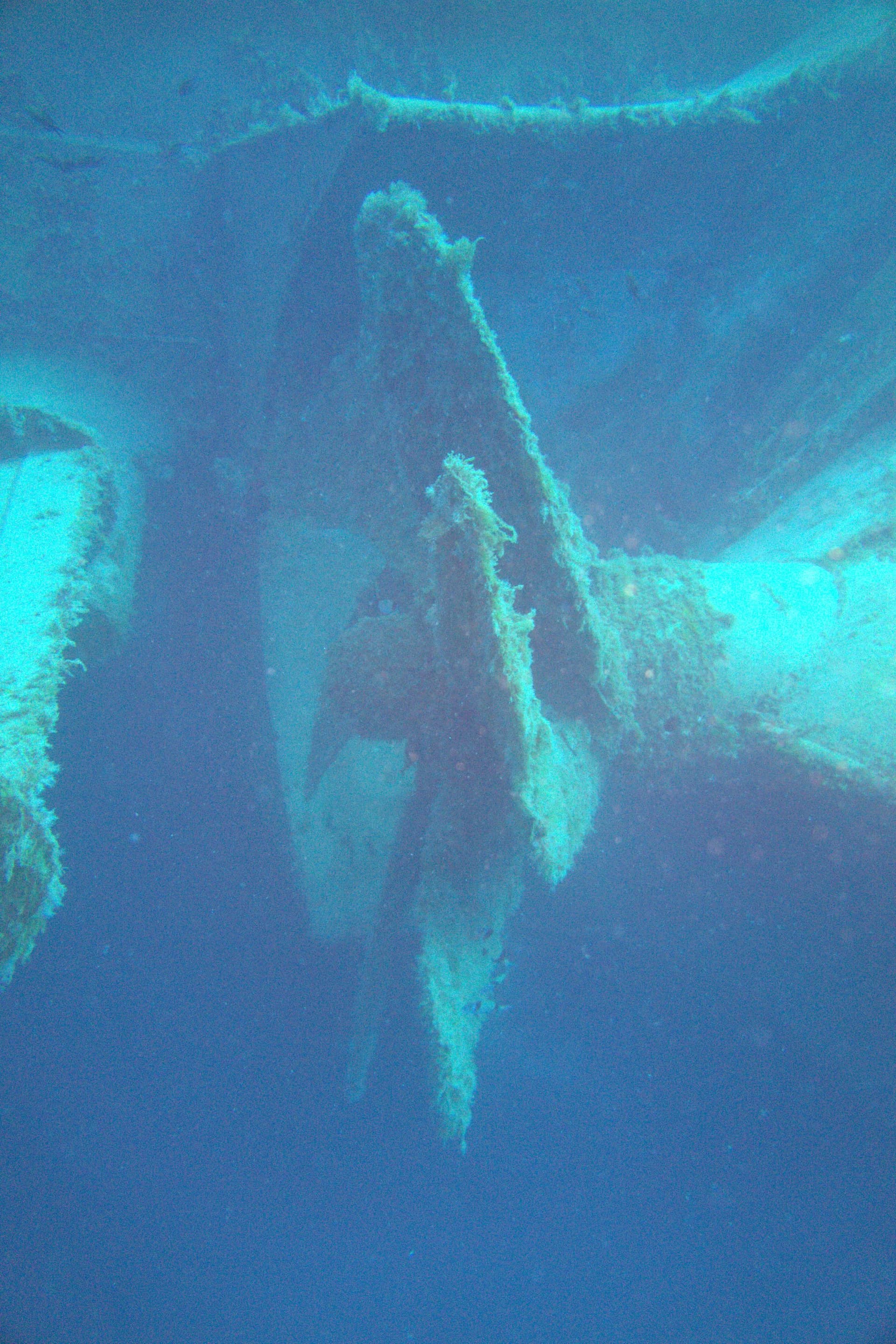
A 141.55 m cargo ship on her side, minutes by boat from Ibiza port
Divers pairing the Don Pedro wreck with a shallower second dive on dense Mediterranean fauna
Advanced divers: a tilted fish-farm wreck wrapped in barracuda
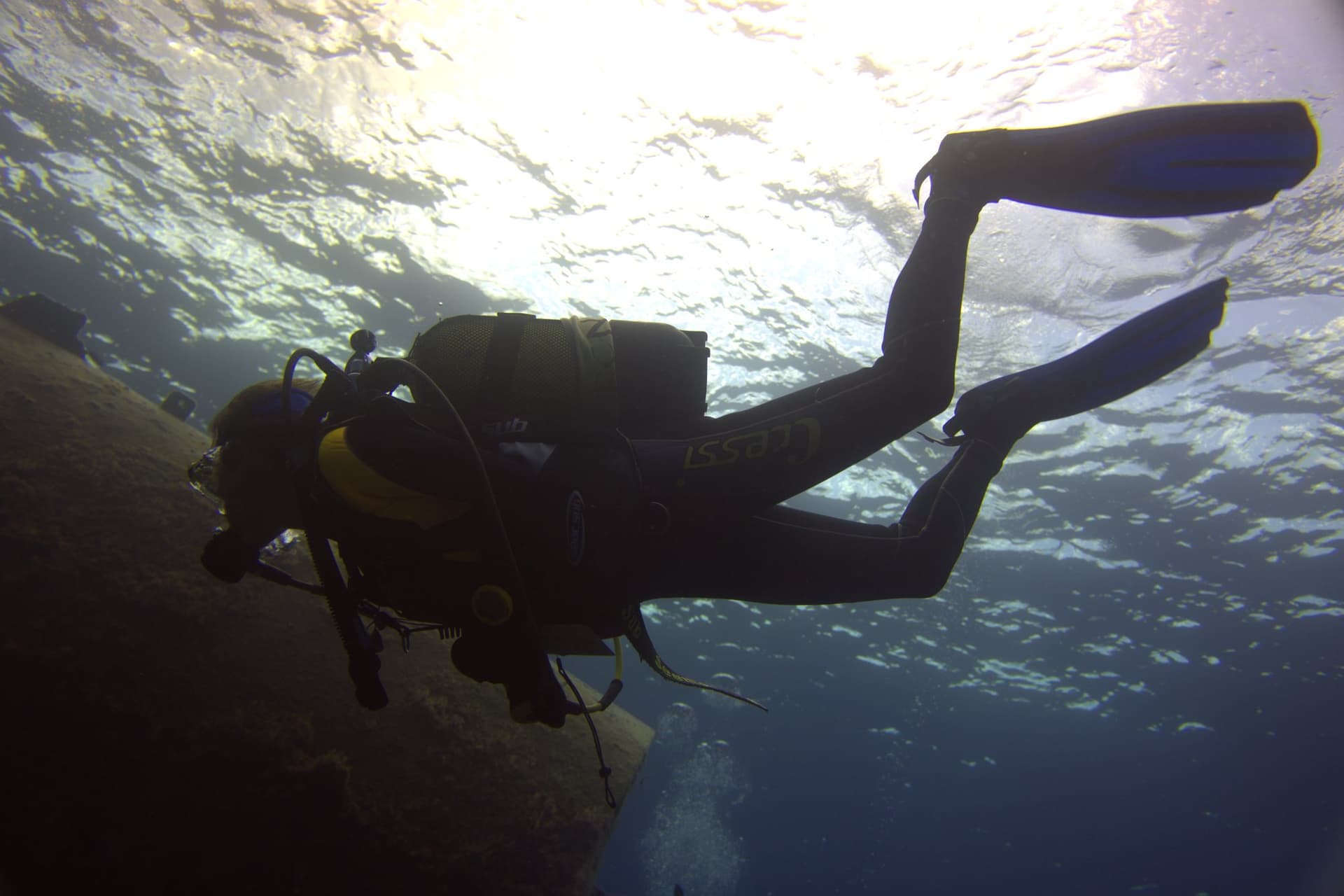
Easy reef dive with a shallow beacon platform and a barracuda canyon
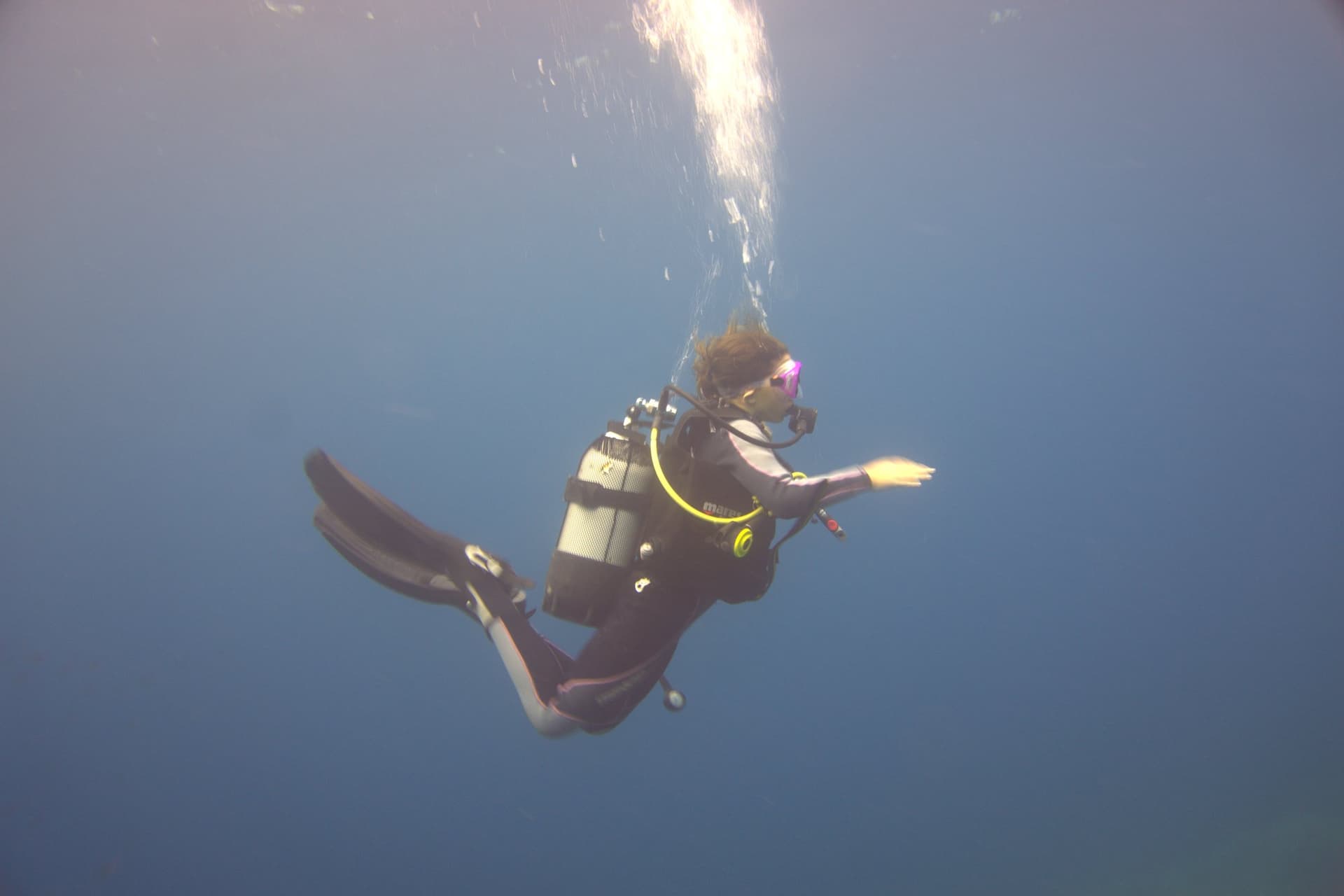
Open Water divers based around Santa Eulària who want a varied reef close to shore with reliable fish life
Surfacing in a stalactite air dome inside a shallow, daylit cavern
Book online or contact a centre that dives this area.
PADI 5 Star Dive Resort in San Antonio, operating since 2004 with a four-boat fleet covering Ibiza's west-coast caves, gorgonian walls, and the Don Pedro wreck.
SSI dive centre on Cala Vadella beach, southwest Ibiza, run by Pablo Suarez with shore access and boat trips to Es Vedra and the Don Pedro wreck.

PADI 5 Star center on Cala Pada beach, Santa Eulalia, Ibiza, with direct beachfront boat boarding and a multilingual team covering German, Dutch, English, and Spanish.

First PADI Eco Center in the Balearics and the only PADI 5 Star CDC on the islands, operating year-round from Marina Botafoch with two permanent Course Directors.
Family-run PADI Resort & School in Port des Torrent, Ibiza, specialising in small-group diving across 35+ sites in the Cala d'Hort Marine Nature Reserve.
Get in touch to add or claim your dive center listing on DiveCodex.
July and August are the warmest and busiest weeks, with boats filling and the island at full tourist pitch; in winter, storms limit access and not every centre runs. Thermoclines can drop the temperature sharply at depth, most noticeably in autumn.
What can go wrong here, and what divers do about it. Conditions change - take the briefing from the operator on the day.
Balearic diving decree2026 amendment to the decreeRegister of dive centresChecked: Oct 2026
National rules also apply: Rules and permits in Spain
Recreational diving inside the reserves calls for a personal, non-transferable authorisation issued online by the Balearic government, and a centre running group dives there holds a collective authorisation of its own. Which of the two covers a guided client on the day is best settled when you book: ask whether the centre arranges your authorisation or expects you to bring it, since the daily tier is only 5.24 EUR.
Not on your own. The 2023 decree that created the ses Bledes and des Vedrà-Vedranell reserves bans night dives for individual, unguided scuba divers in both. Decreto 45/2024 amended that decree in October 2024, so confirm the current rule with a centre before you plan a night dive in either reserve. Elsewhere on the island night dives run from shore and by boat when the weather allows.
Possibly. One diver reported that a Nitrox certification was required to join one centre's Don Pedro dives, and nothing confirms it as a general rule. The wreck lies between about 26 and 47 m by dive-centre figures, where enriched air buys useful bottom time, so ask when you book whether the centre expects it.
Divers who know both islands tend to put Menorca ahead for caves and for fish life inside its reserves. Ibiza answers with a wreck the size of the Don Pedro, deep gorgonian walls, dives from easy to advanced within reach of one base and direct flights from many European cities. Either way this is Mediterranean diving, and visitors used to the Canary Islands find fewer fish here.
Yes. The east is the gentle end: La Catedral at Cala Llonga is a shallow cave with an air chamber, and the reefs around Santa Eulalia, El Faro among them, keep to shallow profiles. Isla Conillera near Sant Antoni tops out around 20 m and Malvín Norte near Ibiza Town is a training site. Centres run introductory try dives, while Ses Bledes, La Bota and the Don Pedro belong to advanced divers.
Yes, with a thinner choice of boats. The sea falls to about 14 C in February and storms limit access. Subfari in Portinatx and Diving Ibiza at Cala Pada dive from 1 May to 31 October, and Diving Ibiza is also closed on Tuesdays, while Scuba Ibiza at Marina Botafoch advertises year-round diving. A thick suit is the norm in winter.
Choose the harbour first, because boat rides run 5 to 35 minutes and each centre works the sites near its own base. Scuba Ibiza at Marina Botafoch and Anfibios in Ibiza Town cover the Don Pedro and the central sites, and Anfibios also runs the Es Vedrà circuit. Arenal Diving in San Antonio reaches Ses Bledes and the west, Diving Ibiza at Cala Pada covers the east, Subfari in Portinatx specialises in northern caves and Orca Sub works the southwest from Cala Tarida.
Not always. Divers have reported that some trips marketed as dives in the Es Freus reserve between Ibiza and Formentera run outside its boundaries. Because the authorisation applies to dives inside a reserve, ask the centre where the dive sits relative to the boundary and whether it needs your authorisation.
Also known as: Eivissa, Ibiza y Formentera
Log your dives - notes, photos, conditions and the marine life you saw - and share them as one public diver profile. What you share helps the next diver, too.
Log every detail
Depth, duration, conditions, gear, buddy, notes — all in one place. Import from Suunto and other dive computers.
Track marine life
Record species sightings on each dive. Build a personal catalogue of everything you've seen underwater.
Your public dive profile
Share your dive history, stats, and experiences with a profile page you control. Show the world where you've been.