

Binibeca Diving
PADI 5-Star dive center on Menorca's SE coast; sole Marca Menorca Biosfera certified dive centre on the island; Cap d'en Font cave complex and Isla del Aire reserve; seasonal May-November.
PADI5 services
Balearic island of limestone caverns and caves and a deep 1929 wreck, with two marine reserves that each ask for a personal diving authorisation.
Last updated October 2026
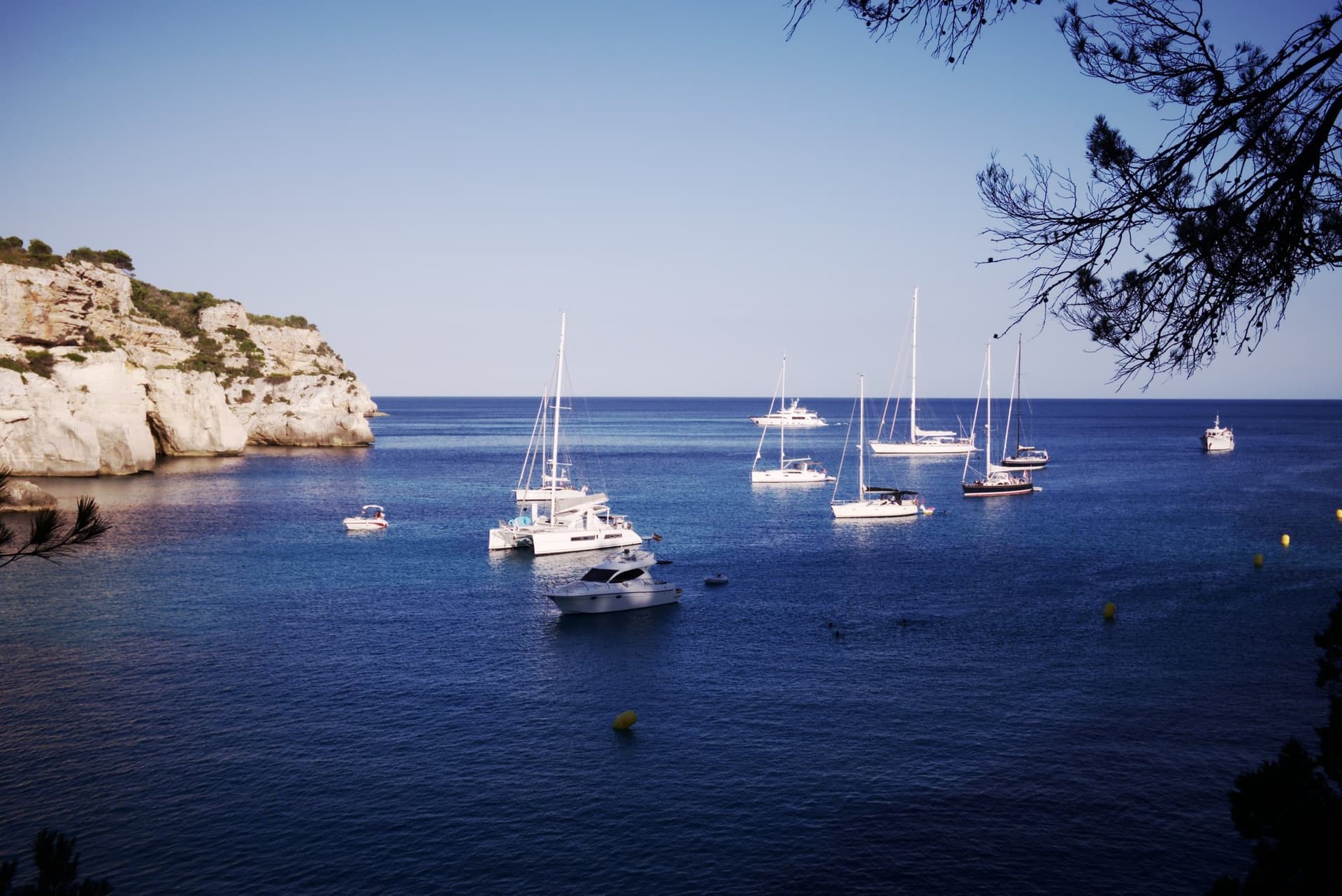
Menorca's best-known dive is a cavern you can surface inside. Pont d'en Gil, off the west coast near Cala'n Bosch, is sold by the centre that runs it for a wide entrance, submerged stalactites and an air dome where divers come up under the rock. It sets the island's tone: caverns, tunnels and halocline caves cut into limestone that has been dissolving for millennia, with the passages beyond the daylight zone left to divers who hold cave training.
The south-east coast adds more of the same rock. Cap d'en Font is a multi-chamber cave system that local centres keep for experienced divers, the Moon Pool at Pozo de la Luna is a cave dive with a 17 m entry cavern and a freshwater halocline, and Es Caragol, a whitewater reef a kilometre offshore, gives Open Water divers grottos, chimneys and arches at 16 to 21 m. On the north-east coast Swiss Cheese is a shore dive through perforated rock at Arenal d'en Castell.
Depth comes from one wreck. The Malakoff sank in 1929 and lies upright on sand at 38 to 40 m off the south-west cape, with gorgonians on the hull, barracuda in the water above and groupers and morays in the structure. It is a boat dive from the marina at Cala'n Bosch.
Two marine reserves frame the rest. North Menorca, declared in 1999, covers 5,085 ha of the Tramuntana coast from Fornells west past Cap de Cavalleria, and holds Sa Nitja's posidonia reef. The Illa de l'Aire reserve, created in April 2019 at the far south-east tip, covers about 719 ha, 454 of them a special diving zone, and its submerged zone has been a Cultural Heritage Site since 2010, with sunken wrecks and anchors among its archaeological remains. Groupers and barracuda are what the reserves are known for; moray eels, congers, octopus and lobsters fill out the reef.
The island has several dive bases, not one: Cala'n Bosch and Ciutadella on the west, S'Algar and Cala Torret on the south-east, Son Bou on the south coast and Fornells in the north. Each centre dives the water closest to its own port, so choose the base by the dive you want and name it when you book; a rental car makes more than one base workable. Fly into Menorca Airport (MAH), near Maó.
Diving inside either reserve needs a personal, non-transferable authorisation from the Govern de les Illes Balears, issued online against your certification and insurance. It is sold by the day, fortnight or year, and an annual one is valid in both Menorca reserves. In the North reserve each Cap de Cavalleria sector is capped, and Sa Nitja takes only two dives a day with prior authorisation from the reserve's managing body, so those dives are fixed ahead of your trip. The reserves close cave interiors to recreational divers entirely. Under the 2026 order on group diving, designated points in each reserve carry buoys reserved for authorised centres, installed in April and removed in October.
The west coast, with Pont d'en Gil and the Malakoff, lies far from both reserves, which sit on the north coast and the far south-east tip. The wreck lies past Advanced Open Water depth and its operator asks for Deep Diver training, the cave sites are advanced dives, and Es Caragol and Swiss Cheese are the gentler options. May to October is the main season, and the Tramuntana is the weather to plan a spare day around in the north.
Limestone calcarenite in the south and older Devonian and Triassic rock in the north, eroded over millennia into ravines, caverns and tunnels, with posidonia meadows over the sand.
The diving here splits into 5 zones:
Cave dive with halocline and surfaceable Moon Pool on Menorca's SE coast
Multi-chamber cave system on Menorca's SE coast; not suitable for beginners
OW divers wanting a reef dive in contrast to Menorca's SE coast caves
Book online or contact a centre that dives this area.
PADI 5-Star dive center on Menorca's SE coast; sole Marca Menorca Biosfera certified dive centre on the island; Cap d'en Font cave complex and Isla del Aire reserve; seasonal May-November.

SSI Instructor Training Centre at Port d'Addaia inside Menorca's Northern Marine Reserve, with Extended Range technical diving, 5 languages (DE/EN/FR/ES/IT), Swiss Cheese less than 5 minutes by boat, and year-round Mon-Sat operation.
SSI dive centre in Cala Galdana with island-wide boat reach, conservation credentials, and a programme covering south, west, and north Menorca including Malakoff, Pont d'en Gil, and Swiss Cheese.

An SSI boat-diving centre on Menorca's SW coast, giving access to Pont d'en Gil, the Malakoff wreck, and 20+ sites on the west coast from Cala'n Bosch.
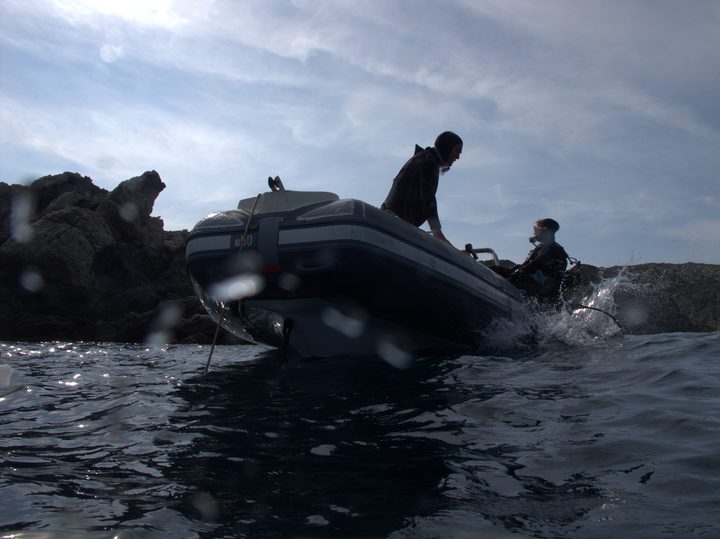
Shore-based SSI Centre at Cala Blanca on Menorca's west coast, with a house reef steps from the beach, IAHD adaptive diving, and six languages.

PADI dive centre in Ciutadella's historic port with 30+ west-coast sites, personalised small-group instruction, and specialist access to the Pont d'en Gil cave and Malakoff wreck.

SSI center in Fornells founded 2011 by marine science graduates; Norte de Menorca reserve specialists; full pricing published and bilingual team.
Get in touch to add or claim your dive center listing on DiveCodex.
June, September and early October pair good visibility with fewer people; July and August are warmest but plankton can cut visibility to 8-12 m. The north wind (Tramuntana) mostly hits the north coast and exposed headlands, and centres move to sheltered water when it blows.
What can go wrong here, and what divers do about it. Conditions change - take the briefing from the operator on the day.
Balearic diving decree2026 amendment to the decreeRegister of dive centresChecked: Oct 2026
National rules also apply: Rules and permits in Spain
It is a named, personal permit that cannot be passed to anyone else. You apply online with a valid dive certification and proof of accident and civil-liability insurance, and you sign a responsible-diving commitment. The longer permits save money if you dive more than a few days, and an annual one is valid in both Menorca reserves.
Inside either reserve, recreational diving in the interior of underwater caves is not allowed. The caves on the south-east coast, such as Cap d'en Font and the Moon Pool, sit near the Illa de l'Aire reserve, and the boundary is drawn on the zoning map the Govern holds, so ask the centre whether a given cave dive lies inside it before you book it as a cave dive. The west-coast cavern at Pont d'en Gil is far from both reserves.
For a quiet, protected stretch of coast, yes. The Cap de Cavalleria sectors are capped, Sa Nitja needs authorisation from the reserve's managing body before you dive, and the north wind can cancel a day, so build in a spare one. The reward is posidonia reef, red coral on rocky ground and an uncrowded water column.
The operator that runs it gives 38-40 m for the hull, while its trip text says 30-40 m. Either way the deepest part touches the 40 m limit of recreational diving, past the 30 m Advanced Open Water ceiling, and that operator asks for Deep Diver or a 3-star equivalent as a minimum.
Es Caragol is an easy offshore reef at 16-21 m, with grottos and arches to explore slowly. Swiss Cheese is a shore dive with swim-throughs and is rated moderate. Cap d'en Font and the Moon Pool are advanced cave dives that operators describe as unsuitable for beginners.
Pick by the dive you want, because each centre works the water nearest its own port. Cala'n Bosch and Ciutadella suit Pont d'en Gil and the Malakoff, S'Algar and Cala Torret suit the south-east caves and reef, Fornells is the gateway to the North reserve. A rental car makes combining bases practical on an island this size.
May to October is the main season, with June, September and early October offering the best balance of visibility and space. The reserve dive buoys go in each April and come out in October. Diving continues through winter in 13-15 C water, with fewer operators working.
Dusky groupers and yellowmouth barracuda are the headline animals, and operators report them multiplying inside the Illa de l'Aire reserve since protection began. Moray eels and congers favour the caves and the Malakoff, octopus work the rubble, and spiny and slipper lobsters are recorded in the North reserve. Red coral grows on its rocky ground, and the noble pen shell, critically endangered across the Mediterranean, is recorded there too.
Also known as: Minorca
Log your dives - notes, photos, conditions and the marine life you saw - and share them as one public diver profile. What you share helps the next diver, too.
Log every detail
Depth, duration, conditions, gear, buddy, notes — all in one place. Import from Suunto and other dive computers.
Track marine life
Record species sightings on each dive. Build a personal catalogue of everything you've seen underwater.
Your public dive profile
Share your dive history, stats, and experiences with a profile page you control. Show the world where you've been.