

Haliotis Santa Maria
PADI Career Development Centre branch at Hotel Colombo, Vila do Porto, Santa Maria, running boat trips to Ambrósio's mobula rays and the offshore Formigas/Dollabarat reserve, June to October.
PADI7 services2 languages
The Azores' oldest island pairs sheltered marine-reserve dives with day-boat trips to a manta-ray seamount and a remote grouper-filled reserve.
Last updated September 2026
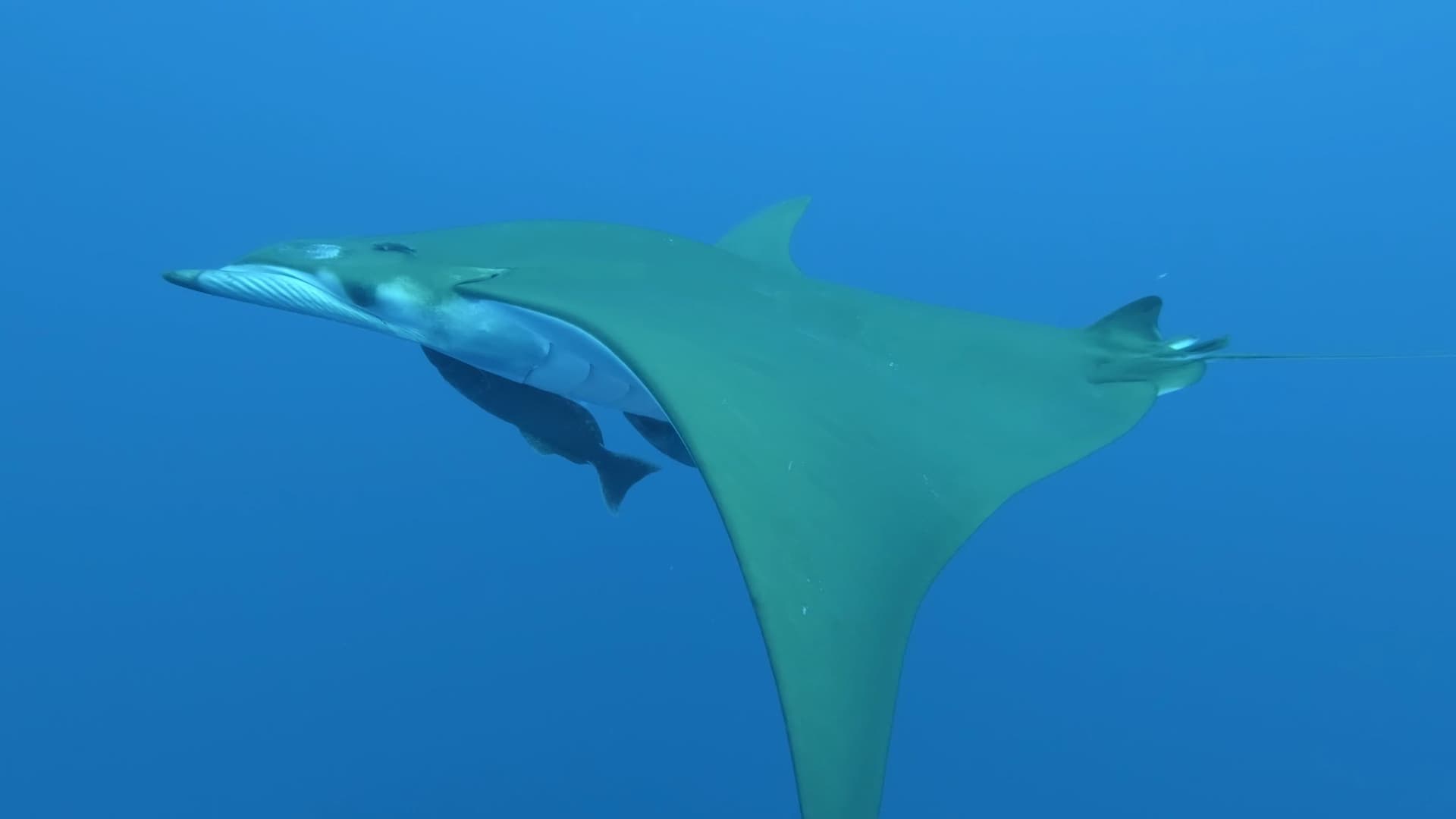
Santa Maria is the oldest and southernmost island in the Azores, its underwater terrain eroded over roughly eight million years into caves, arches and volcanic pinnacles. Diving here splits into two contrasting products from a single base, Vila do Porto marina: sheltered marine-reserve dives close to shore, and long-range day-boat trips to two outer reserves that draw divers from across the archipelago.
The area's signature dive is Baixa do Ambrósio, a seamount reef about 40 minutes out where manta and devil rays gather on a shallow anchor line around 5-15 metres; a rock platform below runs anywhere from about 42 to 50 metres by most accounts, so treat any single depth figure for the platform as approximate. The same reef carries Santa Maria's best-corroborated whale shark reports in the Azores, seasonally in July to September, though sightings track warm-water years and are never a guaranteed encounter. Further offshore, the Formigas Islets and Dollabarat Bank sit inside a natural reserve where groupers are reported unusually approachable and current-driven aggregations of jacks and barracuda are common; the trip only runs in a calm sea.
Closer in, Pedrinha is a sheltered marine-reserve reef ten minutes from the marina, with a shallow platform, cave galleries and current calmer than the offshore reserves, a favourite for night dives and easier diving. Closer still, Ilhéu da Vila is a five-minute boat ride from the marina, the shortest crossing in the area, and a site that welcomes divers of every level; its north-side cave holds nudibranchs and shrimp beneath schooling jacks and barracuda. Amberjacks, moray eels, octopus and large stingrays turn up across the area's reefs.
Santa Maria has no ferry link to other Azores islands, so getting here, and combining it with a second island, means flying; build in a full day between diving and any onward flight, since diving is not recommended within 24 hours of one. Santa Maria Airport sits five kilometres from Vila do Porto, where every operator's boat departs. The island supports only a handful of dive shops, all based at or next to the marina, and community reports describe them filling up on short notice in the June-to-October season, so a walk-in slot is not a safe bet; book ahead. Ambrósio, Baixa da Maia, Pedrinha and Ilhéu da Vila are protected marine areas; some reports describe a registration requirement for operators and a roughly 90-minute stay limit at Ambrósio, though neither figure comes from a source confirmed enough to treat as settled. One recurring option beyond day-boats is a multi-day sailing-catamaran charter departing the same marina, run as a private booking rather than a scheduled liveaboard. Pack a 7mm wetsuit for the main season: community reports describe needing it even at the height of summer, thicker than the general Azores water-temperature range alone would suggest.
The Azores' oldest island, its underwater terrain eroded over roughly eight million years into volcanic walls, pinnacles, caves and tunnels.
Santa Maria's easiest big-animal dive, devil rays on a shallow anchor line
Santa Maria's closest, easiest dive: nearshore cave, night dives, baptisms
Santa Maria's calmest boat dive: shallow platform, caves and easy night diving
Santa Maria's photographer-rated reef, booked by notice not a fixed slot
Santa Maria's remote big-pelagic seamount, always paired with Formigas
Santa Maria's columnar-basalt wall dive, named for the Giant's Causeway
Azores' offshore big-animal seamount, reached only by a long AOW-gated crossing
Santa Maria's north-coast bank, one continuous current-swept profile to 40-45m
Book online or contact a centre that dives this area.
PADI Career Development Centre branch at Hotel Colombo, Vila do Porto, Santa Maria, running boat trips to Ambrósio's mobula rays and the offshore Formigas/Dollabarat reserve, June to October.

SSI dive centre and PADI Resort at Vila do Porto marina, Santa Maria, Azores, running boat day trips to Baixa do Ambrósio's mantas since 2009.

Get in touch to add or claim your dive center listing on DiveCodex.
Boat operations run into the shoulder months either side of the June-October core, but the outer Formigas and Dollabarat reserve trip needs a calm, flat sea and does not run every day it is scheduled.
What can go wrong here, and what divers do about it. Conditions change - take the briefing from the operator on the day.
Marine reserve
Park authority and permit formsPark rules (2026 text)Banco Condor boat rulesChecked: Oct 2026
Natural park
Marine area rulesDive access timetablePark decreeChecked: Oct 2026
National rules also apply: Rules and permits in Portugal
Both figures appear in the sources, and neither is the whole picture: operators and the official tourism board report depths anywhere from about 20 to 50 metres for the same seamount, most likely because they describe different profiles on the same site, and not one settled number. Ask your operator which part of the reef your dive plan covers.
No. The island has the Azores' best-corroborated whale shark reports, including an official claim that they visit in summer and at least one independent diver sighting, but this is a seasonal possibility in warm-water years, not a guaranteed encounter.
These sites sit inside protected marine areas, and some reports describe a registration requirement for the operator and a roughly 90-minute stay limit at Ambrósio, but neither detail comes from a source solid enough to state as settled. No permit fee applies to recreational divers here.
By air only: there is no ferry between Santa Maria and the rest of the archipelago, and the airport sits five kilometres from Vila do Porto, where every dive boat departs. Because diving is not recommended within 24 hours of a flight, island-hopping means building in a non-diving travel day.
Yes. Santa Maria supports only a handful of dive shops, and divers asking about walk-in bookings have been told the island runs short on notice in the main season. A same-week slot is not a safe bet, so book early.
The season runs June to October, with manta rays, devil rays and the best whale-shark odds concentrated July to September. Outside that window, weather limits boat operations.
Divers who have made the trip describe unusually approachable groupers and current-driven aggregations of jacks and barracuda, calling it a highlight of a week based on the island. The trip only runs when the sea is calm enough for the crossing, so keep a flexible window in your schedule instead of one fixed date.
Both are Azores pelagic destinations reached only by plane from each other, so most divers commit to one island for a short trip and save the other for a later visit. Santa Maria's offshore reef is a shorter run from its marina than Faial and Pico's Princess Alice Bank crossing, and its whale-shark odds are the better-documented of the two; Faial and Pico's signature dive is a summer blue-shark trip that Santa Maria does not offer.
Not a purpose-built one. One recurring product is a multi-day sailing-catamaran charter departing Vila do Porto's marina, booked as a private trip, not a scheduled liveaboard, and requiring Advanced Open Water certification.
It depends on the site. Ilhéu da Vila, a five-minute boat ride from the marina, welcomes divers of every level and doubles as the local baptism site; Pedrinha's shallow platform, ten minutes out and calmer than the offshore reserves, is also accessible, though its cave galleries and south-slope drop add a more demanding option on the same reef. Ambrósio's deeper platform and the outer Formigas and Dollabarat reserve involve more current, boat time and depth.
Also known as: Ilha de Santa Maria, Santa Maria Island
Log your dives - notes, photos, conditions and the marine life you saw - and share them as one public diver profile. What you share helps the next diver, too.
Log every detail
Depth, duration, conditions, gear, buddy, notes — all in one place. Import from Suunto and other dive computers.
Track marine life
Record species sightings on each dive. Build a personal catalogue of everything you've seen underwater.
Your public dive profile
Share your dive history, stats, and experiences with a profile page you control. Show the world where you've been.