

Deep Blue Azores
SSI dive centre at Porto das Pipas marina, Angra do Heroismo, founded 2017, diving Terceira's established sites plus offshore trips to Banco D. João de Castro.
SSI3 services1 language
The Azores' historical dive island: a 400-year shipwreck-and-anchor park by Angra do Heroismo, volcanic caves, and easy day-boat diving from two ports.
Last updated September 2026
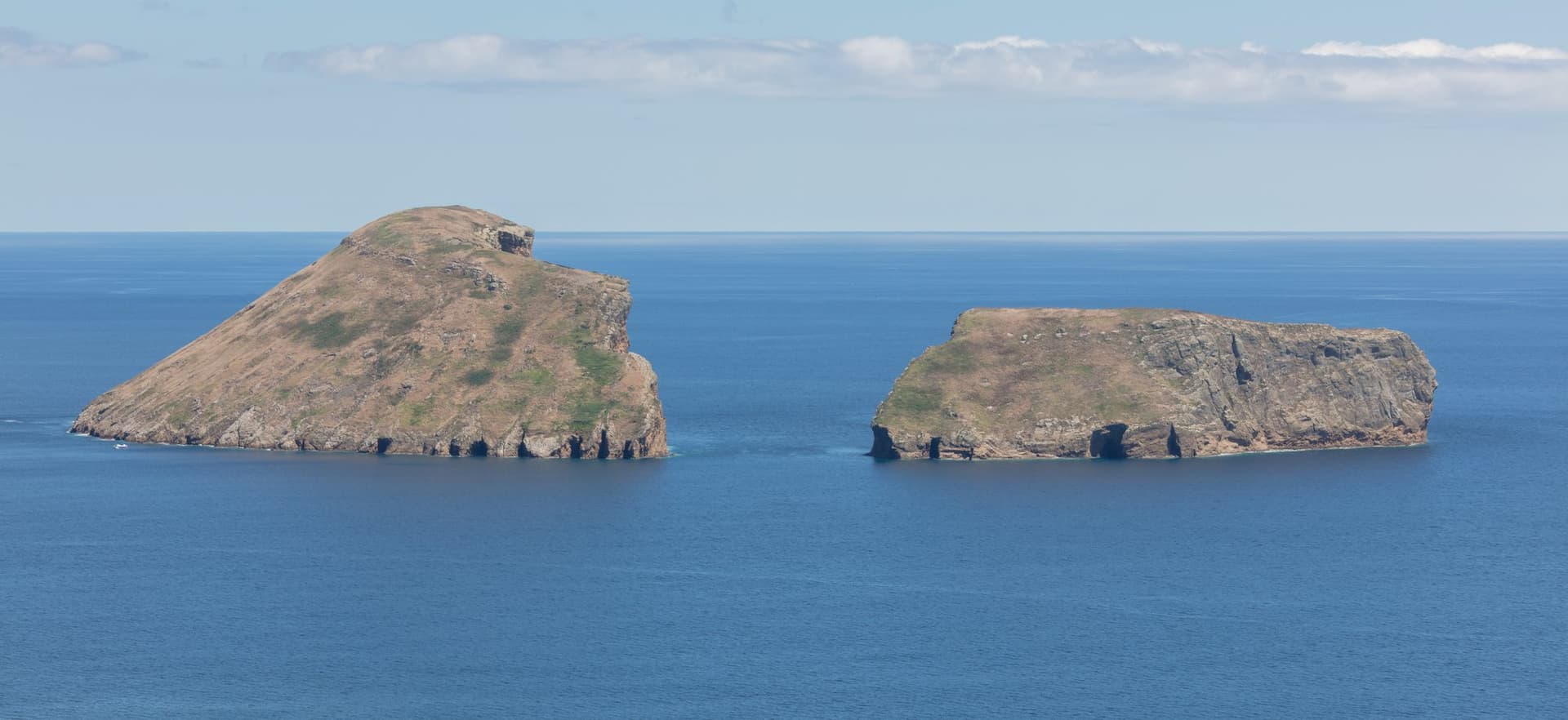
Terceira is the Azores' historical dive island, built around one fact that organises the rest: the Bay of Angra do Heroismo holds an Underwater Archaeological Park, decreed by the Azores regional government in 2005 and opened to divers the following summer, home to an estimated seventy to ninety shipwrecks since the 1500s and two zones divers can visit today, the Lidador wreck and the Cemiterio das Ancoras, the Cemetery of Anchors. Ships here lost their anchors trying to outrun the bay's violent winter storms, the locally named carpenter winds, and the wreck field now sits inside a UNESCO World Heritage historic centre. The Lidador is the park's easy wreck, beginner- and snorkel-friendly at 7 to 11 metres depending on the source; the anchor field's depth is contested too, one source averaging 18 metres with a 35-metre maximum, another giving 22 to 32 metres across rocky and sandy ground. Outside the park, the coast is volcanic: arches, tunnels and caves. Cinco Ribeiras pairs a sheltered shallow zone, open to any level, with a cave complex kept for more experienced divers, and Gruta dos Ratoes, on Ilheu das Cabras, is a volcanic sea cave with a documented summer gathering of eagle rays and round stingrays, wide enough to need no cave certification. Fradinhos, a set of islets off the south coast, is the area's deep pinnacle dive, advanced only. Along the coast look for eagle rays, dusky grouper, round stingrays, moray eels, amberjack and octopus. Offshore, the hydrothermally active Banco Dom Joao de Castro seamount is Terceira's serious objective. Community divers describe the island as the accessible, all-levels choice in the Azores, often visited on a family connection more than picked first for pelagic encounters.
Fly into Lajes International Airport (TER); a rental car covers the two dive towns better than the limited bus service. Angra do Heroismo, on the south coast, bases the Archaeological Park and its UNESCO-listed old town; Praia da Vitoria, on the north-east coast, sits closer to the airport and is the shorter run out to Banco Dom Joao de Castro, at around 110 minutes by boat against roughly 140 from Angra. No permit or entrance fee applies inside the park; book through one of Terceira's dive centres, among them Deep Blue Azores, Octopus Diving Center, Qmann Diving and Scubazores Divers, with at least one active operator on each of Graciosa and Sao Jorge too. Diving here is day-boat only; there's no full-time liveaboard fleet anywhere in the Azores, though private charters can be arranged. The best season runs mid-July to mid-October, for the warmest water and calmest crossings; diving continues year-round, with cooler water and rougher seas outside that window.
Volcanic island terrain: lava arches, tunnels, canyons and pinnacles, with rocky reefs built from the same eruptions that shaped the coastline above water.
The diving here splits into 2 zones:
40-plus wrecked anchors inside Terceira's Underwater Archaeological Park
Terceira's own-protected lava-tube cave with a 1911 wreck boiler at the entry
Terceira's advanced offshore cone with black coral and passing devil rays
Rare mass eagle ray gathering in an Azores cave that needs no cave certification
Terceira's shore-accessible 1878 wreck, easy and beginner-friendly at 7-11m
Terceira's current-swept volcanic reef with resident grouper and hogfish
An active volcano dive with hydrothermal vents and devil ray encounters
A two-tier Terceira dive, shallow wall and ravines to a 35m black-coral pinnacle
Terceira's soft-coral gorge dive with devil ray and eagle ray sightings
Book online or contact a centre that dives this area.
SSI dive centre at Porto das Pipas marina, Angra do Heroismo, founded 2017, diving Terceira's established sites plus offshore trips to Banco D. João de Castro.

SSI dive centre in Praia da Vitoria, Terceira, running since 2008, with boat trips to Banco D. Joao de Castro, Vapor Lidador and Cinco Ribeiras.

SSI dive centre and shop on the Silveira road in Angra do Heroismo, Terceira, founded 2021, running boat and shore dives across 11 named spots.

SSI dive centre at Porto das Pipas, Angra do Heroismo, running boat dives to the Cemetery of Anchors and the Lidador wreck, open since April 2025.

Get in touch to add or claim your dive center listing on DiveCodex.
Diving runs year-round, but winter and spring bring rougher seas and cooler water, and the offshore trips to Banco Dom Joao de Castro are the most weather-dependent part of the season.
What can go wrong here, and what divers do about it. Conditions change - take the briefing from the operator on the day.
Marine reserve
Park authority and permit formsPark rules (2026 text)Banco Condor boat rulesChecked: Oct 2026
Heritage zone
Park decree (text in force)Banned activities in the parkDecree creating the park (2005)Checked: Oct 2026
National rules also apply: Rules and permits in Portugal
Estimates vary by source, from about 7 metres to 8 to 11 metres. There is no single fixed number for it; the wreck sits somewhere in that 7 to 11 metre band.
Sources give two different bands for the same site: one puts it at an average of 18 metres and a maximum of 35, another gives 22 to 32 metres across rocky and sandy ground. Open Water divers can manage the shallower zone; the deeper anchors are for more experienced divers.
No. The park itself charges no diver fee or permit; you arrange the dive through one of the local centres, the same as any other Terceira dive.
Not established as a Terceira sighting. The Azores tourism authority's own whale-shark content names Santa Maria, not Terceira, as the island where the species turns up, and no Terceira-specific sighting or trip was found. Treat any whale-shark mention for this island as unconfirmed.
One account describes a diver planning a two-to-three-day add-on who chose Terceira because Faial/Pico's main draw, Princess Alice Bank, is a two-and-a-half to three-hour crossing each way, while Terceira offered a full day of accessible diving plus a shot at its own offshore bank. That is a single, uncorroborated trip report, not a rule, and other divers rate Faial/Pico's pelagic encounters higher.
Yes, and it is the closer of the two islands that reach it: about 110 minutes by boat from Praia da Vitoria against roughly 160 minutes from Sao Miguel's Ponta Delgada. The named operator running the trip departs from Praia da Vitoria.
Both have an active operator. Graciosa's diving is confirmed through two listed centres, and Sao Jorge has one, found through the tourism portal's individual business page; its general directory had not been updated to show it.
Mid-July to mid-October, for the warmest water, calmest seas, best visibility and the highest odds of a pelagic sighting on the offshore trips. Diving continues year-round, but winter and spring bring cooler water and rougher seas.
Generally mild around the coast. Two exceptions: Pedra Perdida runs moderate-to-strong, and the open-water hang at Banco Dom Joao de Castro is also moderate-to-strong with no structure to shelter behind.
Not as a full-time fleet. Diving throughout the Azores, Terceira included, is day-boat only, though private multi-day charters can be arranged elsewhere in the archipelago.
Also known as: Ilha Terceira, Terceira Island
Log your dives - notes, photos, conditions and the marine life you saw - and share them as one public diver profile. What you share helps the next diver, too.
Log every detail
Depth, duration, conditions, gear, buddy, notes — all in one place. Import from Suunto and other dive computers.
Track marine life
Record species sightings on each dive. Build a personal catalogue of everything you've seen underwater.
Your public dive profile
Share your dive history, stats, and experiences with a profile page you control. Show the world where you've been.