Sataya Dolphin Reef

Also known as: Sataya

Horseshoe reef in Egypt's Fury Shoals where a resident pod of spinner dolphins rests in a sheltered lagoon, with steep outer walls past recreational depth.

Last updated May 2026

The dive

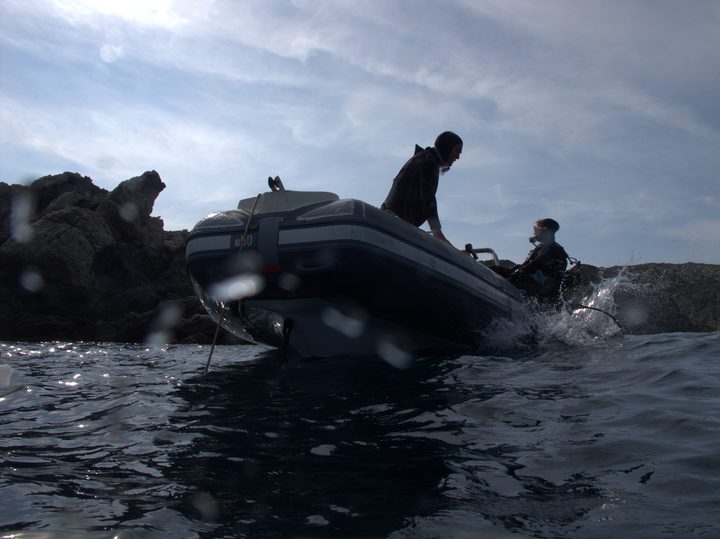
Sataya is two dives in one mooring. The boat anchors on the south side of the reef, outside the lagoon, and the cylinders go in first. A roll-off entry drops you onto a coral-draped wall that keeps falling past 80m, so the operating logic is to stay conservative on depth and let the moderate Fury Shoals current carry you along the face. Anthias clouds break around the wall, parrotfish and butterflyfish work the hard-coral cover, green and hawksbill turtles cruise the shallows, and bluespotted rays sit half-buried where the wall flattens out. Manta rays show outside the lagoon in spring, and a whale shark is an occasional rather than expected sighting.

Once the divers are back on the boat, the captain repositions inside the horseshoe. The lagoon is shallow, sandy and almost always glassier than the open sea outside it, and a resident pod of spinner dolphins uses it as a daytime resting ground. The standing instruction from guides who consistently get good encounters is plain: stay still, do not chase, do not splash, do not duck-dive at the pod with fins beating. When it works, the dolphins approach the snorkellers and stay for several minutes. When it does not, the visit becomes a clear-water reef snorkel, which on a good day is also a fair payoff.

The framing for the day is therefore long: an early-morning road transfer to Hamata, the open-sea crossing, an outer-wall scuba dive at Red Sea standard, one or two long lagoon snorkel sessions with the pod, then the long return.

What makes it special

The defining feature is the resident pod and how the site lets you meet it. Sha'ab Samadai further north has a managed permit system and freediving restrictions; Sataya runs the encounter as snorkel-only inside the lagoon but allows freediving with the animals, with no operator quota and no zoning beyond "do not chase." Pod sizes reported routinely run 40-100+ animals, and a December 2024 community trip report noted "large schools of dolphins with many babies at Sataya" alongside the standard southern-Red-Sea cast. Year-round presence, day-to-day variability: that is the honest version.

The second reason to choose the site is the dual programme. An outer-wall Fury Shoals drift is an Egypt highlight on its own, and pairing it with a lagoon snorkel between dives extracts more from the long boat journey than a single-purpose reef would. That kind of stacking, a wall dive plus the dolphin snorkel and sometimes a second dive at a nearby Fury Shoals reef, is what makes Sataya a default inclusion on multi-day Marsa Alam trips and on Deep South and Brothers-Daedalus-Fury liveaboard itineraries.

Photographer's notes

The lagoon snorkel does not behave like a dive. Light is excellent and the water is shallow, but the dolphins control the pace and they do not stop for angles. Continuous-burst or video buys more usable frames than stills, and being still in the water is what brings the pod close enough to fill the frame. On the outer wall the Red Sea standard applies: morning sun on the south face works for wide-angle on the soft coral and anthias columns, and the deeper coral-pillar terrain rewards a strobe rather than ambient light. Manta encounters in spring sit outside the lagoon, where ambient blue and a wide enough lens are the right call.

Know before you go

Operator selection is the lever. Recent visitors report more than ten boats and around 200 swimmers in the lagoon simultaneously at peak European-summer times, and several explicitly call for stricter caps. Liveaboards arrive on the reef ahead of the day-boat fleet; Red Sea Diving Safari guests at Wadi Lahami camp run a 40-minute RIB transfer rather than the 1.5-2.5 hour Hamata crossing; both routes give a noticeably calmer encounter than the midday day-boat window. Pick an operator that does not chase and the snorkel itself improves measurably.

The logistics carry weight. Pickup runs around 05:00, the road transfer to Hamata is roughly 3 hours, the boat another 1.5-2.5 hours each way, and the Wadi El Gemal park fee is around 2 EUR per person at the harbour. A 3mm shorty is enough in summer; 5mm covers winter. Reef-safe sunscreen, hydration on long surface time, and November-February wind can cancel the day-boat run entirely. Some divers have historically described amphoras on the lagoon sand, but the report sits in a single older forum thread and is not corroborated elsewhere; treat it as folklore rather than a feature to look for.

Why Dive Sataya Dolphin Reef

What makes this dive site stand out.

  1. 1
    Resident spinner dolphin pod

    40-100+ animals routinely rest in the lagoon; freediving with the pod is permitted, unlike Sha'ab Samadai.

  2. 2
    Two dives in one site

    Outer-wall drift to 40m and a sheltered lagoon snorkel run as a stacked day programme.

  3. 3
    Horseshoe lagoon

    West-opening trident reef shelters a sandy 5-10m lagoon that stays calm when the open sea is rough.

  4. 4
    Fury Shoals offshore reef

    Reached only by boat from Hamata or by liveaboard; outer walls drop steeply past 80m.

  5. 5
    Wadi El Gemal protection

    Sits inside the Wadi El Gemal national-park marine boundary with a small park fee at Hamata.

Depth & Profile

5m
Min depth
40m
Max depth
5–25m
Typical range
ReefWallSandCoral

Location

24.1564°N, 35.7147°E

Conditions

Temperature
22°C30°C
Visibility
20–30m
Current
variable

Difficulty & Certification

ModerateMin cert: OW

Lagoon is easy; outer wall is advanced. Most groups dive only the wall and snorkel the lagoon.

Frequently Asked Questions

What's the difference between Sataya and Sha'ab Samadai (Dolphin House)?
They are two separate sites. Sha'ab Samadai sits closer to Marsa Alam town and runs a managed permit-and-zone system; freediving with the dolphins there is restricted. Sataya is roughly 100-110 km south in the Fury Shoals, with larger lagoon pods and freediving permitted, plus an outer-wall scuba dive that Samadai does not offer. The shared 'Dolphin House' label is a common source of confusion when booking.
Is swimming with the dolphins at Sataya ethical?
It can be. The lagoon is run snorkel-only, touching and chasing are prohibited, and operators that enforce a calm, no-pursuit approach get the closest encounters. The honest pressure point is volume: recent visitors describe more than ten boats and around two hundred swimmers in the lagoon at peak times. Liveaboard arrivals or off-peak day trips, and operators known for keeping their distance, materially improve the experience.
Can beginners or non-certified divers visit?
Yes for the snorkel and for OW divers on the sheltered lagoon side; the outer-wall drift to 40m needs AOW and current comfort. Most non-divers come for the snorkel programme alone, which is the operator-recommended way to approach the dolphins anyway.
How do I get to Sataya from Marsa Alam?
It is a full-day commitment. Pickup is around 05:00 from Marsa Alam-area resorts, then roughly 3 hours south by road to Hamata harbour and 1.5-2.5 hours by boat each way. Liveaboards on Deep South or Fury Shoals itineraries moor on the reef and reach it before the day-boat fleet. Wadi Lahami camp guests run a much shorter RIB transfer of around 40 minutes.
When should I go?
Spring (March-May) and autumn (September-November) give the most comfortable mix of warm water and calm crossings. Dives are possible year-round, but November-February winds can cancel day boats and summer midday lagoon time gets uncomfortably hot. Dolphins are reported year-round; encounter density varies by day rather than by season.
Is the coral still healthy after the 2024 bleaching?
The southern Egyptian Red Sea took a hard bleaching event in 2024, with a precursor in 2023, when September water hit around 32 degrees. Divers in the wider Wadi El Gemal and Fury Shoals belt reported significant hard-coral mortality afterwards. Site-specific post-event reports for Sataya itself are scarce, and offshore reefs typically fared better than shore reefs, but it is fair to expect some bleaching impact on the outer wall.
What can I see on the outer-reef dive?
Steep wall and pinnacle terrain with hard and soft coral, anthias clouds, parrotfish, butterflyfish, moray eels, bluespotted rays and the standard Red Sea reef cast. Green and hawksbill turtles are common. Whale sharks pass through occasionally, especially in winter and spring; manta rays are reported outside the lagoon in the spring plankton window. The wall itself reads like a typical Fury Shoals offshore reef rather than a pelagic-aggregation site.

Log your dives

Track every dive with depth, duration, conditions, and marine life sightings. Join a club and share your underwater experiences.

Try DiveLog — it's free