

Ali Sub
Family-run SSI dive centre in Villajoyosa diving Isla y La Llosa de Benidorm, known for its naturalist-led Piélago plankton expedition.
SSI8 services2 languages
Costa Blanca diving built around two marine reserves, Tabarca and Cabo de San Antonio, plus Marina Alta's caves and the Penyon de Ifach's walls.
Last updated July 2026
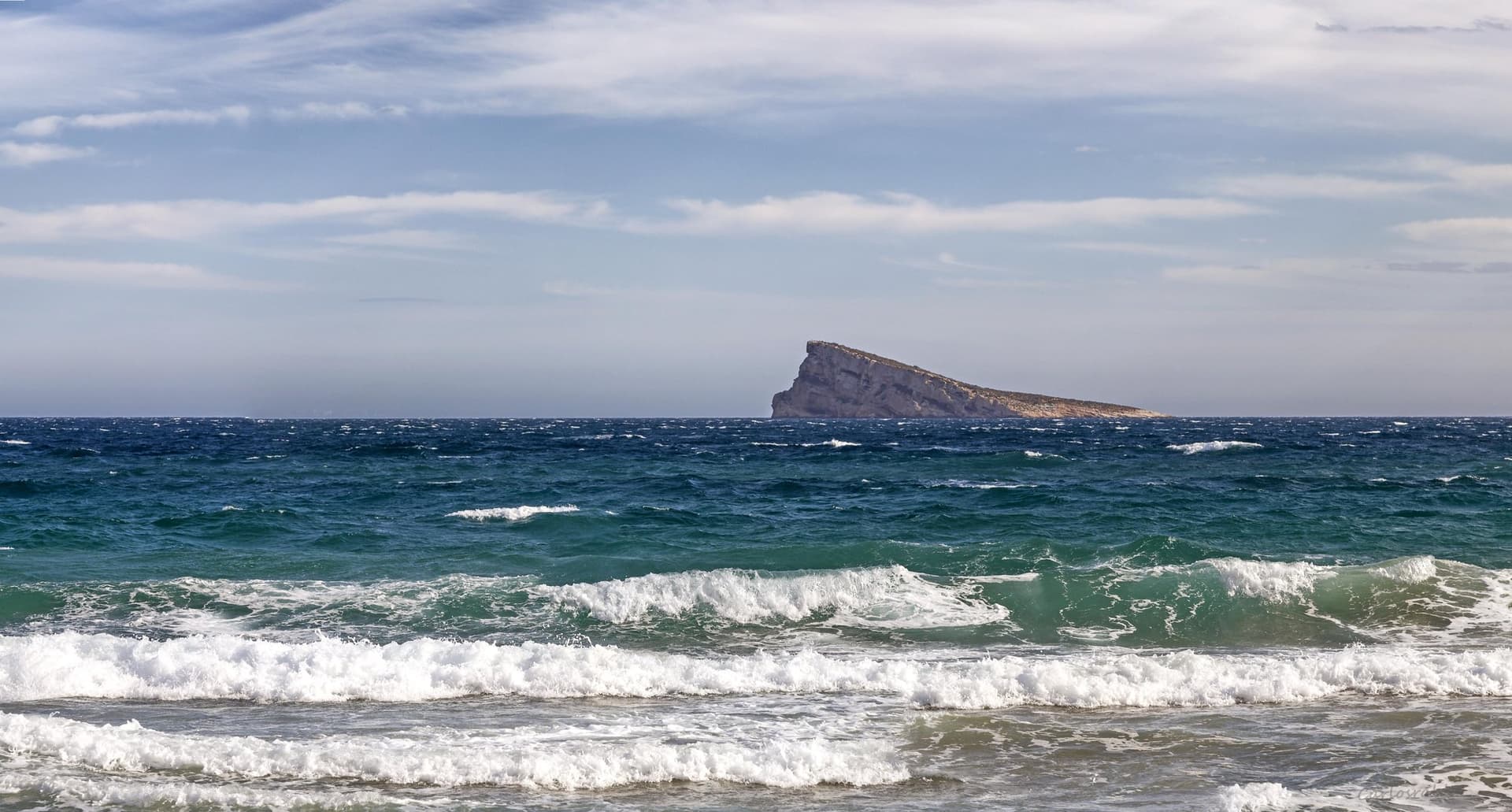
Two marine reserves anchor this stretch of the Mediterranean. Tabarca's waters, protected since 1986, were the first marine reserve declared in Spain; Cabo de San Antonio's, off Denia and Javea, followed in 1993. Between and around them, a limestone coast turns into caves, arches, and walls rather than big wrecks or strong-current pinnacles.
Cova dels Arcs, tucked into the cliffs near Benitatxell, is the area's calling card for cavern diving: three natural arches lit by daylight the whole way through. Cabo de San Antonio drops its reserve wall to sandy channels below the 150m cape. Isla de Benidorm packs a sheltered wall and an exposed pinnacle into one boat trip off the resort strip, and Cala Granadella offers the easiest shore entry on the coast. Tabarca's artificial reef, four concrete structures and three sunken fishing boats set in the 1990s, sits under the tightest quota of any site here.
Grouper and moray show up across nearly every sector. Octopus and seahorses are common on the reserve sites in particular. Eagle rays and sunfish pass through in summer, along with occasional dolphins. Worth watching for, but not something to plan a dive around.
Compared with Cabo de Palos or the Illes Medes further along the coast, Alicante trades the biggest grouper aggregations for calmer, year-round conditions. Dive centres here operate in multiple languages, reflecting the coast's large resident northern-European population. August brings more boat traffic; the trade-off is a coast that dives easily most of the year.
Tabarca requires prior authorisation and a per-zone daily quota of 7 or 10 divers, arranged through an authorised boat from Santa Pola or Alicante; book ahead for summer weekends. Cabo de San Antonio allows recreational diving without an individual permit, so reserve access there is far more straightforward. The rest of the coast, including the Penyal d'Ifac at Calpe and the Serra Gelada waters around Isla de Benidorm, carries natural-park status but no diving permit or quota.
May to October suits warmth and beginners; April-June and September-November bring more marine-life encounters and fewer boats. Winter divers chase the year's clearest visibility. Beginners start at shore coves such as Granadella or Cala el Raco, then move up to the reserve walls and Isla de Benidorm once certified; La Punta's 30m-plus profile calls for Advanced Open Water.
A limestone Prebetic coast: vertical cliffs over 150m at Cabo de San Antonio, submerged arches, chimneys and cavern systems, rocky reefs, and wide Posidonia oceanica meadows, with sandy channels in the sheltered bays.
Alicante's hand-built reef dive, with a late-1980s origin and a strict daily quota.
Benidorm's signature island dive: sheltered wall to exposed pinnacle, one trip.
Alicante's clearest wall dive, inside one of two marine reserves on this coast.
A guided, OW-appropriate cavern dive with three arches, not the system beyond
Costa Blanca's easiest shore-accessible dive for beginners and try-dives
An easy grotto-and-tunnel dive with genuine local folklore, no advanced skills
The easiest, most accessible beginner and snorkel dive near Calpe's Ifach rock
Moraira's classic mid-level wall, with a cave and tunnel below a historic tower
The Ifach area's wall dive for certified divers ready past the shallow coves
A compact islet dive built around one chimney passage, not open-water drama
The Ifach area's Advanced Open Water dive, for a genuine deep profile past 30m
The Calpe area's easy, training-friendly swim-through dive among rock arches
Reliable barracuda and amberjack schools on a dive that never repeats
Book online or contact a centre that dives this area.
Family-run SSI dive centre in Villajoyosa diving Isla y La Llosa de Benidorm, known for its naturalist-led Piélago plankton expedition.

Small snorkel and dive club in Alicante offering Open Water and bautizo courses, snorkel routes, and organised trips like El Hierro.
PADI 5-Star and SSI Diamond dive centre at Marina Nou Fontana, Jávea, operating since 1995 with boats moored directly at the door.
PADI dive centre at the Club Náutico de Moraira, running since January 2009, covering 30+ dive points from Benidorm to Jávea.
Non-profit dive club in Torrevieja, FEDAS/CMAS-registered since 2018, running member dives along this coast plus regular trips to Cabo de Palos and Cartagena.
Family-run PADI 5-Star Dive Resort at the foot of the Peñón de Ifach, specialising in first-time and beach-entry diving in Calpe.

PADI dive centre in Alicante city, not Altea, running small-group trips to the Tabarca reserve, Benidorm Island, and local bay sites since 2017.
Get in touch to add or claim your dive center listing on DiveCodex.
Yes. Diving Tabarca requires prior authorisation from the regional fisheries authority, and boats must moor to a designated buoy. Each named dive zone inside the reserve carries its own daily quota, either 7 or 10 divers, so an authorised centre normally handles the paperwork as part of booking the trip.
Recreational scuba diving is permitted throughout the reserve without an individual permit. Organised or professional diving operations need separate authorisation, and fishing is banned in the reserve's protected core, which is why the walls stay in noticeably better condition than open coast nearby.
It's the resort's signature dive: a sheltered wall on one side of the island opens onto an exposed pinnacle on the other, so a single boat trip covers two very different profiles. The surrounding waters sit inside a natural park, and grouper and damselfish are a regular sight along the wall.
Cova dels Arcs, near Benitatxell, is the accessible option: three natural arches lit by daylight throughout, guided at Open Water level rather than technical cave diving. It's a cavern dive with visible exits, not a penetration dive into an unlit system.
Alicante trades the biggest grouper aggregations of Cabo de Palos or the Illes Medes for calmer typical conditions, year-round operation, and a cave and cavern offering neither of those reserves has. Fish size and density here run smaller, and August brings more boat traffic, but the variety across one short coastline is hard to match.
May to October suits beginners and warmer water. April to June and September to November bring more marine-life encounters and thinner boat traffic. Winter divers with more experience come for the clearest visibility, since plankton levels drop. The coast is diveable year-round.
Cala Granadella is the easiest shore entry in the area, a shallow cove built for beginners and try-dives. Cova dels Arcs is also shore-accessible from Benitatxell, though it's a guided cavern dive rather than an open swim.
Winter runs roughly 13-17C, spring 15-21C, summer surface temperatures reach 22-28C, and autumn sits around 18-23C. A 5mm wetsuit covers summer; step up to 7mm, a semidry, or a drysuit for winter, and expect noticeably cooler water below the thermocline on the deeper reserve and Ifach sites even in summer.
Tabarca, declared in 1986, was the first marine reserve declared in Spain, and runs a strict per-zone diver quota with prior authorisation required for every dive. Cabo de San Antonio, protected from 1993 and covering roughly 900 hectares of protected waters, allows recreational scuba without an individual permit; only professional or organised diving needs authorisation. Everywhere else on this coast, including the Penyal d'Ifac and the waters around Isla de Benidorm, carries natural-park protection but no diver permit or quota system.
Yes. Shore coves like Cala Granadella and Cala el Raco sit at a few metres and are built around try-dives and Open Water training. Certified divers move up to the reserve walls and Isla de Benidorm, while La Punta's 30m-plus profile calls for Advanced Open Water.
Log your dives - notes, photos, conditions and the marine life you saw - and share them as one public diver profile. What you share helps the next diver, too.
Log every detail
Depth, duration, conditions, gear, buddy, notes — all in one place. Import from Suunto and other dive computers.
Track marine life
Record species sightings on each dive. Build a personal catalogue of everything you've seen underwater.
Your public dive profile
Share your dive history, stats, and experiences with a profile page you control. Show the world where you've been.