

ATLANTIK Scuba Diving Tenerife
PADI Gold Palm 5 Star IDC Resort in Puerto de la Cruz, founded 1994 by the Christoph family and run today by sons Thomas and Dirk.
PADI / SSI8 services3 languages
Also known as: Kamin, The Chimney
A vertical volcanic chimney off Puerto de la Cruz, Tenerife: a 5m shaft into a gorgonian-carpeted canyon with lava bridges, 15-35m, advanced divers.
Last updated July 2026
A vertical shaft in the rock, roughly five metres across, drops divers from the anchor near 15-18 metres down to a floor between 33 and 35 metres, depending on which account of the site's history you go by. The German and Spanish descriptions of this same dive differ by a couple of metres at both ends, close enough that it barely matters once you're inside the shaft. At the bottom, a side opening leads into a chamber some divers call the living room, its floor and walls carpeted with red gorgonians and yellow fan corals. From there the route continues east into a canyon about 15 metres wide, crossed by three lava bridges thick enough to swim beneath rather than around. A tunnel system runs underneath the canyon floor, threading below the bridges before the route climbs back up toward the anchor point. Wrasses and moray eels work the crevices along the way, with barracuda occasionally crossing the open water above the canyon.
This was the first dive site Atlantik found after opening in 1994, back when the operator worked from two small inflatable boats and swept the seabed with a handheld echo-sounder instead of a proper boat's electronics. When the readout showed a sudden drop, the crew anchored and went to look. What they found was the chimney. The centre still describes the descent as diving like Santa Claus, dropping straight down the shaft before the exit spits divers out into the coral-carpeted room below. Within the wider Puerto de la Cruz cluster, that vertical drop is what sets this site apart from its neighbours: not a single chamber, not a maze of passages, just one shaft down and a canyon on the other side. The German name, Kamin, is still how some visitors know the site, even though La Chimenea is the name that has stuck locally.
Divers typically run this dive close to the edge of no-decompression limits, so gas planning matters more here than on a shallower reef dive. Advanced Open Water is the working minimum, and this isn't the site to try as a first taste of Advanced-level diving. A torch earns its place in a BCD pocket for the lava tunnel system beneath the canyon, even though most of the dive happens in open water and natural light. A 5mm wetsuit generally covers the site year-round. Visibility across this stretch of coast tends to run 15-30 metres and occasionally further, with April-June and September-November flagged as the strongest windows. Atlantik, the centre that discovered the site, still runs the trip regularly; expect roughly ten minutes on the water from the harbour.
What makes this dive site stand out.
A roughly 5m-wide shaft drops through the rock like a natural staircase down
Red gorgonians and yellow fan corals cover the floor at the base of the shaft
A 15m-wide canyon on the eastern side is spanned by three natural rock bridges
The first dive site Atlantik located here, using an echo-sounder from small boats
28.4191°N, 16.5567°W
These windows are flagged as the strongest for visibility
Contact a local operator for current pricing
Advanced Open Water is the stated minimum; the dive typically runs close to no-decompression limits
Summary
Described as suited to committed, ambitious divers rather than a first taste of Advanced-level diving
Safety considerations
What can go wrong here, and what divers do about it. Conditions change - take the briefing from the operator on the day.
Book a guided dive at this site.
PADI Gold Palm 5 Star IDC Resort in Puerto de la Cruz, founded 1994 by the Christoph family and run today by sons Thomas and Dirk.
Get in touch to add or claim your dive center listing on DiveCodex.
Yes. Kamin is the German name used by the centre that discovered the site in 1994; La Chimenea, its Spanish translation, is the name that has stuck more widely among visiting divers.
The vertical shaft runs from around 15-18m at the anchor to roughly 33-35m at the canyon floor, figures that vary slightly depending on the source but sit in that band.
Advanced Open Water is the working minimum. The dive typically runs close to no-decompression limits, so this isn't a good choice for a first Advanced-level outing.
Red gorgonians and yellow fan corals carpet the chamber at the base of the shaft, and barracuda occasionally pass through the open water above the canyon. Wrasses and moray eels work the crevices along the route.
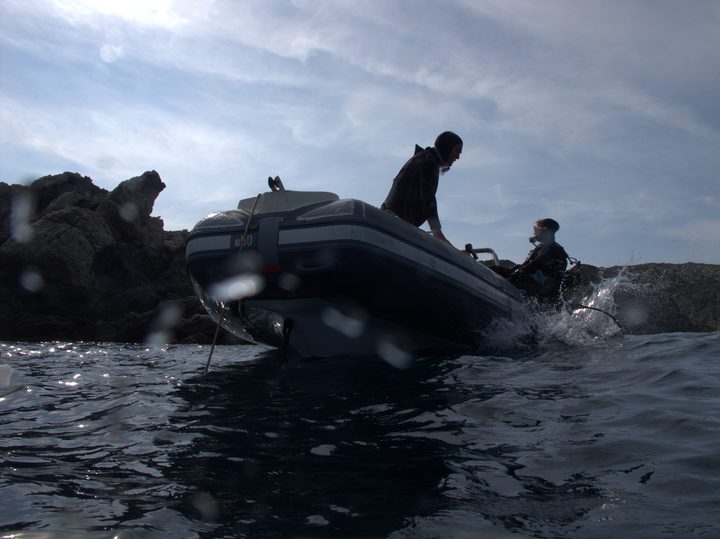
Boats leave from Puerto de la Cruz harbour, with Atlantik, the centre that found the site, running the roughly ten-minute trip out regularly.
Divers descend the vertical shaft to a coral-carpeted chamber, then head east into a 15m-wide canyon crossed by three lava bridges, with a tunnel system running beneath before the route climbs back to the anchor.
No. Tenerife's two Natura 2000 marine zones sit further along the coast, so no permit, fee, or quota applies here.
Log your dives - notes, photos, conditions and the marine life you saw - and share them as one public diver profile. What you share helps the next diver, too.
Log every detail
Depth, duration, conditions, gear, buddy, notes — all in one place. Import from Suunto and other dive computers.
Track marine life
Record species sightings on each dive. Build a personal catalogue of everything you've seen underwater.
Your public dive profile
Share your dive history, stats, and experiences with a profile page you control. Show the world where you've been.