

Apnea Canarias
Freediving school and training facility inside Puerto Deportivo de Radazul, east Tenerife, operating since 2009, coached by elite competitive freediver Miguel Lozano with fixed training lines to -35/-45/-60m.
SSI3 services2 languages
Volcanic Atlantic diving around Tenerife: basalt walls and lava tunnels in the north and west, sheltered bays with turtles and angel sharks in the south.
Last updated July 2026
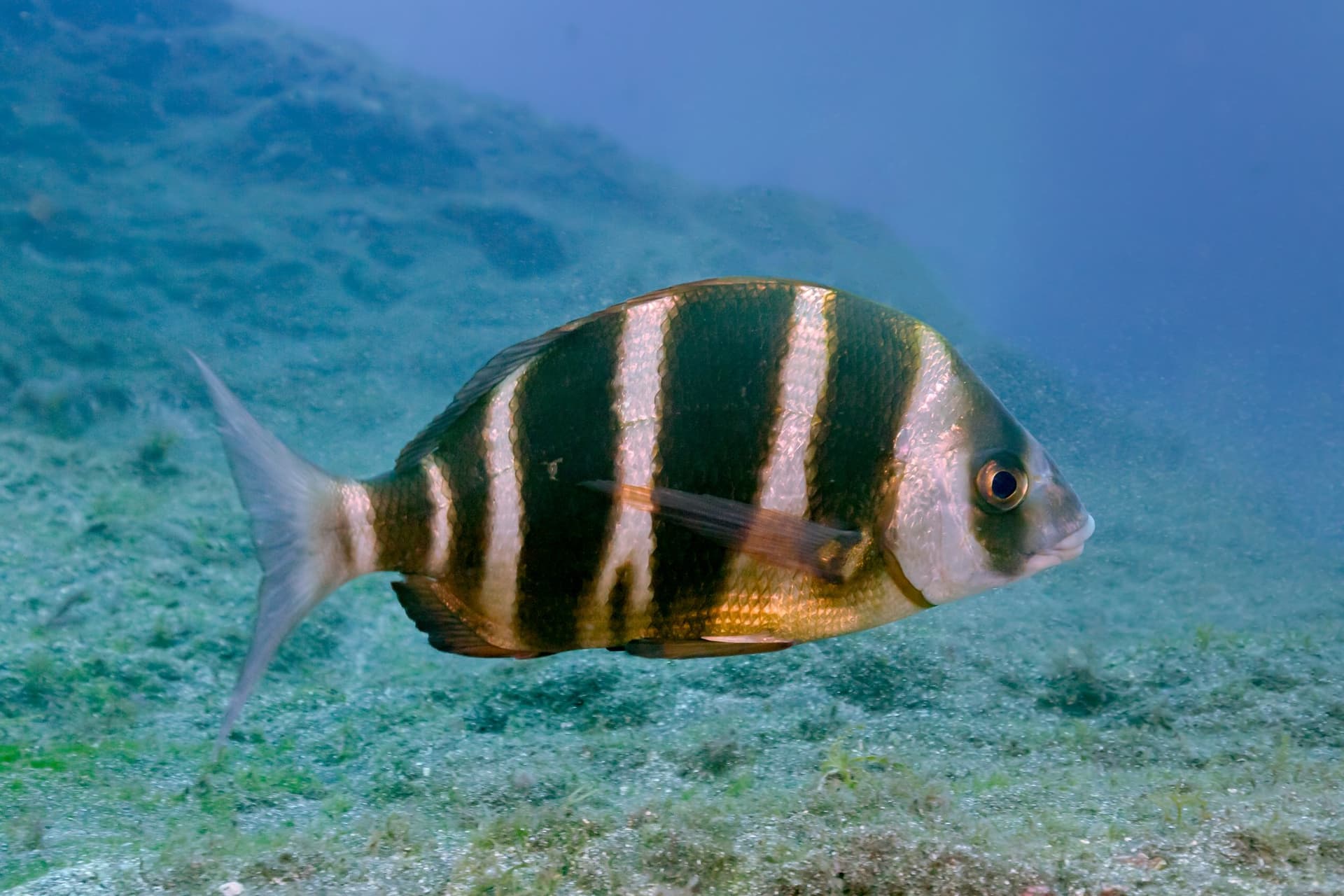
Basalt, not coral, defines this coast. Hexagonal columns and lava tunnels replace reef as the defining terrain, with black-sand bays filling the gaps between headlands. Diving spreads across six distinct clusters around the island's edge.
The north, off Puerto de la Cruz, holds the deepest and most technical diving. La Rapadura's stepped basalt wall runs boat-only to 45m, rated for expert divers. La Catedral's skylit chamber and Labyrinth's cave maze sit nearby, both advanced-rated overhead dives. West and northwest, past Los Gigantes toward Garachico and Punta de Teno, swim-through caves and a 150-metre lava tunnel break up a coast that also holds easier bays near Playa San Juan. South and southwest, around Costa Adeje, Los Cristianos and Las Galletas, the diving turns calmer. Shallow wrecks sit off Palm-Mar. Montana Amarilla's protected bay threads five named routes through easy shallows. Shore entries here suit newer divers learning to dive. The southeast, at Abades and Poris de Abona, adds resident grazing turtles and a seasonal angel shark nursery to gentle sand-and-reef terrain. East of Santa Cruz, Radazul and Tabaiba pair a shore dive scaling to 55m with a deliberately sunk tugboat.
Angel sharks, Critically Endangered, turn up on sand from autumn through winter, concentrated along the south, west and southwest coast. Sightings stay seasonal, never guaranteed. Pilot whales and dolphins are a separate, year-round draw, spotted from whale-watching boats out of Los Cristianos rather than by divers underwater.
No permits, fees or diver quotas apply on this coast. Two Natura 2000 zones cover part of it: Teno-Rasca along the west, Sebadales del Sur along the south. Neither changes how or where you dive, and most of the island's coast carries no formal designation at all.
Water stays warm enough to dive year-round. Summer bottom temperatures run 22-25C, winter drops to 17-19C. A 5mm wetsuit covers most months; add a 7mm or a hood for winter. Shore access is common in the south and east. The north cluster and several west-coast caves run boat-only. Newer divers do best starting in the south or southeast bays, then working up to the north's walls and caves, or the west's lava tunnels, once certified for the depth and current involved.
A volcanic Atlantic coastline: hexagonal basalt columns and sheer walls off Puerto de la Cruz in the north, lava tunnels and swim-through caves along the west and northwest, and sheltered black-sand bays over sand and seagrass across the south and southeast.
A shore bay pairing resident grazing turtles with a winter angel shark nursery
The easiest wreck dive in the Palm-Mar cluster, good for newly certified divers
Tenerife's marquee expert wall dive, built on cathedral-organ basalt columns
A south Tenerife bay with named routes from easy shallows to a deep cave
One sheltered shore entry that scales from beginner-easy to a 55m volcanic wall
The stepped, rockier route through Abades bay rather than the sandy main entry
The open-water seamount dive of north Tenerife, for experienced current divers
One boat trip with both an easy arch dive and a genuine advanced canyon
A deep rocky wall known locally for its density of named moray eel types
Advanced divers wanting a shallow, namesake overhead cave dive
Advanced divers drawn to moray-filled walls and a memorial-marked cavern
Divers wanting a varied single-site dive: caves, arches, swim-throughs
Advanced wreck divers who want a recognisable, largely intact hull rather than a debris field
A pier straight into a volcanic wall, with underwater religious statues as a genuine local landmark
A reef slope named for its Guanche history, with boga shoals that pull in barracuda and tuna
Advanced divers seeking Puerto de la Cruz's single skylit cathedral chamber dive
Advanced divers who want a single vertical shaft dive into a coral-carpeted canyon
A two-tier maze: an accessible moray-rich reef above an advanced cave system
A sheltered bay diveable in rough weather, with long lava tunnels and two underwater statues
An easy shore ray-and-seahorse dive that continues into a deeper arch reef
A south-coast boat dive pairing a fish spur with a small, explorable wreck
A straightforward shore dive between Garachico and Punta de Teno
Divers of any level who want a dependable turtle and ray encounter over dramatic volcanic terrain
One shore entry combining easy initiation diving with a genuinely deep named cave route
A reliable, easy training and night-dive beach for Los Cristianos operators
An easy bay dive with an honest, unresolved turtle story, not a guaranteed show
The accessible entry point to Puerto de la Cruz diving, one site, two dives
Divers wanting a scenic, current-free shore dive at Tenerife's westernmost point
One boat site with both an easy tunnel dive and a genuine deep-speciality wall
An exclusive-access shore dive with a calm beginner zone and a deeper rocky reef
A west-coast boat reef with reliable ray sightings over sand and volcanic rock
A named, dated tugboat wreck reachable from shore, with a penetrable interior for trained divers
Advanced divers seeking Tenerife's 150-metre single-pathway lava tunnel
The deepest, most demanding dive in the Puerto de la Cruz cluster
Book online or contact a centre that dives this area.
Freediving school and training facility inside Puerto Deportivo de Radazul, east Tenerife, operating since 2009, coached by elite competitive freediver Miguel Lozano with fixed training lines to -35/-45/-60m.

PADI 5 Star IDC dive centre in Playa de las Américas since 1999, running up to three boat dives a day plus a separate shore-dive programme along the coast.

PADI 5-Star IDC and TecRec facility in El Fraile, south Tenerife, running boat trips to 30+ named sites from Las Galletas harbour since 2005.
PADI 5 Star Dive Resort in Costa del Silencio, south Tenerife, family-run since 1987 with a house reef at Montaña Amarilla and small-group day trips.

Conservation-led dive centre at Puerto Colón, Costa Adeje, running one-to-one shallow eco baptism dives and adapted diving from a small boat.

PADI Gold Palm 5 Star IDC Resort in Puerto de la Cruz, founded 1994 by the Christoph family and run today by sons Thomas and Dirk.
SSI centre in Los Cristianos, south Tenerife, capping groups at four divers per guide and specialising in beginner and nervous-diver instruction.
Get in touch to add or claim your dive center listing on DiveCodex.
Autumn through winter, roughly September to March, when Squatina squatina rests camouflaged on sand at sites along the south, west and southwest coast, including Abades and Radazul. This is a Critically Endangered species: sightings are never guaranteed, and the responsible approach is to keep distance and never disturb a resting shark.
Not usually underwater. The resident population of short-finned pilot whales off the southwest coast, between Los Cristianos and Costa Adeje, is a boat-based whale-watching draw rather than something divers encounter on a dive. Dolphins turn up in the same waters and occasionally elsewhere around the island, again mostly as a surface, boat-based sighting.
No. Two Natura 2000 conservation zones cover parts of the coast, Teno-Rasca along the west and Sebadales del Sur along the south, but neither is a fishing reserve and neither requires a diving permit, fee or quota. Most of the island's coast carries no formal protection status at all.
Both, depending on where you go. The south, southeast and east coast run mostly shallow, shore-accessible bays suited to Open Water divers and try-dives. The north cluster off Puerto de la Cruz and several west-coast lava tunnels run deeper, current-affected and boat-only, better suited to Advanced Open Water divers and beyond.
La Rapadura, off Puerto de la Cruz: a wall of hexagonal basalt columns diving to 45m, boat-only and rated for expert divers, with a National Geographic cover credit to its name. Valle de los Peces nearby runs even deeper, to 50m, for divers who want the cluster's most demanding profile.
Yes, mainly around Palm-Mar and Tabaiba. El Condesito is a broken, shallow wreck at 9-18m suited to newly certified divers, while El Meridian nearby is an intact hull at 18-30m for advanced divers. Tabaiba's tugboat, deliberately sunk in 2006, sits further east and is penetrable for trained divers.
Warm enough to dive year-round. Summer bottom temperatures run roughly 22-25C, dropping to about 17-19C in winter. A 5mm wetsuit covers most of the year; bring a 7mm or a hood for winter dives, especially on the deeper north and west-coast sites.
Yes, particularly off Puerto de la Cruz and around Garachico and Los Gigantes. Tubo de Garachico runs a single 150-metre passage to a basalt arch, and Labyrinth and La Catedral hold a cave maze and a skylit chamber. Most of these are advanced-rated overhead dives with natural light and a single route, not technical cave penetration, but they still call for AOW-level buoyancy and overhead experience.
Log your dives - notes, photos, conditions and the marine life you saw - and share them as one public diver profile. What you share helps the next diver, too.
Log every detail
Depth, duration, conditions, gear, buddy, notes — all in one place. Import from Suunto and other dive computers.
Track marine life
Record species sightings on each dive. Build a personal catalogue of everything you've seen underwater.
Your public dive profile
Share your dive history, stats, and experiences with a profile page you control. Show the world where you've been.