

ATLANTIK Scuba Diving Tenerife
PADI Gold Palm 5 Star IDC Resort in Puerto de la Cruz, founded 1994 by the Christoph family and run today by sons Thomas and Dirk.
PADI / SSI8 services3 languages
A volcanic cave-and-canyon maze off Puerto de la Cruz, Tenerife, with a moray-rich scree field at 18m and a cave exit at 32m, advanced divers.
Last updated July 2026
Above the labyrinth itself, a scree field at 18 metres does most of the talking: moray eels pack into the loose rock in numbers dense enough that divers nicknamed the spot Moray City years ago, and at least two species share the same ground. From there the route drops into the maze proper, a canyon crossed by three natural rock bridges, threading past a cave system that exits again at 32 metres back into the main canyon. Divers who stay on the upper platform get the moray density and the reef without entering an overhead section at all; divers who go lower get the caves, the bridges and a real sense of navigating something built rather than just swum through. Barracuda move through the open water above, and sponges and gorgonians along the canyon walls fill in the gaps between the bigger set pieces.
Most dives ask you to pick a level and stick with it. Labyrinth doesn't. The upper reef and its Moray City scree field work for less experienced divers on their own, while the cave-and-labyrinth system underneath is closed to anyone without more experience, so the same site quietly runs two different trips depending on who's booked it. The maze is also unusually sheltered: the protected inner passages stay calm even on days when a moon-phase current runs hard on the surface, something the more exposed sites nearby can't offer. There's a naming mix-up worth knowing about too. Some guides outside the centre that discovered this site have mislabelled it "La Cathedral" over the years, an old translation error that has nothing to do with the actual site of that name close by.
Confirm with your guide before the dive whether the plan includes the cave-and-labyrinth section or stays on the upper platform, since the two are genuinely different outings inside one site. Spanish law requires a cutting device and a decompression buoy on every dive, and both matter more once you're inside the maze's passages. Open Water divers can enjoy the scree field and reef on their own; the deeper cave system calls for Advanced Open Water. Visibility on this stretch of coast runs up to around 30 metres, with water temperature ranging from the high teens in winter to the low-to-mid twenties in summer. The site is diveable year-round, and the boat ride out from the harbour runs about ten minutes.
What makes this dive site stand out.
A dense concentration of morays at 18m gave this spot its nickname
A canyon, volcanic caves and a sub-reef labyrinth combine below the platform
Rock bridges span the main canyon along the route
An accessible upper reef sits above a cave system restricted to certified divers
Protected passages stay calm even when surface current picks up
28.4285°N, 16.5650°W
Diveable year-round
Contact a local operator for current pricing
The upper reef and 18m scree field are accessible to Open Water divers; the cave-and-labyrinth system below requires Advanced Open Water
Summary
The signature cave-and-labyrinth system is advanced-only; the upper platform alone suits less experienced divers
Safety considerations
What can go wrong here, and what divers do about it. Conditions change - take the briefing from the operator on the day.
Book a guided dive at this site.
PADI Gold Palm 5 Star IDC Resort in Puerto de la Cruz, founded 1994 by the Christoph family and run today by sons Thomas and Dirk.
Get in touch to add or claim your dive center listing on DiveCodex.
Partly. The upper reef and its 18m Moray City scree field suit Open Water divers on their own. The cave-and-labyrinth system beneath it is closed to beginners and needs Advanced Open Water.
A scree field at 18m holds a dense concentration of moray eels, dense enough that divers nicknamed the spot Moray City. At least two species share the same ground.
The scree field sits at 18m, and the cave system beneath it exits at 32m back into the main canyon. Divers who stay on the upper platform never need to go past 18m.
No. Some guides outside the centre that discovered both sites in 1994 mislabelled this site 'La Cathedral' after an old translation error, but they are two separate dives with different signature features.
Advanced Open Water. The upper reef and scree field are open to Open Water divers, but the cave-and-labyrinth system below is restricted to more experienced divers.
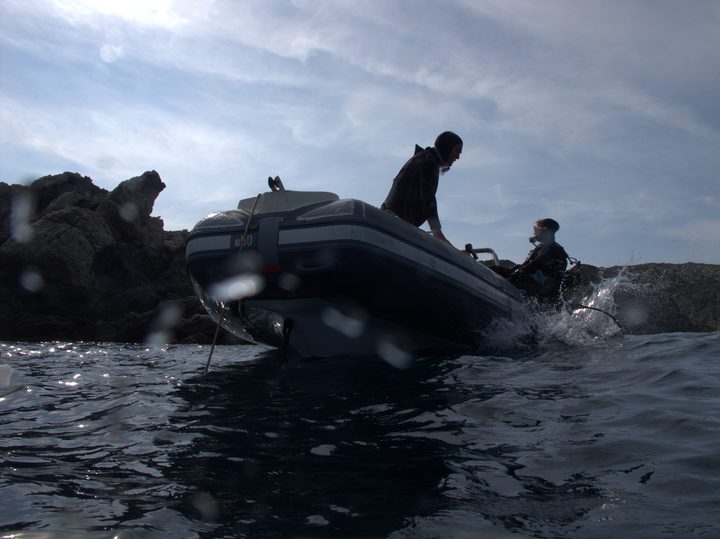
By boat. The ride out from Puerto de la Cruz harbour takes roughly ten minutes.
No. Tenerife has two Natura 2000 marine zones, on the west and south coasts, and this stretch of the north coast isn't one of them, so there's no permit, fee, or quota to plan around.
Log your dives - notes, photos, conditions and the marine life you saw - and share them as one public diver profile. What you share helps the next diver, too.
Log every detail
Depth, duration, conditions, gear, buddy, notes — all in one place. Import from Suunto and other dive computers.
Track marine life
Record species sightings on each dive. Build a personal catalogue of everything you've seen underwater.
Your public dive profile
Share your dive history, stats, and experiences with a profile page you control. Show the world where you've been.