

Scubafriends Tenerife
PADI 5 Star IDC dive centre in Costa Adeje's Salytien centre, led by Course Director Salvatore, teaching in Italian, English, and Spanish.
PADI6 services3 languages
Also known as: El Tubo, Garachico, Garachico Tunnel
A 150-metre volcanic lava tunnel off Garachico, north-west Tenerife, ending at a basalt arch called Angel Wings; one of the region's deepest caves.
Last updated July 2026
The boat drops you at a tunnel mouth that opens with a vertical descent to around 20 metres, where the passage makes a hard 90-degree turn and goes horizontal. From there it widens steadily, a single unbroken corridor through solidified lava with no side branches to lose track of. Slipper lobsters and the larger Canary lobster shelter in the cracks along the way, easy to miss without a torch trained on the walls. The tunnel runs for roughly 150 metres before opening into a wide chamber, where a basalt arch called Angel Wings frames the exit. One route in, one route out. Currents on the approach are the real variable, not the tunnel itself.
At 150 metres, this single-pathway lava tunnel is one of the deepest caves available for recreational diving in the Canary Islands, cut through rock laid down when the Trevejo volcano buried much of old Garachico town in 1706. What sets it apart from the shorter tunnel and chimney dives elsewhere on this coast is scale combined with structure: one continuous passage, deep enough to demand real certification, but simple enough in layout that getting lost isn't the risk. The current is.
Check sea conditions before you commit; strong current is a genuine, repeatedly flagged hazard here, and boat traffic adds another layer to manage on the surface. Bring a torch without question, plus a helmet given the overhead environment, and dress for cold: a drysuit or thick semi-dry in winter, 5mm in summer. Nitrox is worth arranging if your operator offers it, since it buys useful bottom time on the deeper approach to the tunnel mouth.
What makes this dive site stand out.
One of the deepest caves available for recreational diving in the Canary Islands
A distinctive rock arch marks the far end of the passage
One route through the tunnel removes any risk of losing your way inside
Slipper lobster and the larger Canary lobster both shelter along the walls
28.3728°N, 16.7687°W
Diveable year-round; check sea conditions carefully given the current and boat-traffic hazards specific to this site
Contact a local operator for current pricing
Advanced Open Water is the minimum; a Deep Diver specialty is advisable for the sections past 30 metres
Summary
Strong currents and the overhead tunnel environment put this beyond a beginner or intermediate profile
Safety considerations
What can go wrong here, and what divers do about it. Conditions change - take the briefing from the operator on the day.
Book a guided dive at this site.
PADI 5 Star IDC dive centre in Costa Adeje's Salytien centre, led by Course Director Salvatore, teaching in Italian, English, and Spanish.
PADI 5-Star dive centre in Radazul harbour, east Tenerife, running daily double and single-tank boat dives plus a structured island-wide 'Top 10 Tenerife' trip for advanced divers, TEC diving, and PADI Freediver.
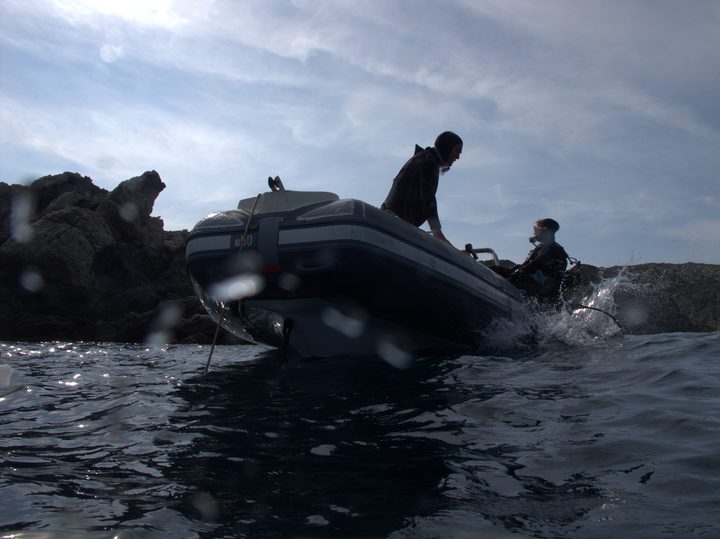
Get in touch to add or claim your dive center listing on DiveCodex.
About 150 metres, entered through a vertical descent to roughly 20 metres before turning 90 degrees into a horizontal passage. It widens gradually and ends at a large opening beside a basalt arch known locally as Angel Wings.
Advanced Open Water at minimum. A Deep Diver specialty pays off on the sections beyond 30 metres, and this isn't a site for newly certified divers.
Garachico covers several named dive points, and Tubo de Garachico is the specific 150-metre lava tunnel among them. Other points nearby, including a shore-access bay and a separate wall dive, have different profiles and difficulty ratings.
They're a repeatedly documented hazard on this stretch of coast, and deep diving here is considered more demanding as a result. Checking sea conditions before the dive matters more here than at most sites in this cluster.
Yes. The passage runs 150 metres with sections well beyond the reach of surface light, and a torch is essential both for navigation and for finding the lobsters and moray eels tucked into the tunnel walls.
Two lobster species share the walls: the smaller slipper lobster and the larger Canary lobster. Parrotfish, damselfish, octopus and moray eels round out the regular sightings, with eagle rays and turtles turning up less predictably.
Spring and autumn generally bring the clearest water, sometimes past 30 metres visibility. Summer visibility can dip to 20-25 metres from plankton, though the site is diveable year-round when conditions allow.
Log your dives - notes, photos, conditions and the marine life you saw - and share them as one public diver profile. What you share helps the next diver, too.
Log every detail
Depth, duration, conditions, gear, buddy, notes — all in one place. Import from Suunto and other dive computers.
Track marine life
Record species sightings on each dive. Build a personal catalogue of everything you've seen underwater.
Your public dive profile
Share your dive history, stats, and experiences with a profile page you control. Show the world where you've been.