


Aquatica Illes Medes
SSI Diamond ITC in L'Estartit since 1996, specialising in small-group, low-impact diving in the Illes Medes Marine Reserve from a campsite-based dive school.
SSI6 services5 languages
Seven-islet limestone archipelago a mile off L'Estartit: a no-take reserve with groupers at most sites, tunnels, caves and gorgonian walls.
Last updated October 2026
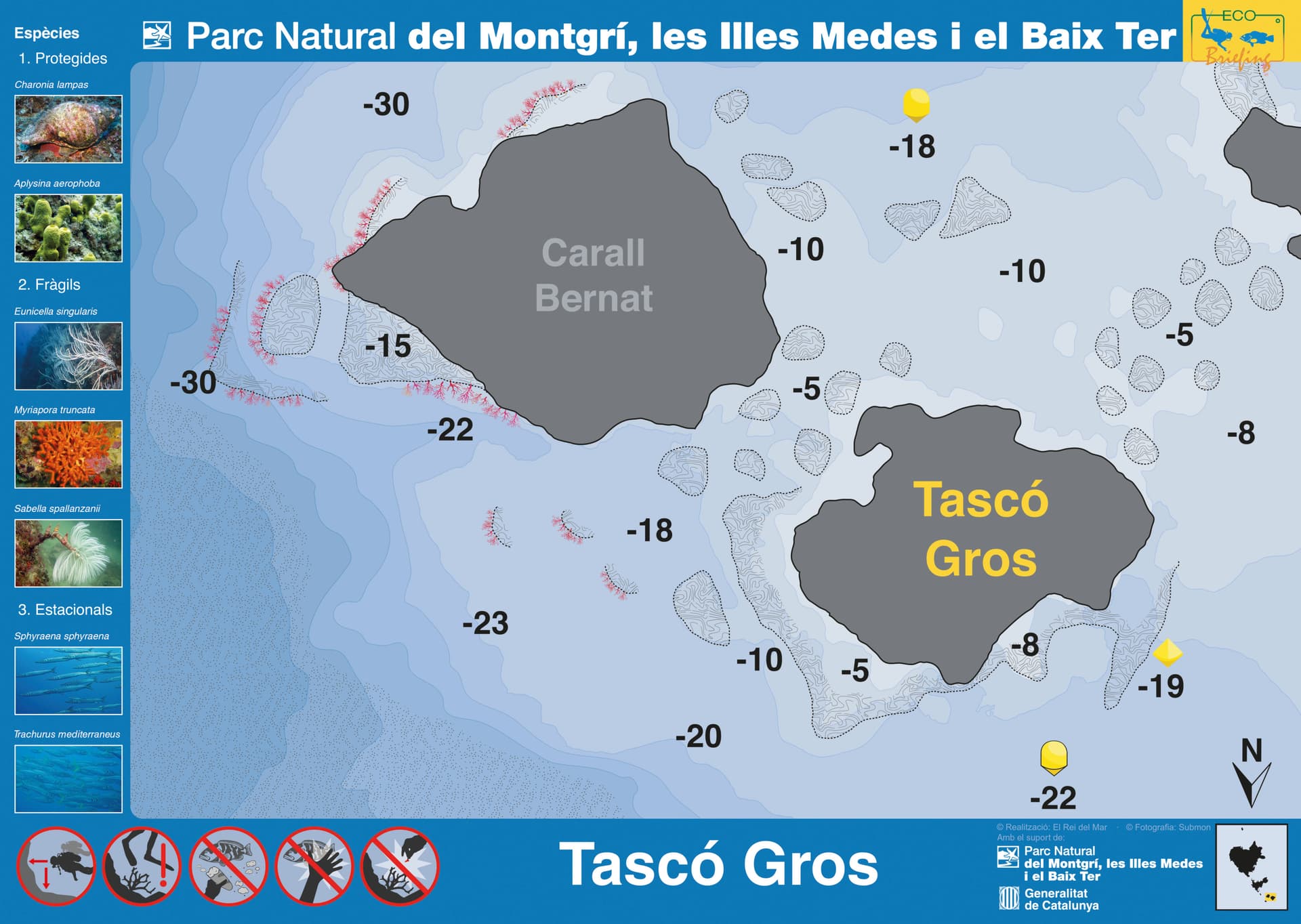
The Medes are the Montgrí massif carrying on under the sea: seven main islets and a scatter of rocks about a mile off L'Estartit's main beach, their limestone cut into tunnels, caves, walls and pinnacles. The reserve was declared in 1983 and fishing stopped, and about 511 hectares of sea are now protected. That is the draw. Dusky groupers, the meros, hold territory at almost every island site and often swim up to divers, and the Park places the highest concentration of groupers in these waters on the south side, around Carall Bernat.
The rock itself is the second reason. La Vaca is a tunnel of about 30 m through Meda Gran, bright enough to see the far end, with a large grouper usually at the mouth. Dofí Nord and Sud are a pair of cave systems on Meda Petita, with an air chamber and red coral. Pedra de Déu carries a wall of blue and yellow gorgonians on the north-east of Meda Gran, and the Tascons are where eagle rays turn up most, with barracuda schools around Dofí and the odd sunfish in June. El Salpatxot, a gentle slope on the north side, is the easy way in.
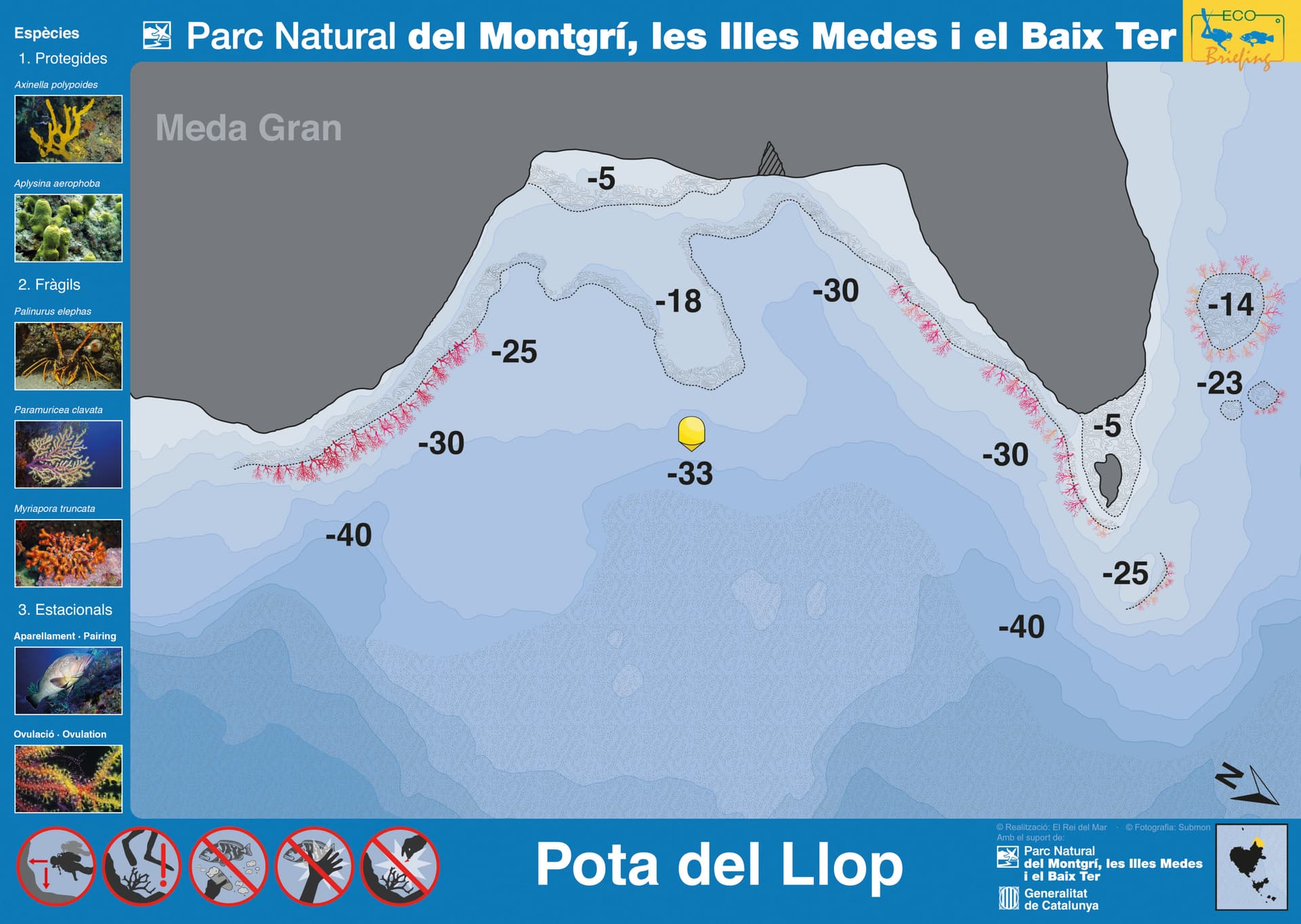
Two dives sit apart from the usual rotation. Pota del Llop, the deep east cliff of Meda Gran, is one the Park itself says often exceeds the responsible limits of recreational diving.1 The Reggio Messina, a ferry sunk on purpose as an artificial reef, lies broken into three main pieces (stern, centre and bow)2 and is dived only when the weather allows, at Advanced level.
Diving in the reserve is regulated, and the centre you book with handles the arrangements. July and August boats fill, so book ahead in summer and expect the centre to choose the day's site from wind, swell and slots. The Park promotes a short eco-briefing before each dive, and its guidance says guided dives cause up to 6.5 times less impact than unguided ones.3
Before it takes you out to the islands, the centre checks your card against the reserve's requirement, shown in the regulations module. The centres cluster in L'Estartit, and the Montgrí coast is where many run try dives and courses. Girona-Costa Brava is the nearest airport, roughly an hour's drive, and Barcelona about two hours. Pack a dive light for the tunnels, and plan for a hooded 5 mm suit in high summer.
Limestone continuation of the Montgrí massif, carved into tunnels, caves, vertical walls, pinnacles and boulder fields, with nutrients from the Ter river outflow feeding the life on it.
The diving here splits into 2 zones:
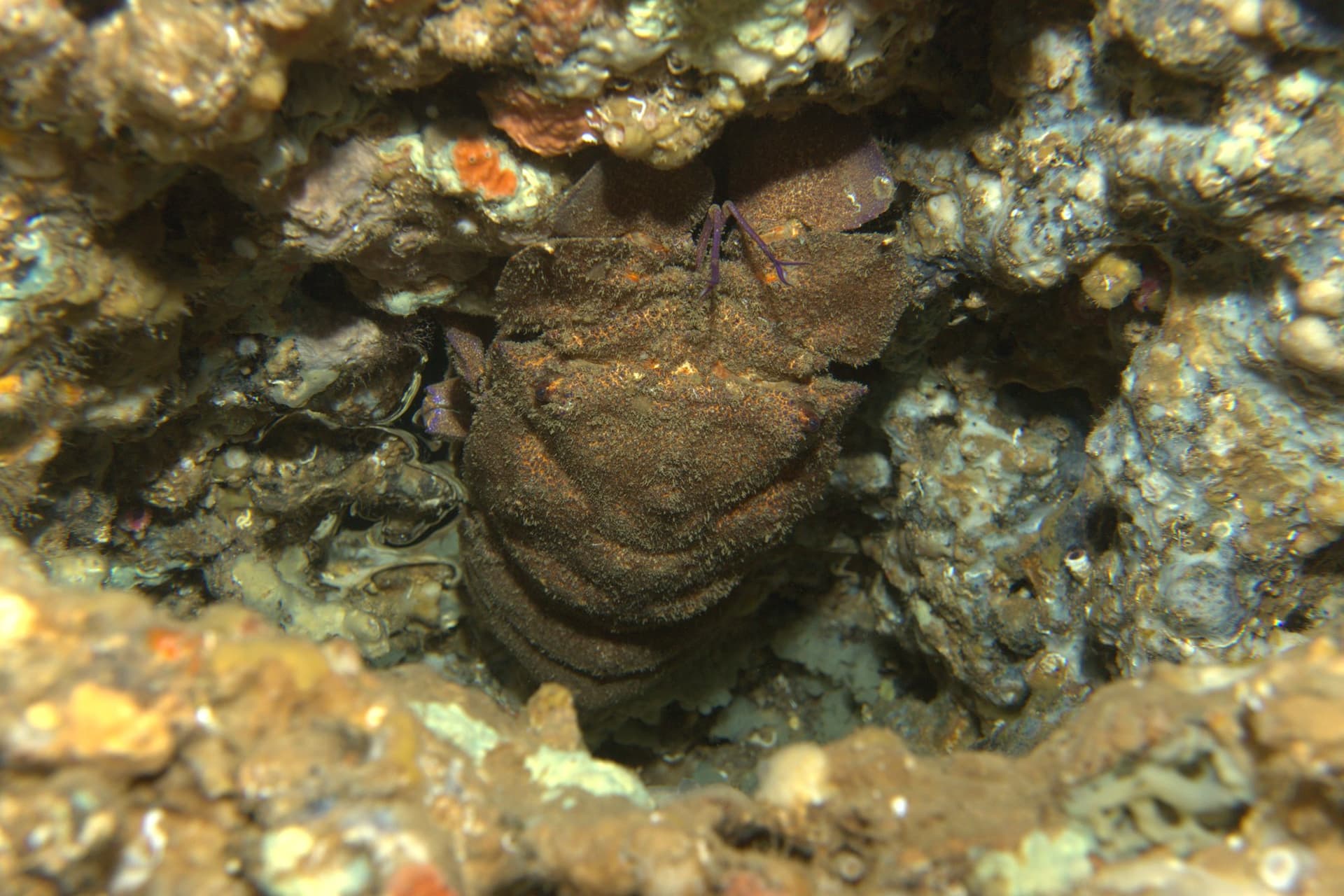
Divers who want a lit short tunnel, red coral and gorgonian walls on one stretch of the Illes Medes
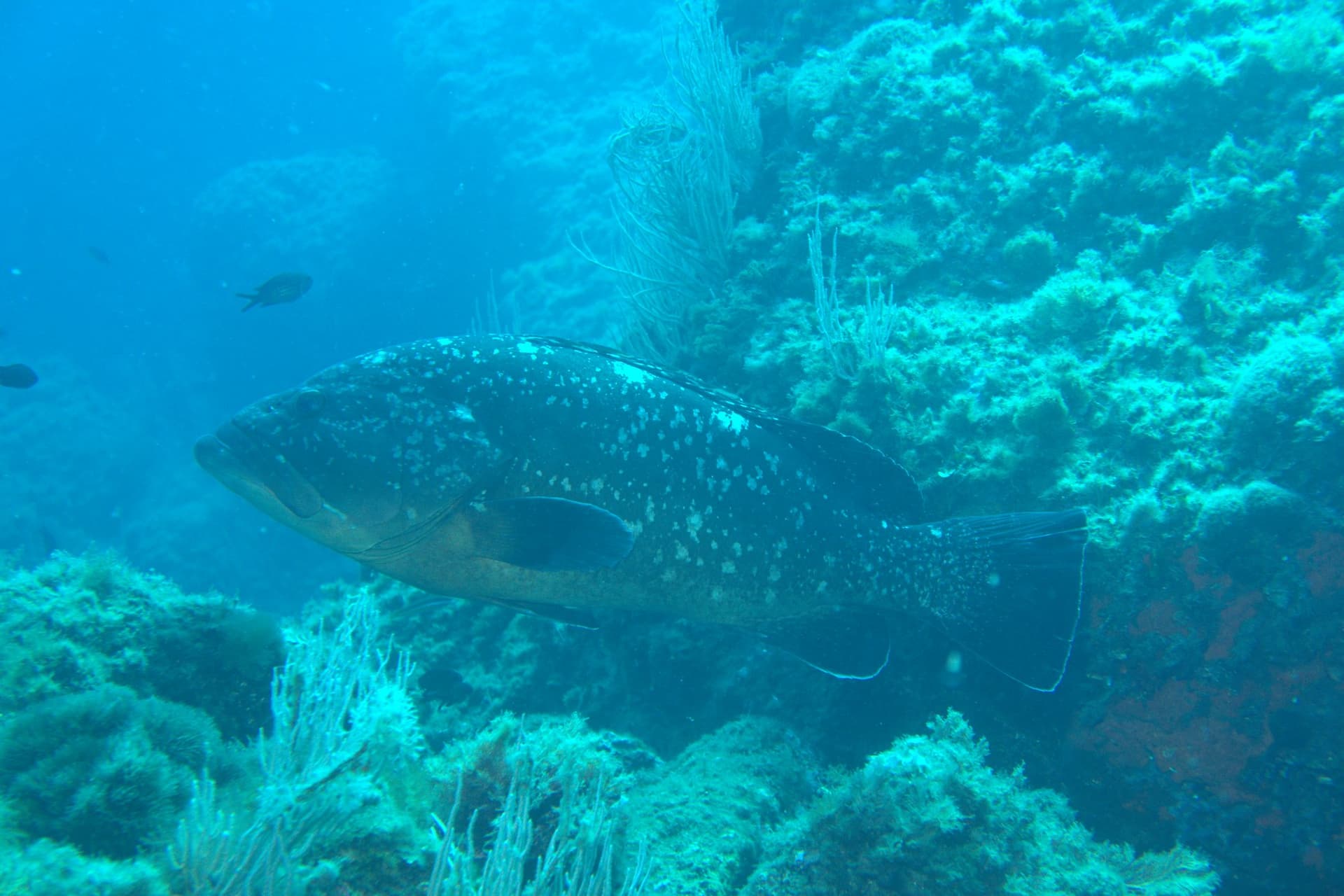
A grouper-rich wall where the day's current decides the route
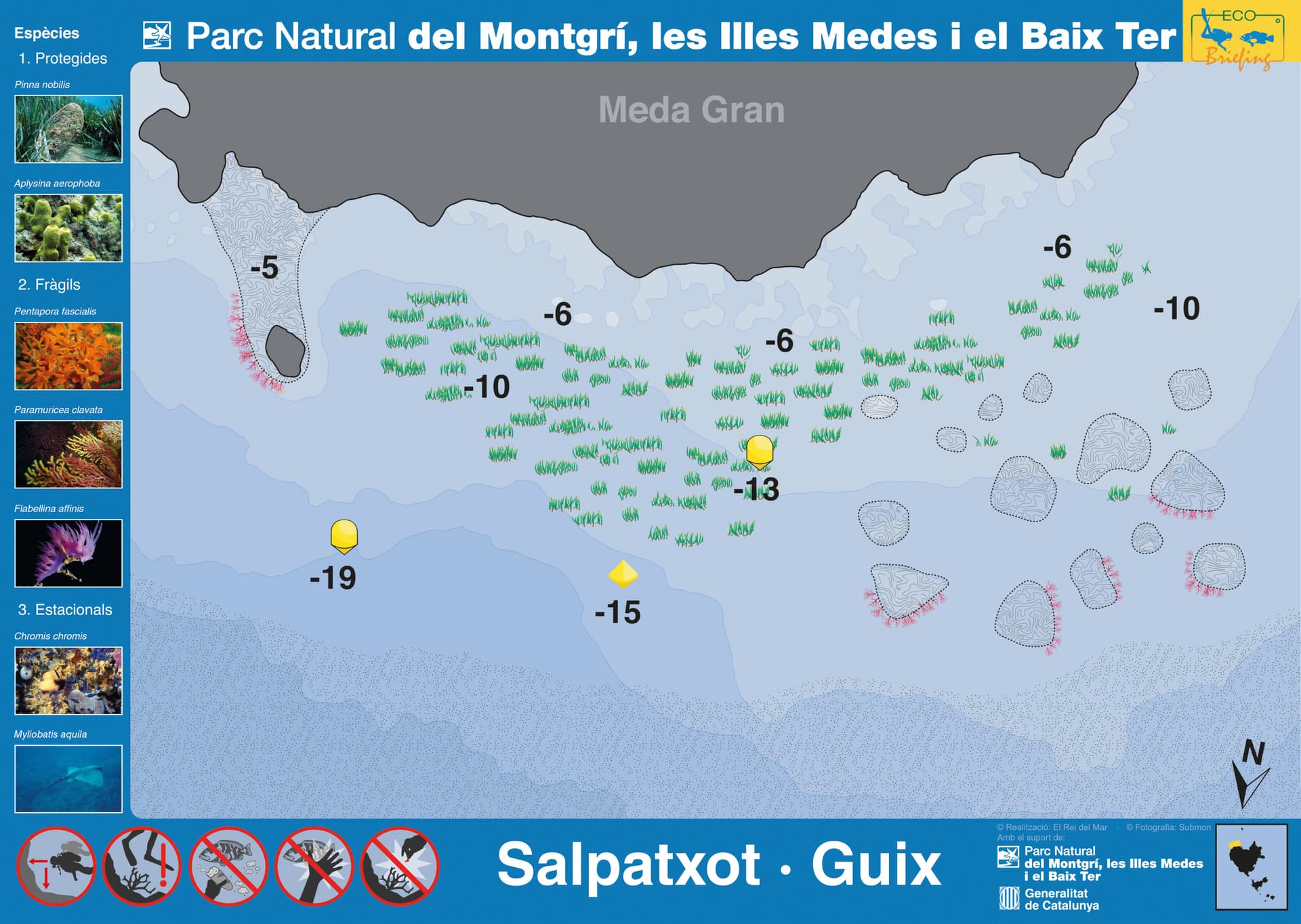
Open Water divers and photographers wanting a relaxed, fish-rich Medes dive with rare Posidonia meadow habitat
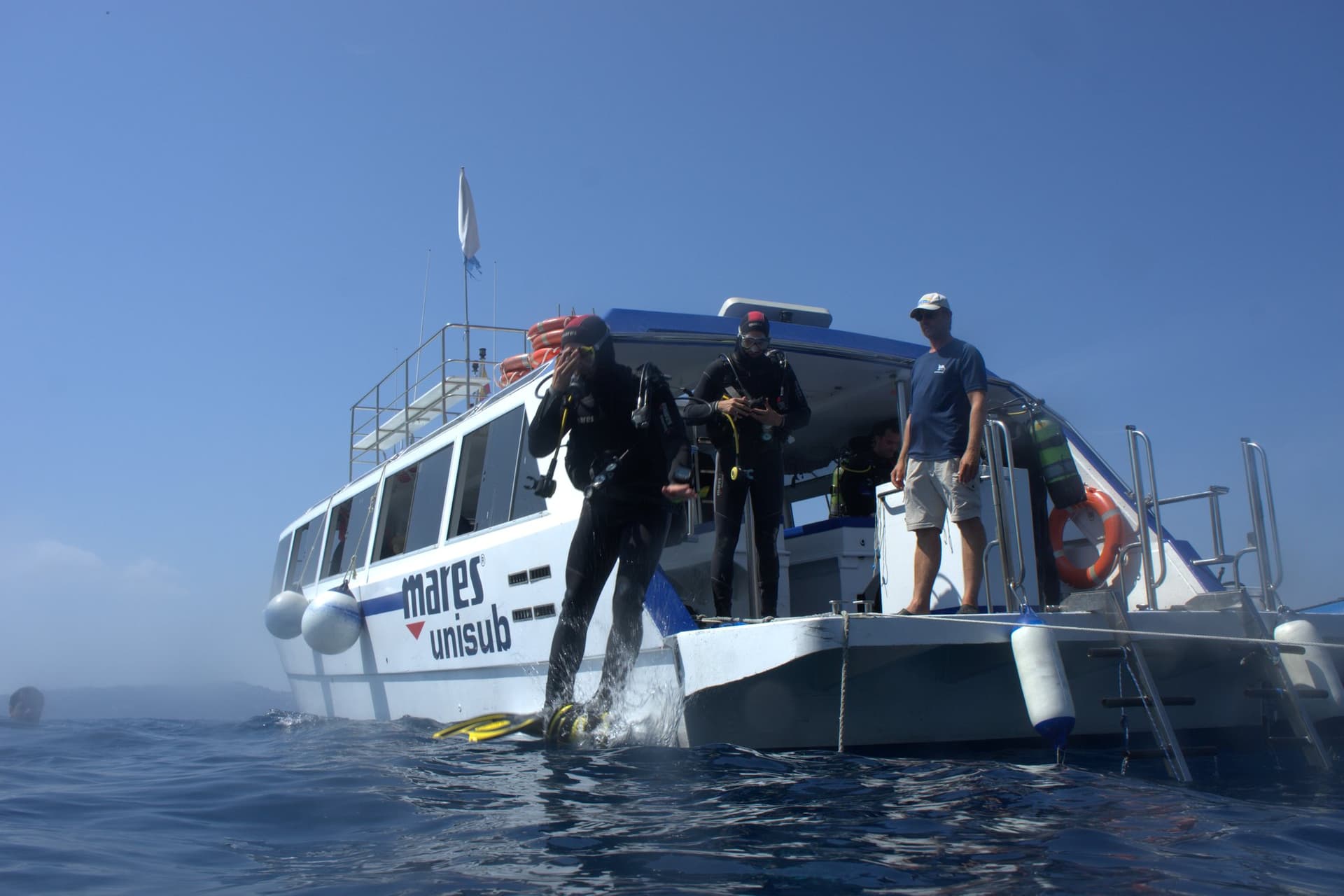
Divers who want a shallow east route past groupers and morays, or a gorgonian-covered south side, in the southern Illes Medes
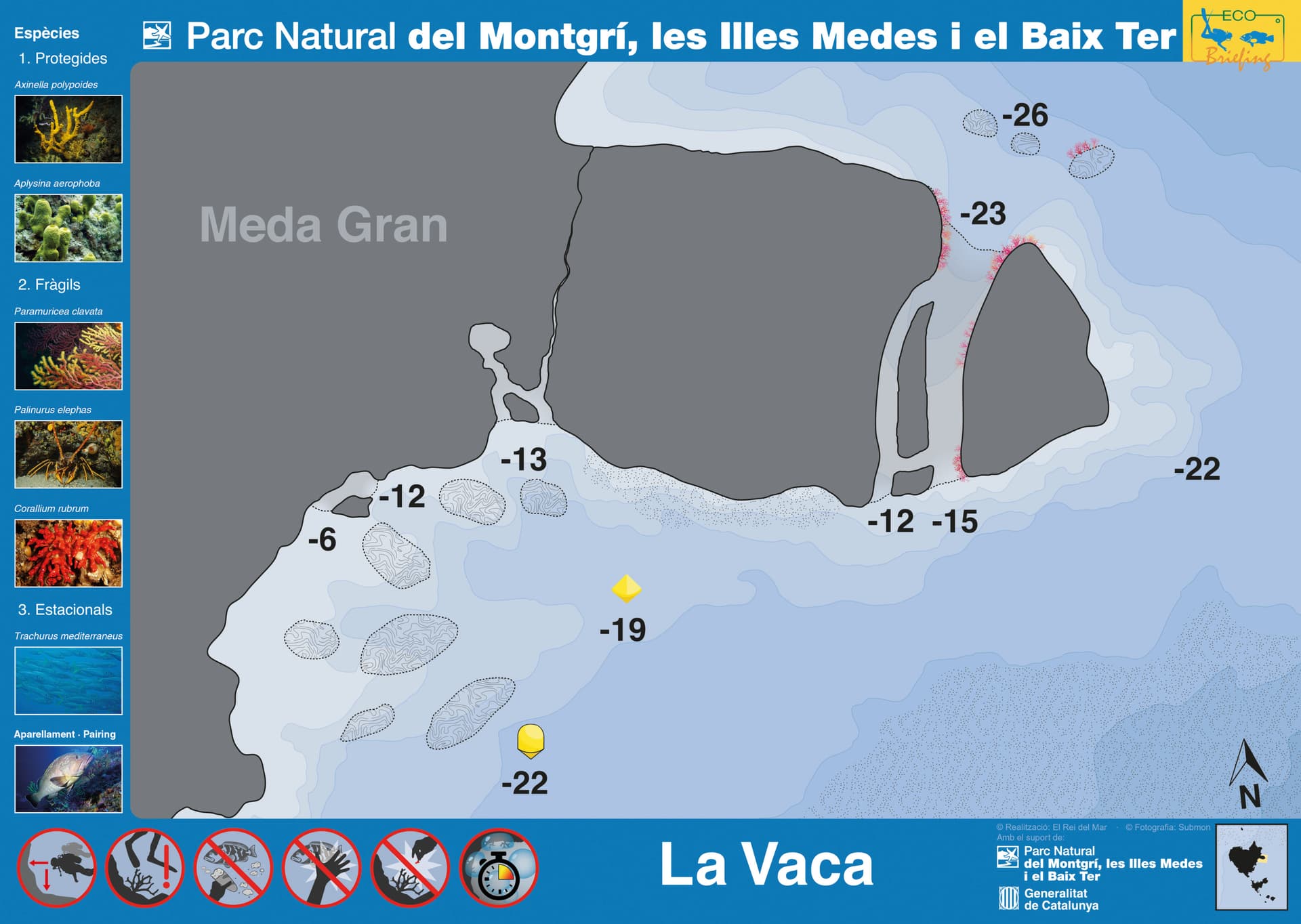
Photographers and recreational divers wanting a naturally lit Mediterranean cavern swim-through
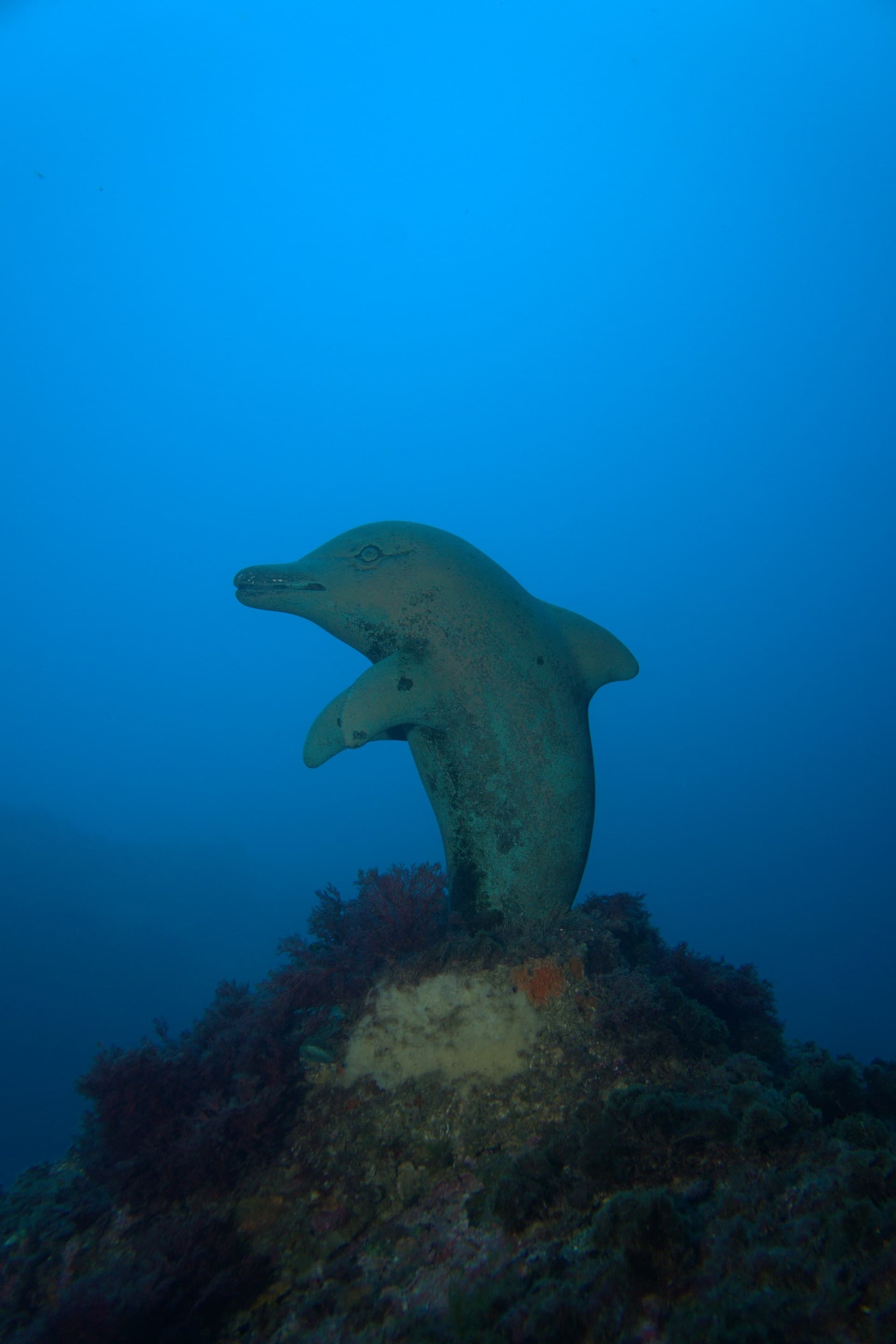
Photographers and AOW divers wanting cavern light play, the bronze dolphin statue, and the 65-70 m Catedral through-route
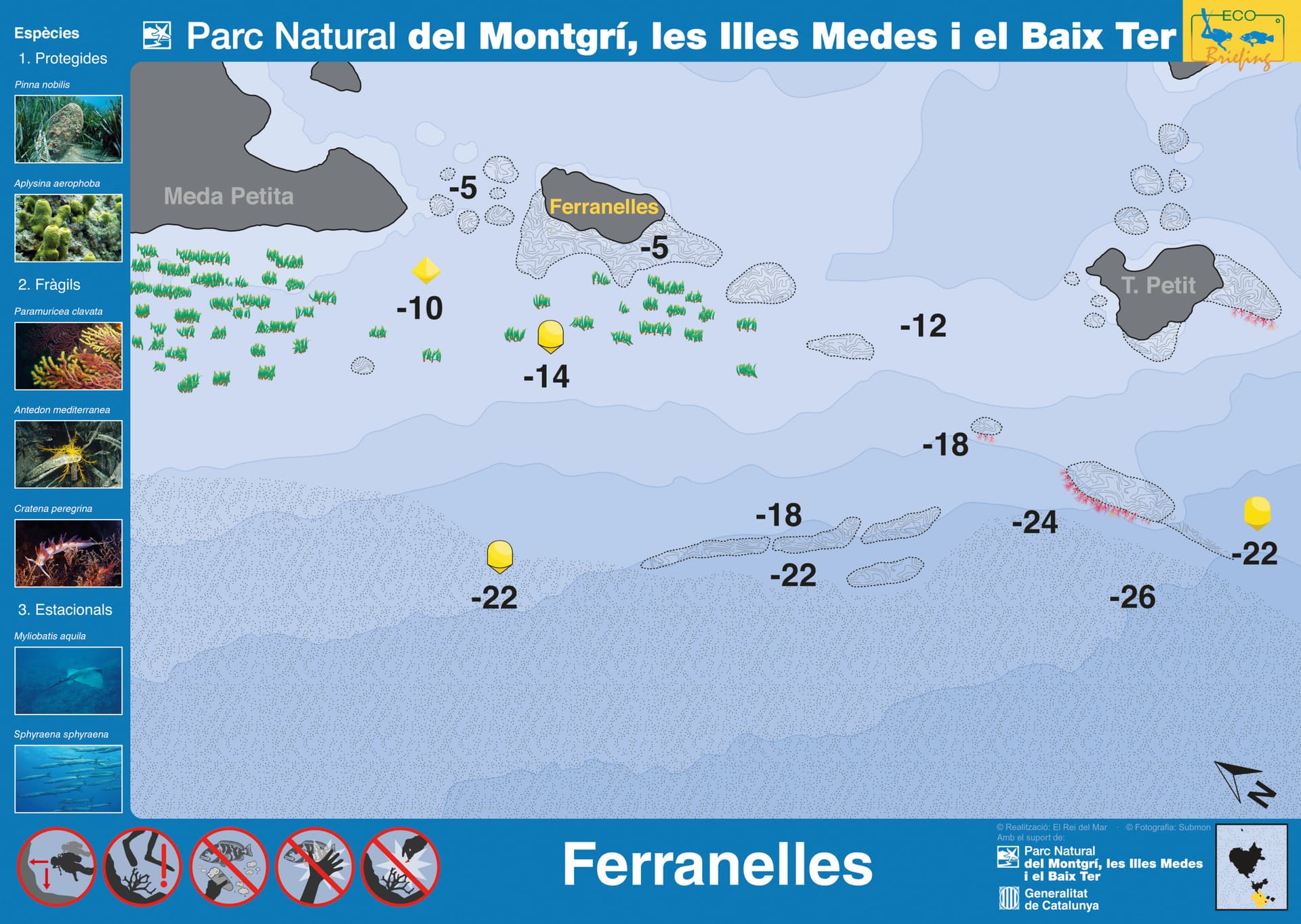
Divers wanting a versatile Medes dive that scales from easy shallow reef to advanced deep gorgonian walls on the same rock chain
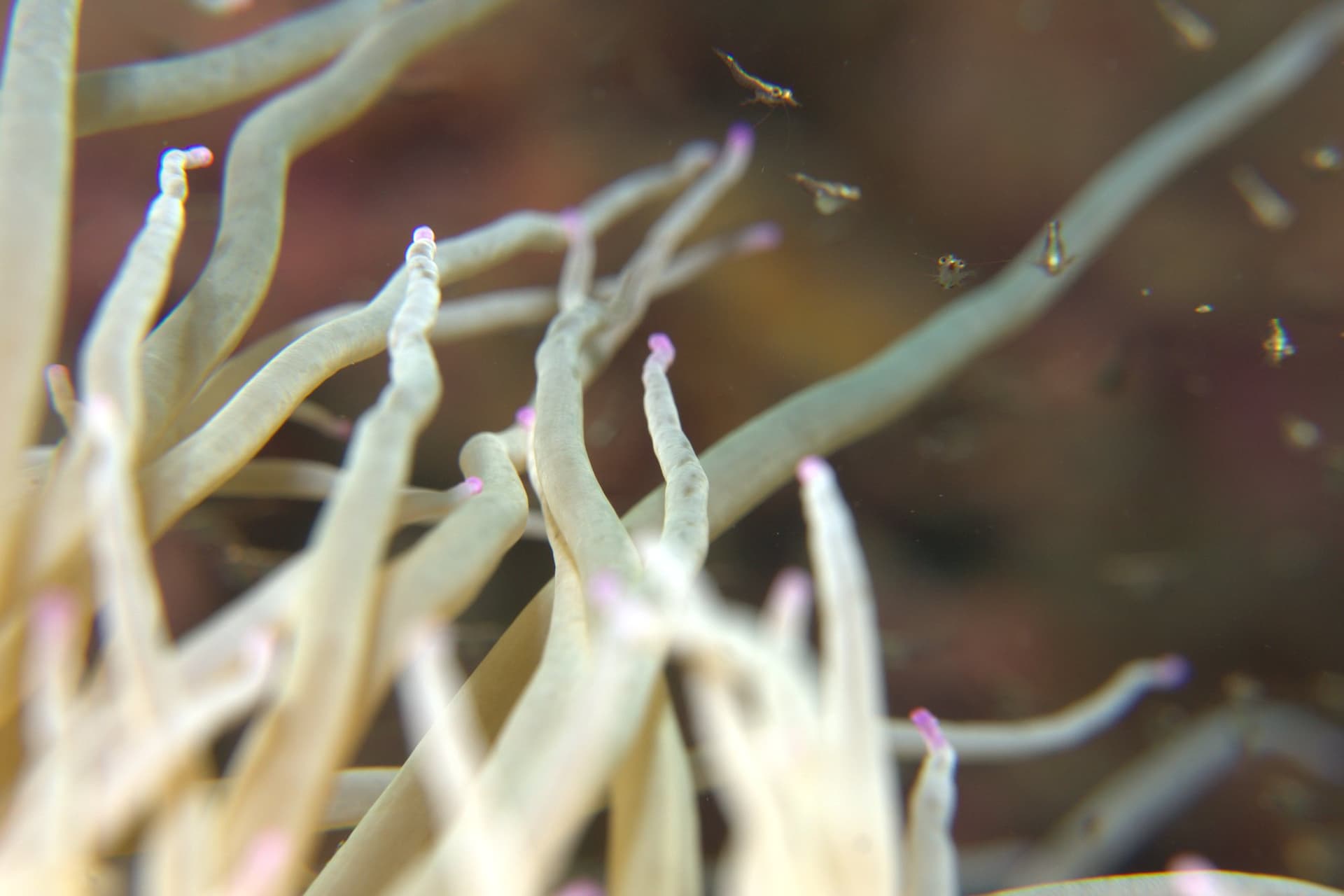
AOW divers chasing the deeper gorgonian wall on a sheltered north-east shotline that runs OW shallow and advanced deep on the same boat
Advanced divers who want a less-dived gorgonian wall in the Medes on the calm days the north-east face is accessible
Divers who want a Medes signature dive with route flexibility and a Garbí-resilient mooring that holds when other pinnacles close
Experienced divers who have done the popular southern Medes sites and want a wilder, less-crowded alternative with naturally behaving wildlife
Book online or contact a centre that dives this area.
SSI Diamond ITC in L'Estartit since 1996, specialising in small-group, low-impact diving in the Illes Medes Marine Reserve from a campsite-based dive school.
Family-run PADI centre in L'Estartit, run by Peter and Jacqueline Lane for nearly 40 years, with PADI Green Star and four other environmental credentials.

PADI 5 Star centre on L'Estartit seafront with stay-and-dive packages, four daily boat dives between Illes Medes and Montgrí, plus tec diving.

Family-run PADI 5 Star Resort and SSI centre in L'Estartit since 1990, with two 30-diver boats running hydraulic lifts to the Illes Medes reserve.
Long-running L'Estartit dive centre (founded 1969) running a four-boat fleet to the Illes Medes reserve and Montgrí coast, with SSI training and a strong family/snorkel programme.

Family-run hotel and dive centre in L'Estartit since 1985, with two dedicated boats and four daily departures to the Illes Medes reserve.

Owner-led PADI centre on Carrer Salines in L'Estartit, capping each guide at 5-6 divers across the Illes Medes, Montgrí, and Cap de Begur.
Get in touch to add or claim your dive center listing on DiveCodex.
Upcoming trips published by dive centres in this area.
Availability is read from each centre's public calendar and refreshed daily. Last checked October 16. Confirm with the centre before travelling.
September gives warm water and thinner crowds than August, though the 11th and 24th are Catalan holidays. Visibility is usually 10 to 15 m, and north and levante winds stir up the exposed sites.
What can go wrong here, and what divers do about it. Conditions change - take the briefing from the operator on the day.
Marine reserve · Part of Montgrí, Medes Islands and Baix Ter Natural Park
Park information pageReserve rules (2017 update)Original 2008 management planChecked: Oct 2026
Natural park
Park diving pageResponsible diving leafletLaw that created the parkChecked: Oct 2026
Decree on dive centresGeneralitat page for dive centresChecked: Oct 2026
National rules also apply: Rules and permits in Spain
The gentlest island dives are the slope of El Salpatxot and the shallower sites of Sant Istiu, Embarcador del Francès and Cova de la Reina, with groupers, octopus and nudibranchs. Try dives and Open Water course sessions run from Montgrí-coast sites such as Punta Salina and El Negre del Falaguer. The centre checks your card against the reserve's requirement, shown in the regulations module, before it takes you out. Carall Bernat and the Tascons suit divers with some experience, and Pota del Llop and the Reggio Messina wreck are Advanced.
Published maximum depths run deep and disagree with each other. Tascó Gros is listed at 5 to 45 m by one centre and at a 30 m maximum by another. La Vaca is 12 to 45 m in one account and 15 to 25 m on the Park's own page. Pota del Llop is 12 to 57 m in one account against about 50 m on the Park's page, which adds that its walls often exceed the responsible limits of recreational diving. Read each as the site's maximum, not a depth to dive; plan to your certification and ask your guide for the planned profile.
Divers report a 5 mm hooded suit as the usual choice from July to September; a 3 mm is too thin for anyone who feels the cold, even in July. In early season, around June, a 6 mm hooded or 7 mm semi-dry suit is the safer pick. The surface sits near 22 to 24 C in summer, but a sharp thermocline brings it to about 17 C at depth.
Regulars recommend it: the water is still warm, the boats are less crowded and visibility tends to be at its best. It is a recommendation, not a guarantee, and the busiest September days are the Catalan holidays on the 11th and the 24th, which regulars advise avoiding.
Snorkelling in the reserve is not free of its rules in every case. Going deep on a breath or wearing long fins can make the outing count as a scuba dive, and centre-run snorkel outings are guided and licensed. Ask the centre what applies to your plan before you book.
Opinion splits. Visiting divers often treat it as a European bucket-list reserve, while Spanish divers' recurring complaints are summer crowding and price, and some say it is a great site apart from those two. A week works because the sites run from shallow slopes to tunnels, caves and walls, and the Montgrí coast adds a fallback when island slots or the wind close in. Compare quotes like for like by checking what each includes, such as the guide, cylinder and weights.
Island sites are five to ten minutes by boat from L'Estartit and the Montgrí coast ten to twenty-five. Centres typically run two to four departures a day, with single-tank dives of about 45 minutes, two to four divers per guide underwater and boats of roughly seven to fifteen divers. Sites rotate between boats according to wind, swell and licence slots, so name the dive you most want when you book.
La Vaca's tunnel is about 30 m long and around 5 m wide, and bright enough to see the far end. The narrower caves at Racó de la Vaca are dark and are not recreational dives, and the Park's own page for La Vaca warns about them. Take a dive light, follow the guide and stay where daylight reaches.
Also known as: Islas Medas, Medes Islands
Log your dives - notes, photos, conditions and the marine life you saw - and share them as one public diver profile. What you share helps the next diver, too.
Log every detail
Depth, duration, conditions, gear, buddy, notes — all in one place. Import from Suunto and other dive computers.
Track marine life
Record species sightings on each dive. Build a personal catalogue of everything you've seen underwater.
Your public dive profile
Share your dive history, stats, and experiences with a profile page you control. Show the world where you've been.