

Aqua-Marina Diving Center Tenerife
PADI 5 Star IDC dive centre in Playa de las Américas since 1999, running up to three boat dives a day plus a separate shore-dive programme along the coast.
PADI7 services3 languages
Also known as: Cueva del Camarón, Cueva del Palm-Mar, La Cueva de Juanito, La Cueva de las Morenas, Palm Mar Cave
An advanced cavern dive off Palm-Mar, south Tenerife, known for dense moray eels and a memorial cross and statues along the wall.
Last updated July 2026
The entry point is a rocky platform at 15-18m, and the wall from there down is thick with moray eels, tucked into every crack along the rock. Follow it deeper and a stone cross comes into view at the cave mouth around 27-30m, placed for divers who died here in the past. A little further on, a Virgin figure watches over the route, and deeper still a dolphin statue commemorates Jacques Cousteau on a rock shaped like a mushroom. Past that point the floor turns to fine sand, easy to stir into a cloud that swallows the exit, which is exactly why operators keep the dive to the entrance and exterior wall rather than pushing into the galleries beyond.
This is the moray dive of the Palm-Mar cluster: several species share the same stretch of wall, dense enough that some divers here call it Moray City. The three memorials along the route give the site a quieter, more reflective character than the wrecks nearby, one part natural history and one part local memory. Together they make Cueva de Palmar the pick for divers who want depth, density of life and a bit of atmosphere, rather than an easy shore-style wall or a wreck to pick apart.
Bring a torch for the wall's crevices and the cave entrance. Stay outside the cave mouth unless you're cave-certified: the sandy floor silts out fast, and that silt is the reason this site has a genuine safety history, not just a cautionary label. Currents are usually mild, but conditions can shift, so ask your operator about them before the platform descent.
What makes this dive site stand out.
Several moray species share this wall, giving the site its local nickname
A cross, a Virgin figure and a Cousteau tribute mark stages of the route down the wall
The dive works the entrance and exterior wall; deep penetration is discouraged
The cave's fine sand floor can obscure the exit, the reason operators keep divers outside
28.0273°N, 16.7093°W
Diveable year-round
Contact a local operator for current pricing
Advanced certification is recommended for the wall and cave-mouth approach; true interior penetration is cave-diver only
Summary
The outer wall is manageable for less experienced divers, but the site as a whole is not a beginner dive
Safety considerations
What can go wrong here, and what divers do about it. Conditions change - take the briefing from the operator on the day.
Book a guided dive at this site.
PADI 5 Star IDC dive centre in Playa de las Américas since 1999, running up to three boat dives a day plus a separate shore-dive programme along the coast.

PADI 5-Star IDC and TecRec facility in El Fraile, south Tenerife, running boat trips to 30+ named sites from Las Galletas harbour since 2005.
SSI centre in Los Cristianos, south Tenerife, capping groups at four divers per guide and specialising in beginner and nervous-diver instruction.
Recently renovated PADI 5 Star IDC dive centre right on Las Vistas Beach, Los Cristianos, running a stability-focused RIB for boat and shore dives.

PADI and SSI base at Puerto Colón marina, Costa Adeje, with its own dive boat within 15 minutes of more than 20 south-west Tenerife sites.
PADI, FEDECAS and ISDA-CMAS dive centre in Las Galletas, south Tenerife, with a 21-site own catalogue and paired diver accommodation nearby.

PADI dive school on Paseo Marítimo in Los Cristianos, running shore and boat dives island-wide plus kayak and snorkel tours.
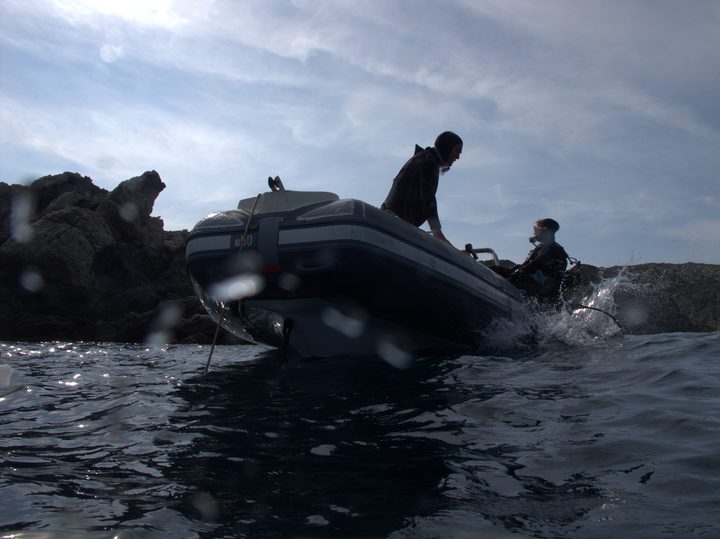
Get in touch to add or claim your dive center listing on DiveCodex.
Operators treat this as an entrance-and-exterior dive, not a penetration dive. The cave floor is fine sand that silts out easily, and only cave-certified divers with proper equipment should go further in.
Advanced Open Water is recommended. The outer wall is workable for less experienced divers, but the site overall, and certainly any approach to the cave mouth, calls for more experience.
A memorial cross sits at the cave entrance, a Virgin figure a little further along, and a dolphin statue in tribute to Jacques Cousteau deeper still. No source pins down exactly when these were placed.
Moray eels are the defining feature, with several species sharing the wall and cave entrance. Garden eels, octopus, grouper, barracuda and amberjack round out the sightings, with occasional green turtles.
Cueva de Palmar sits deeper and calls for more experience, built around a dense moray population and the cave's memorials. Palm Mar Wall is shallower, suits all levels, and is built around turtles instead.
Log your dives - notes, photos, conditions and the marine life you saw - and share them as one public diver profile. What you share helps the next diver, too.
Log every detail
Depth, duration, conditions, gear, buddy, notes — all in one place. Import from Suunto and other dive computers.
Track marine life
Record species sightings on each dive. Build a personal catalogue of everything you've seen underwater.
Your public dive profile
Share your dive history, stats, and experiences with a profile page you control. Show the world where you've been.