
Moray eels
Muraenidae
The reef's resident dragons — morays peek from holes with jaws rhythmically opening and closing (they're breathing, not threatening you). Cleaning stations are the best place to watch them fully emerge and hold still.
Last updated April 2026
Species
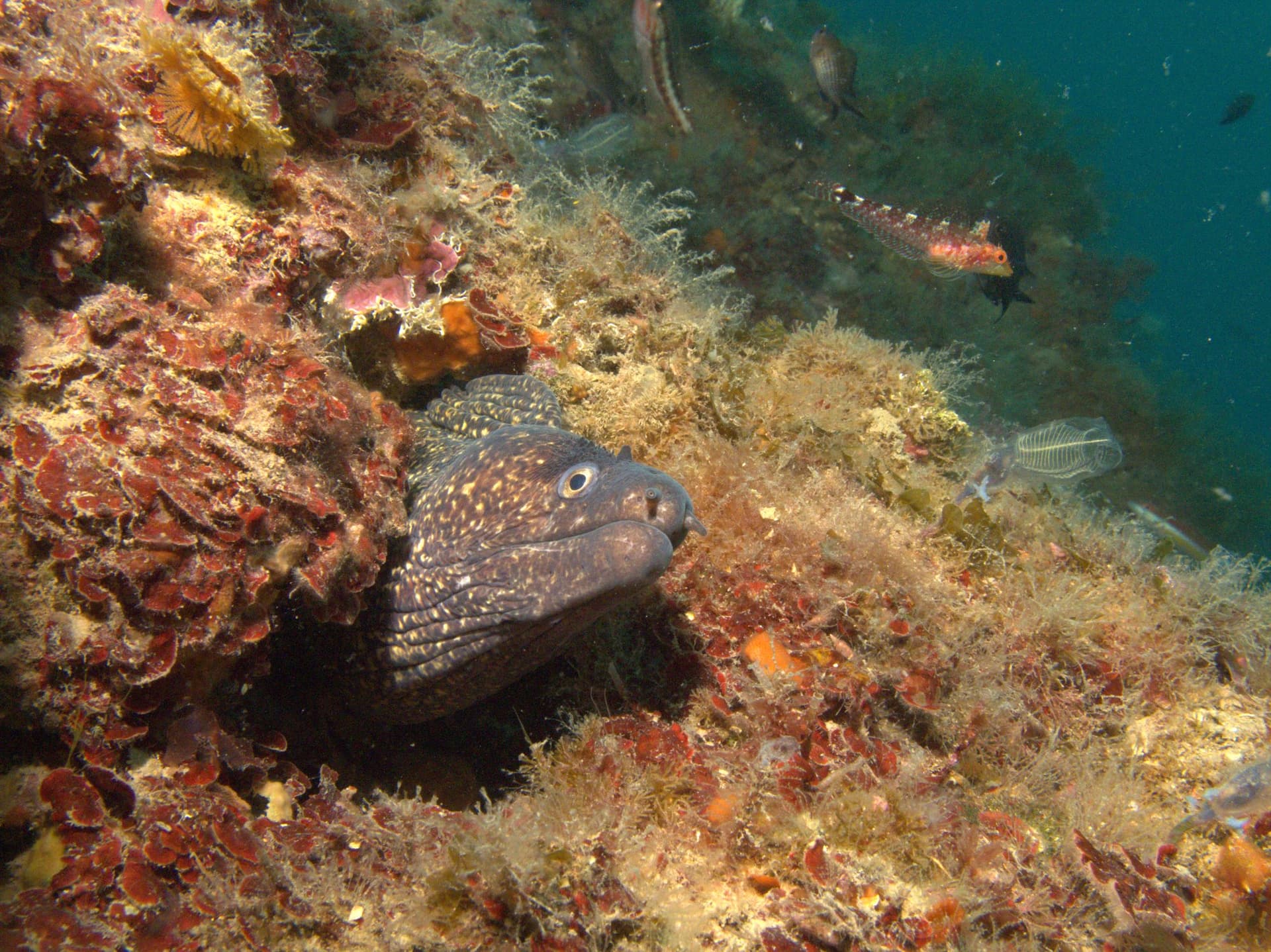
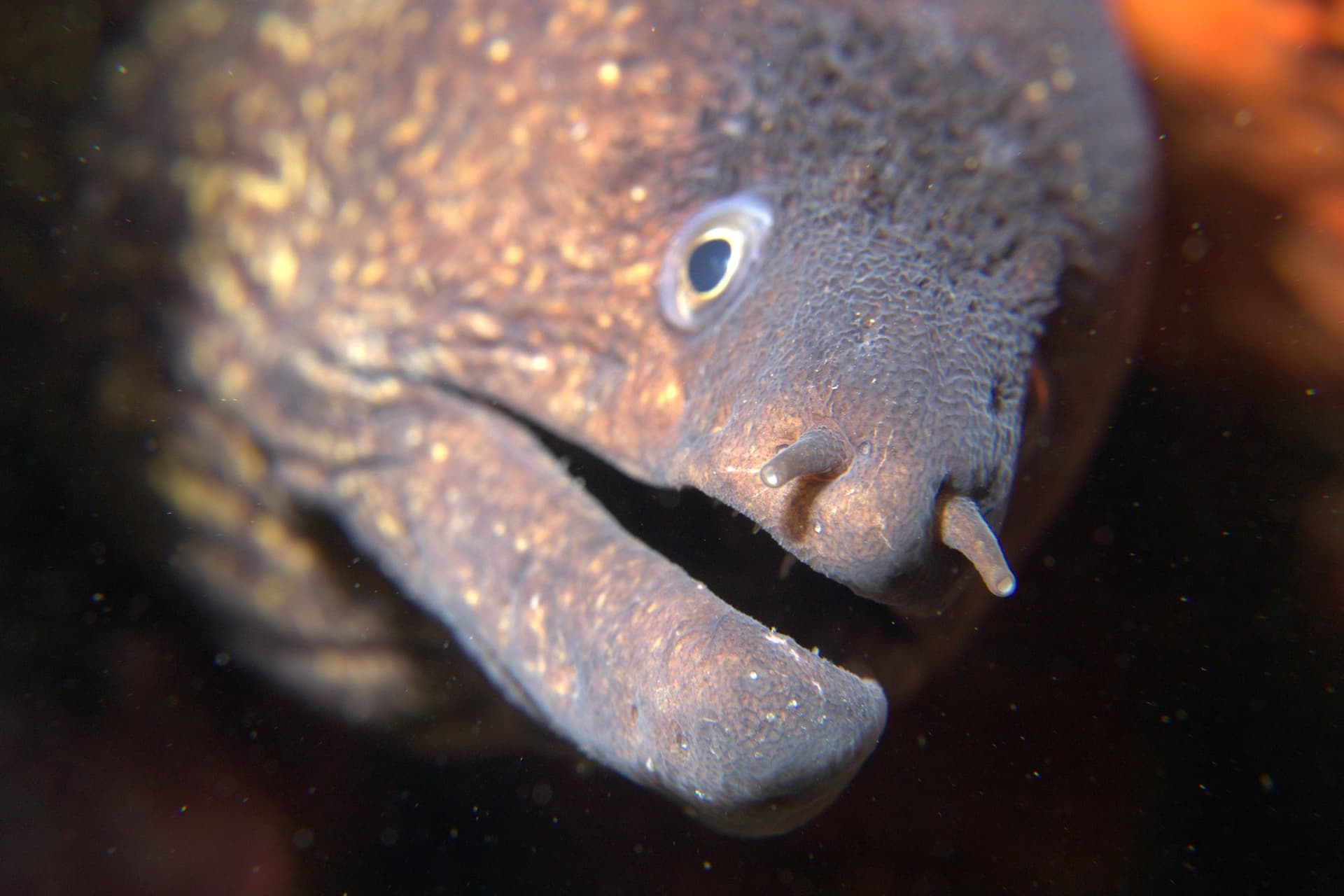
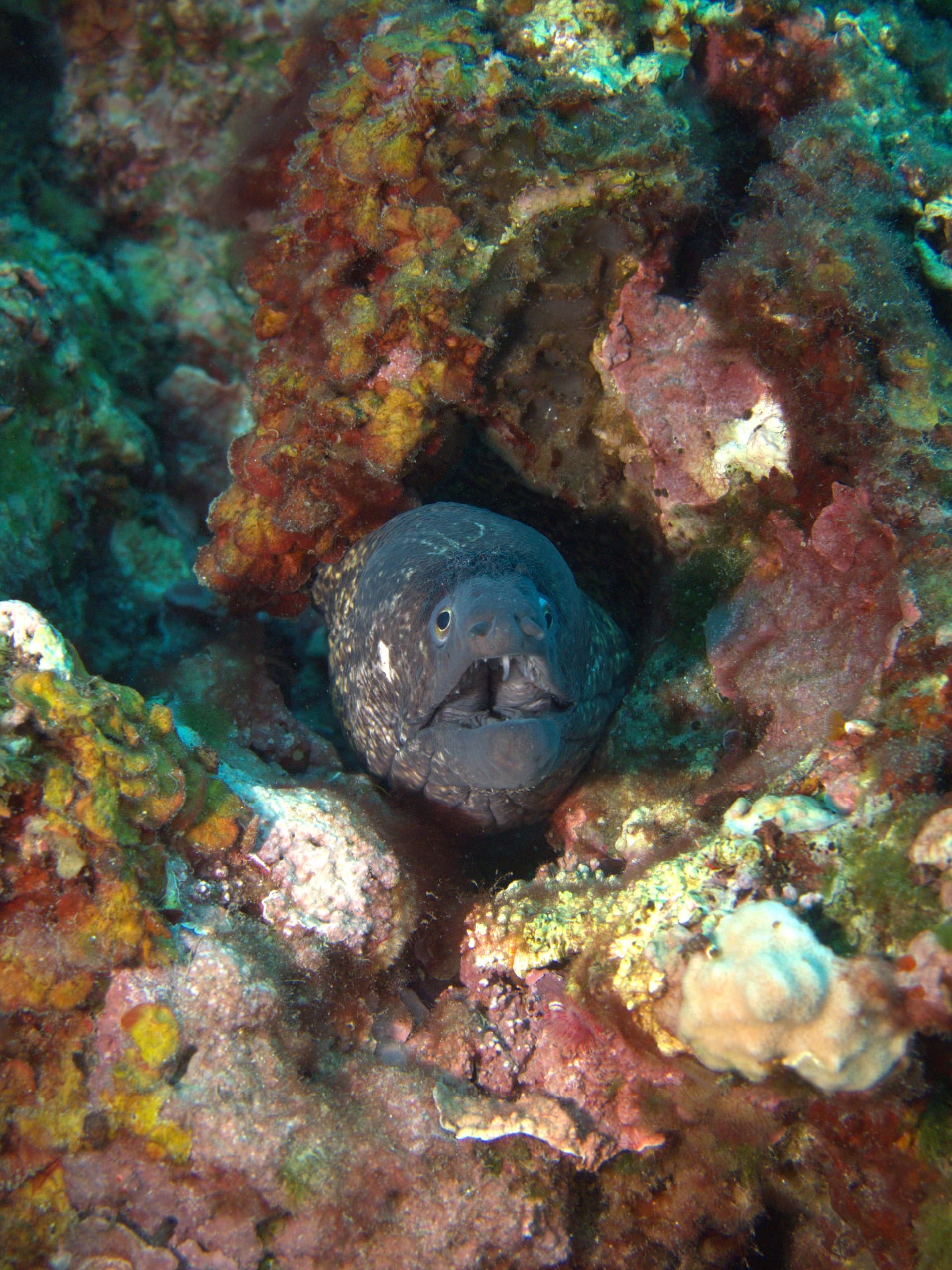
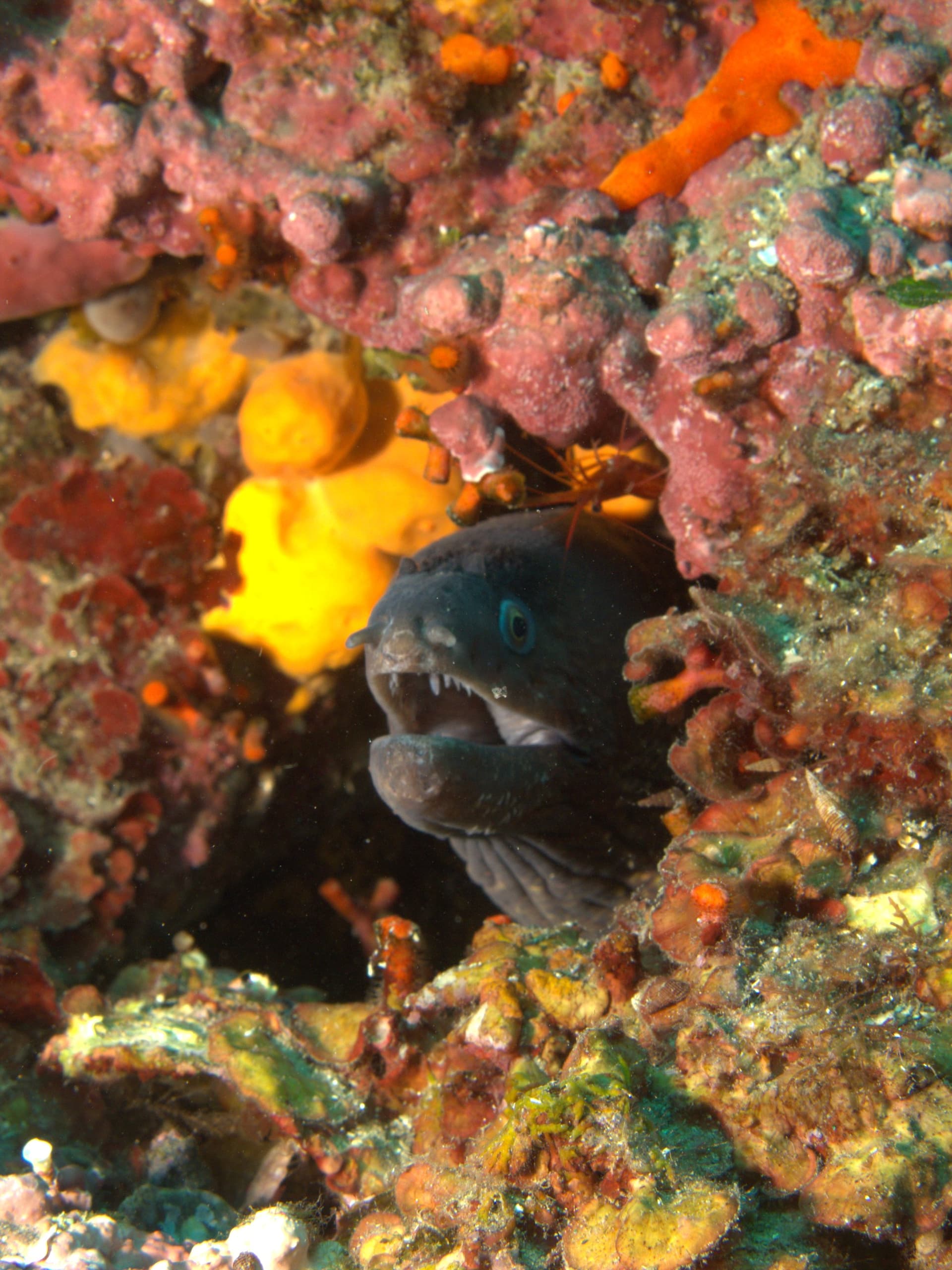
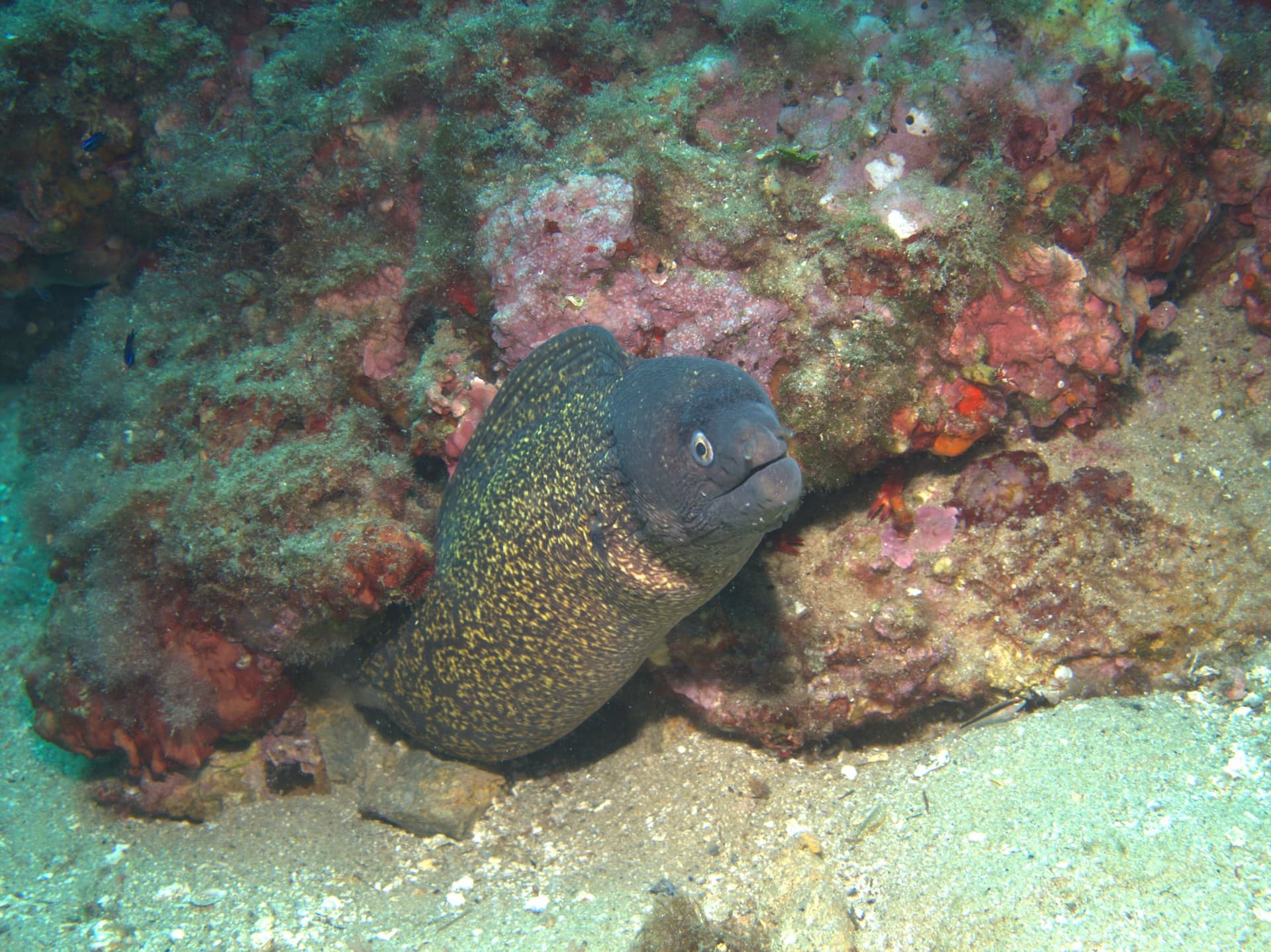
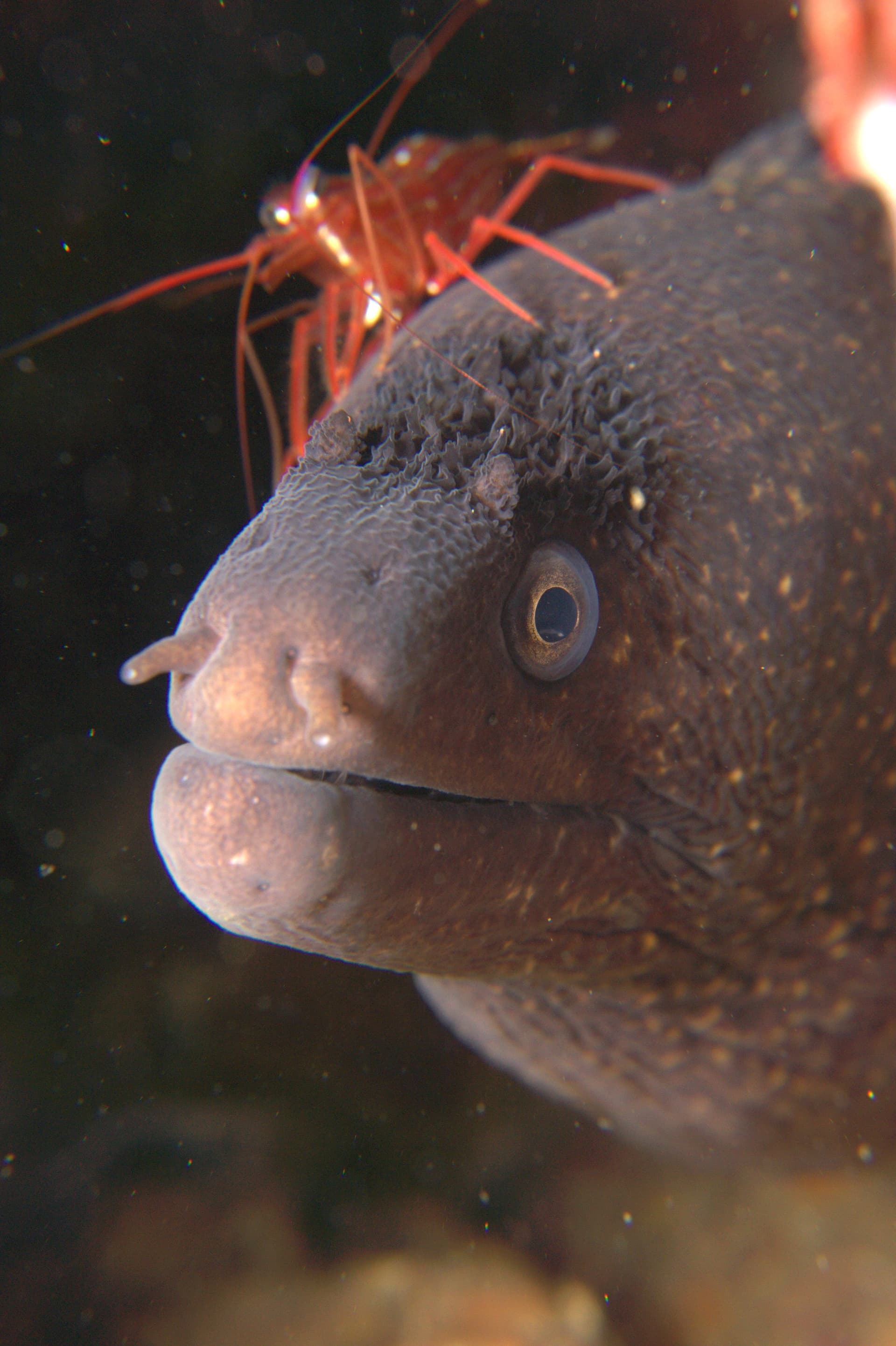
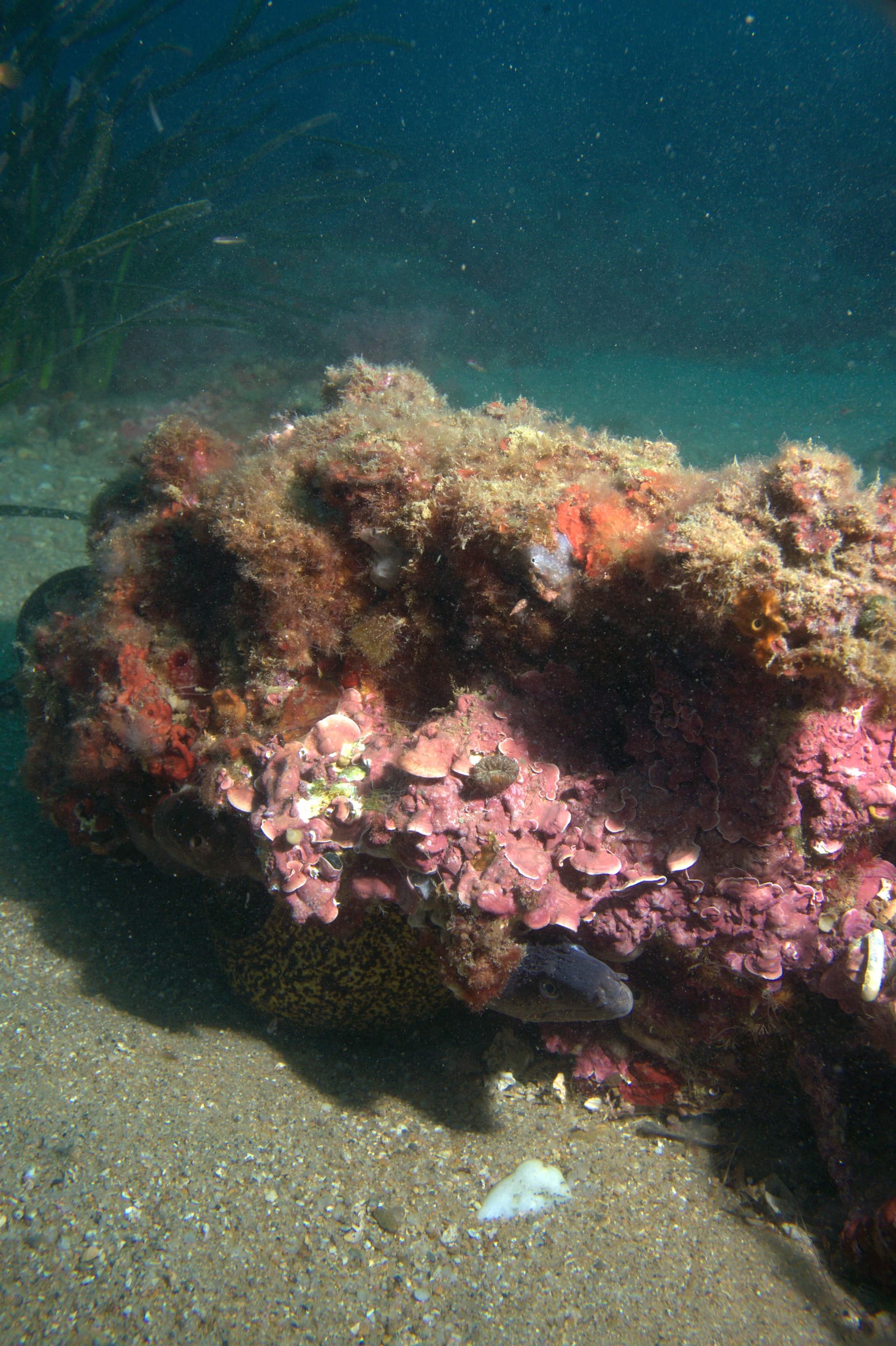
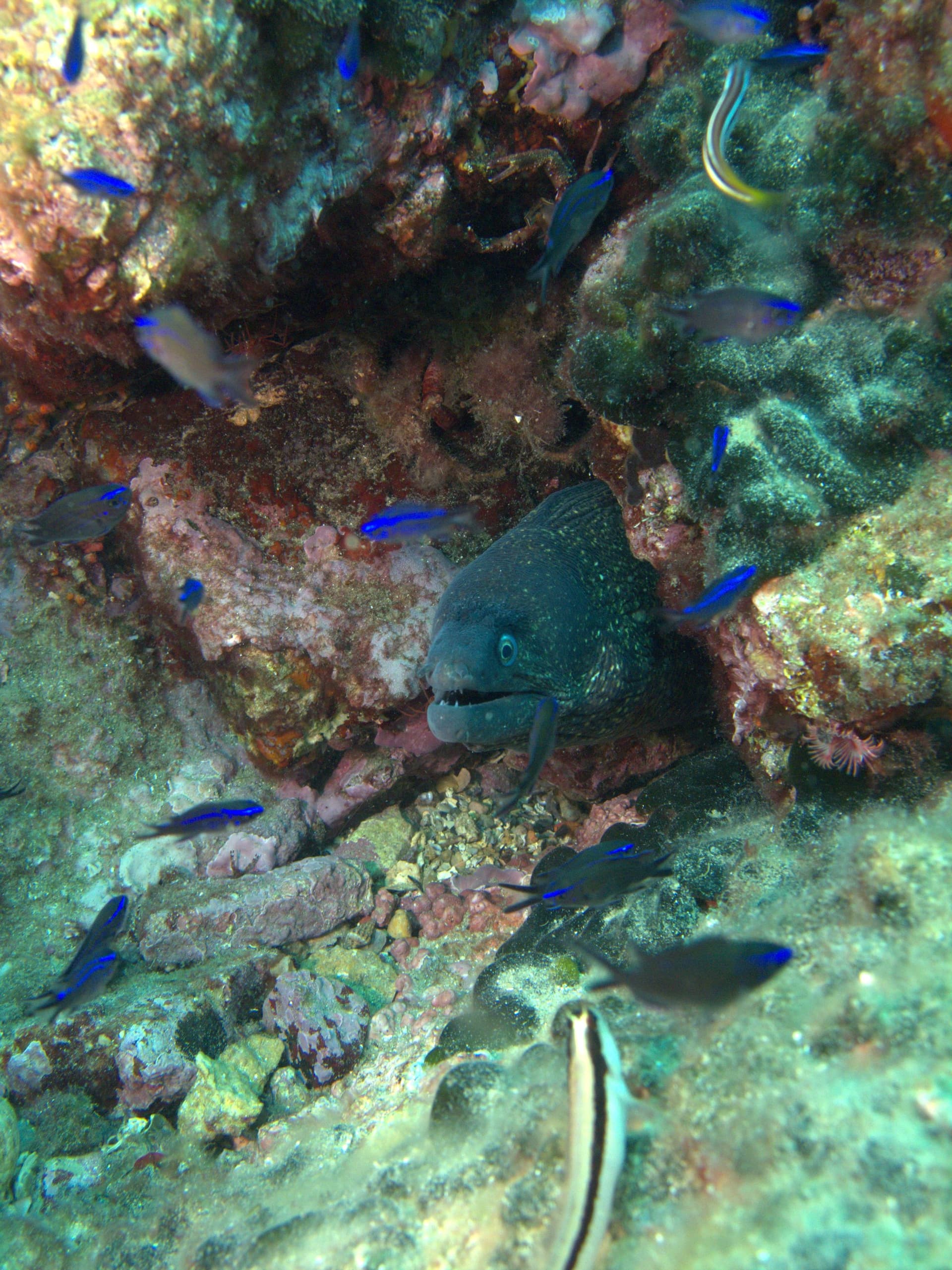
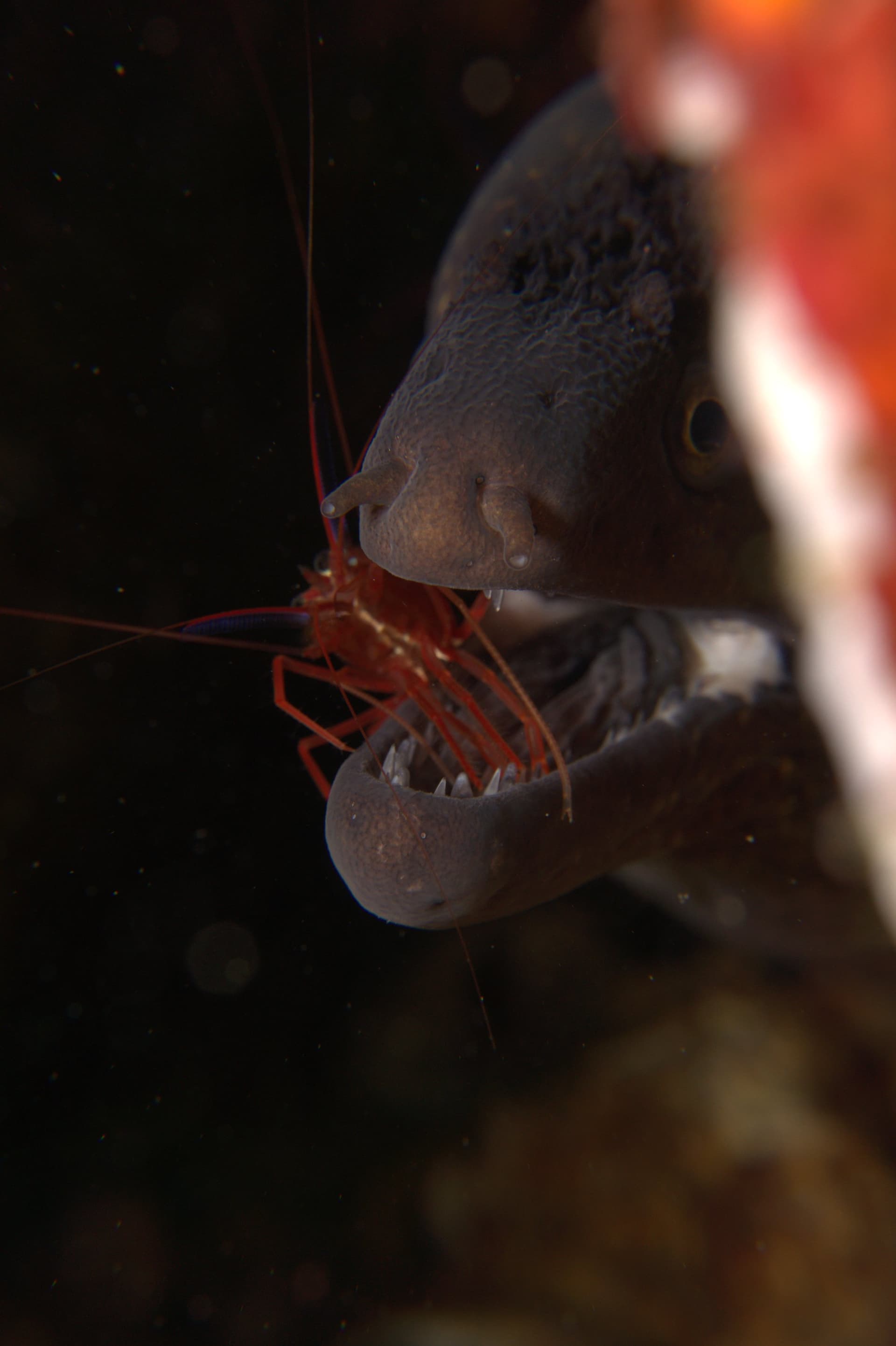
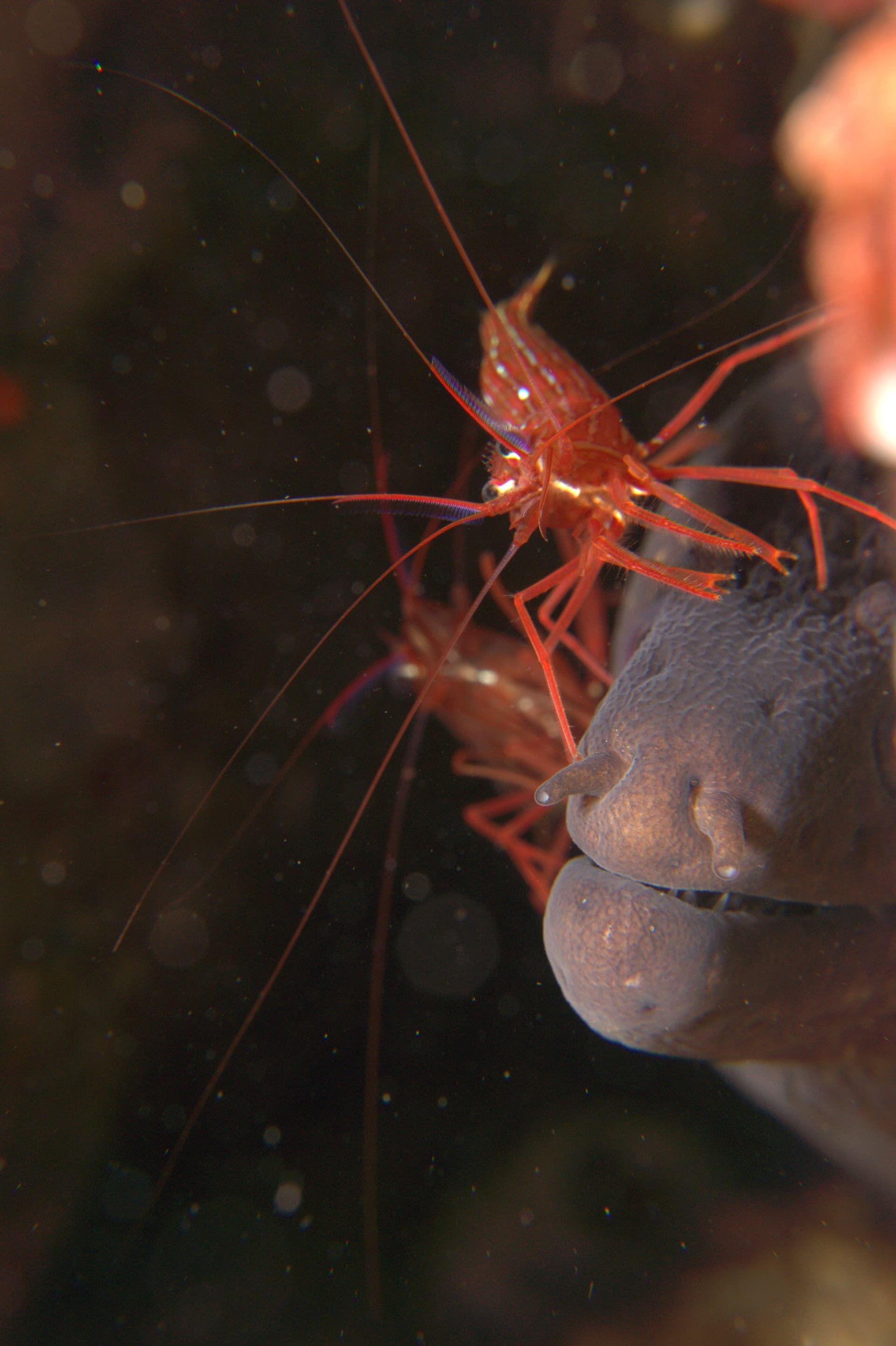
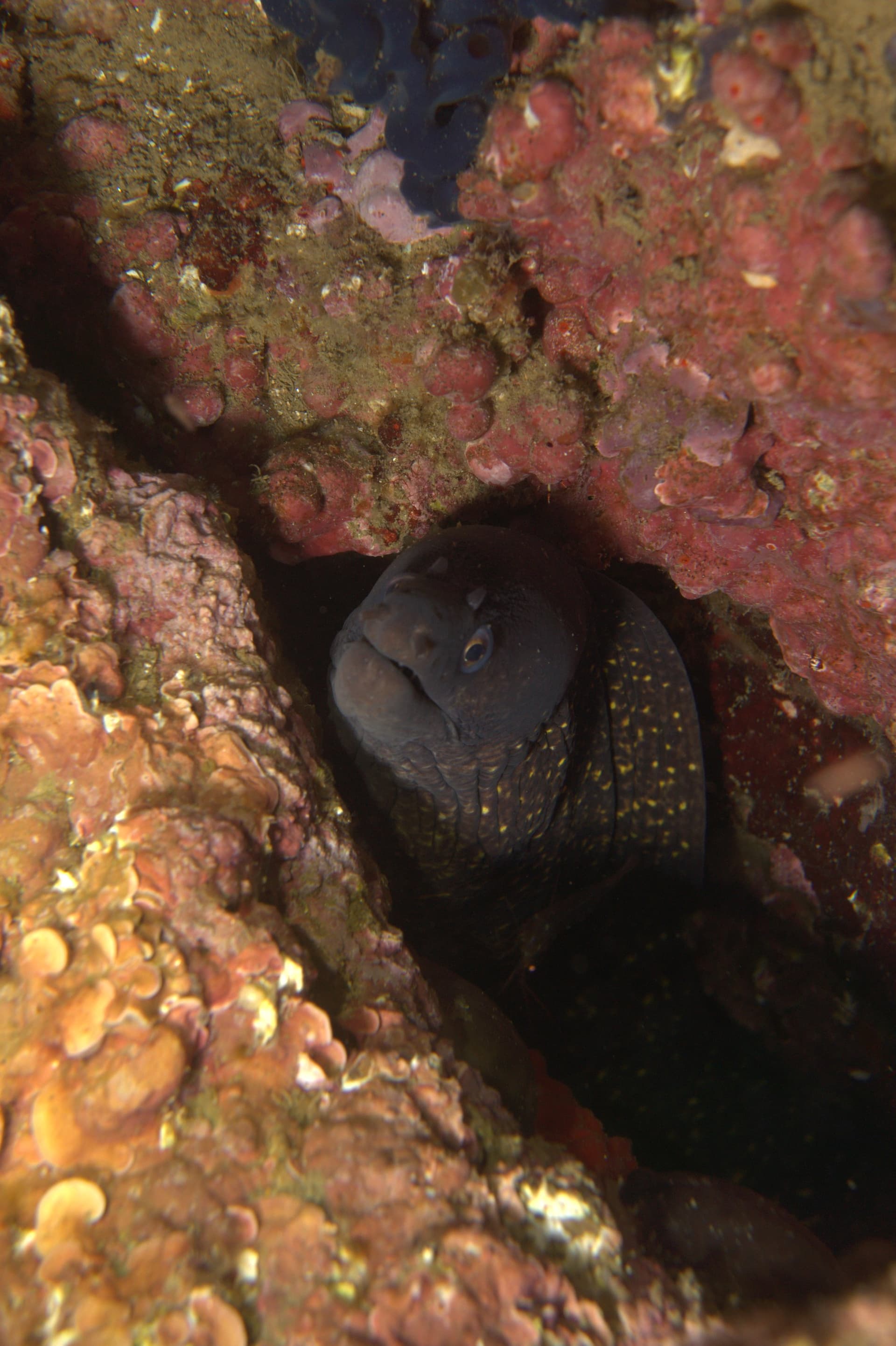
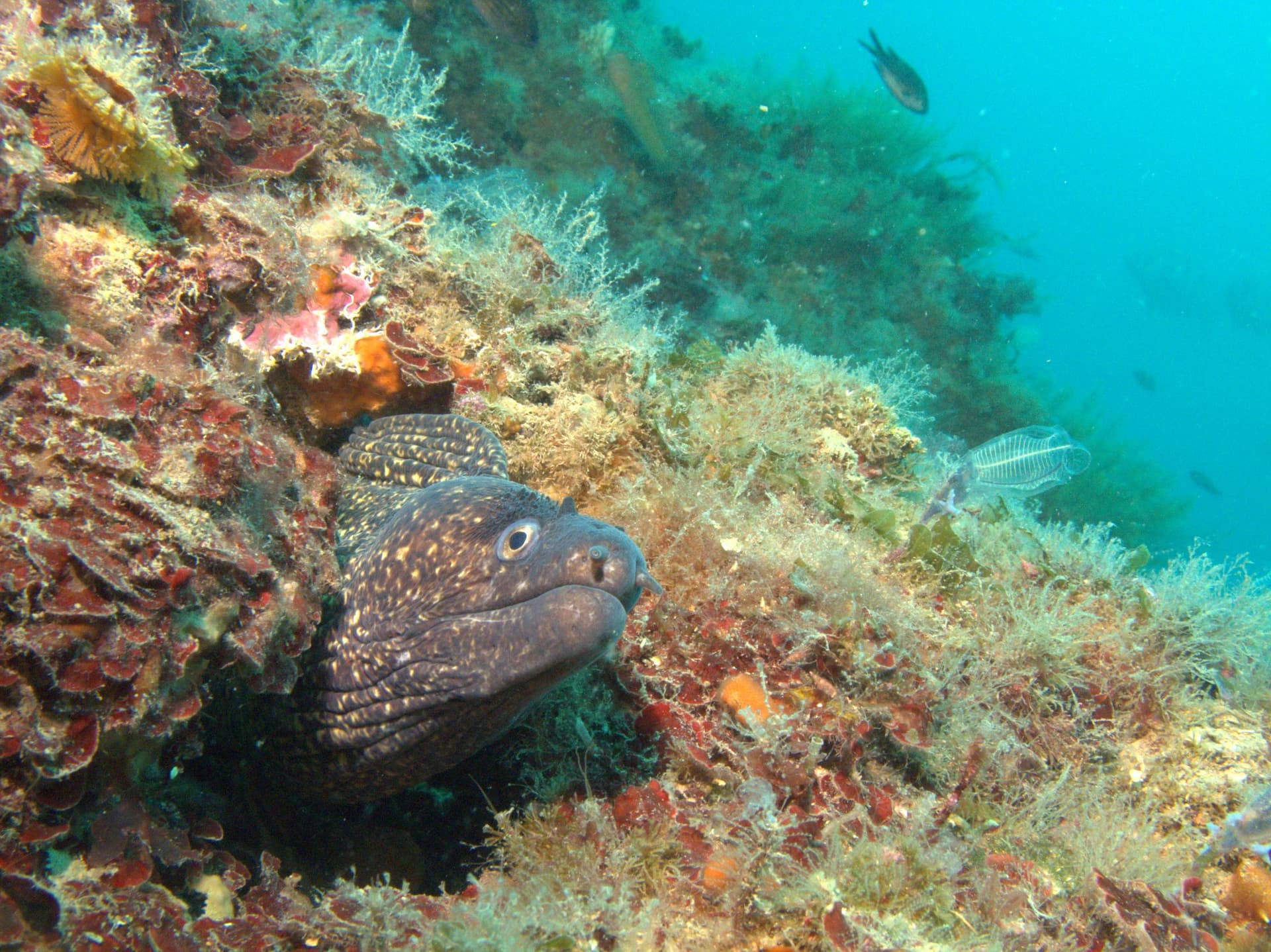
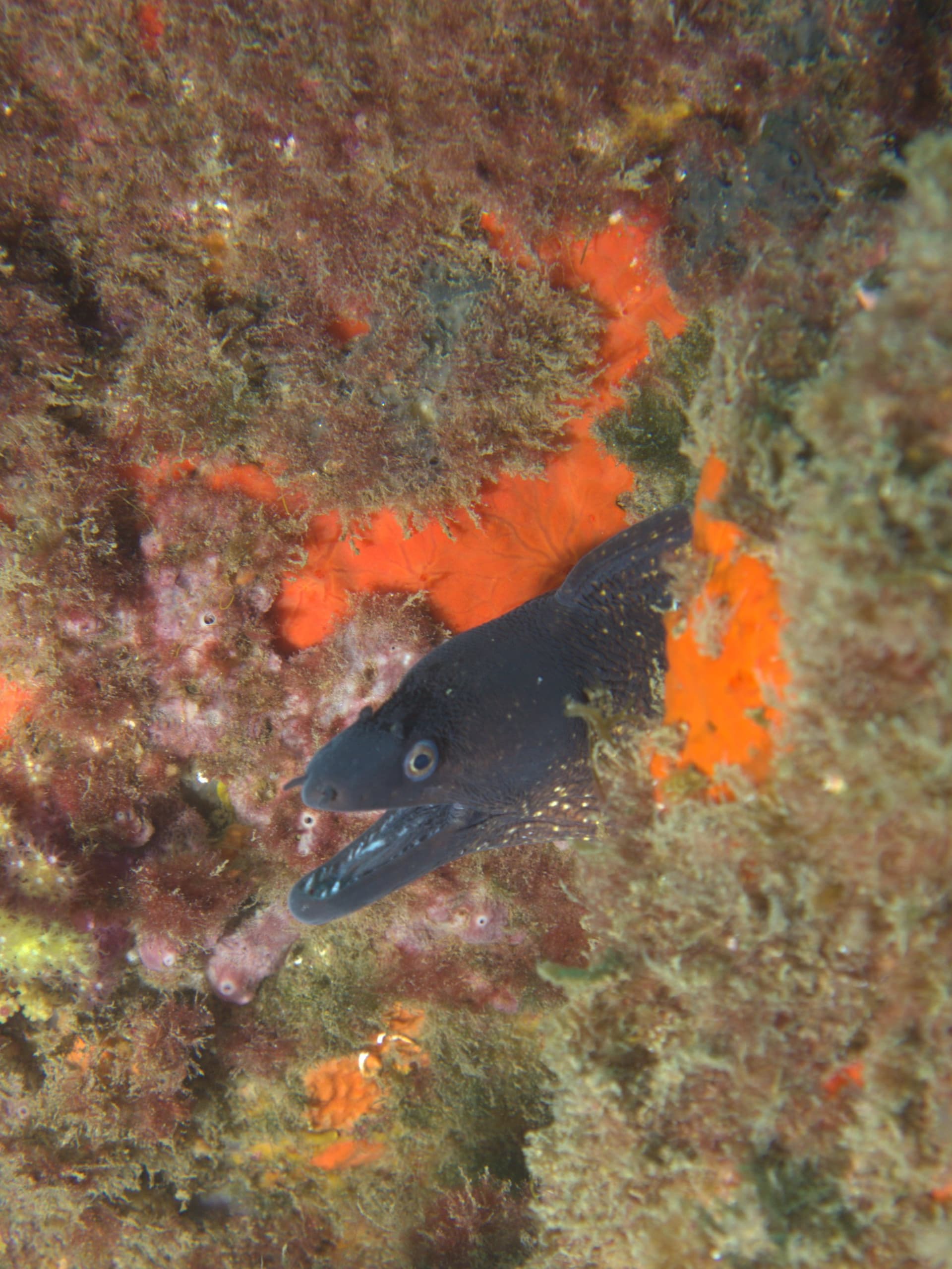
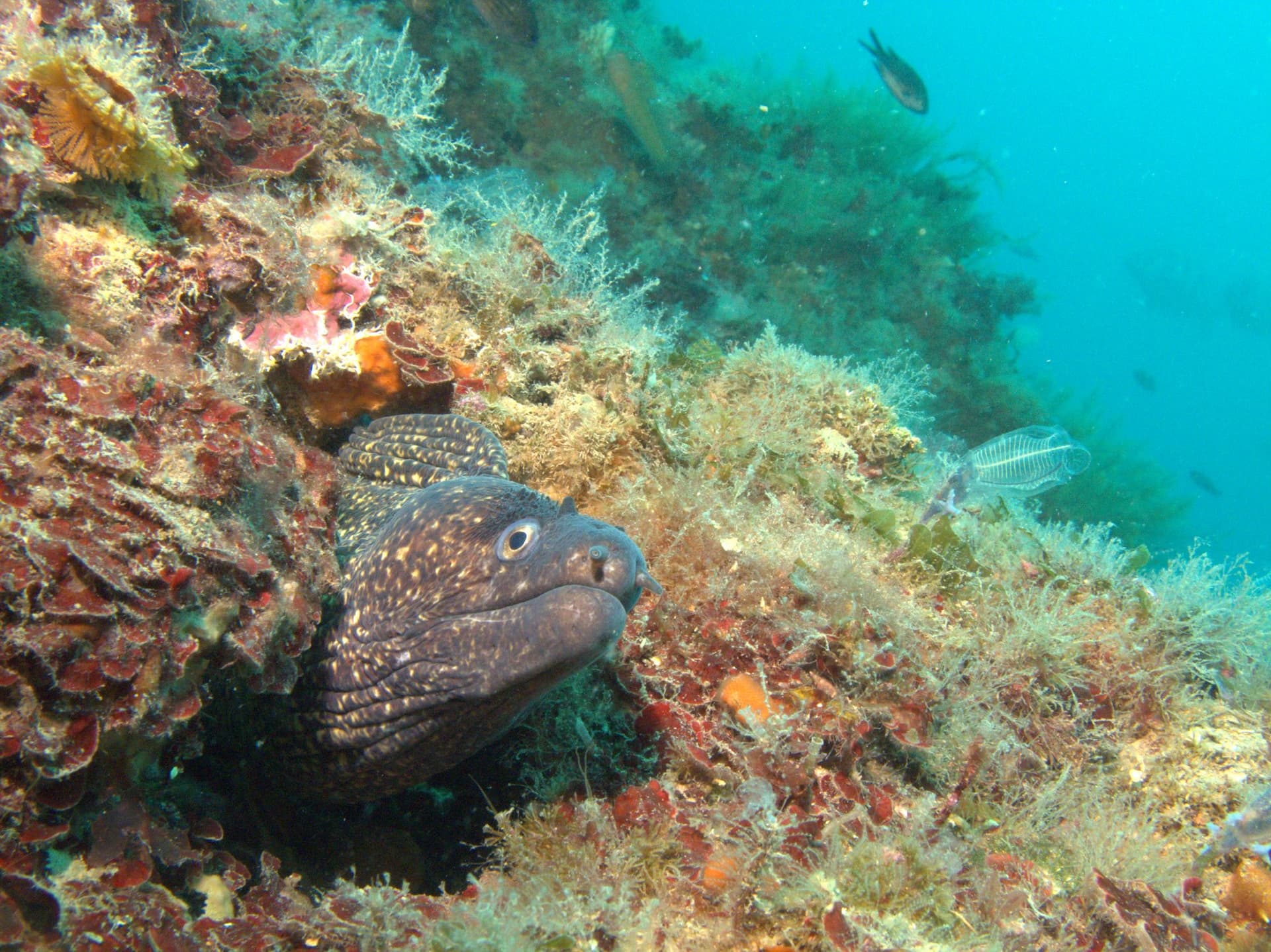
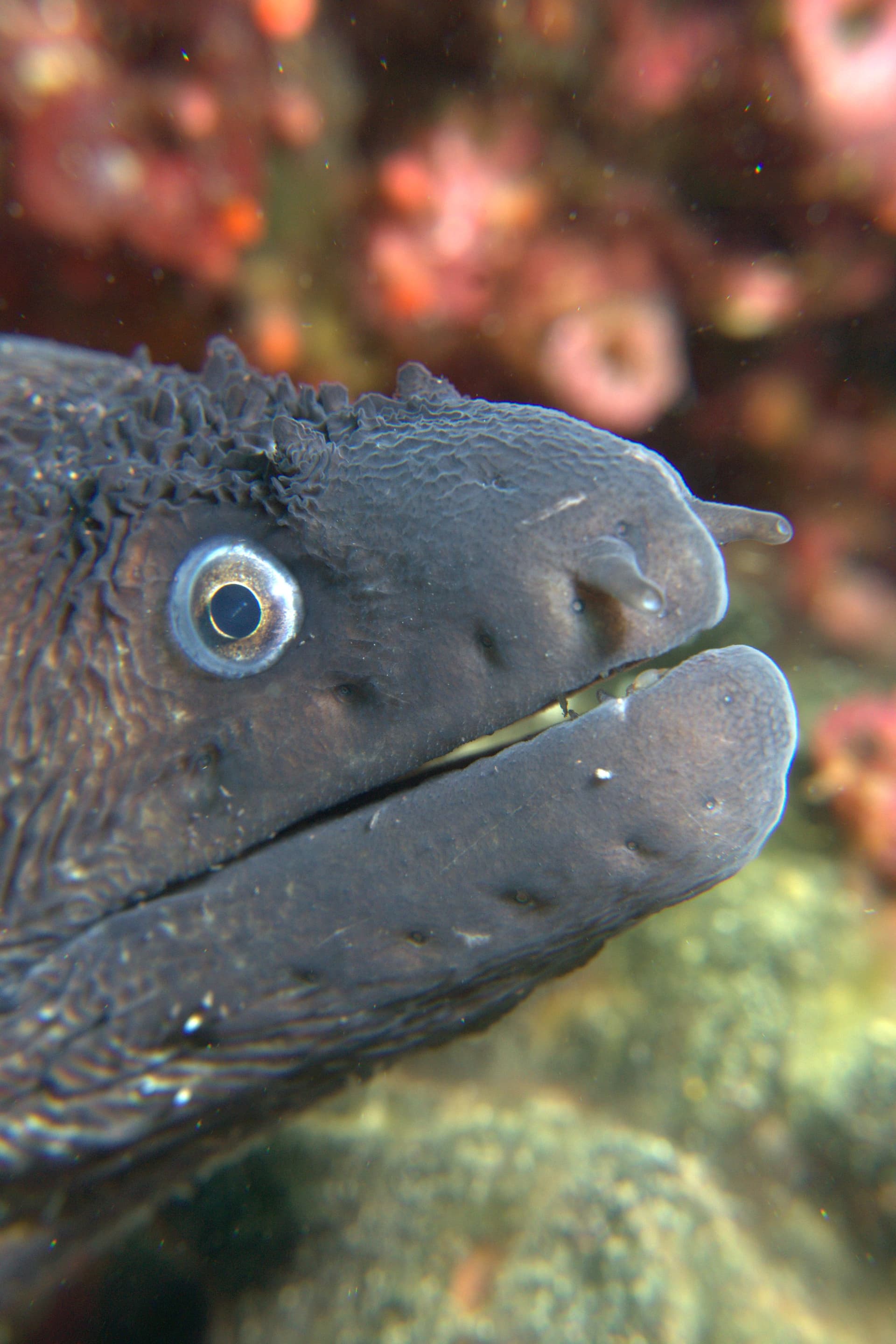
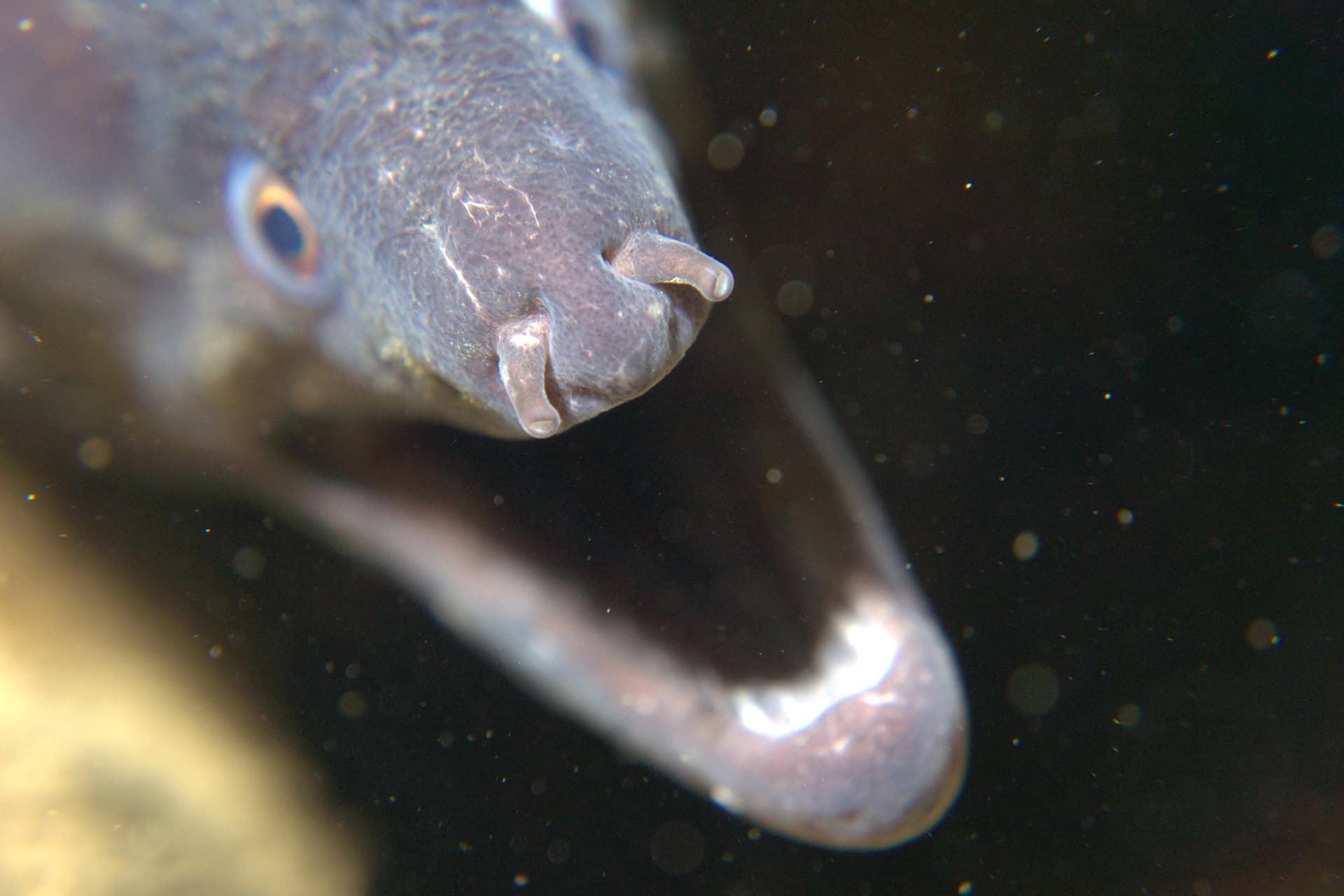
Mediterranean moray eel
Muraena helena(23 photos)Dark brown body densely patterned with yellow speckles and a wide, gaping mouth. The classic Mediterranean moray, often seen with mouth rhythmically opening for breathing.
Peers out from rocky holes with its mouth agape — looks threatening but is just breathing. Keep hands out of crevices as bites are defensive.
© Jouni Kuisma
© Jouni Kuisma
© Jouni Kuisma
© Jouni Kuisma
© Jouni Kuisma
© Jouni Kuisma
© Jouni Kuisma
© Jouni Kuisma
© Jouni Kuisma
© Jouni Kuisma
© Jouni Kuisma
© Jouni Kuisma
© Jouni Kuisma
© Jouni Kuisma
© Jouni Kuisma
© Jouni Kuisma
Observed at
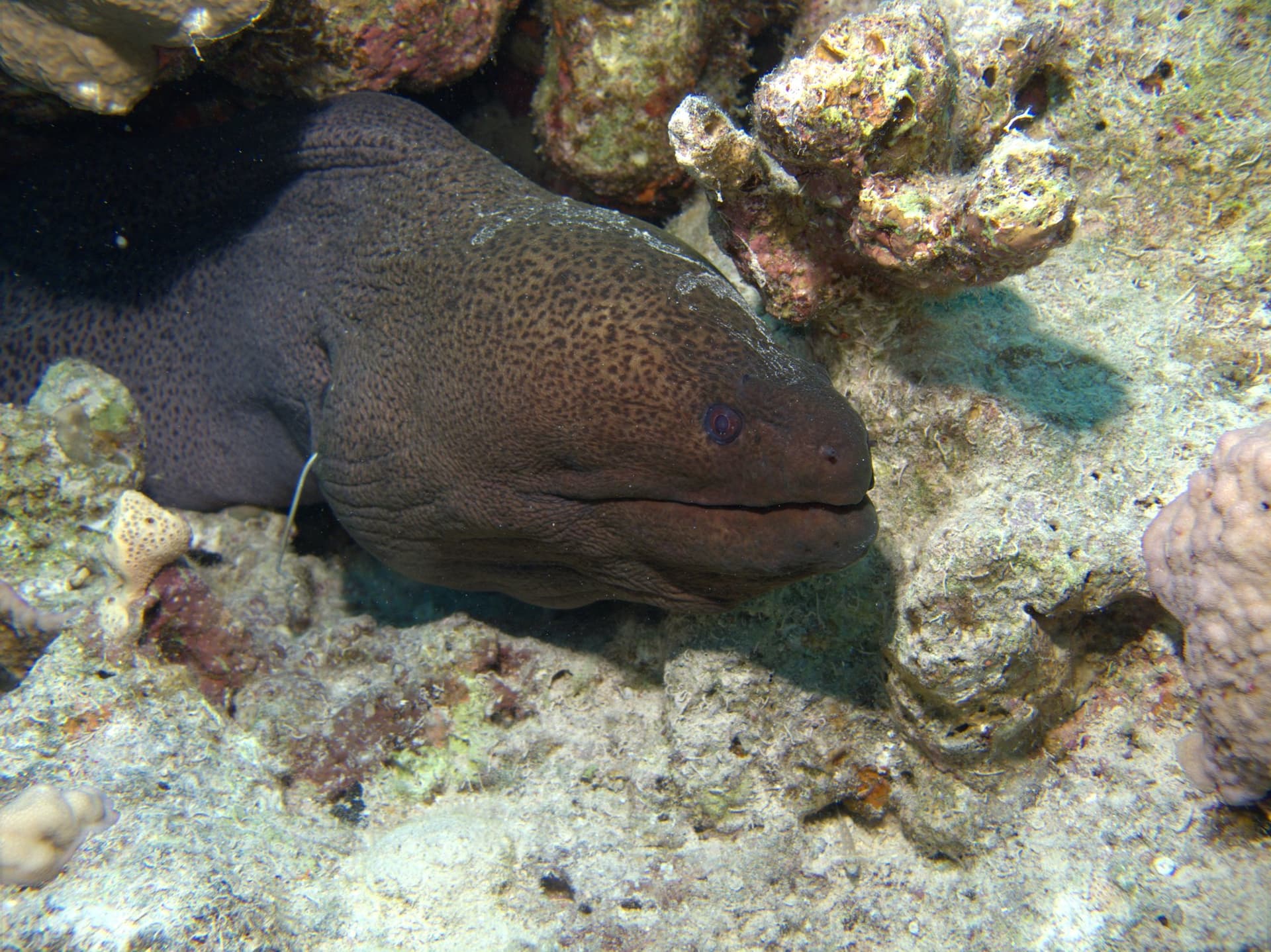
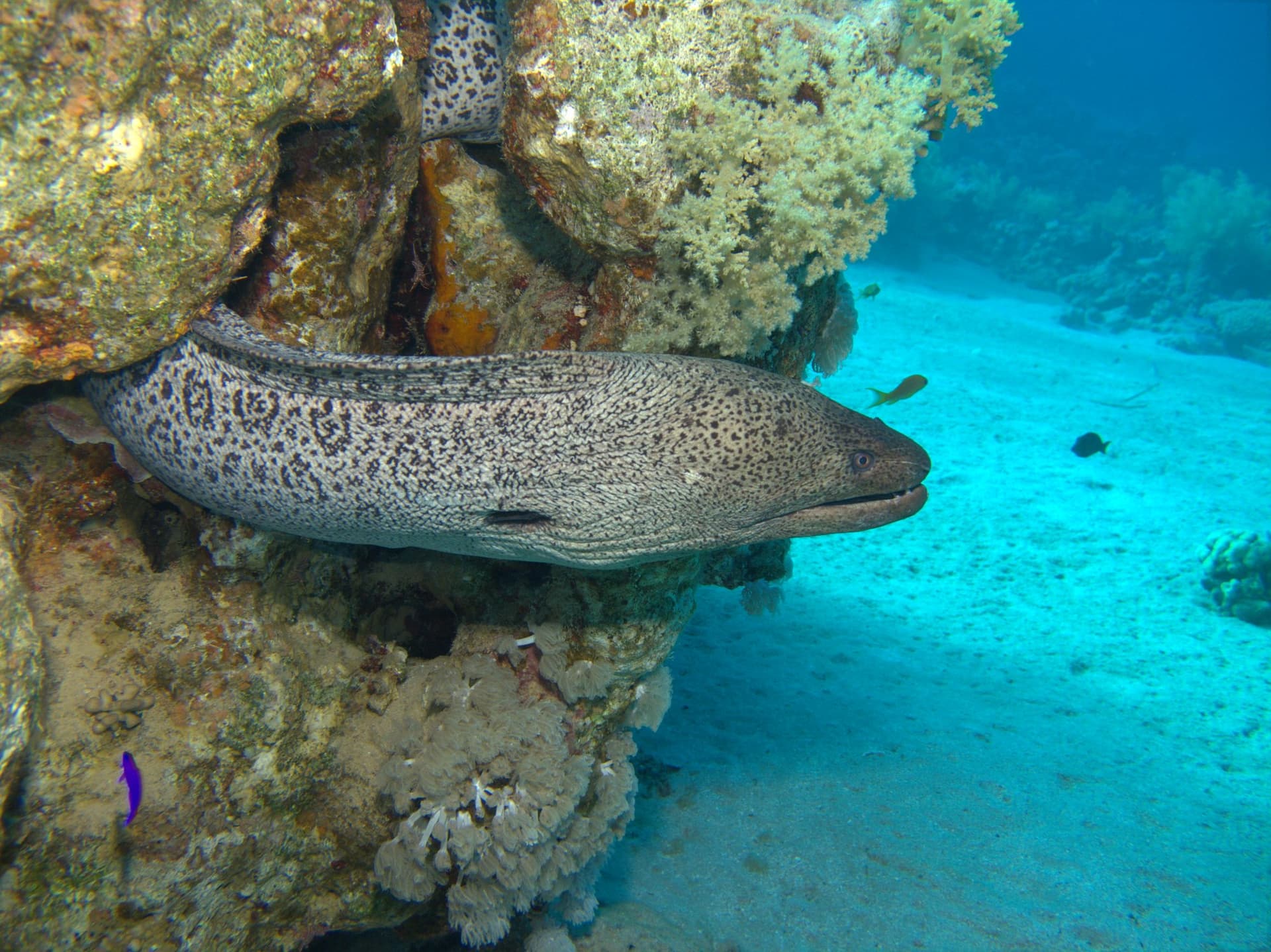
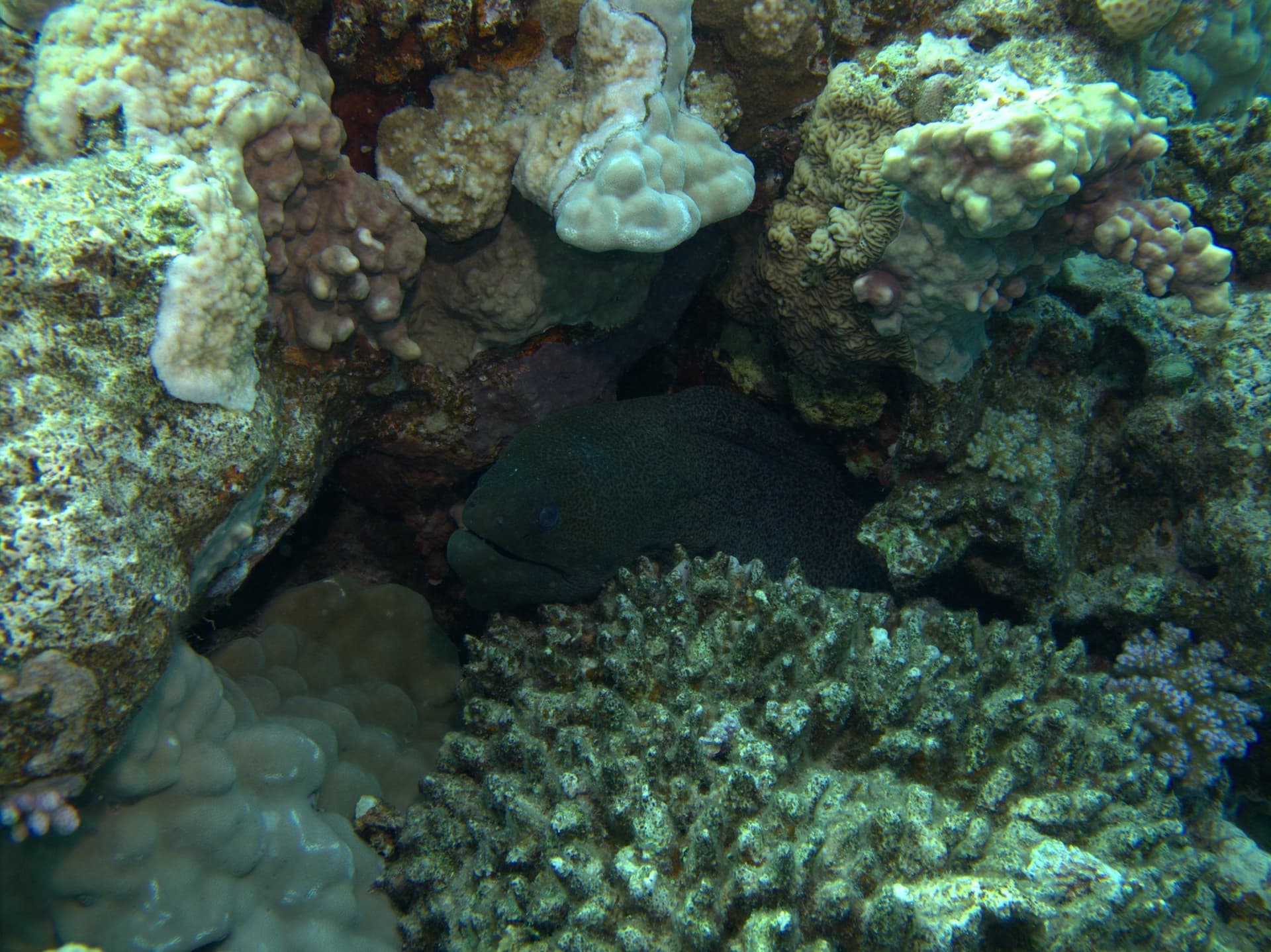
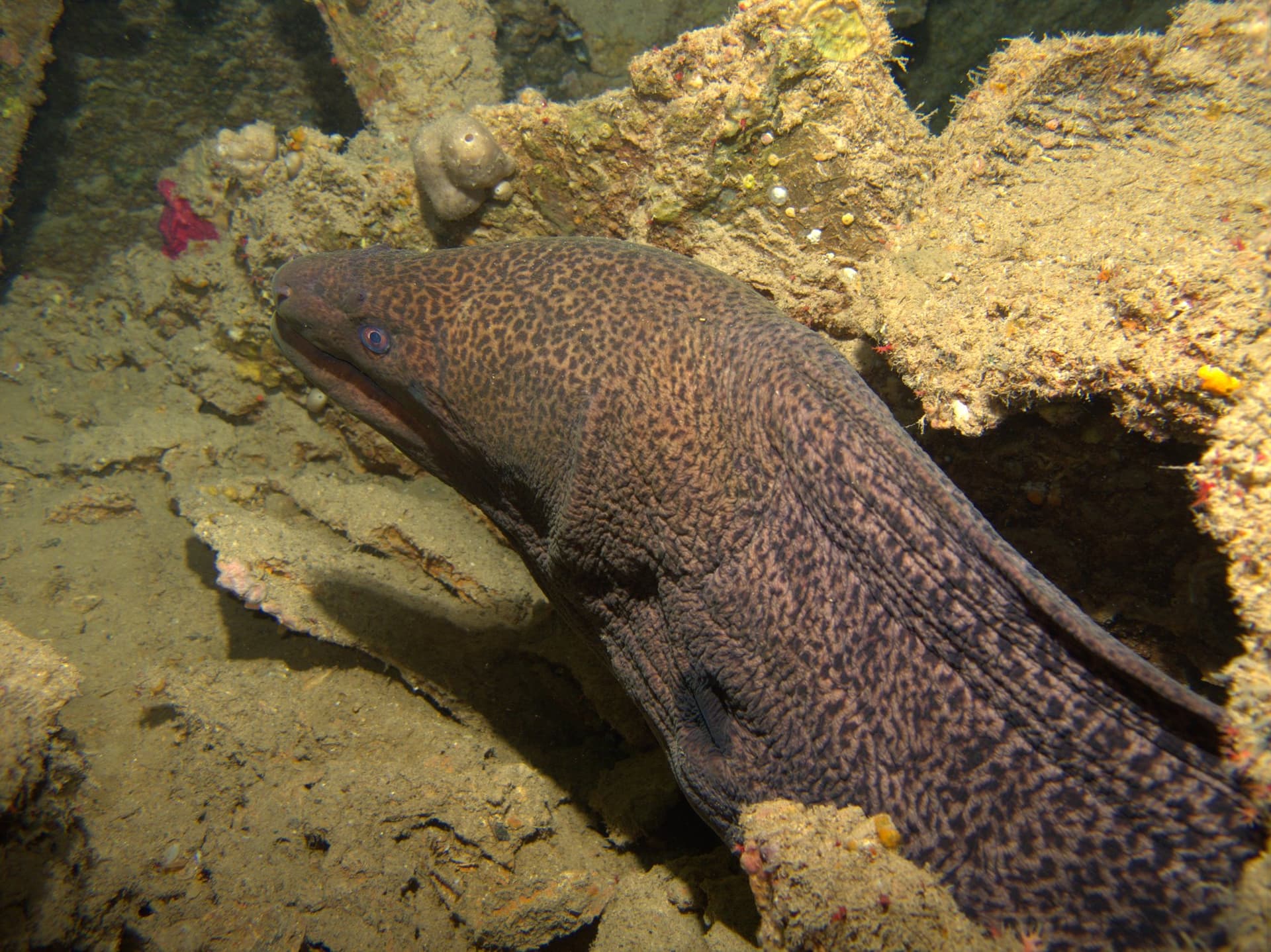
Giant moray
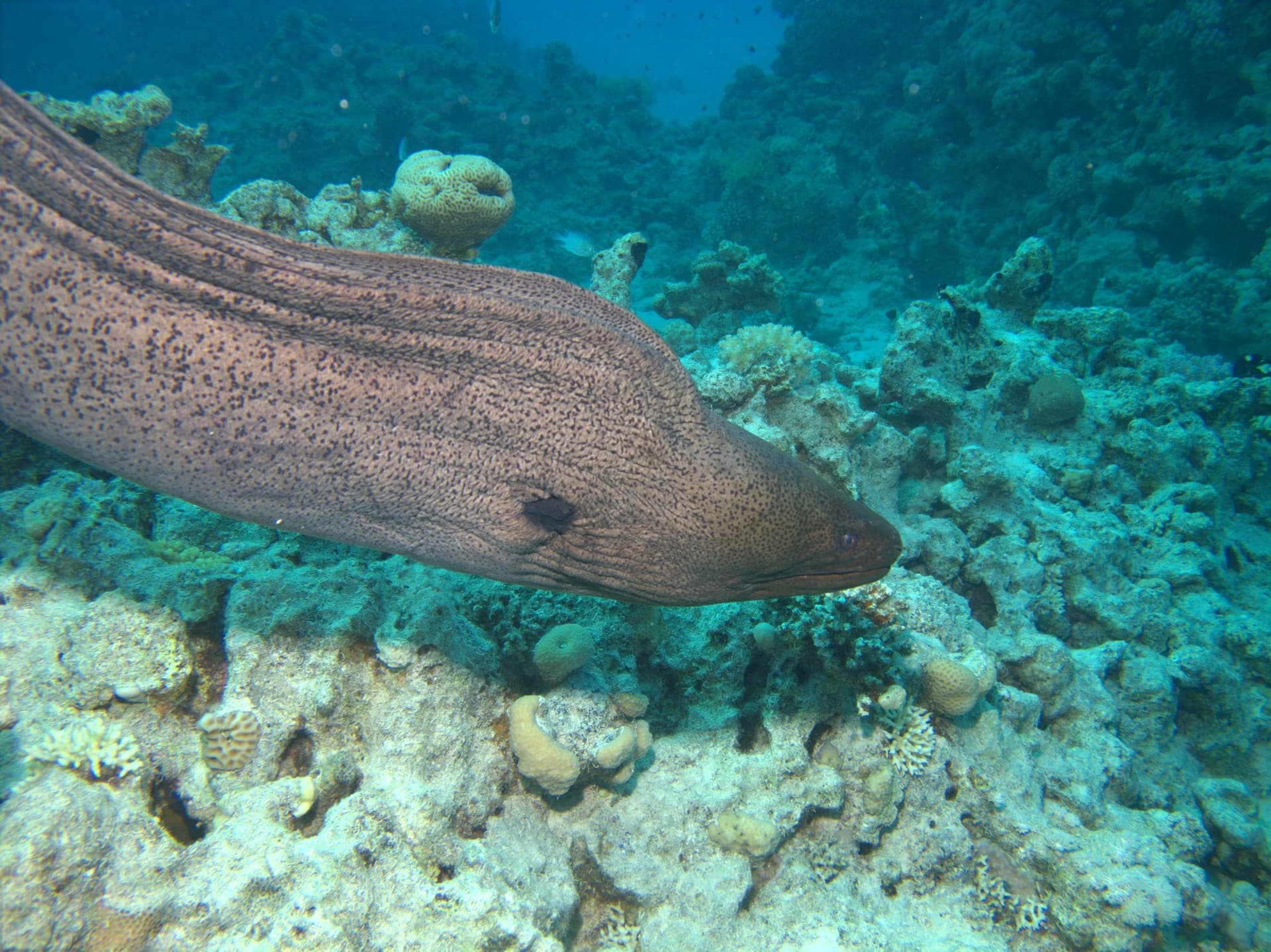
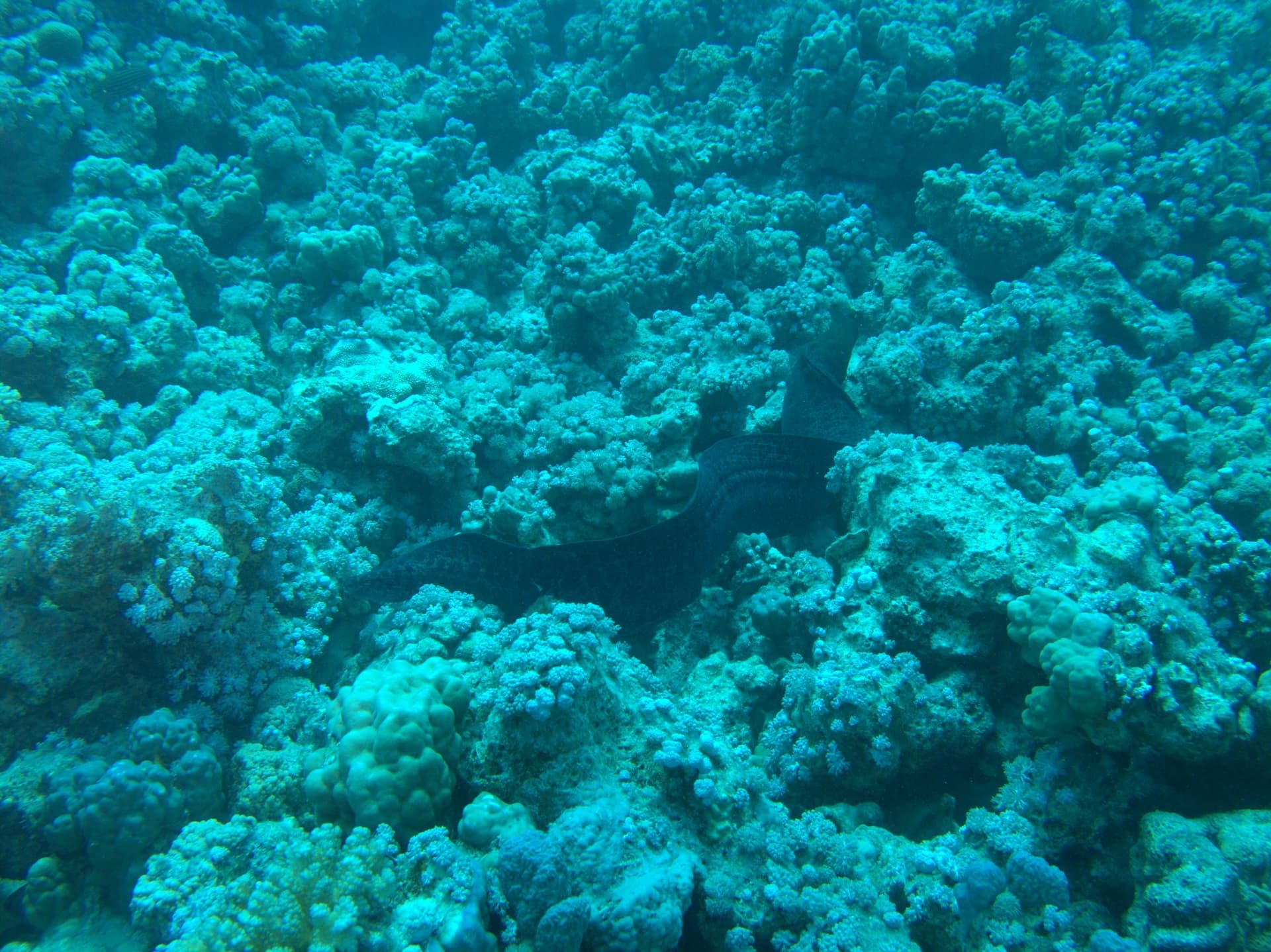
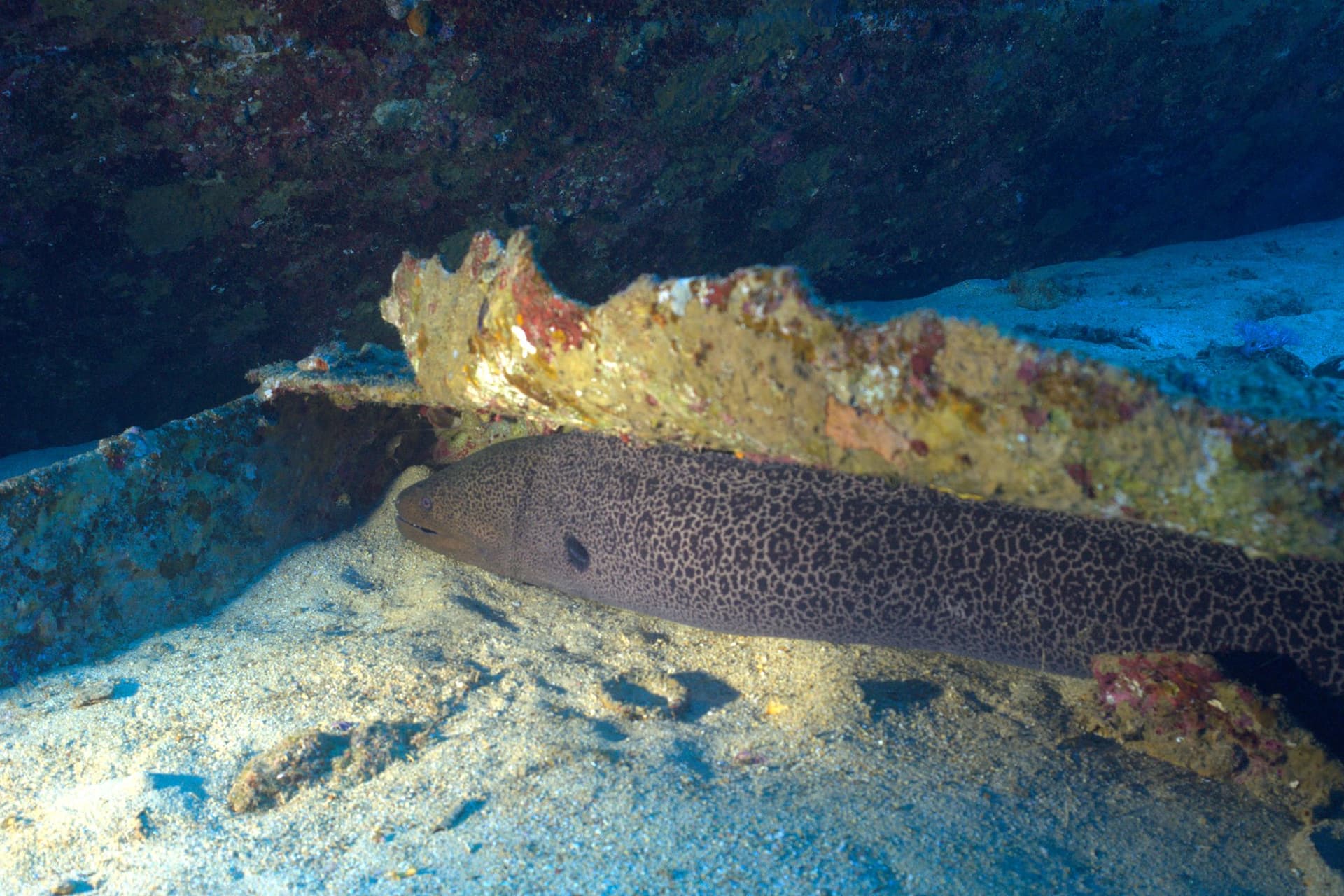
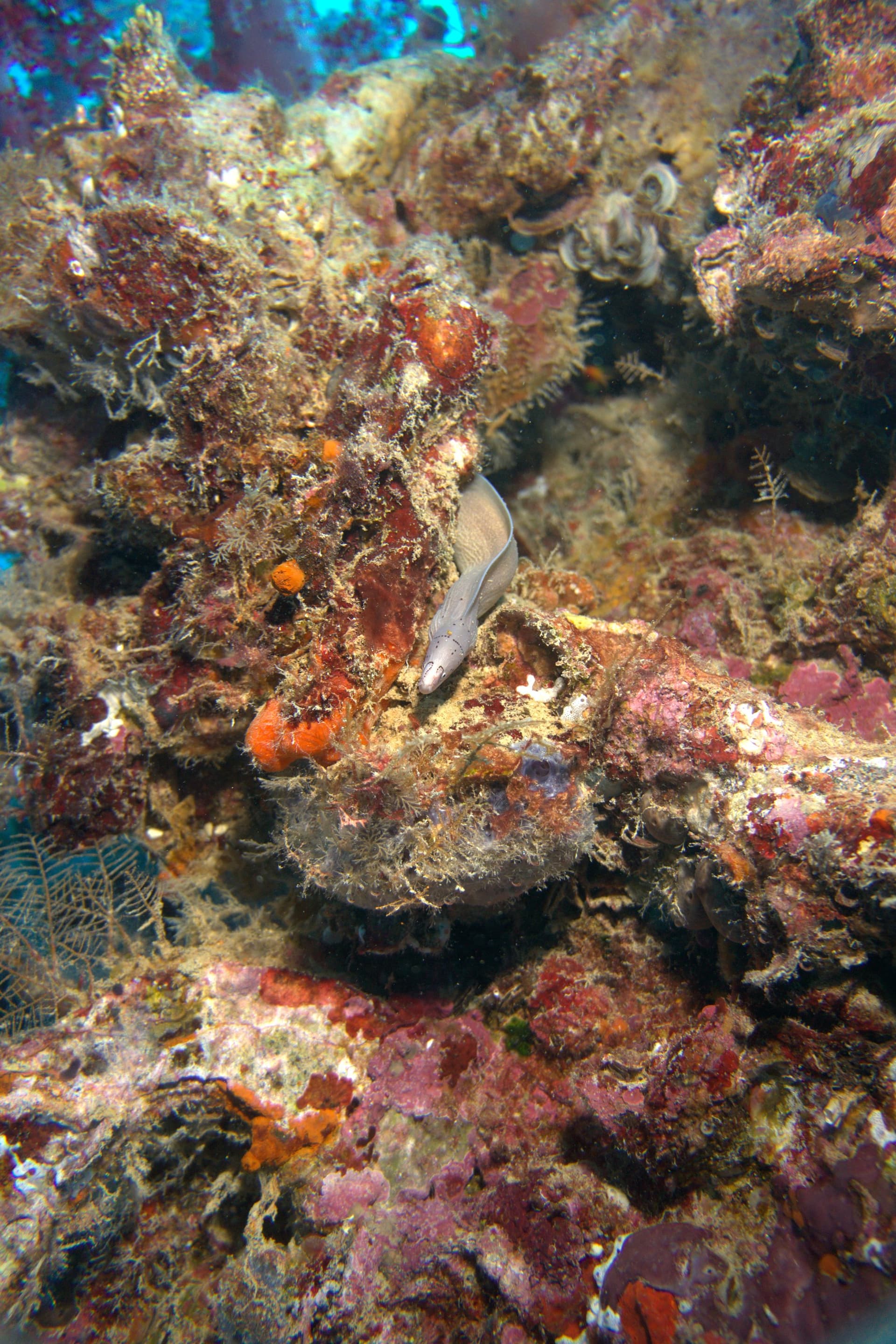
Gymnothorax javanicus(8 photos)The largest moray species — a massive eel reaching 3 meters, with brown leopard-like spots on a yellowish body. Unmistakable size and bulk.
Rests in large coral caves or under table corals during the day, sometimes attended by cleaner wrasses working inside its open mouth.
© Jouni Kuisma
© Jouni Kuisma
© Jouni Kuisma
© Jouni Kuisma
© Jouni Kuisma
© Jouni Kuisma
© Jouni Kuisma
© Jouni Kuisma
Black moray
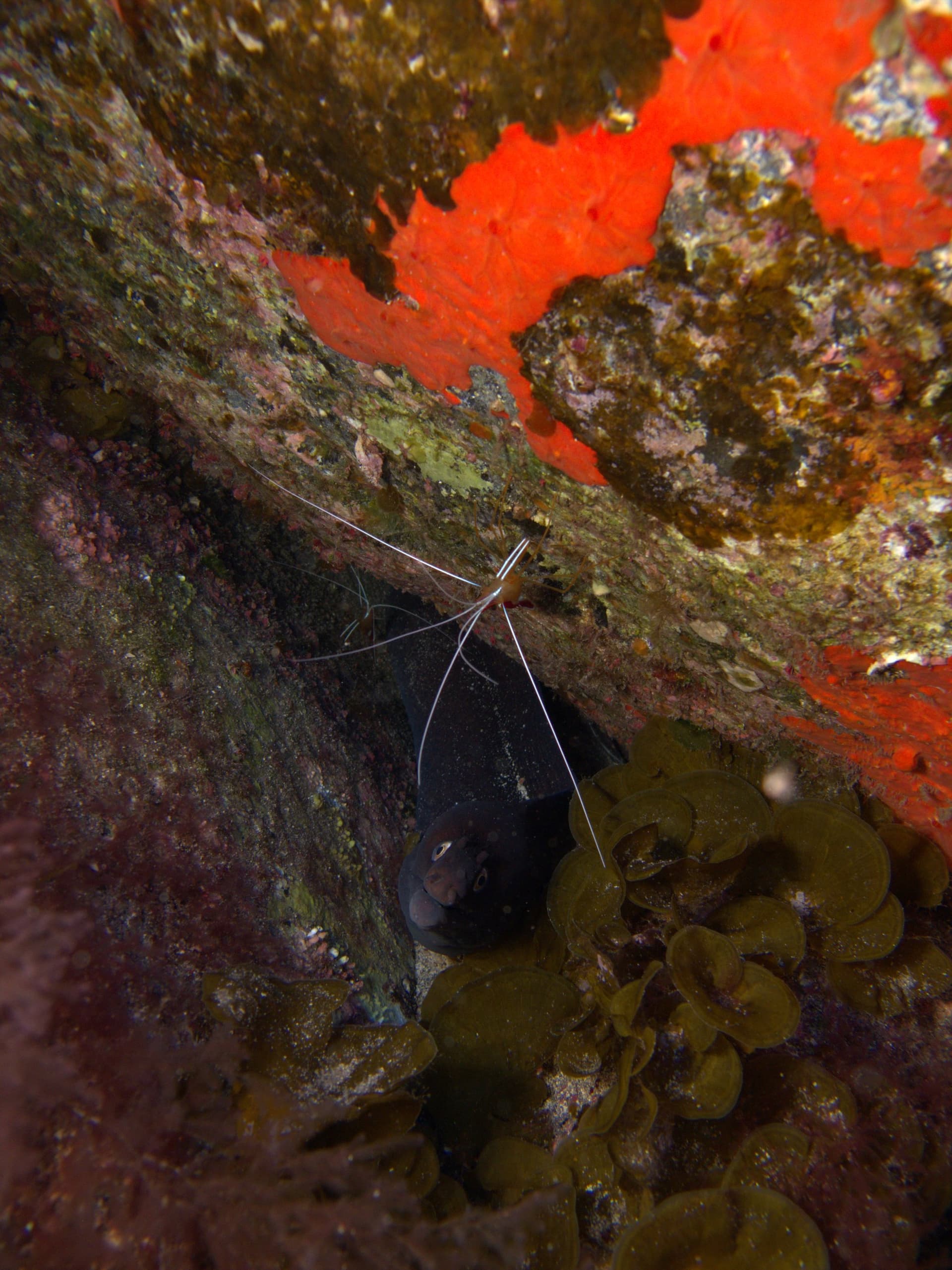
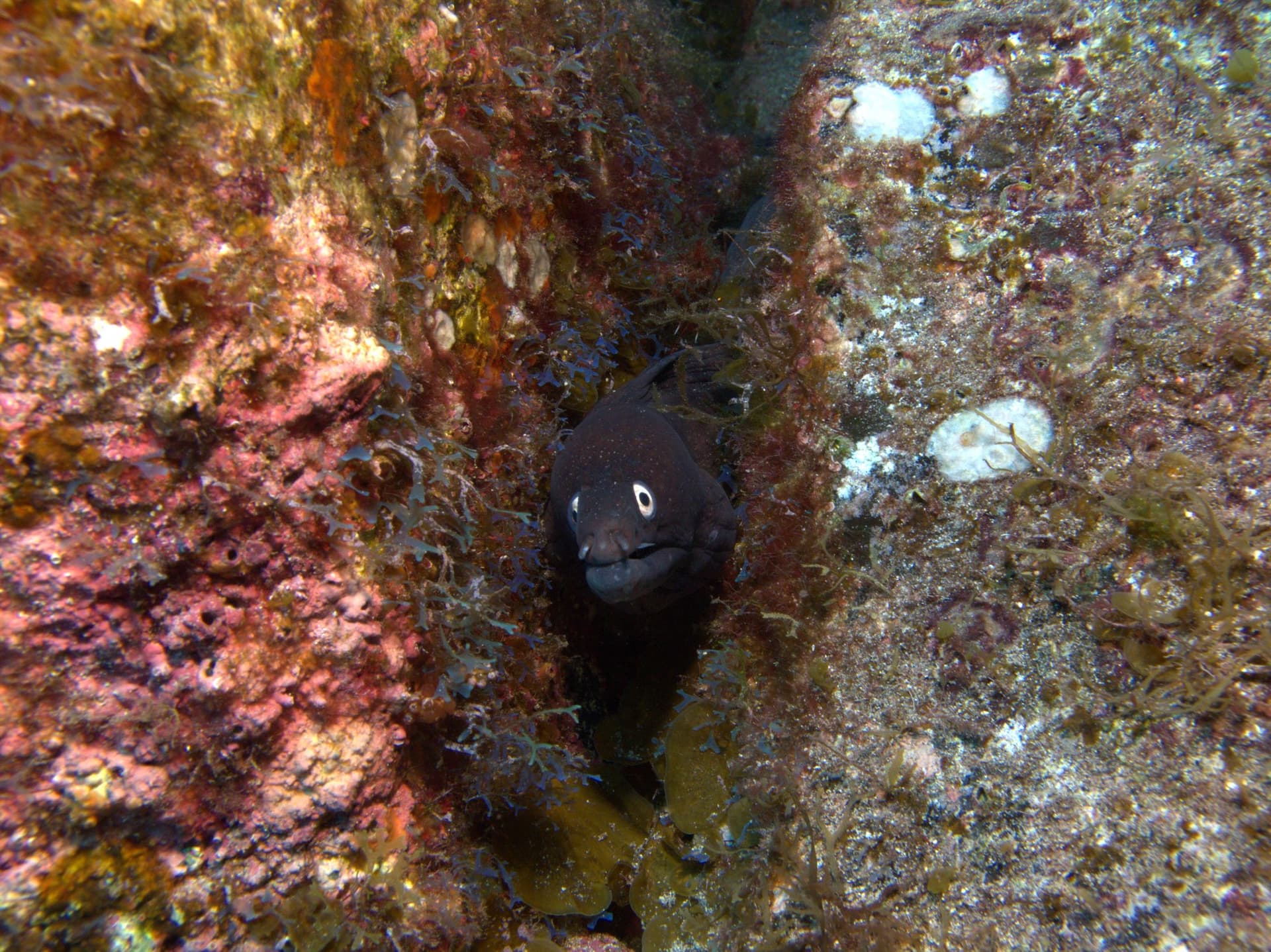
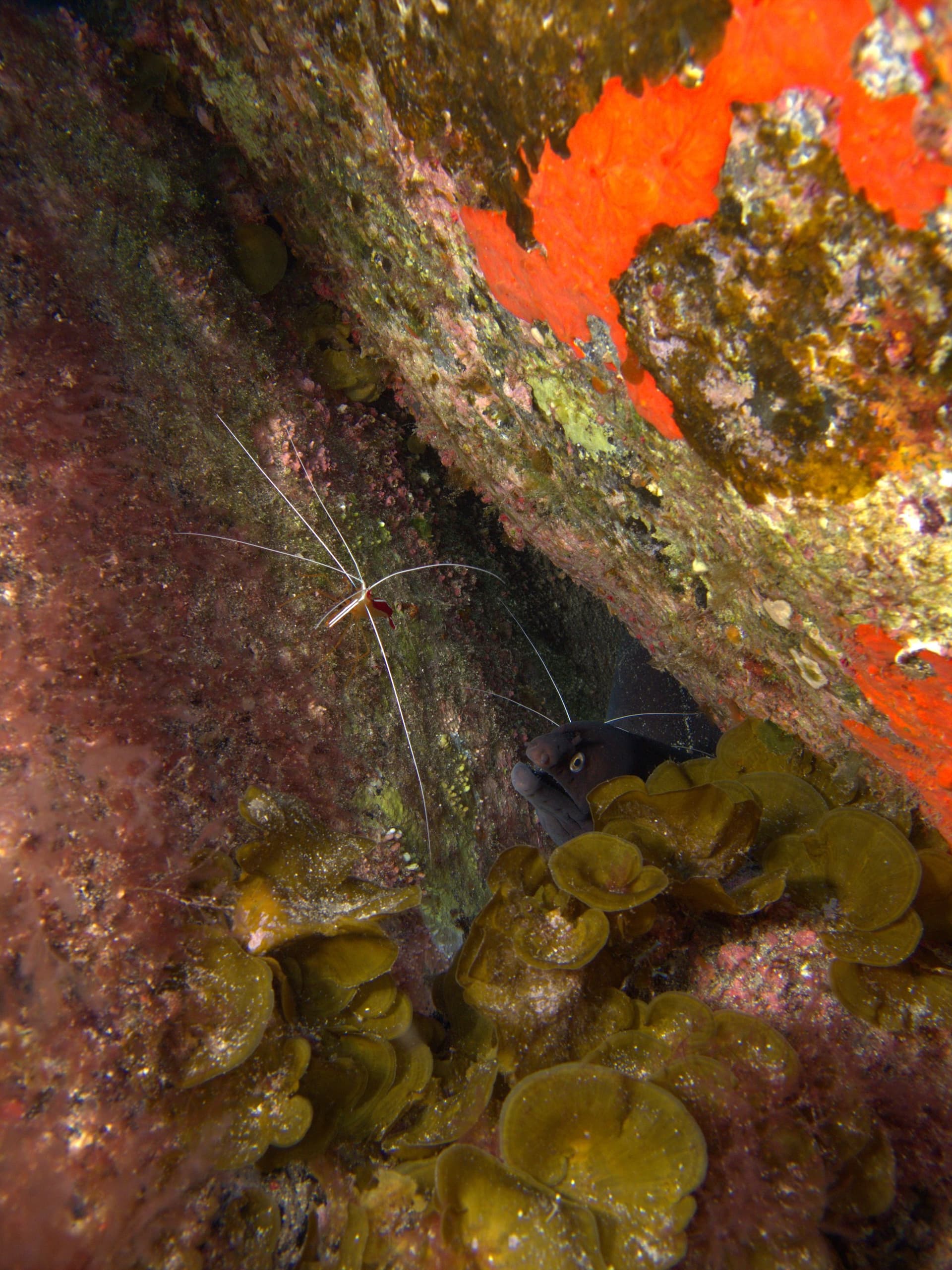
Muraena augusti(7 photos)A uniformly dark brown to black moray endemic to Macaronesian waters — Canaries, Madeira, Azores. Darker and stockier than the Mediterranean moray.
Found in volcanic rock crevices, often at shallow depths — relatively common on Canary Islands night dives.
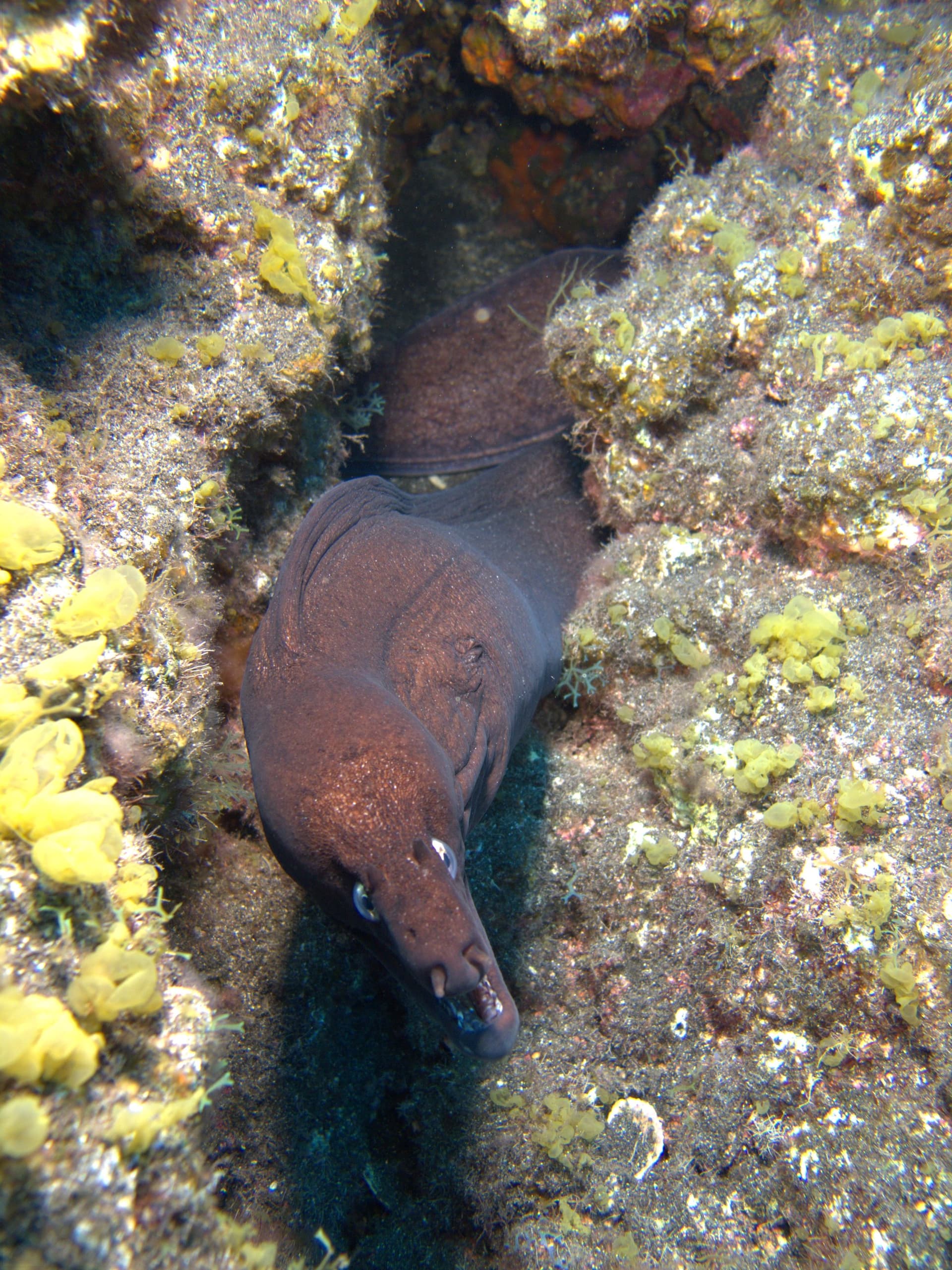
© Jouni Kuisma
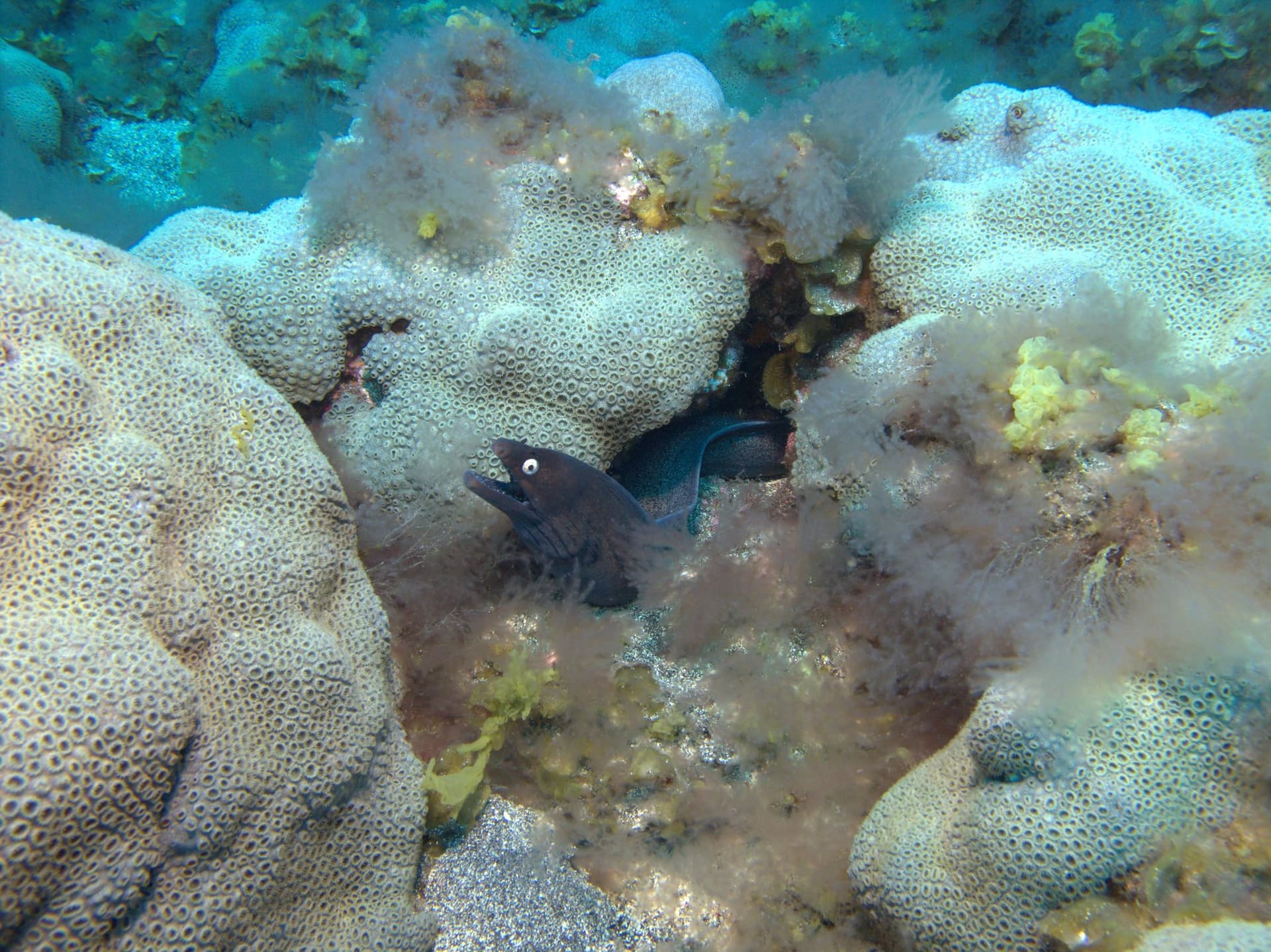
© Jouni Kuisma
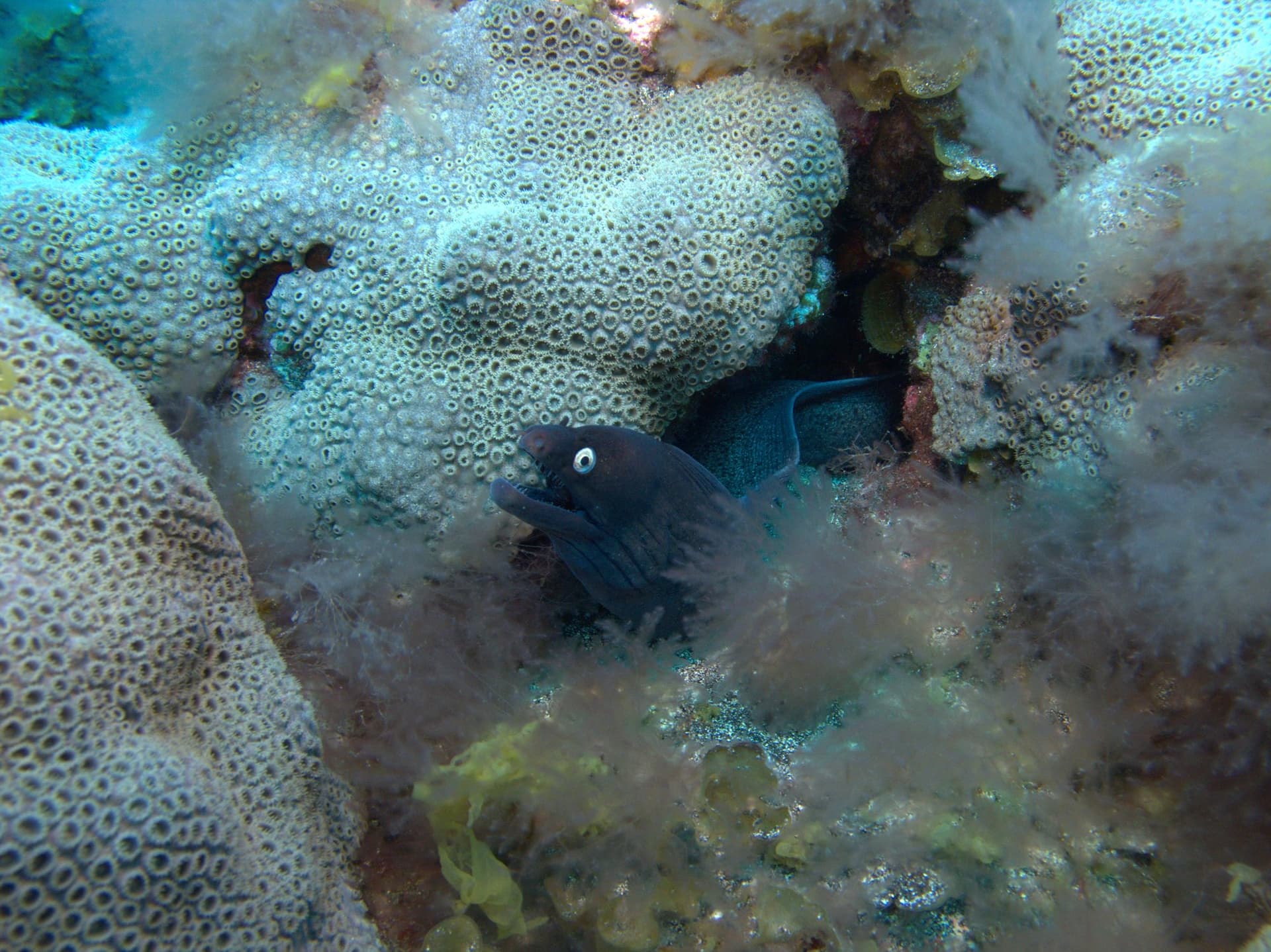
© Jouni Kuisma
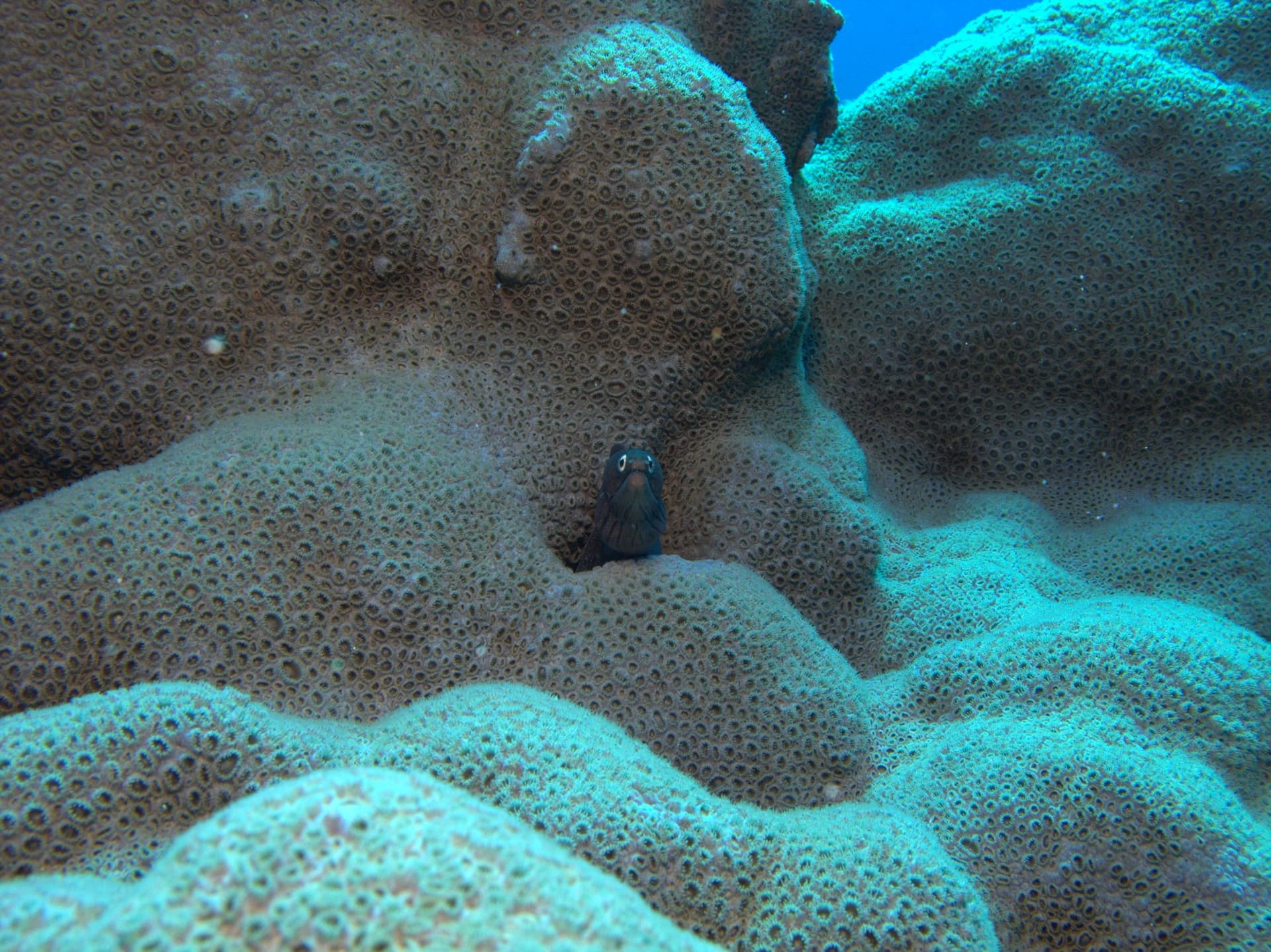
© Jouni Kuisma
© Jouni Kuisma
© Jouni Kuisma
© Jouni Kuisma
Goldentail moray
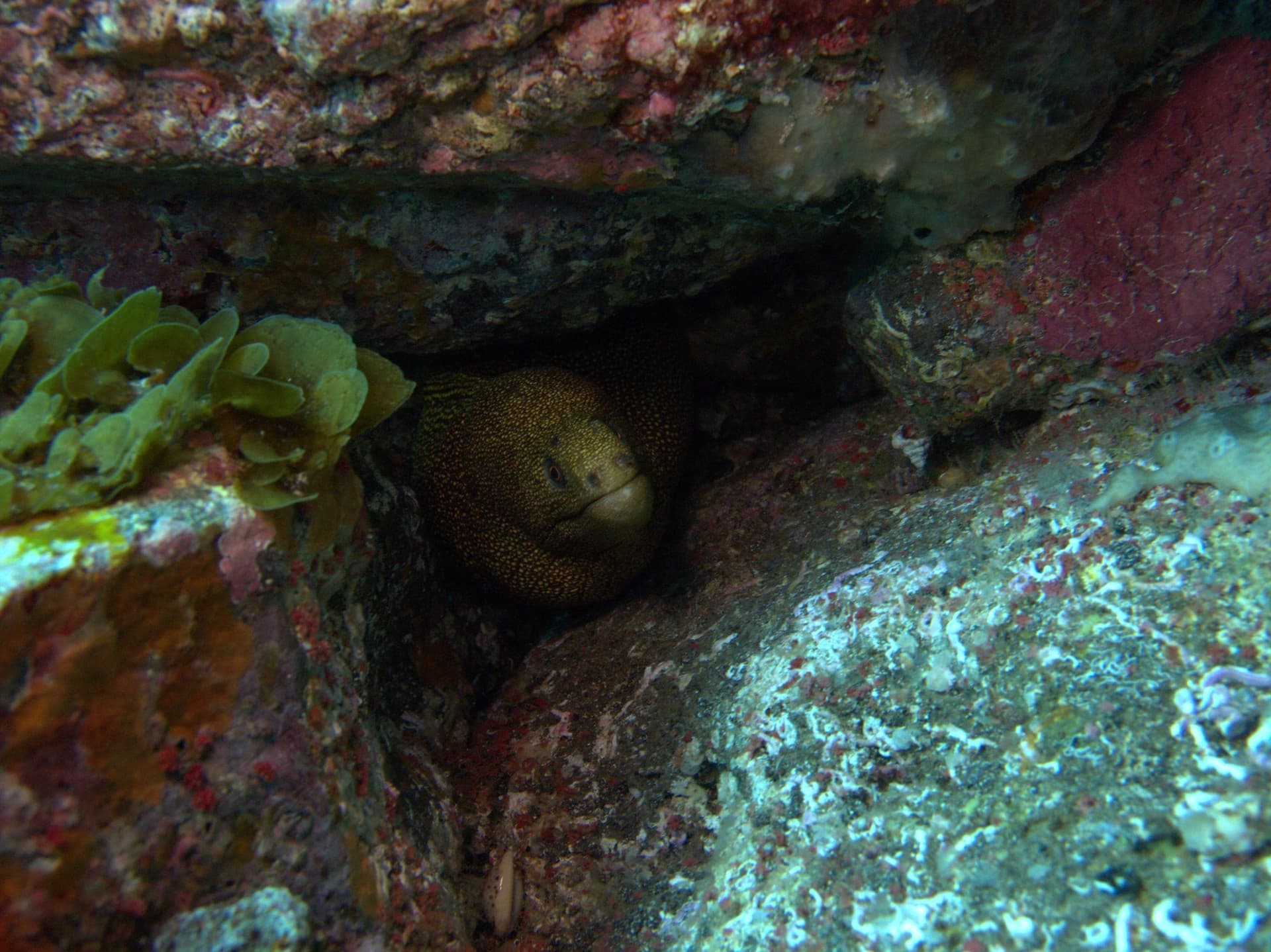
Gymnothorax miliaris(1 photos)A small, bright yellow moray with a golden-brown body covered in tiny white spots. One of the more colorful morays in the Atlantic.
Peeks from small holes in the reef, often more active and visible at night — a delight for macro photographers.
© Jouni Kuisma
Observed at
Brown moray
Gymnothorax unicolor(1 photos)A large, uniformly chocolate-brown moray without distinctive markings. Stocky body and blunt head — often confused with the conger eel but has the typical moray nostril tubes.
Rests in deep caves and overhangs, sometimes sharing shelter with other moray species — more secretive than the common Mediterranean moray.
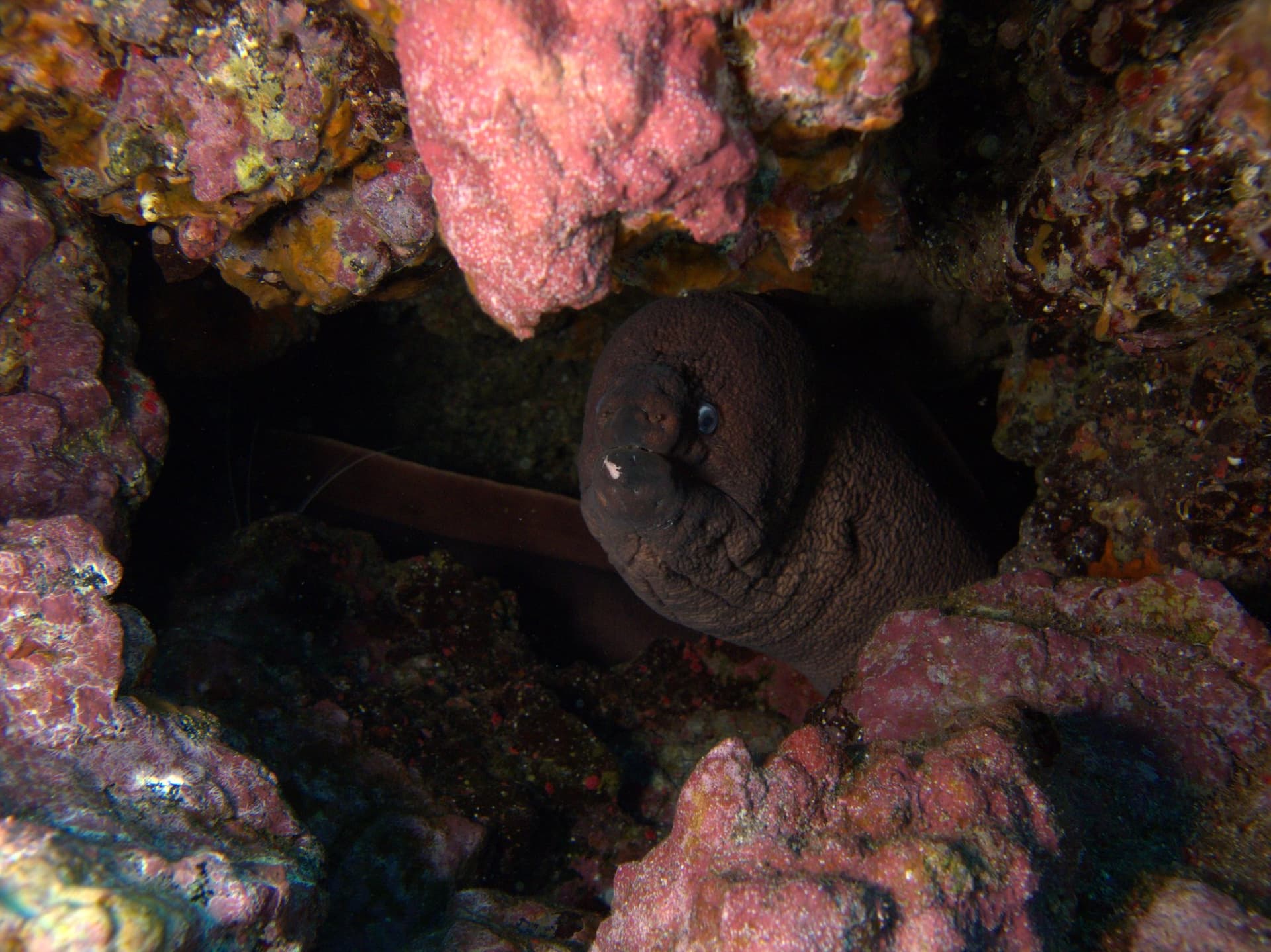
© Jouni Kuisma
Observed at
Fangtooth moray
Enchelycore anatina(1 photos)A dramatic moray with a bright yellow mouth, elongated nostrils, and fang-like teeth that protrude even when the mouth is closed. Dark brown body with yellow highlights.
Hides deep in rocky crevices with just its unmistakable fanged face visible — a prized find for photographers on Canary Islands dives.
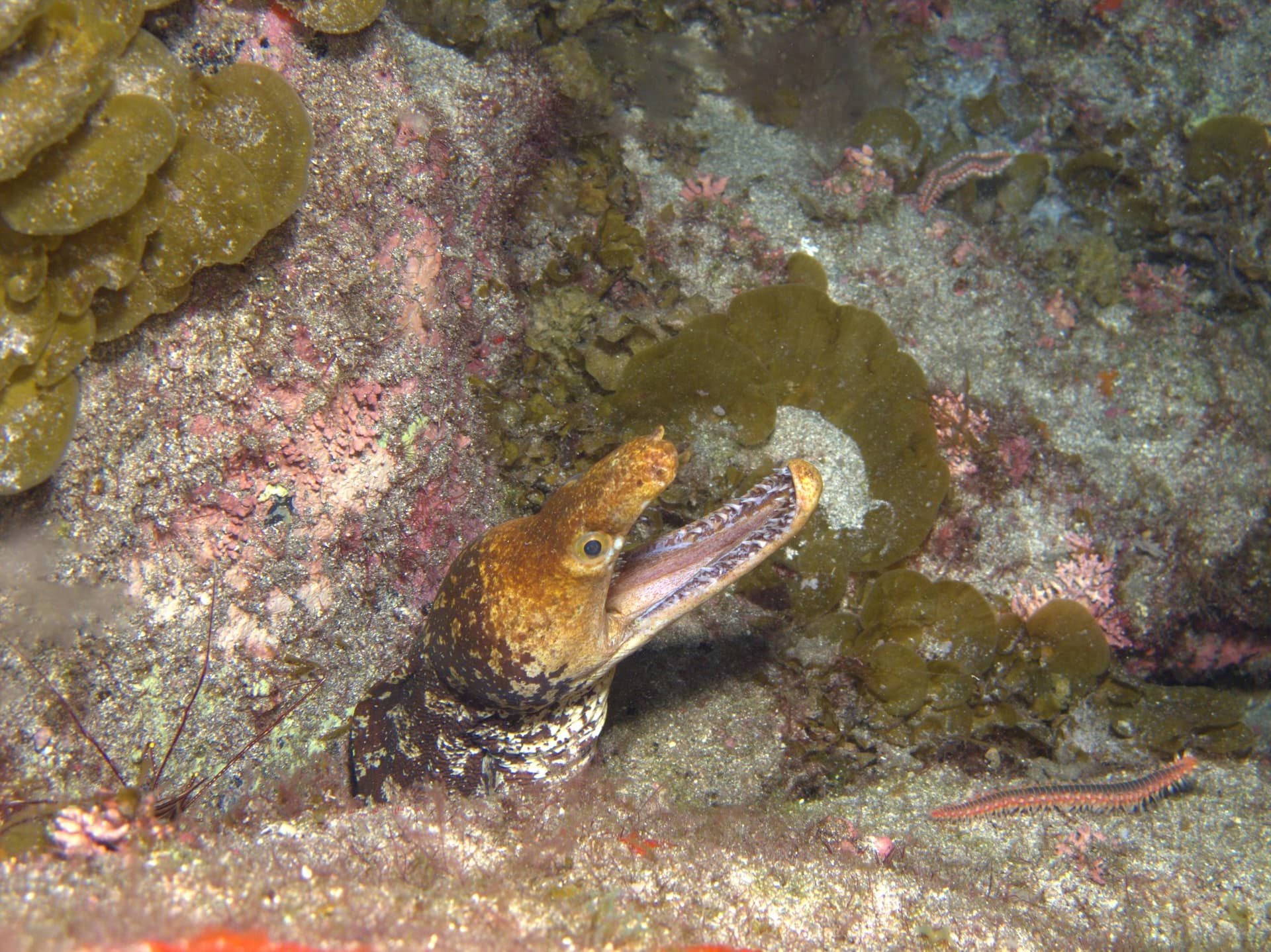
© Jouni Kuisma
Log your dives
Track every dive with depth, duration, conditions, and marine life sightings. Join a club and share your underwater experiences.
Try DiveLog — it's free