
Nudibranchs & sea slugs
NudibranchiaThe jewels of the sea — nudibranchs come in every colour combination imaginable and reward slow, careful searching. Check under overhangs, on sponges, and along hydroids. Once you spot your first, you'll start finding them everywhere.
Last updated April 2026
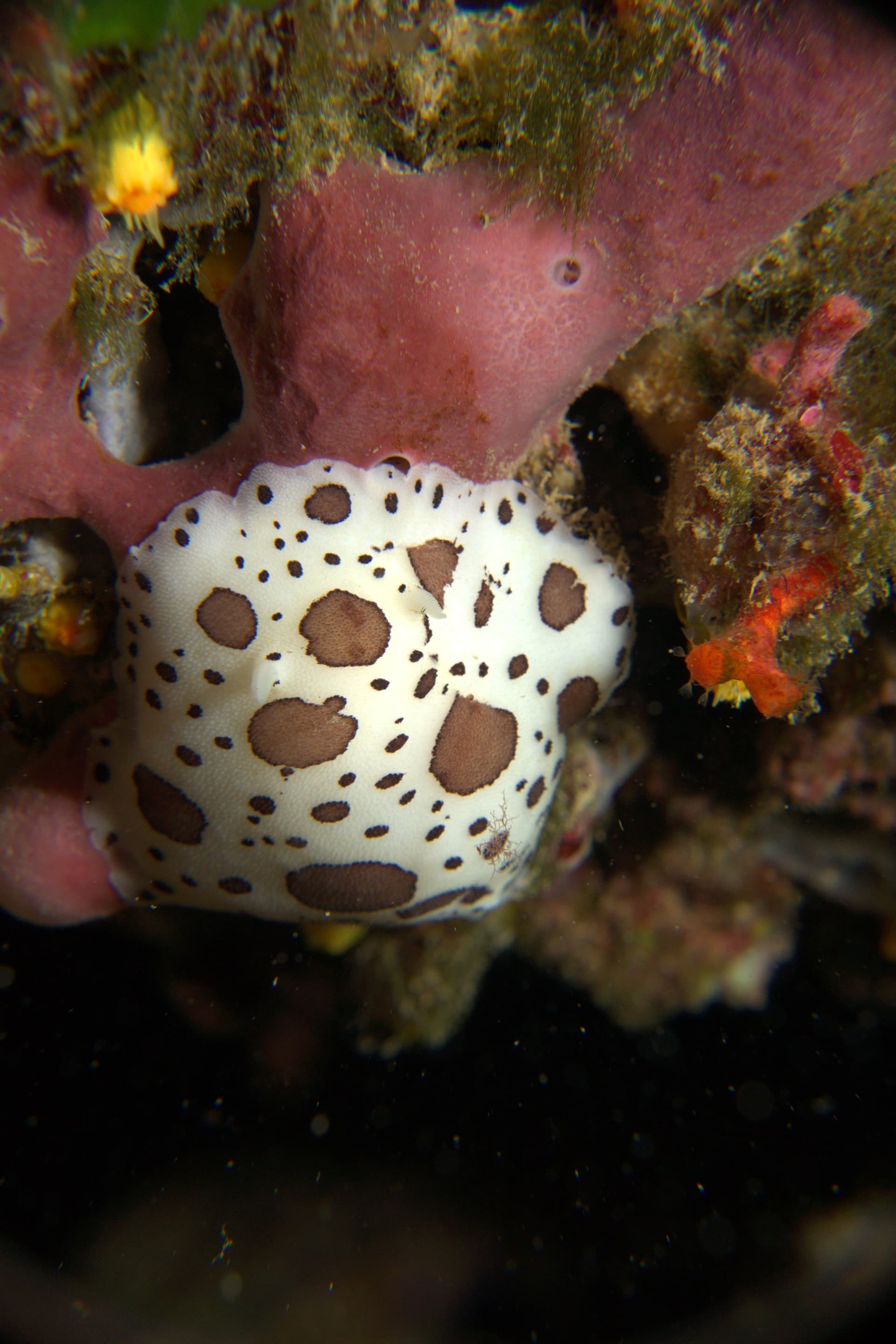
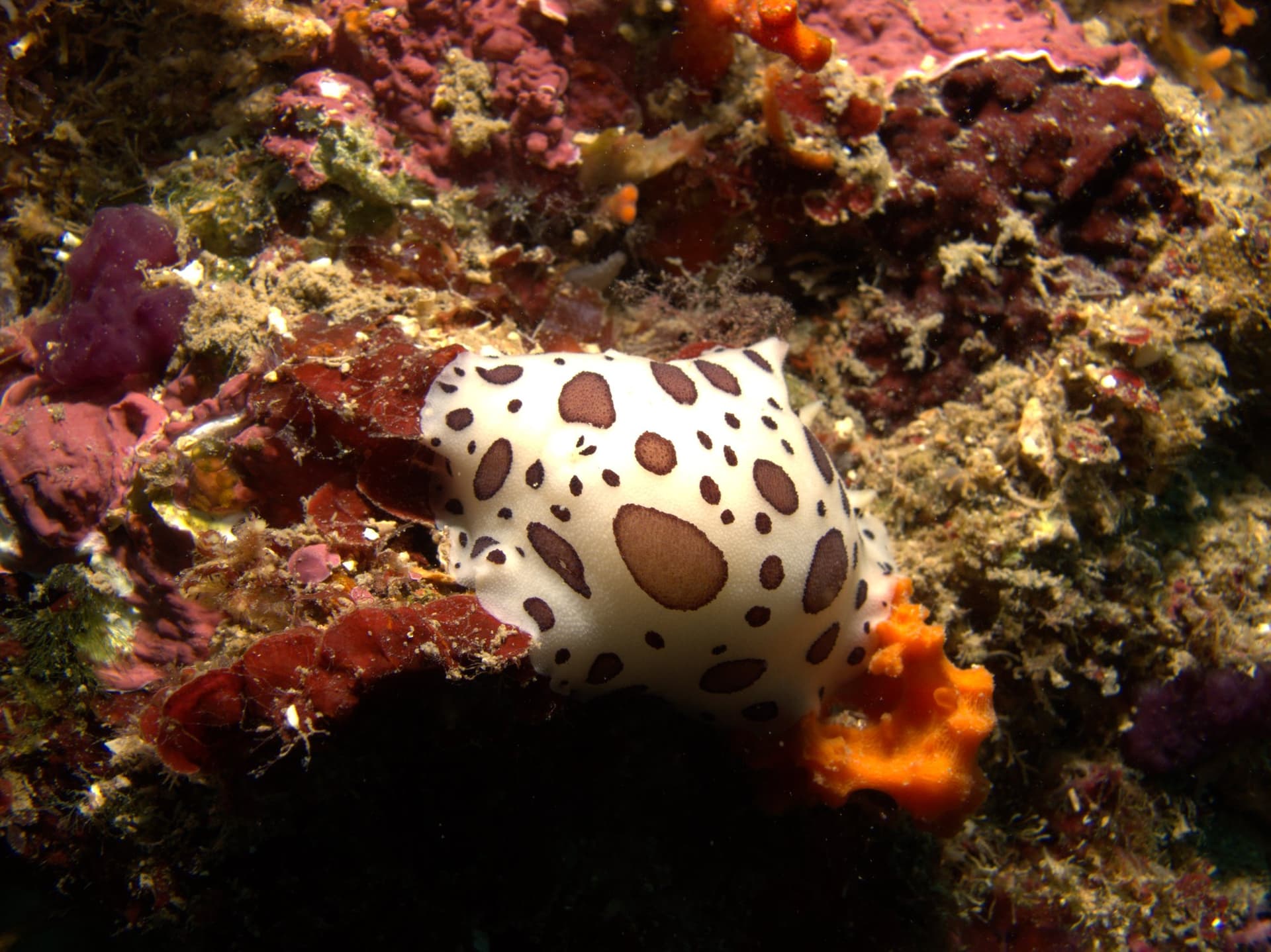
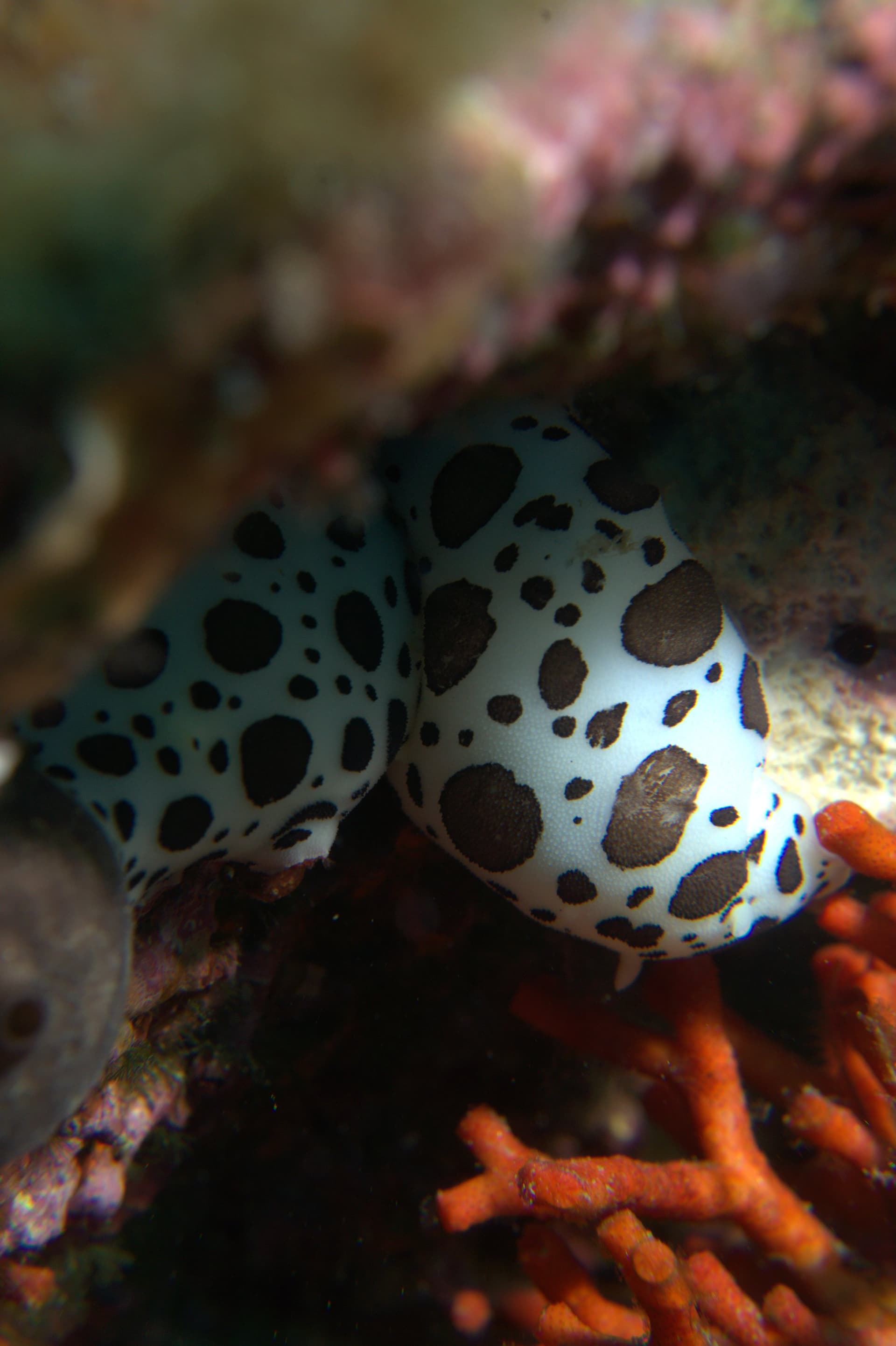
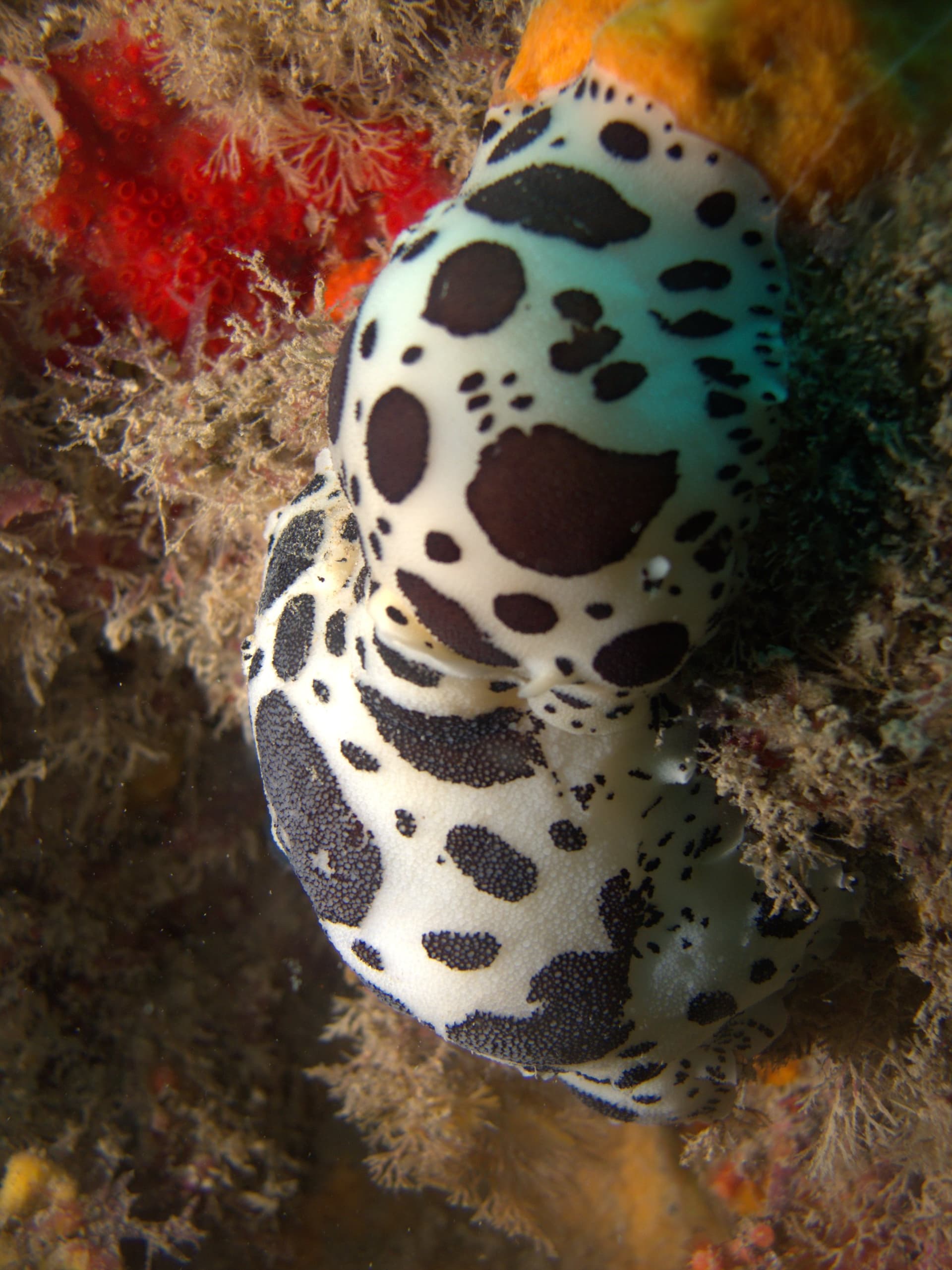
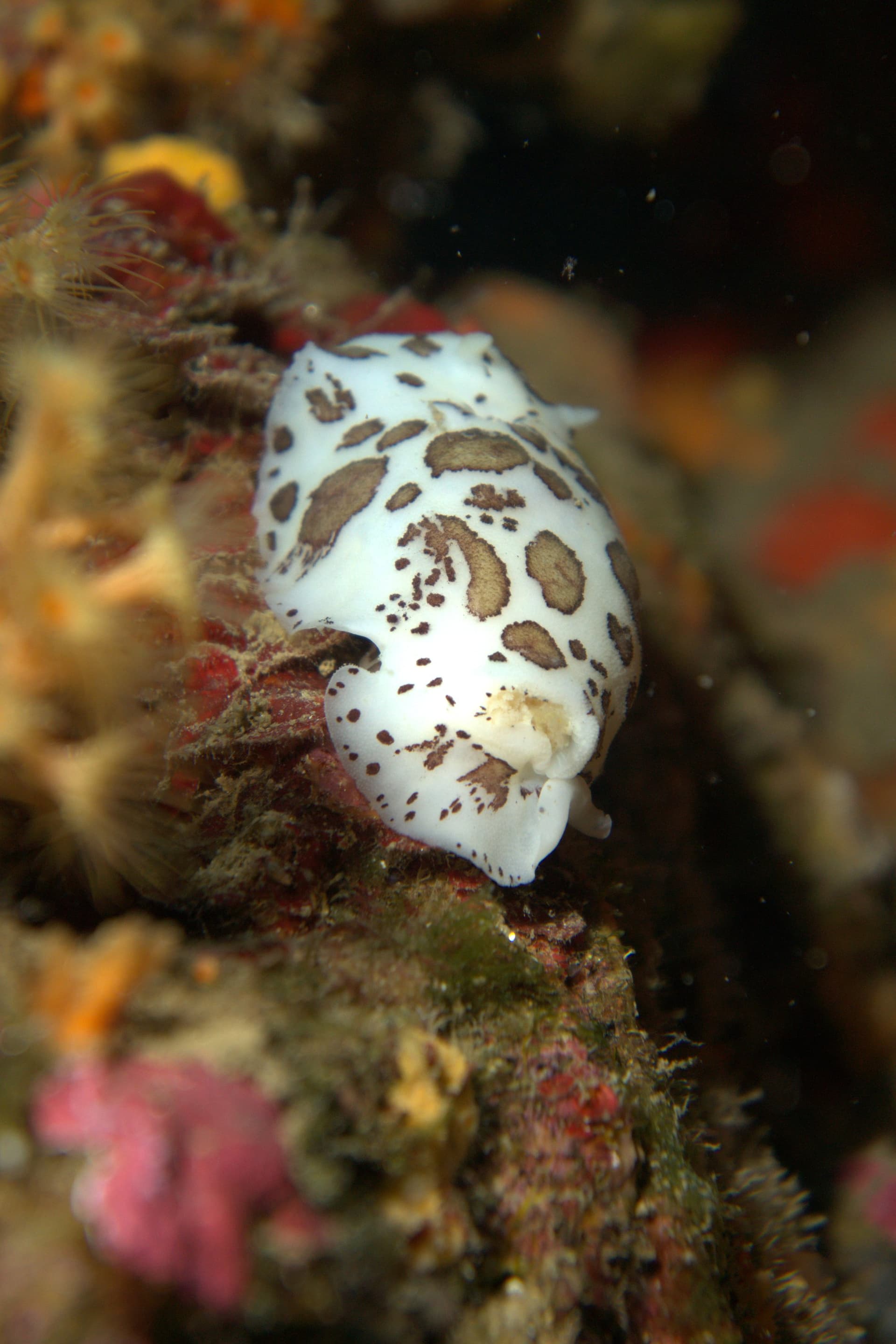
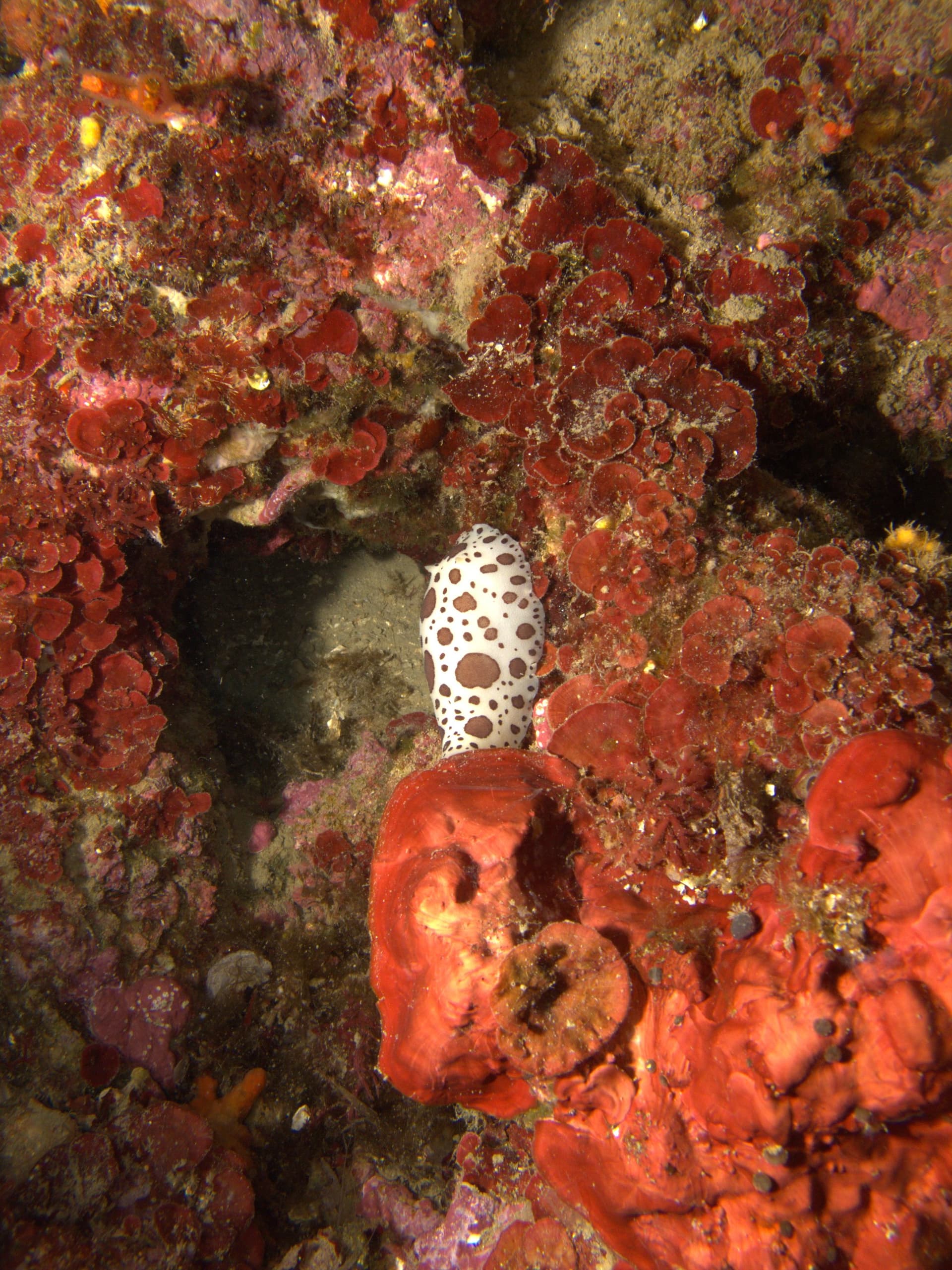
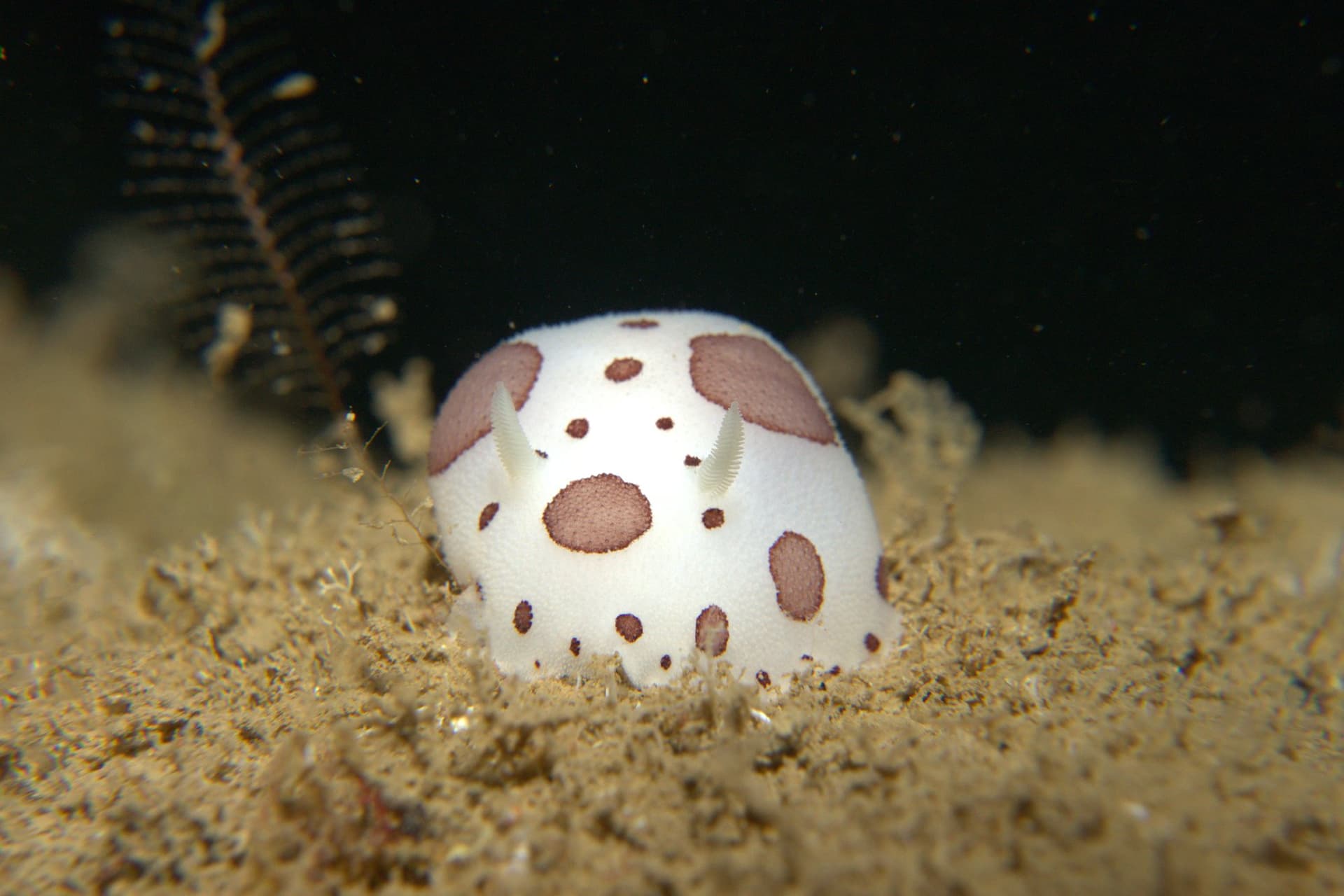
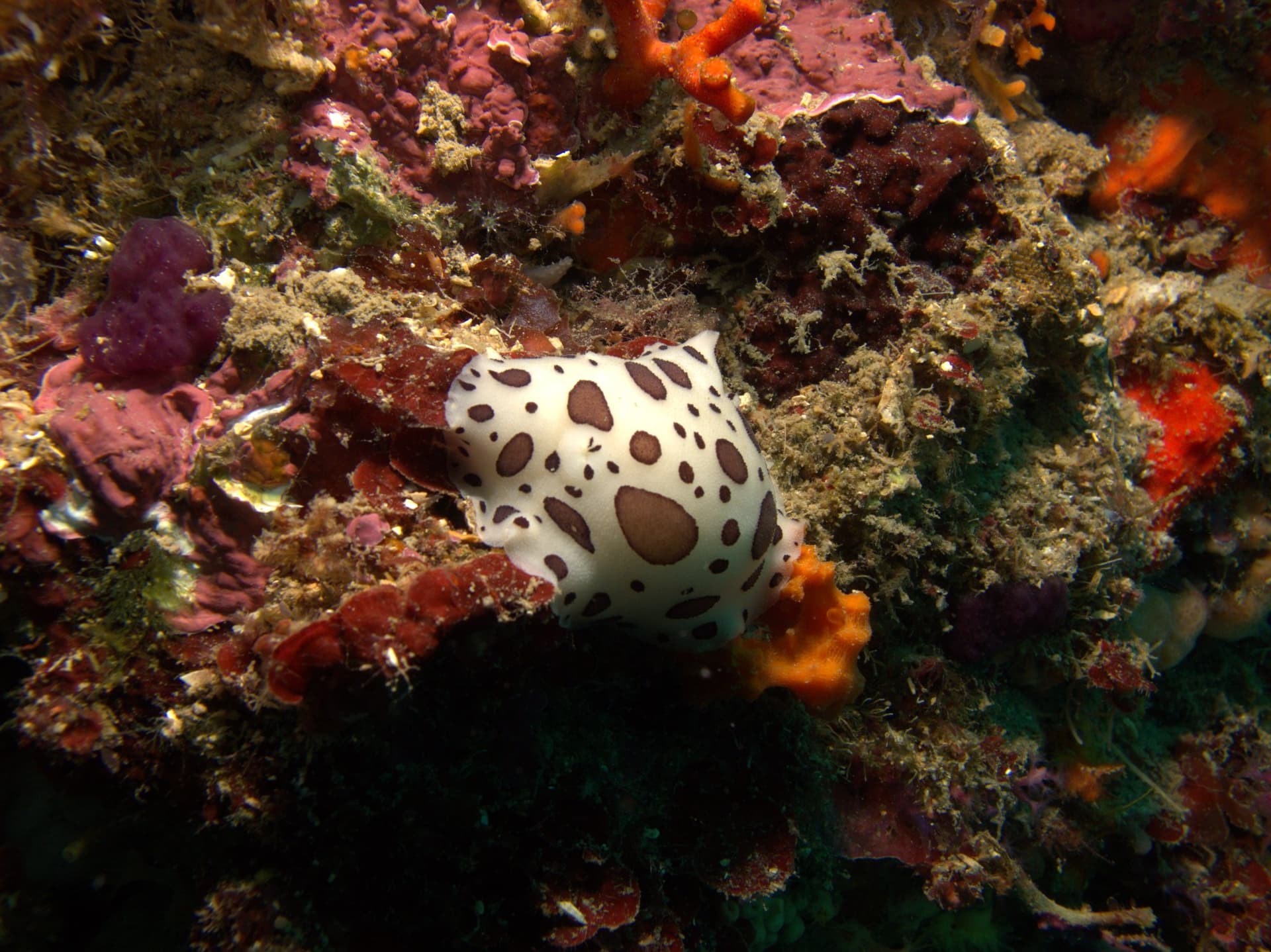
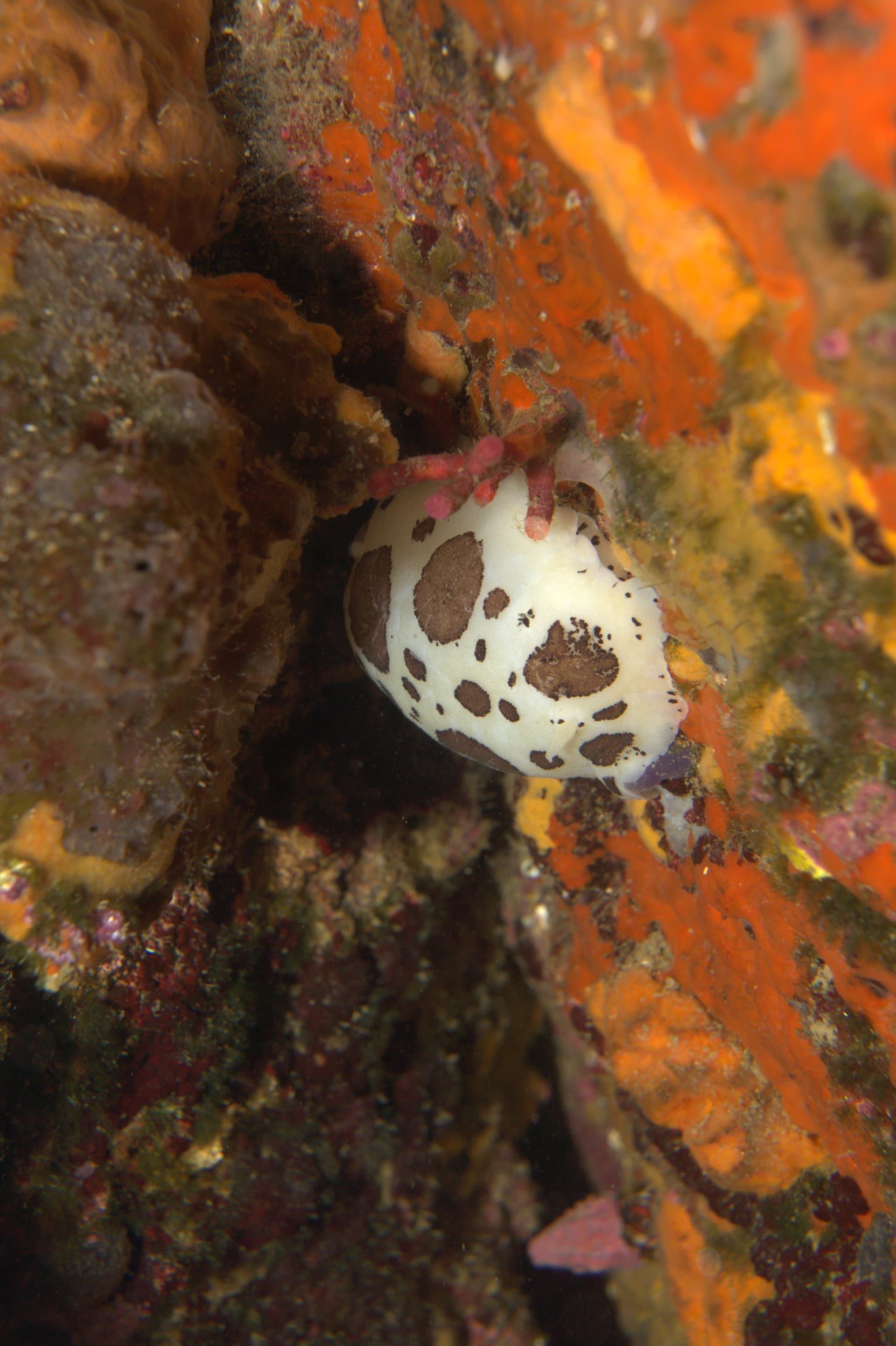
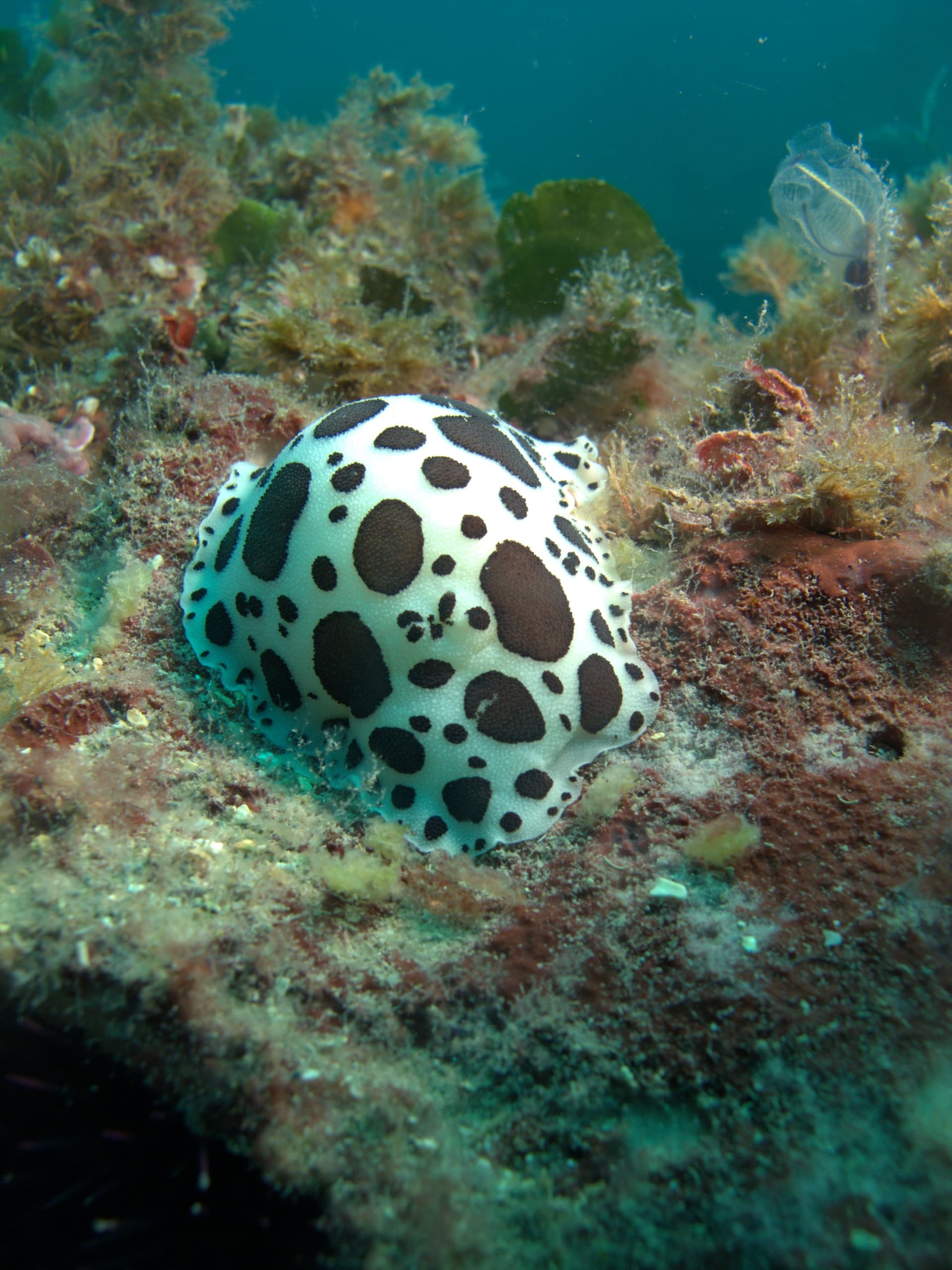
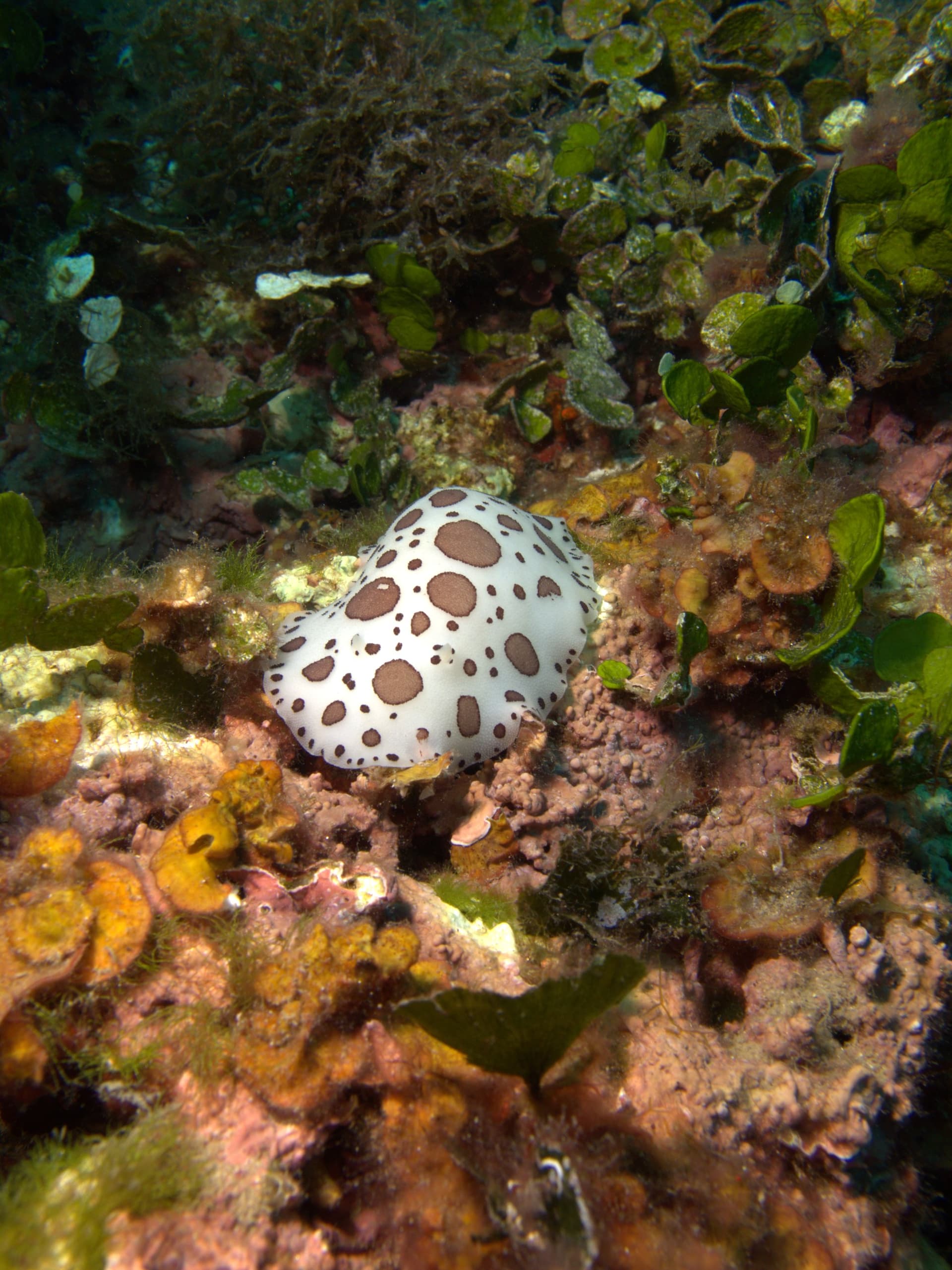
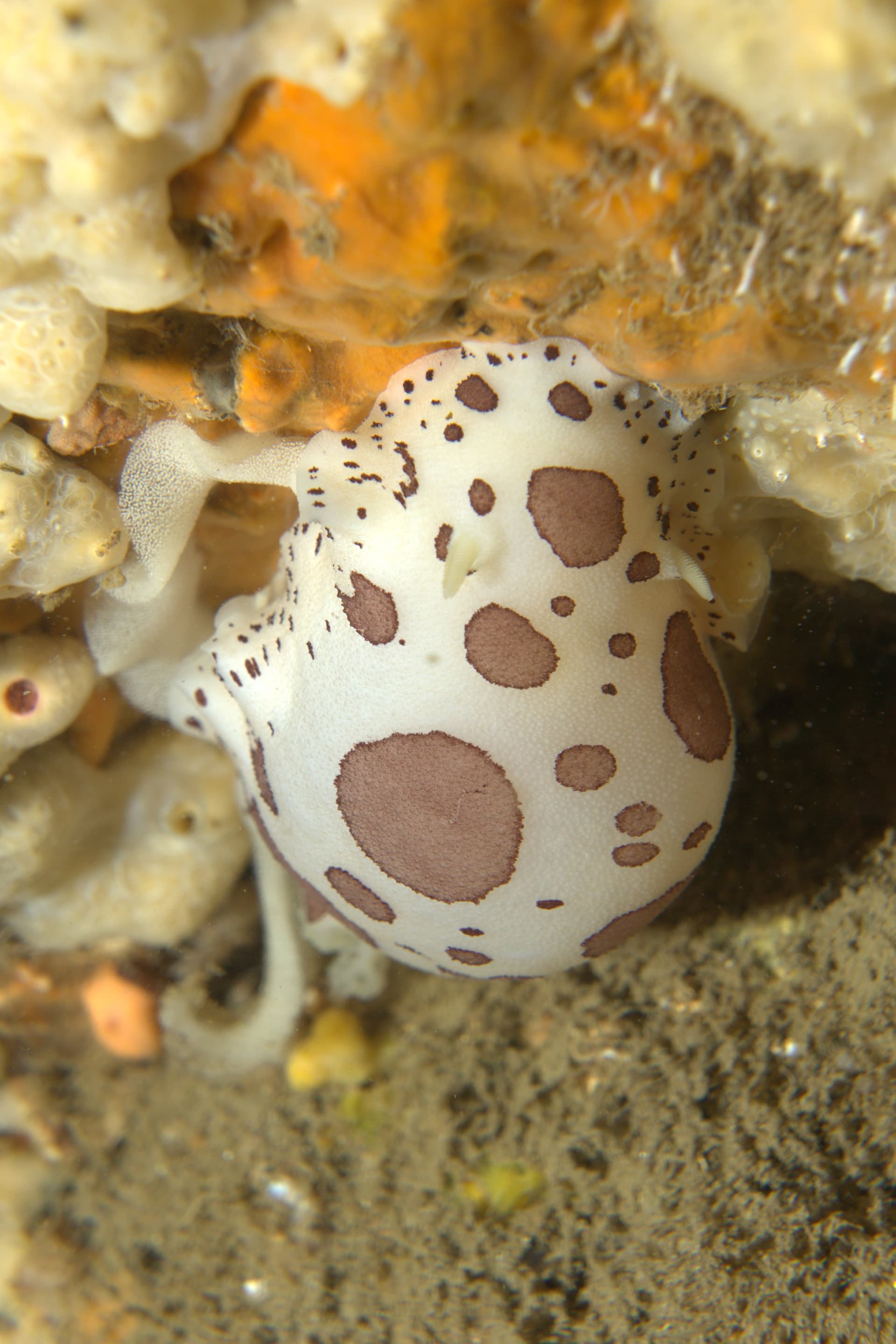
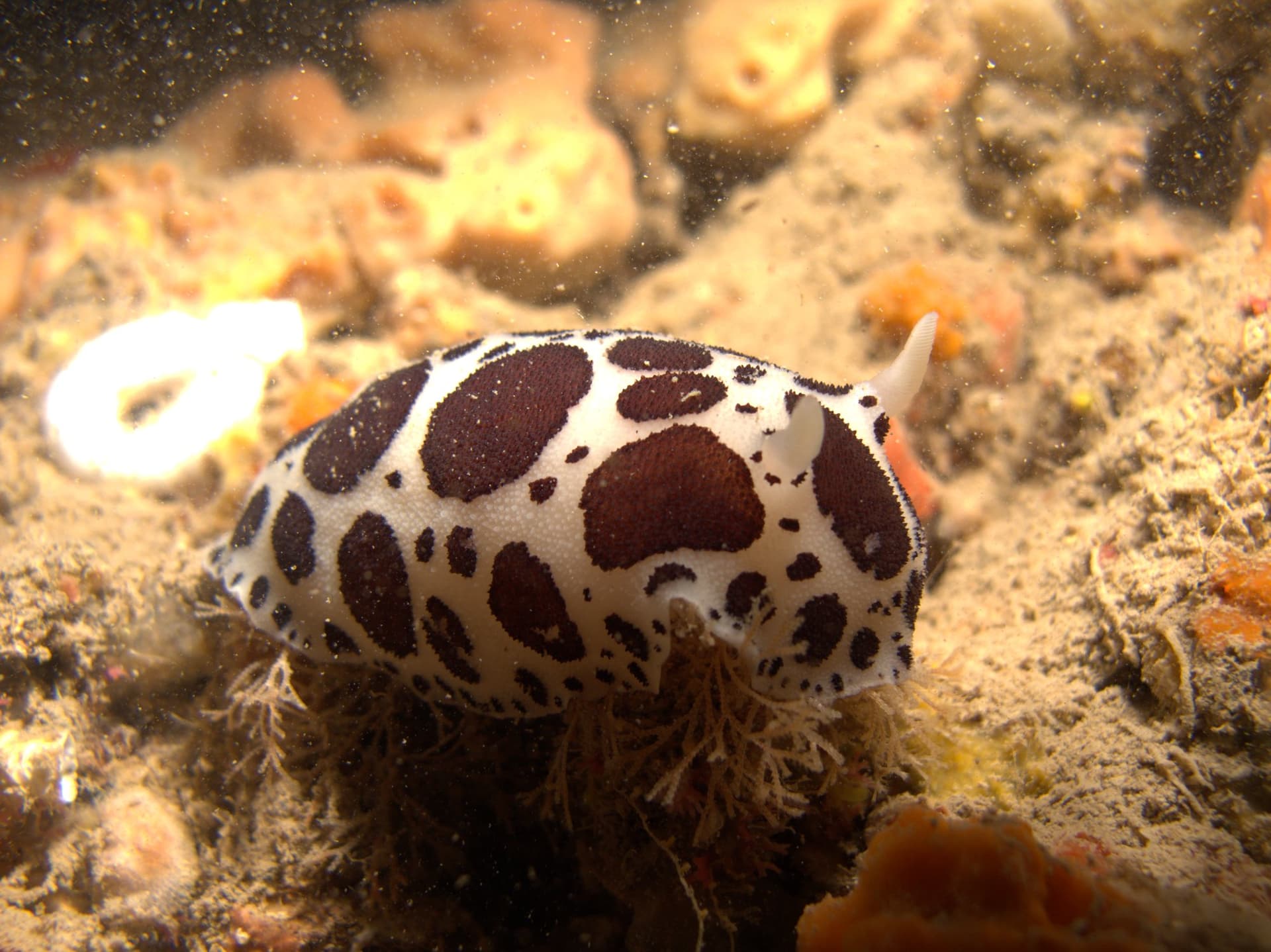
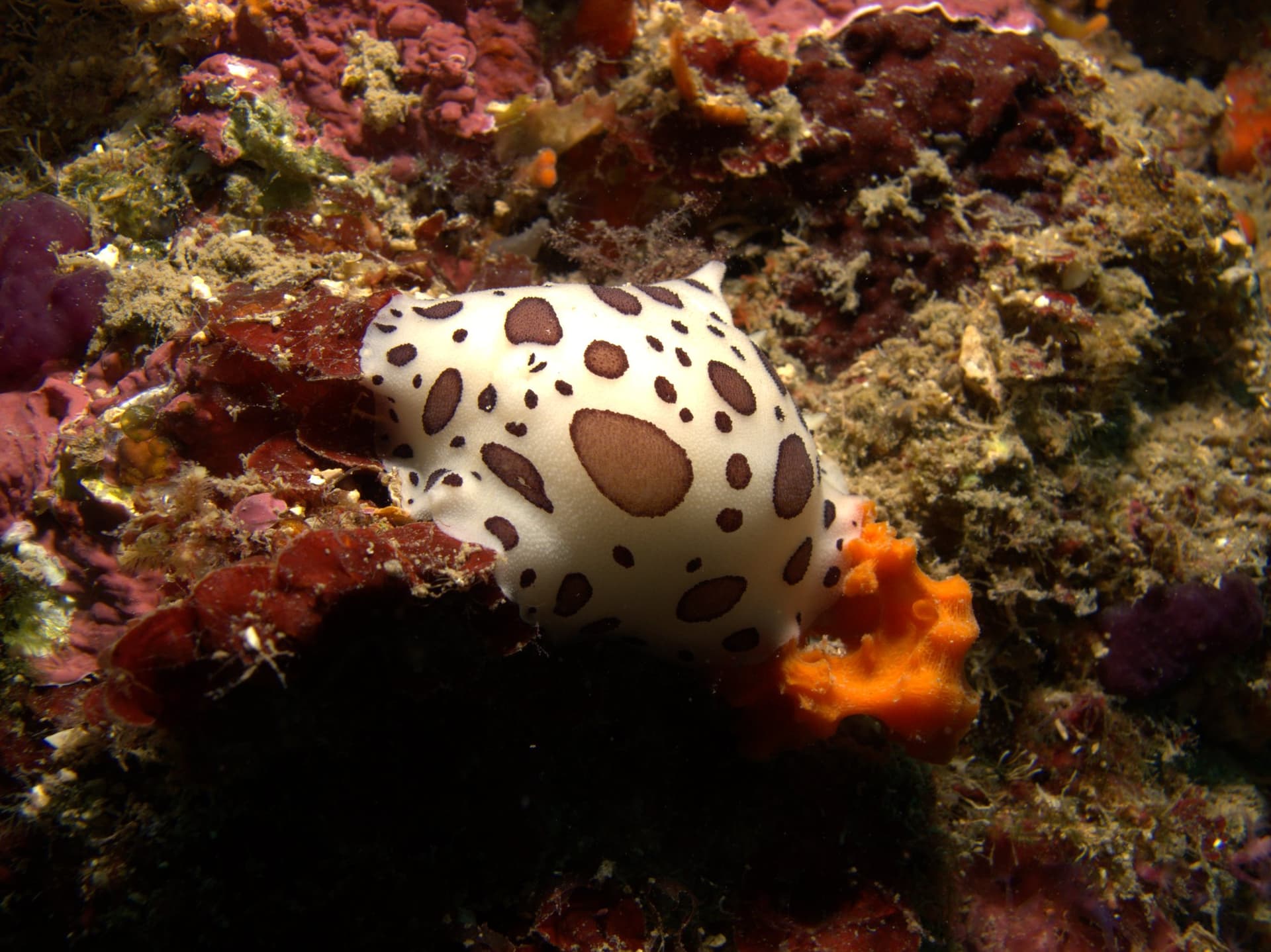
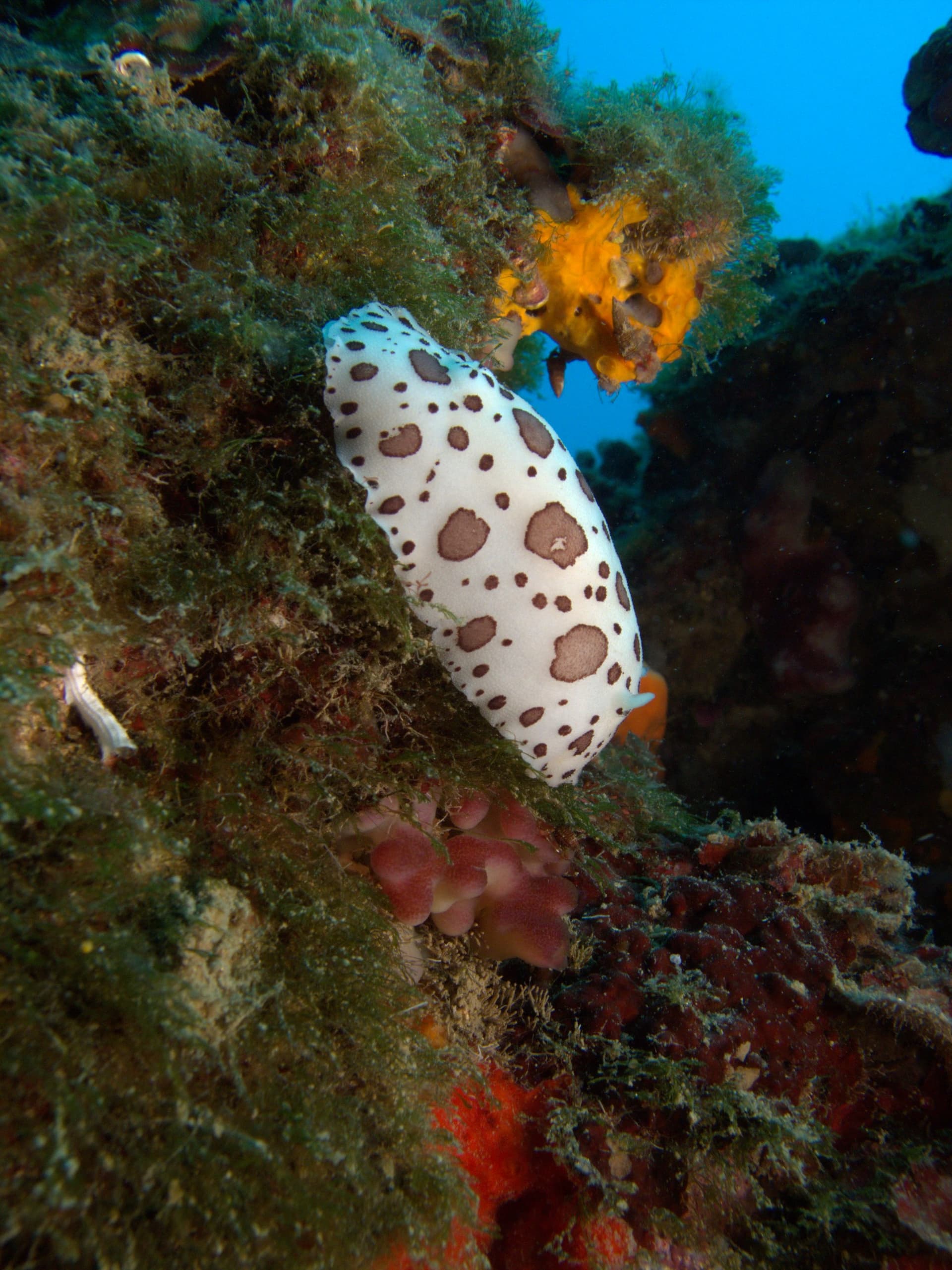
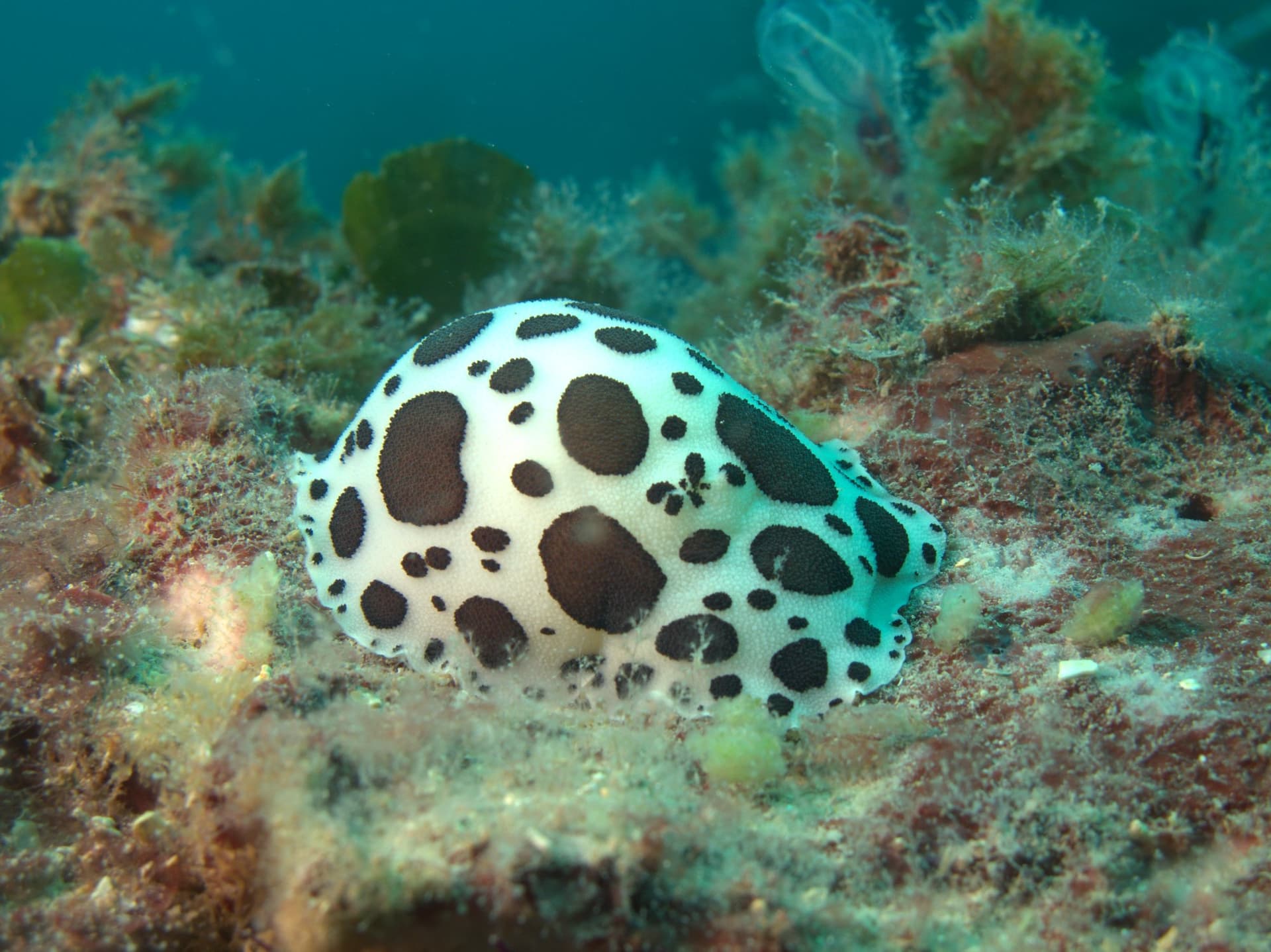
Spotted sea slugPeltodoris atromaculata30 photos
A flat, oval nudibranch — creamy white to pale yellow body covered in distinctive dark brown or black spots and rings. Looks like a cow-print cookie.
Glides slowly over rocky surfaces grazing on sponges — easy to photograph thanks to its slow movement and bold pattern.
© Jouni Kuisma
© Jouni Kuisma
© Jouni Kuisma
© Jouni Kuisma
© Jouni Kuisma
© Jouni Kuisma
© Jouni Kuisma
© Jouni Kuisma
© Jouni Kuisma
© Jouni Kuisma
© Jouni Kuisma
© Jouni Kuisma
© Jouni Kuisma
© Jouni Kuisma
© Jouni Kuisma
© Jouni Kuisma
Observed at
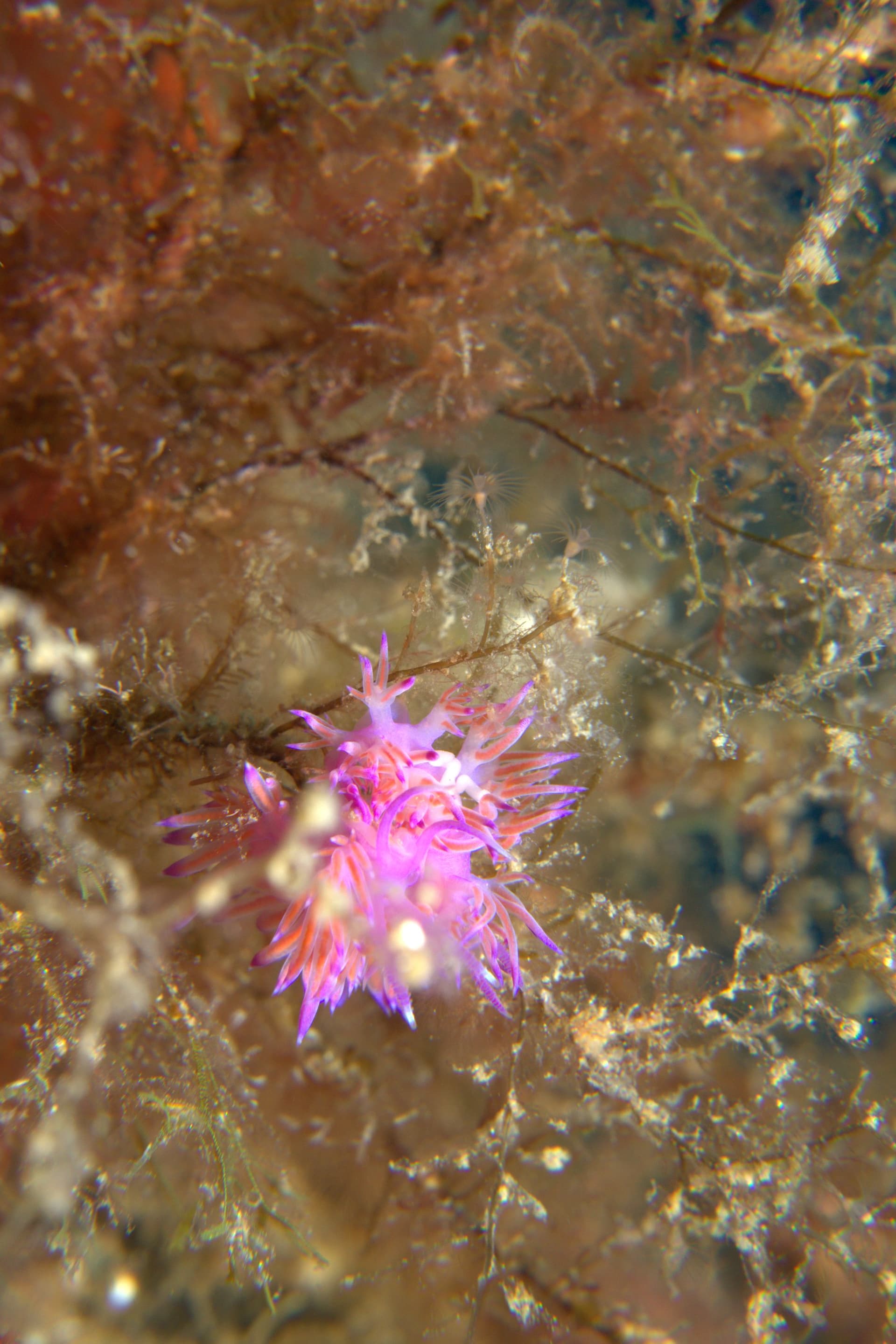
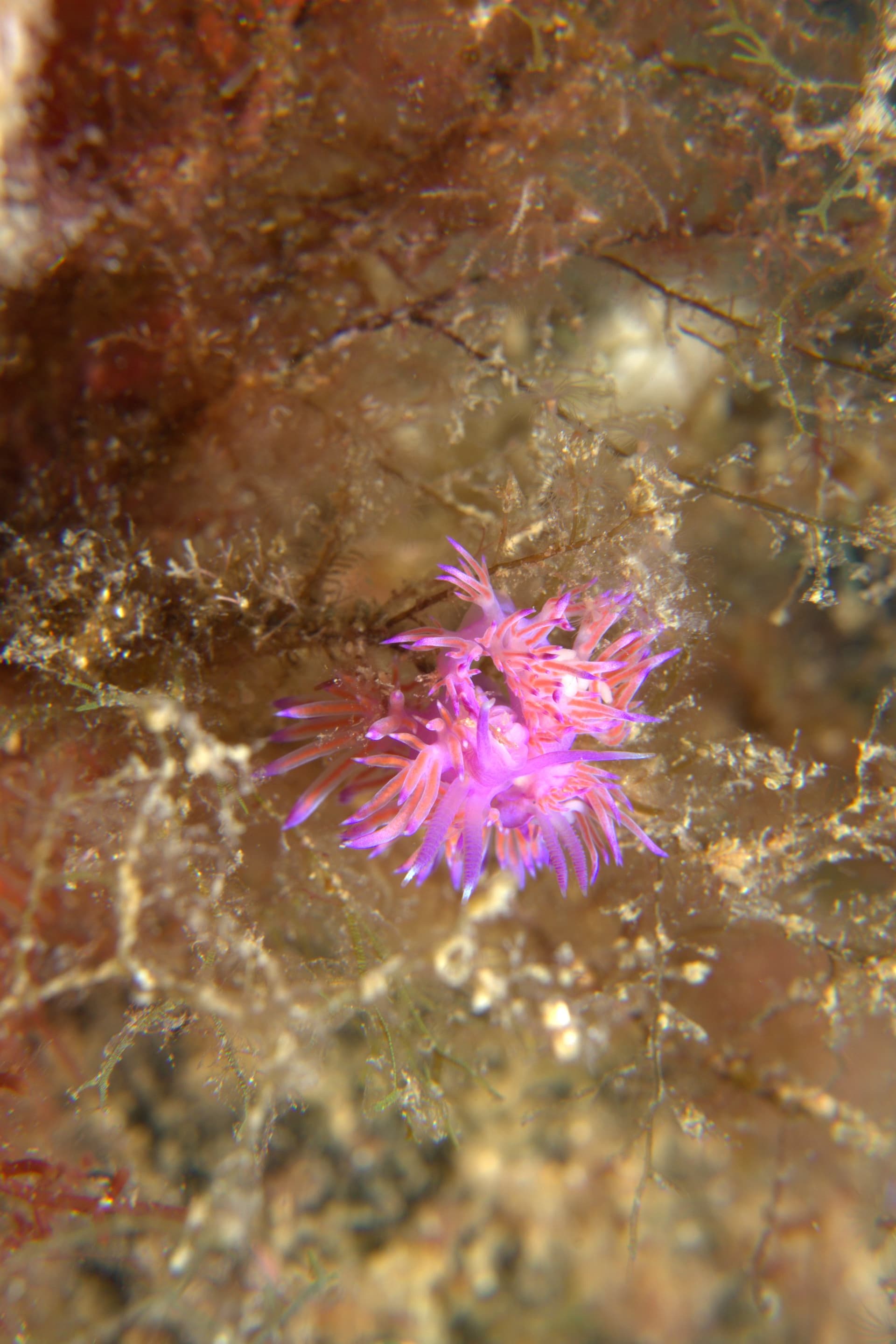
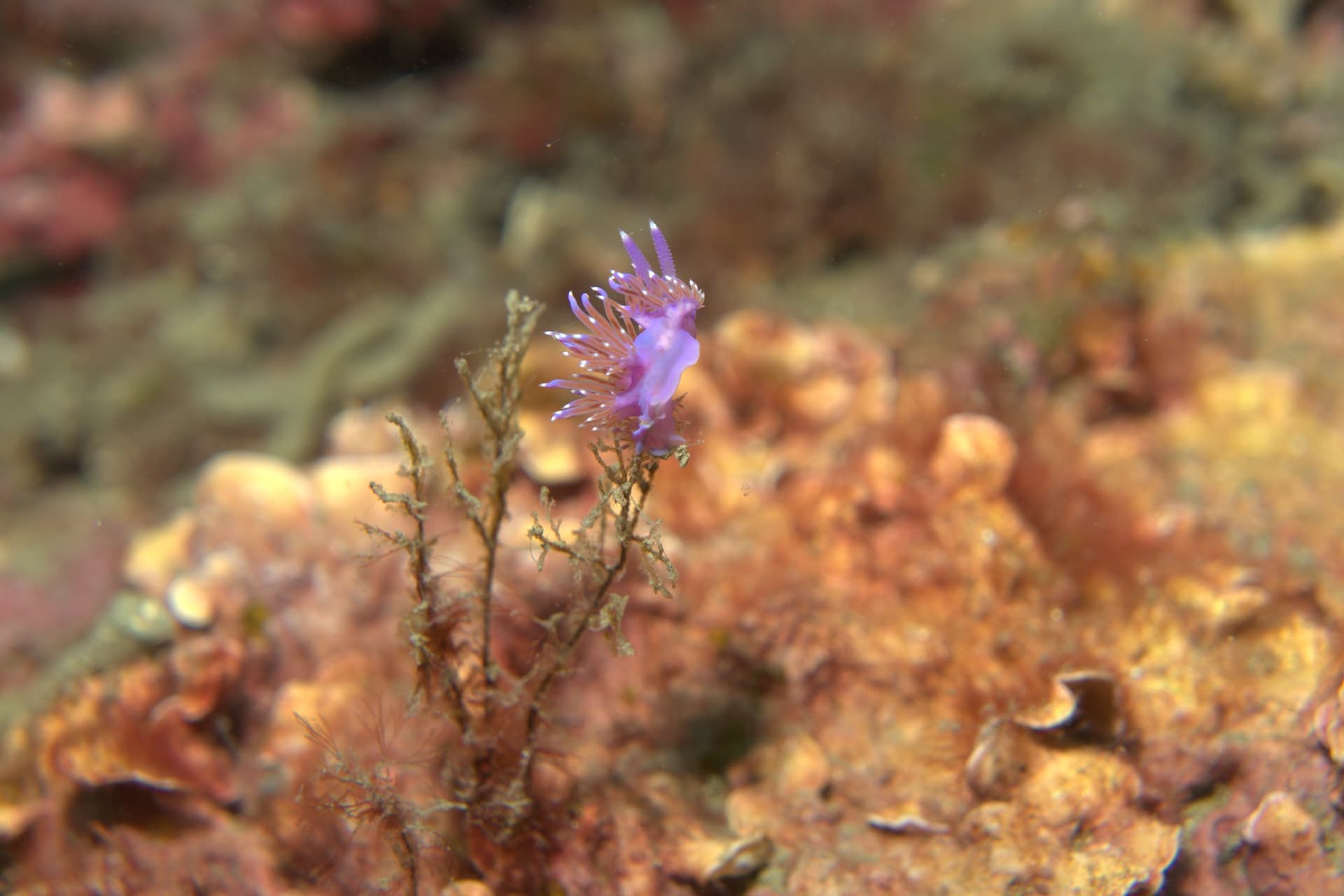
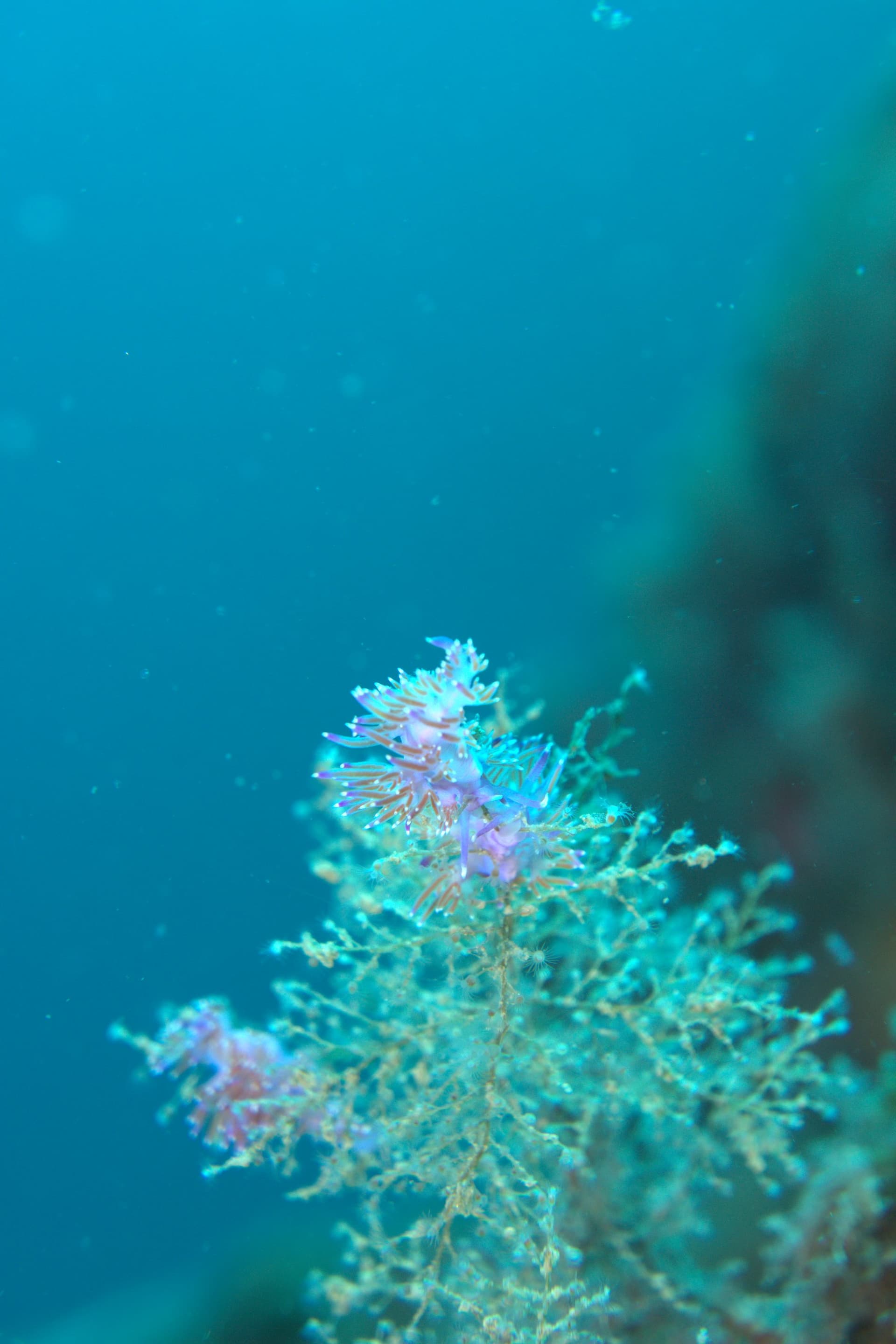
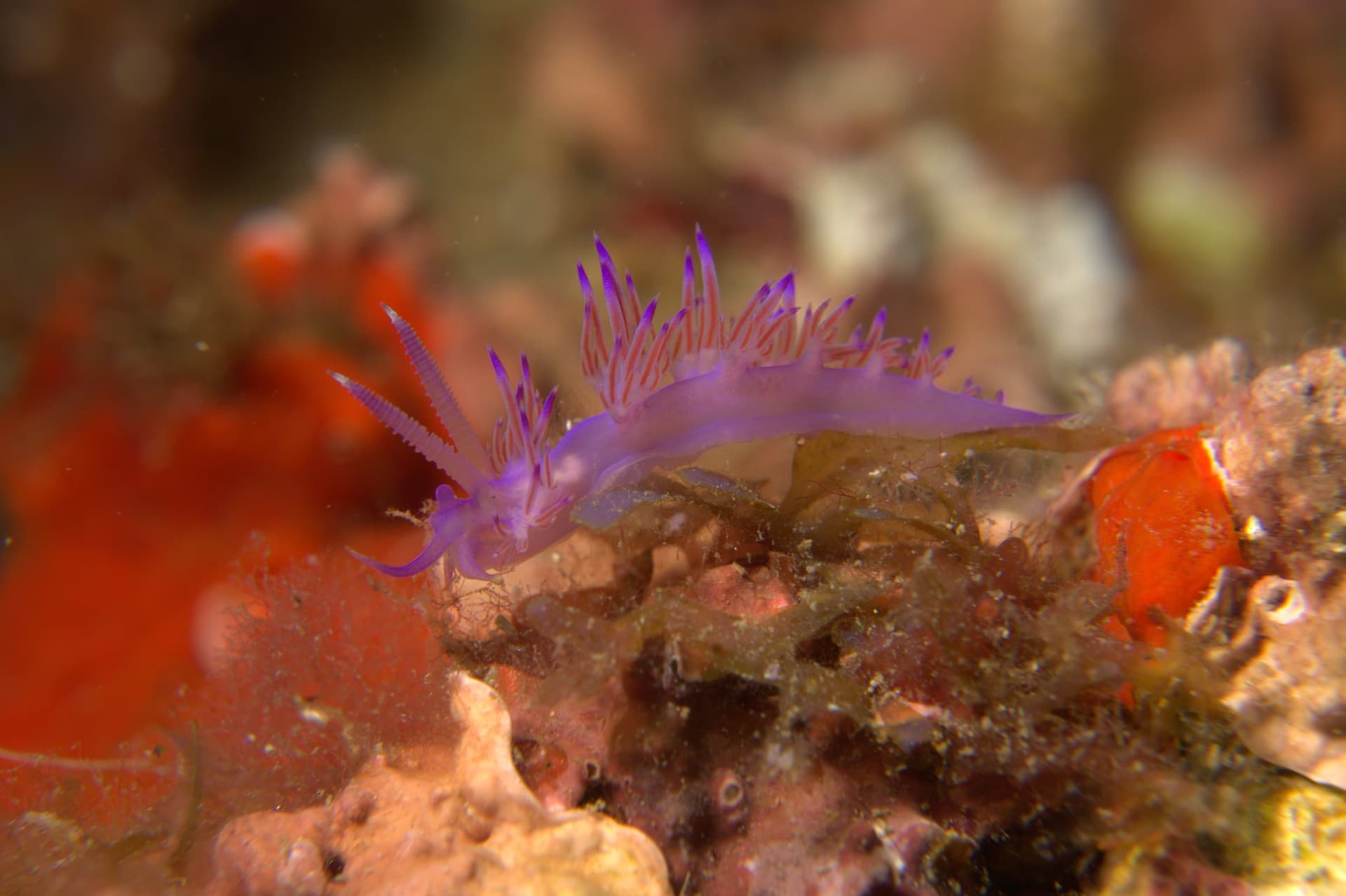
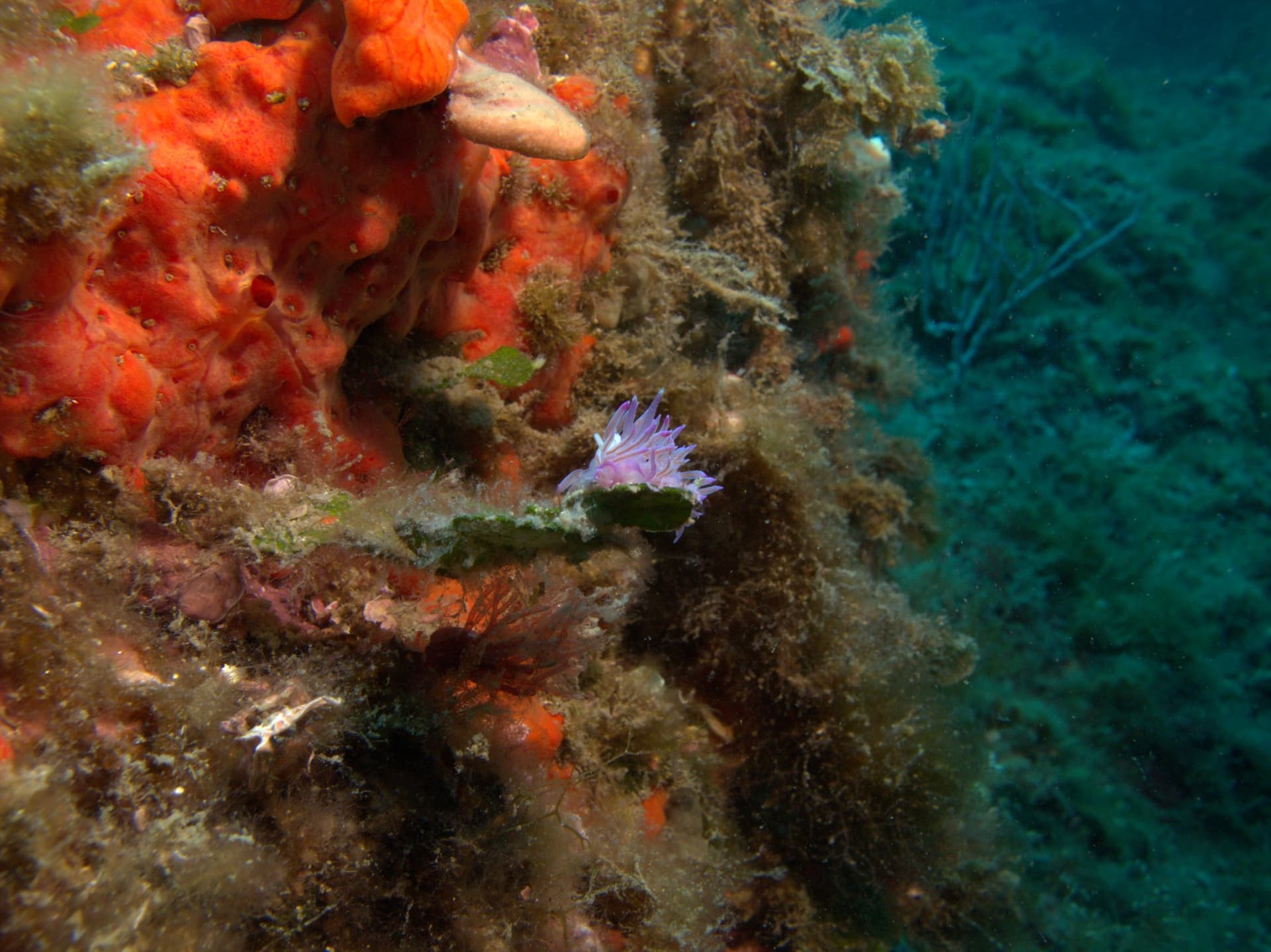
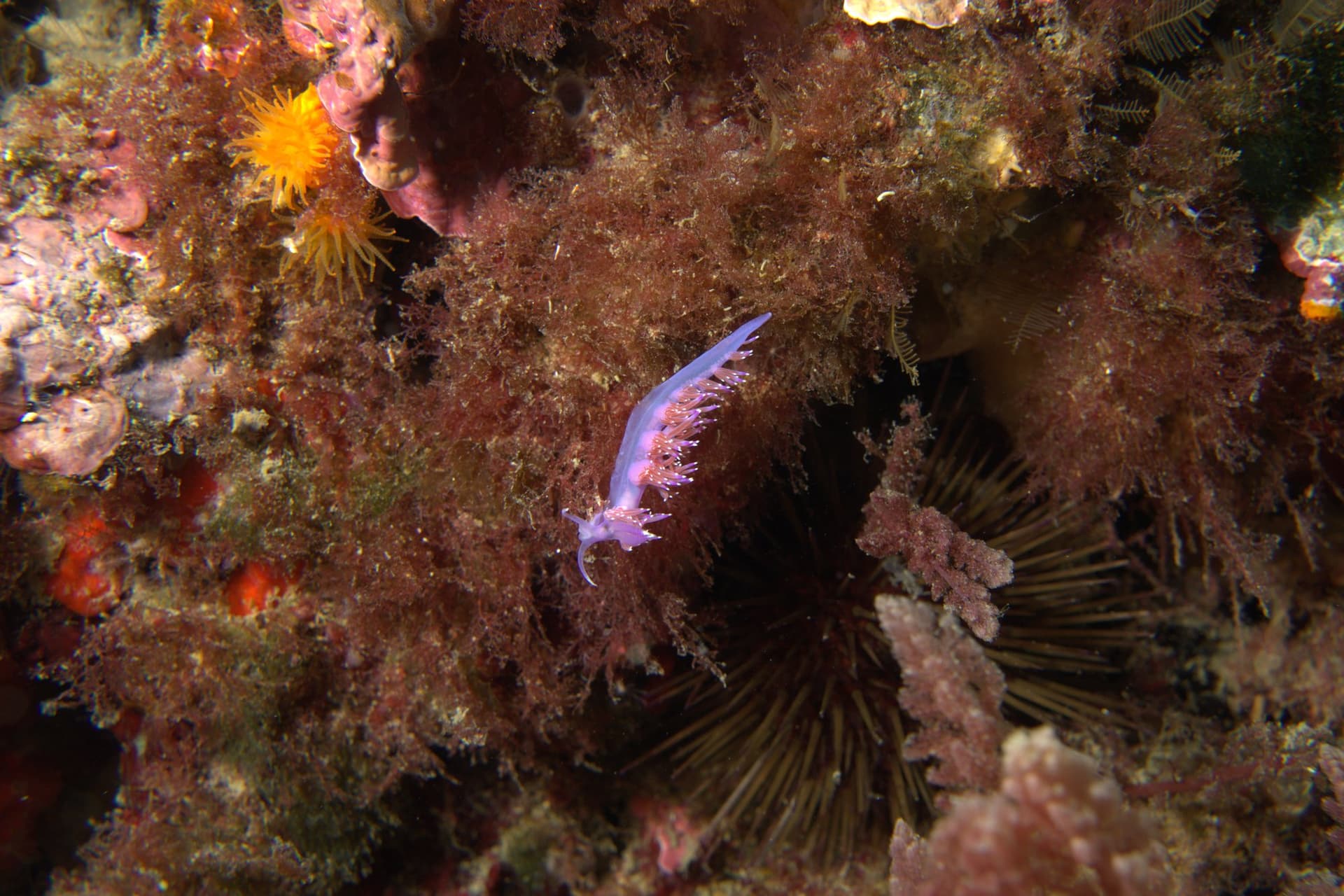
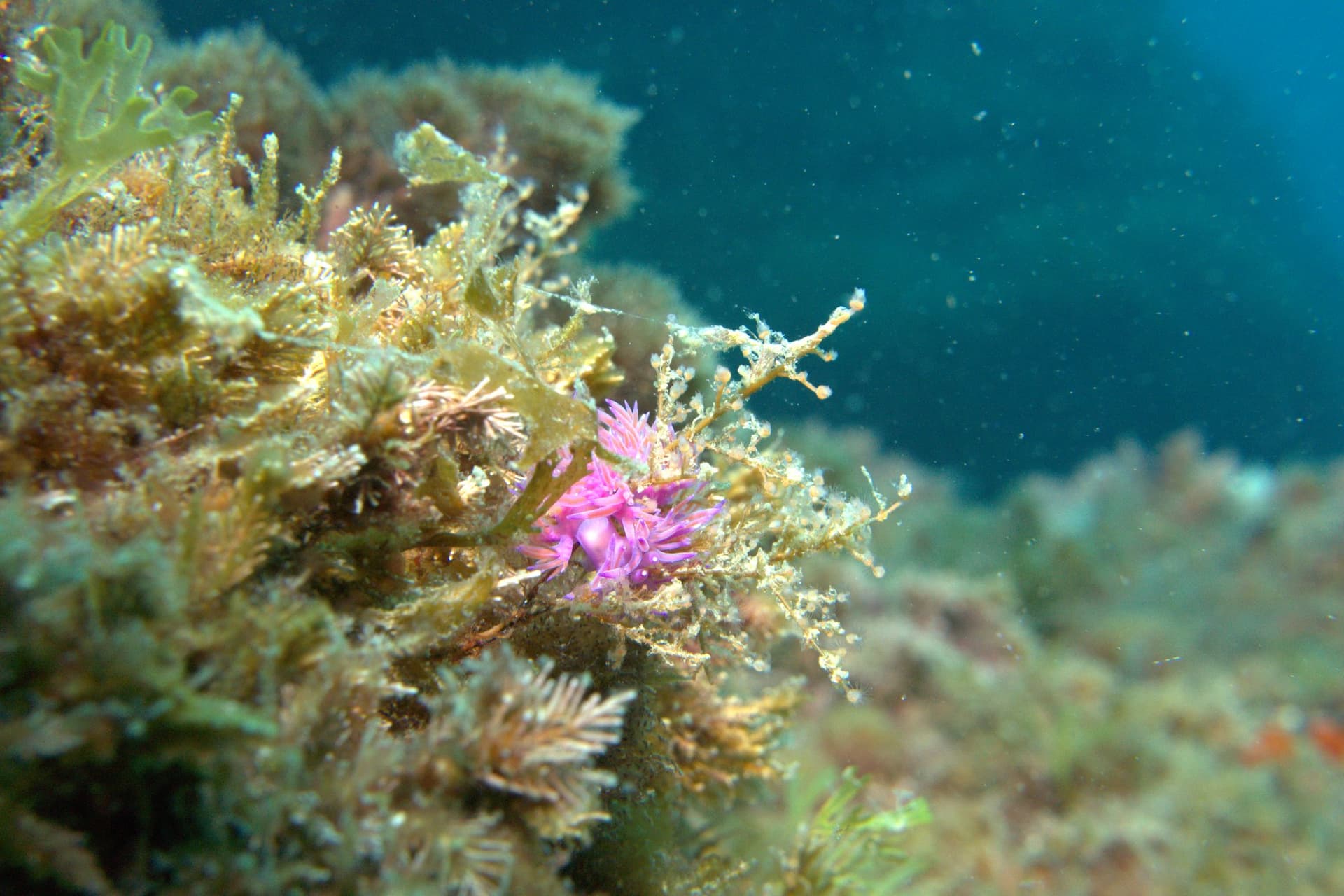
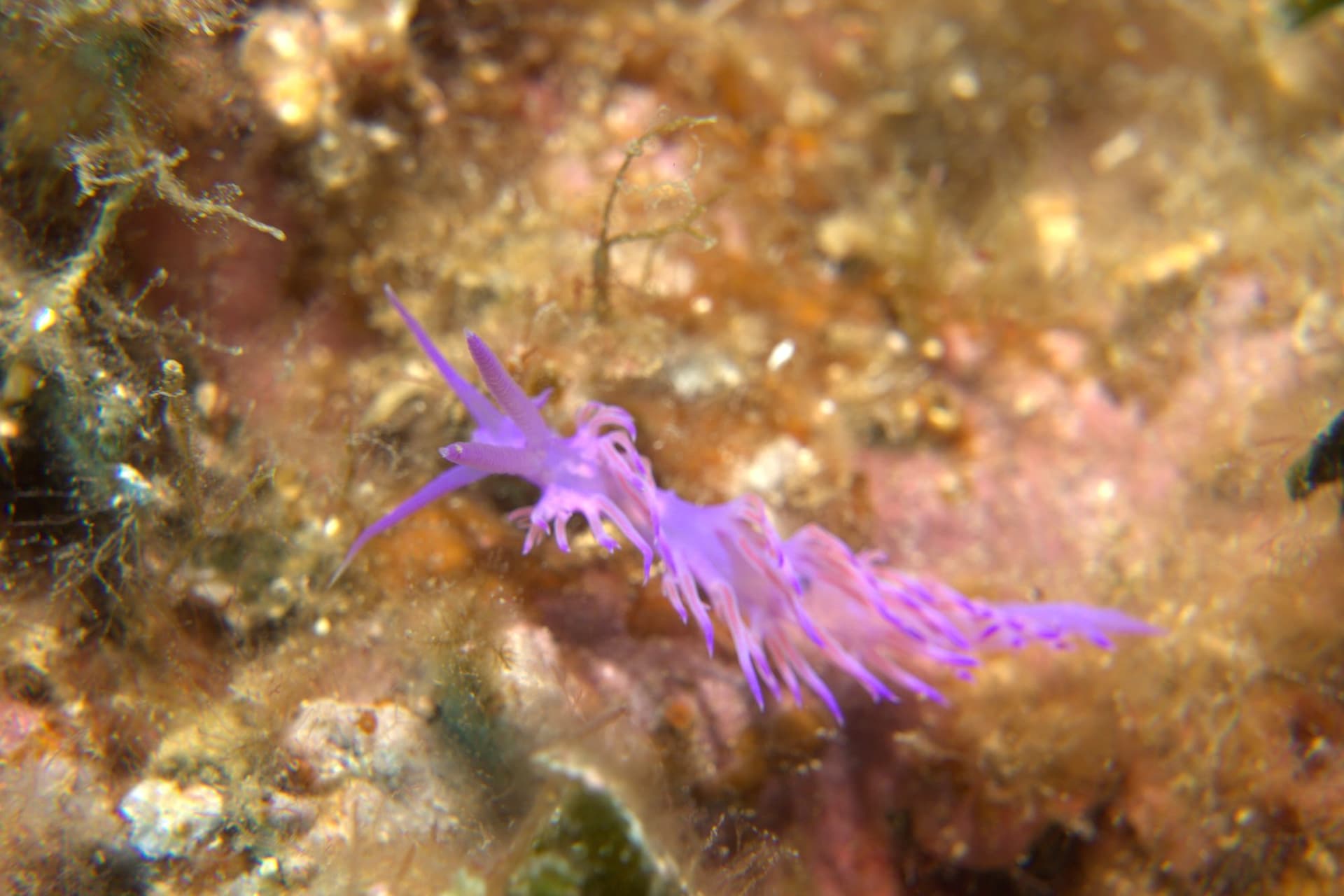
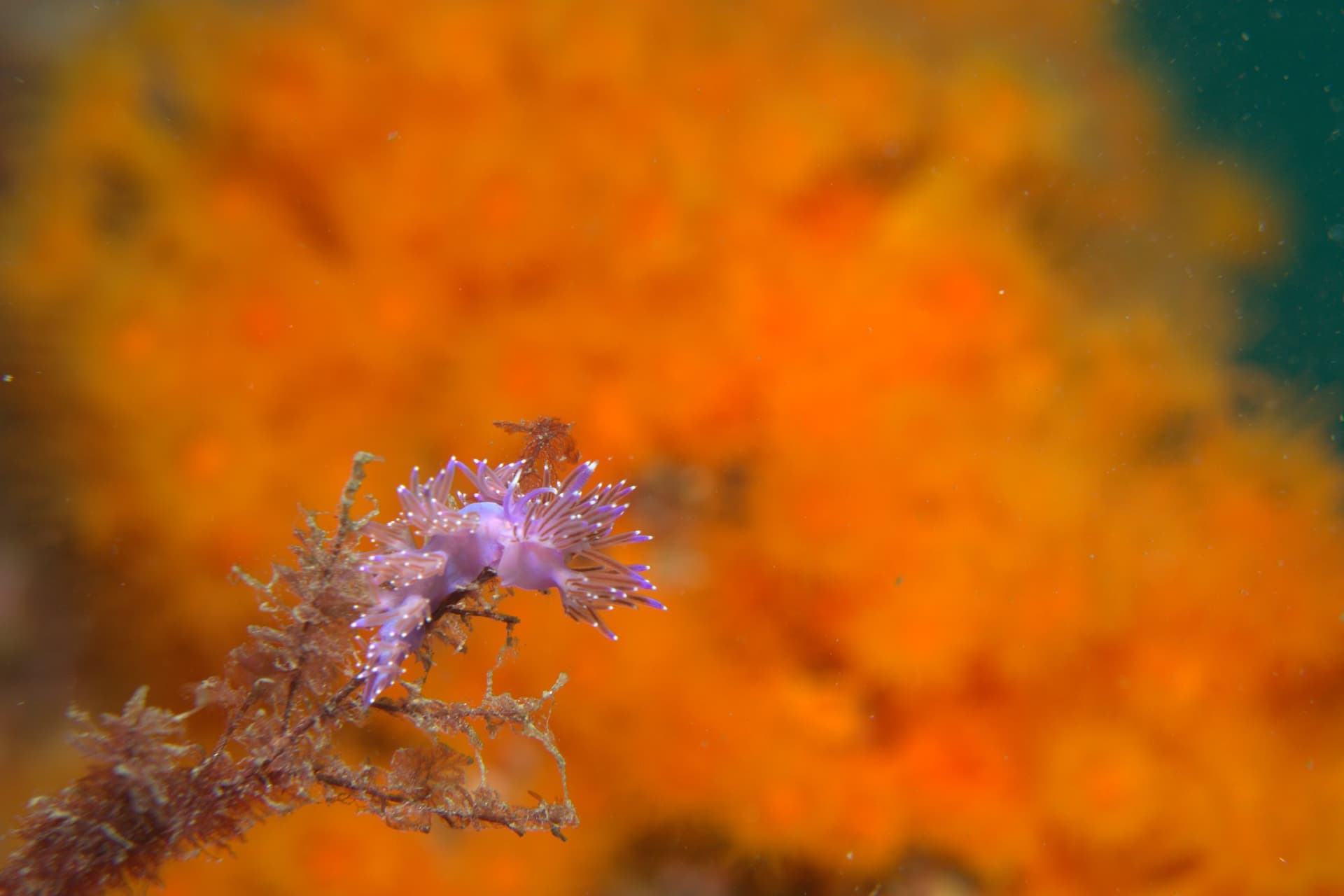
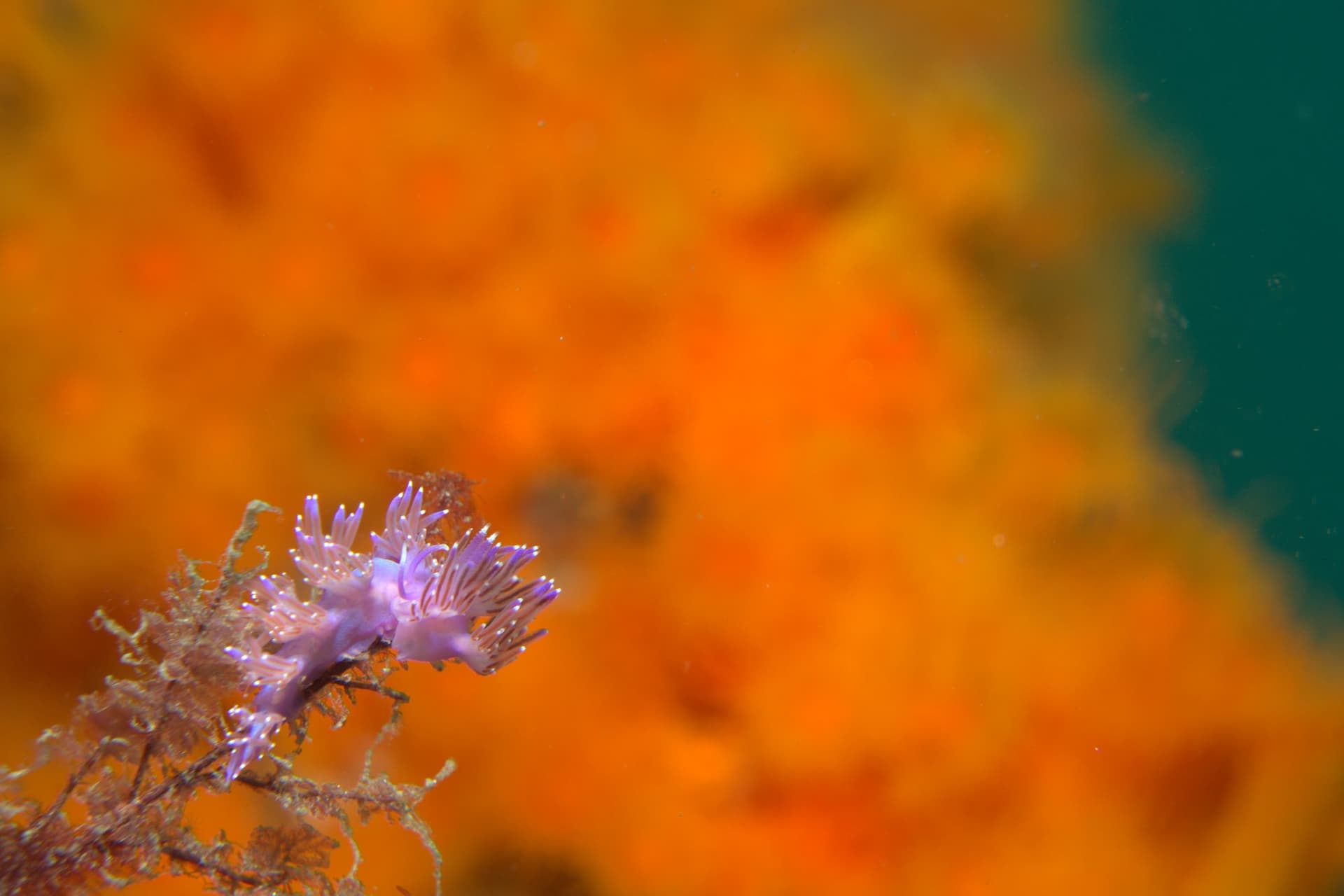
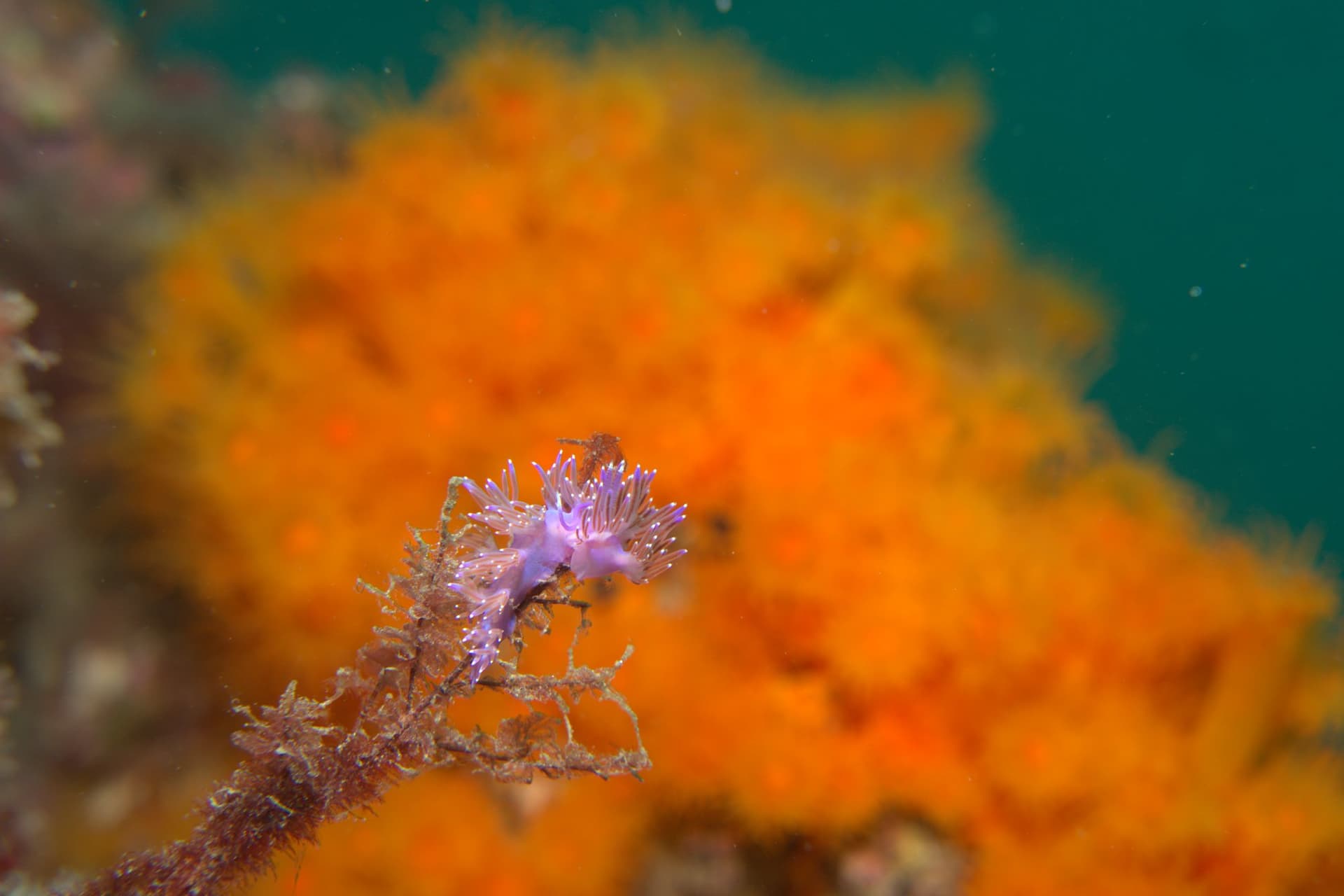
Violet flabellinaFlabellina affinis23 photos
A delicate, purple-violet nudibranch with clusters of cerata (finger-like projections) along its back tipped in white. Striking color against dark rocky surfaces.
Feeds on hydroids on rocky walls — often found in small groups. One of the most commonly photographed Mediterranean nudibranchs.
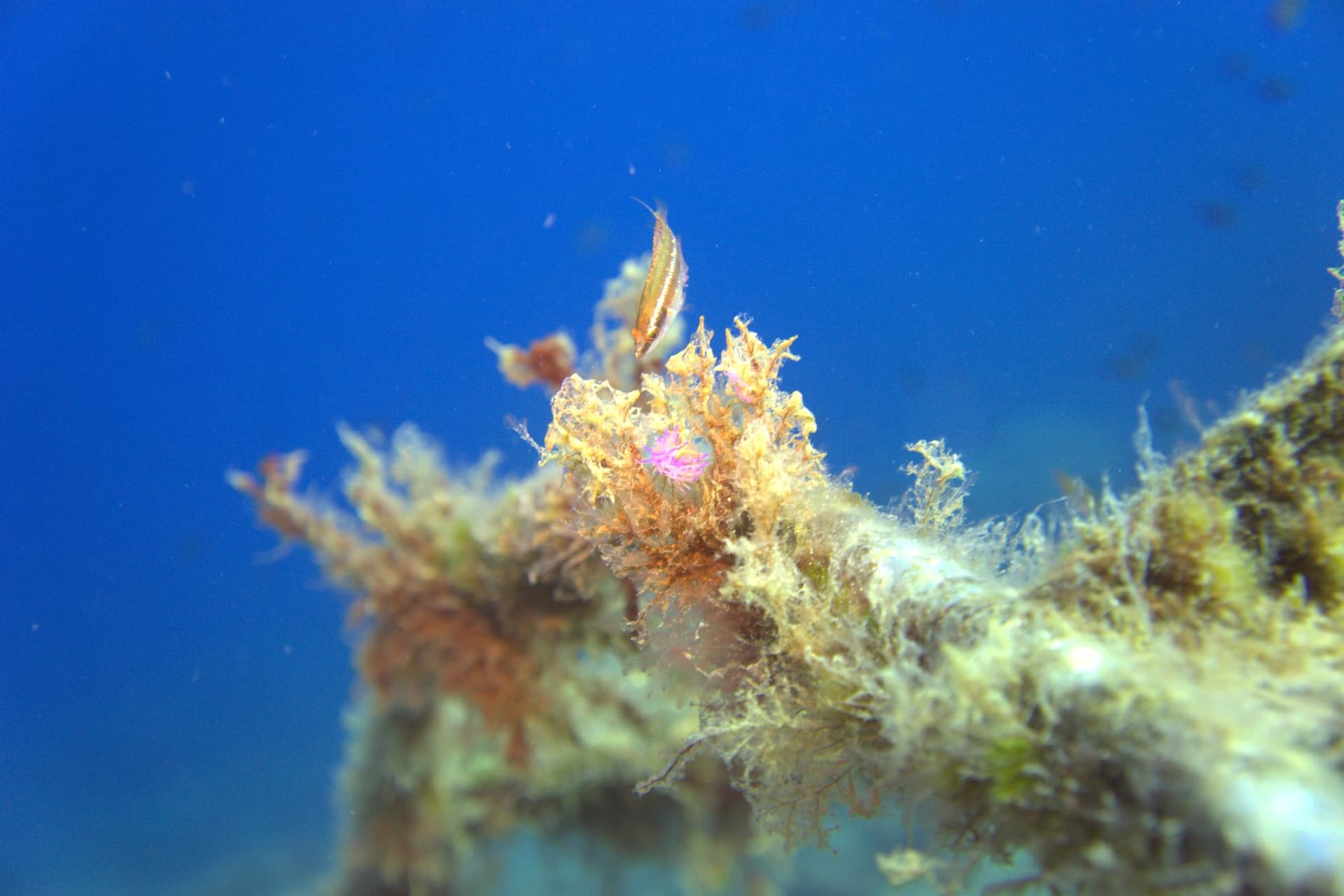
© Jouni Kuisma
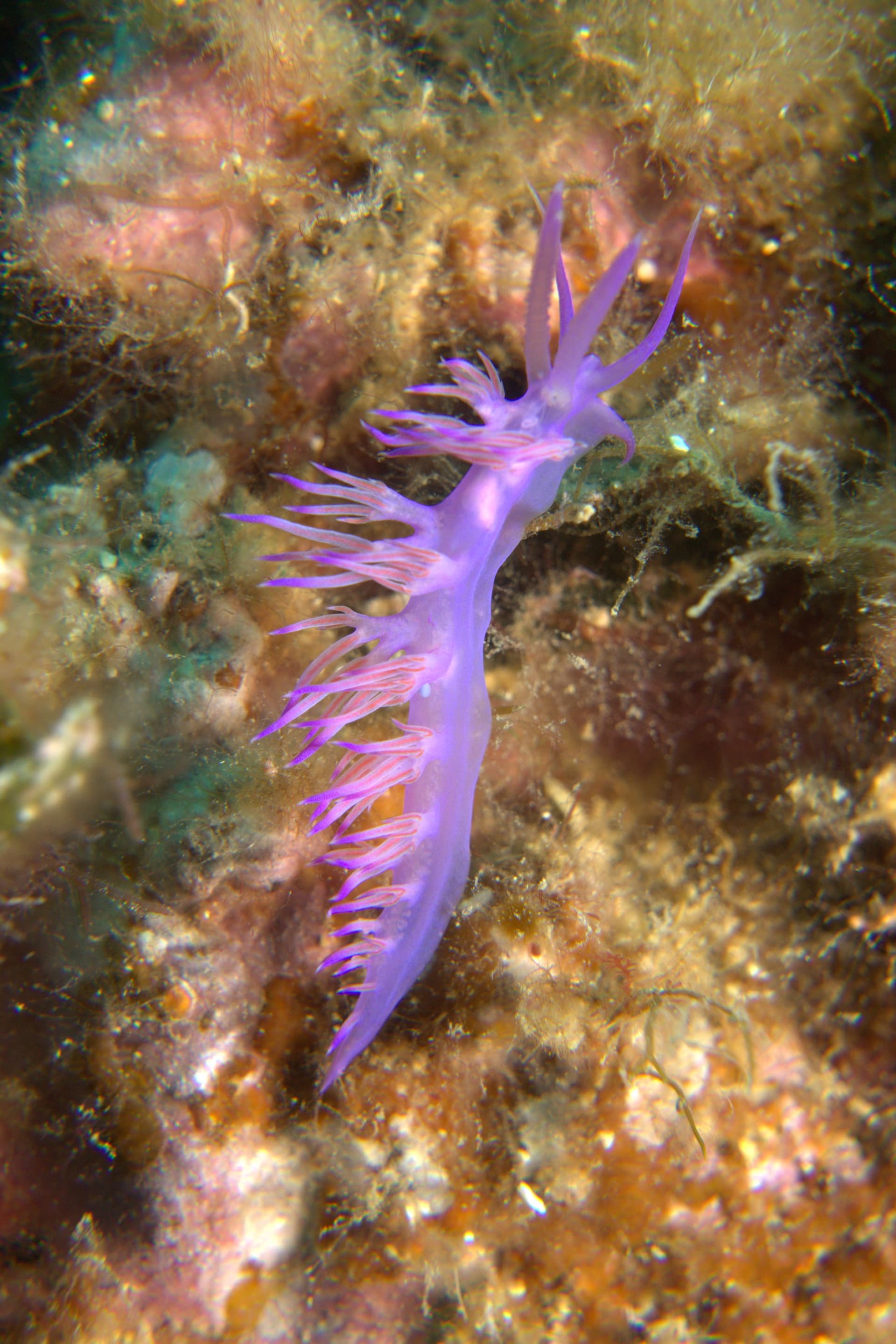
© Jouni Kuisma
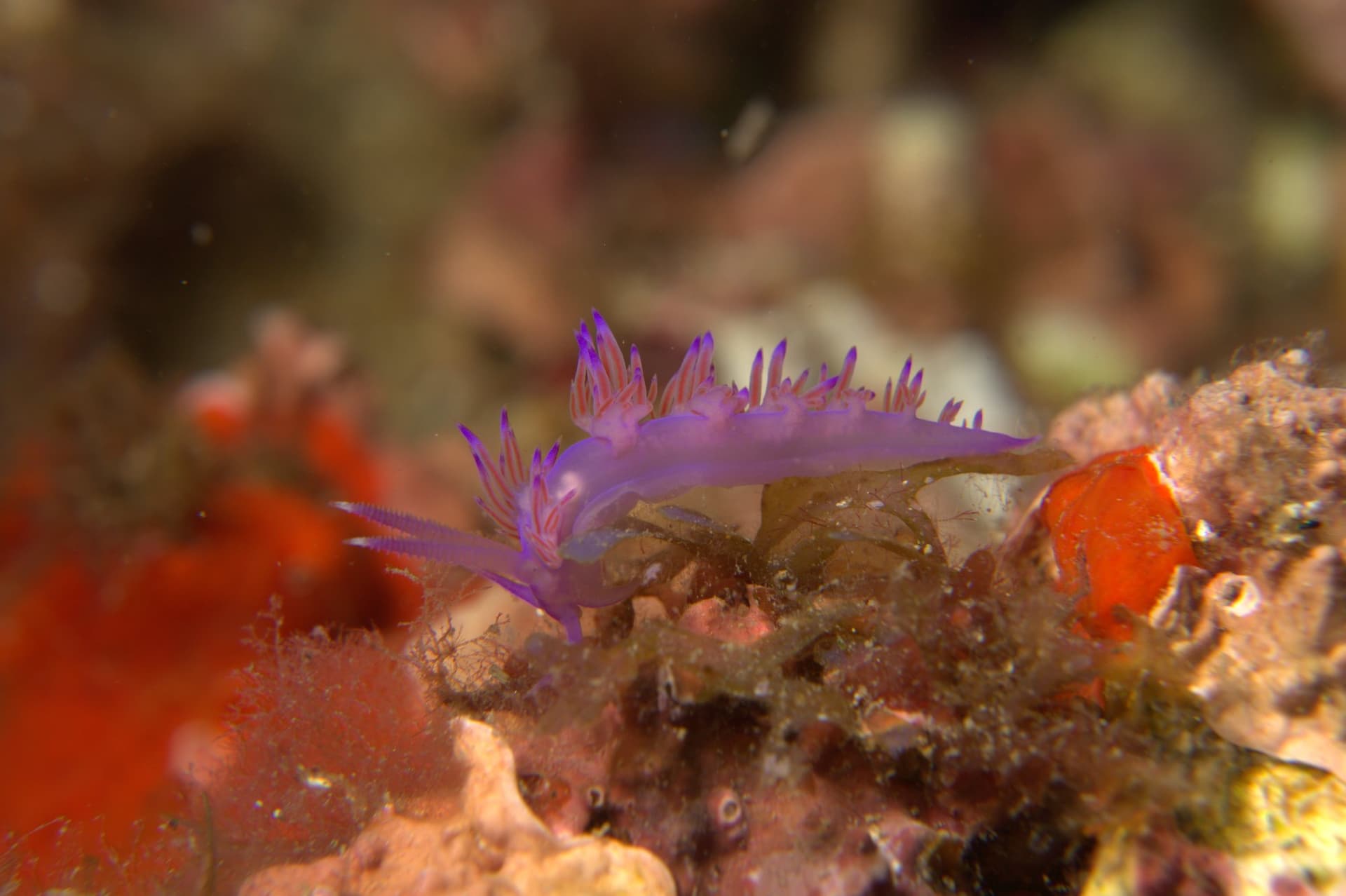
© Jouni Kuisma
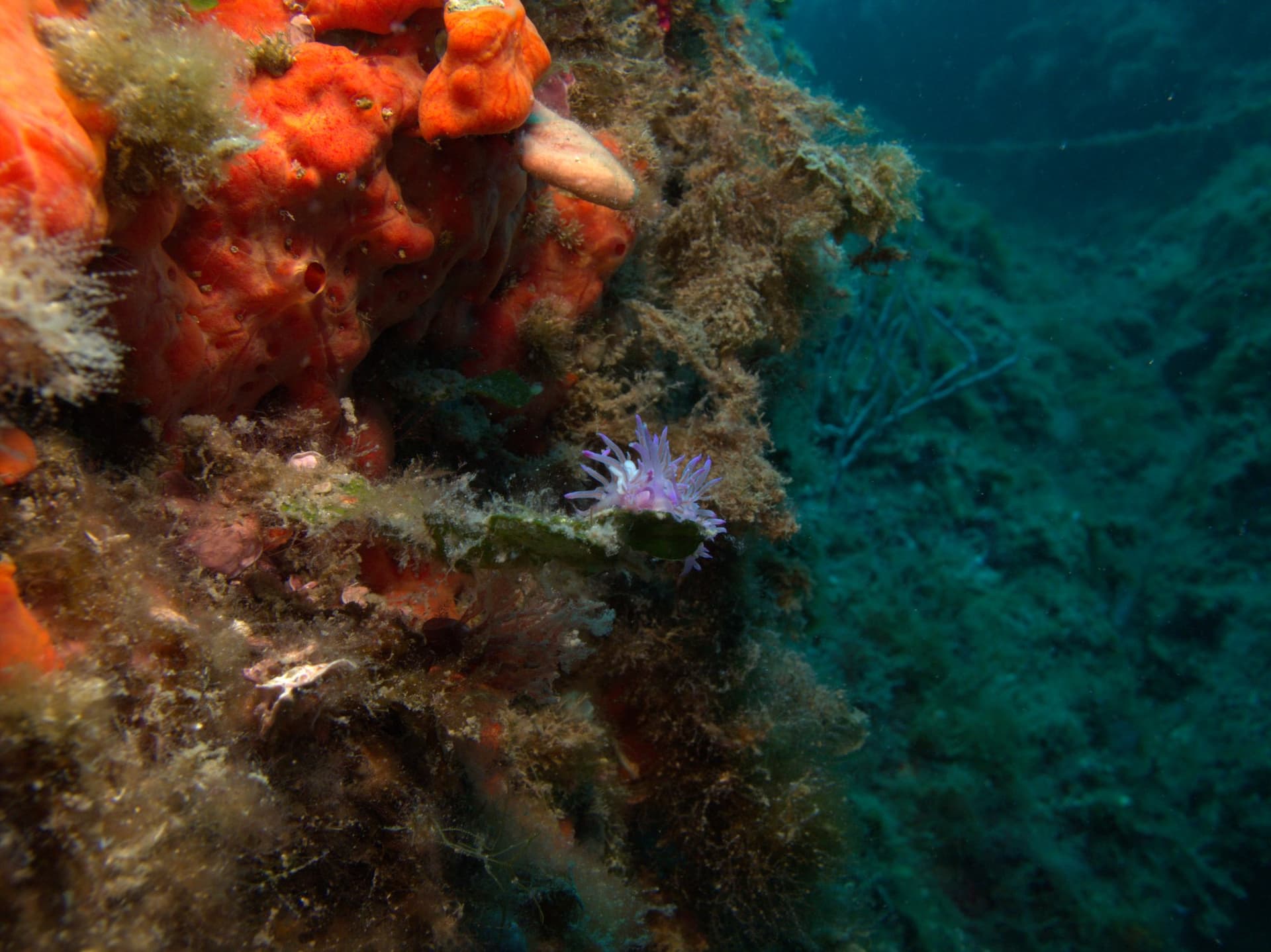
© Jouni Kuisma
© Jouni Kuisma
© Jouni Kuisma
© Jouni Kuisma
© Jouni Kuisma
© Jouni Kuisma
© Jouni Kuisma
© Jouni Kuisma
© Jouni Kuisma
© Jouni Kuisma
© Jouni Kuisma
© Jouni Kuisma
© Jouni Kuisma
Observed at
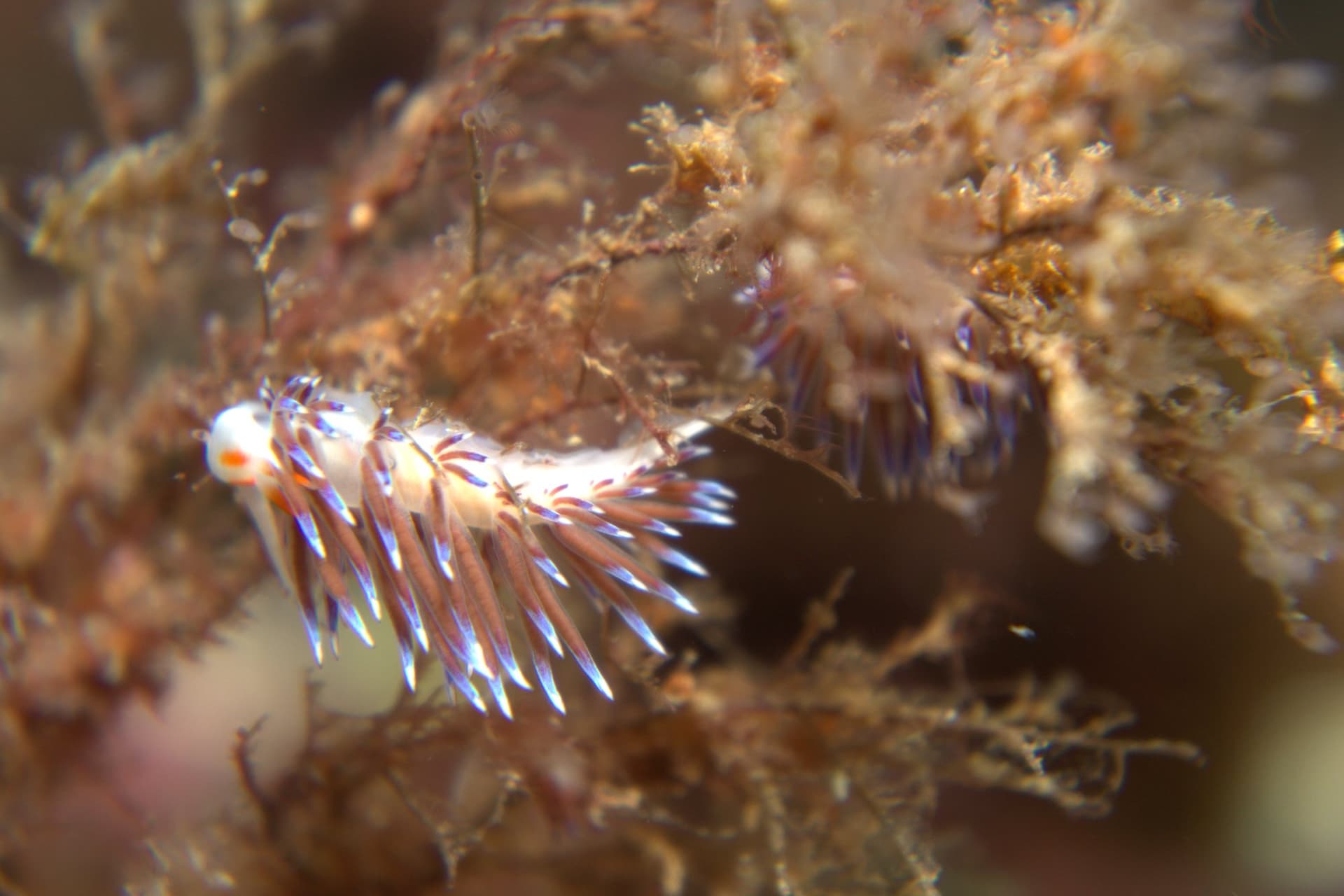
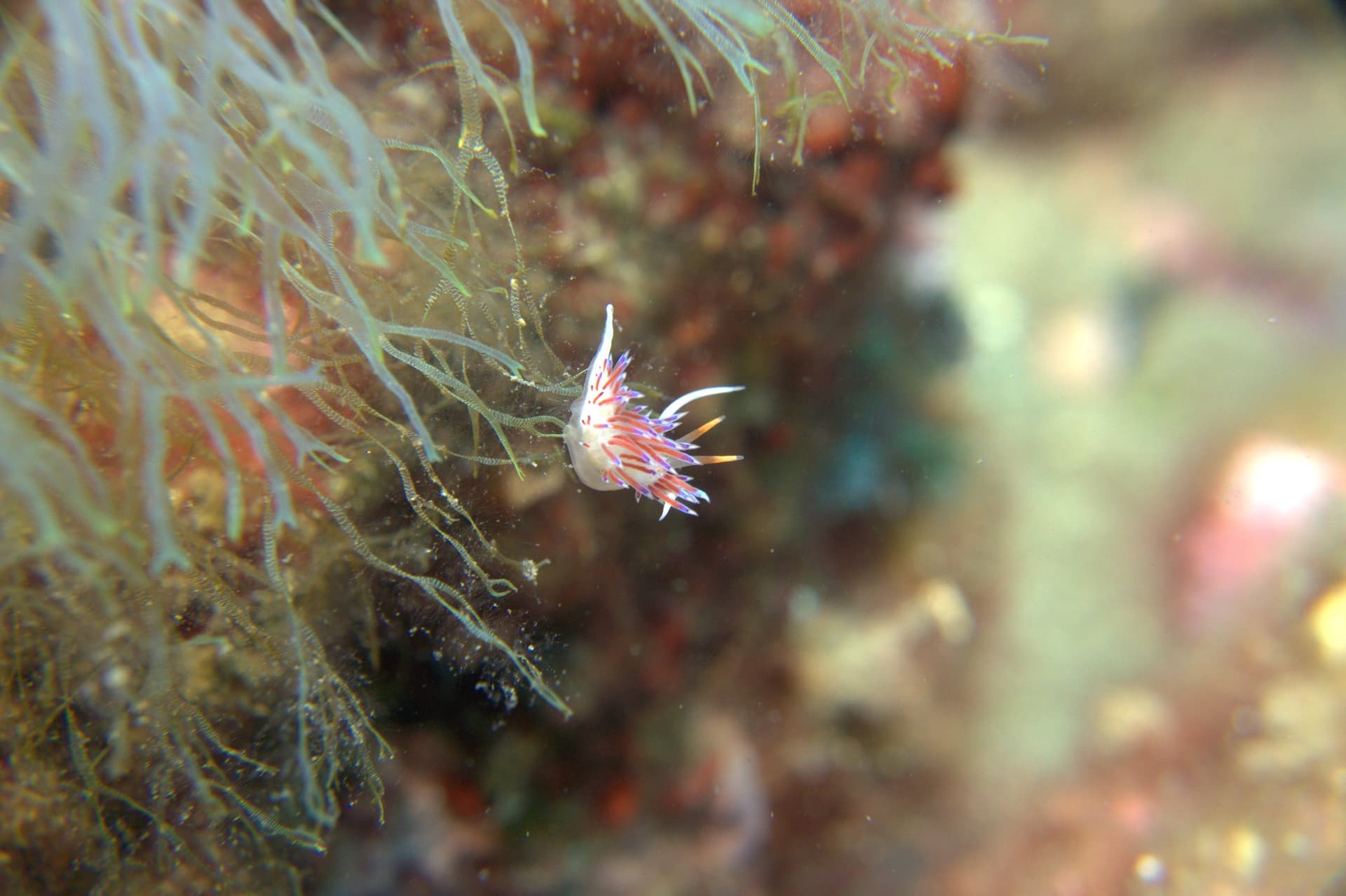
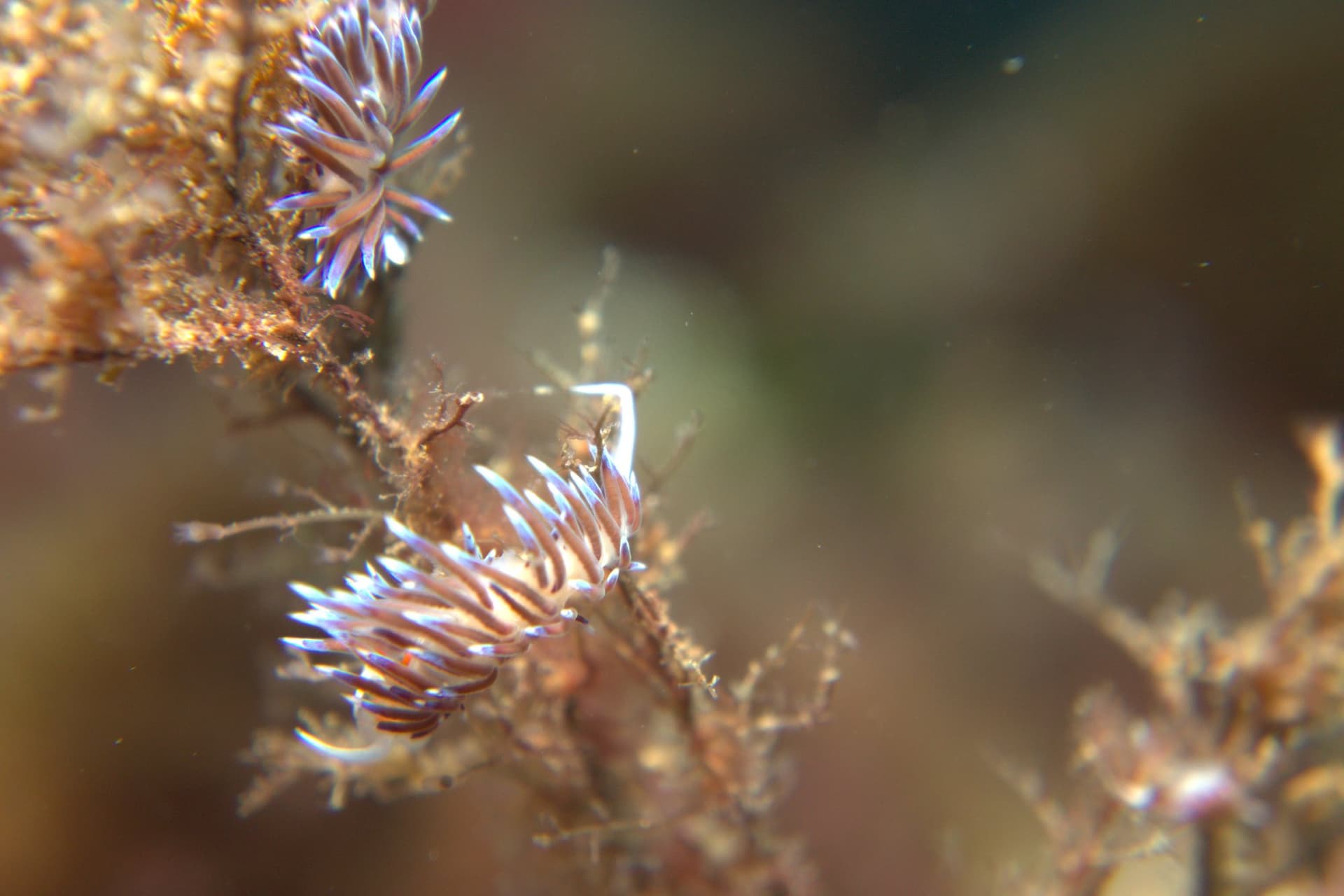
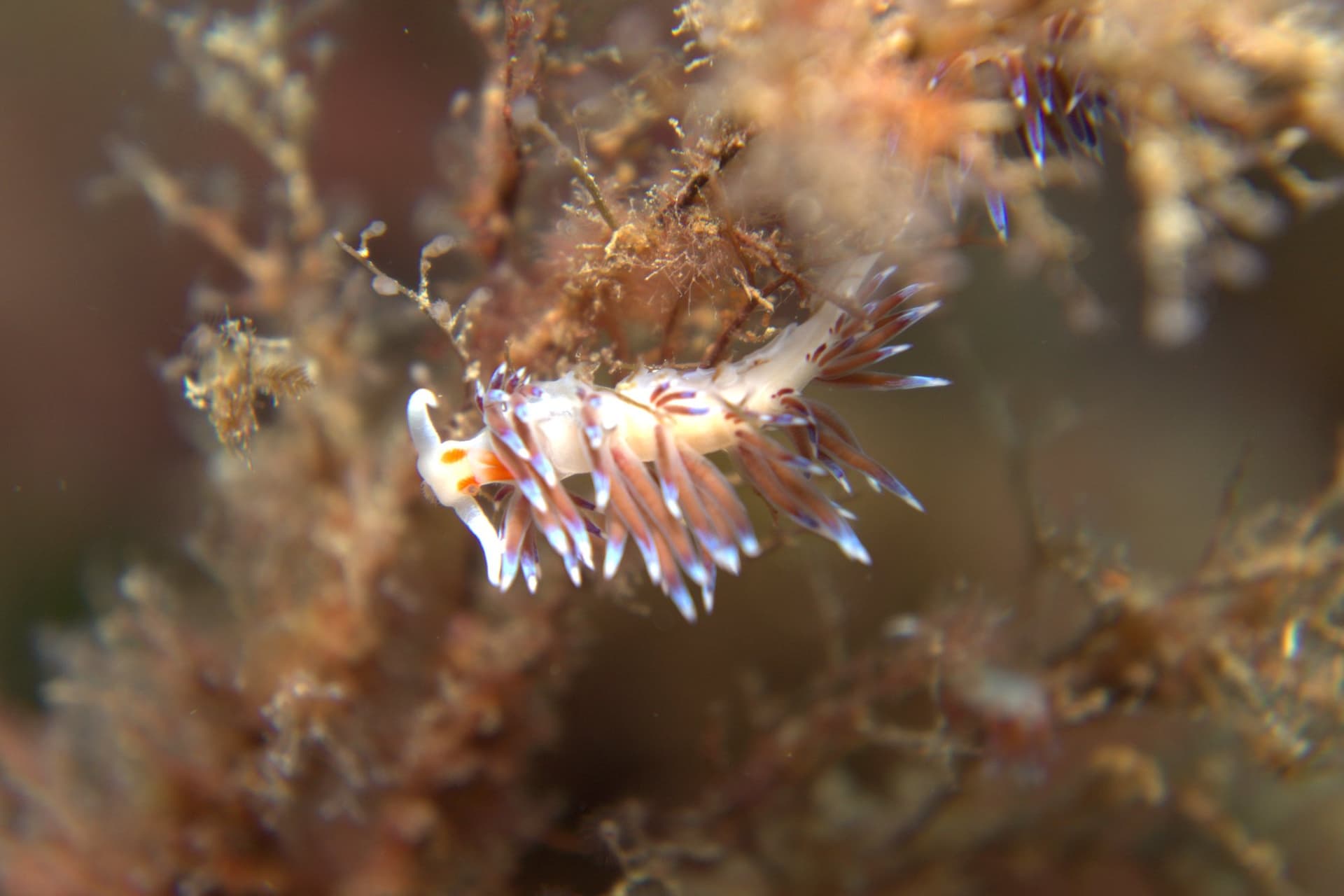
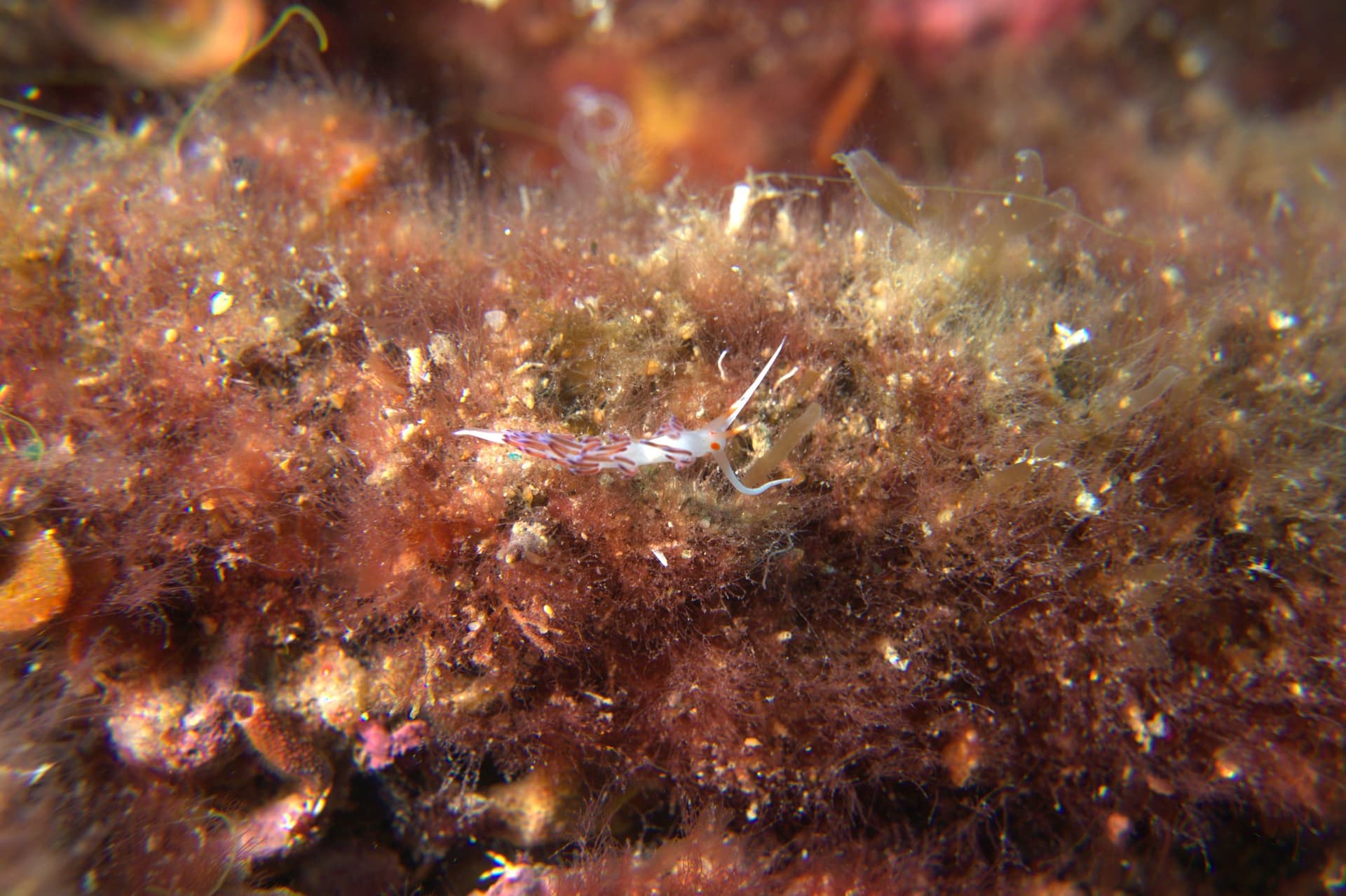
Cratena peregrinaCratena peregrina13 photos
A terrestrial flatworm that has invaded Mediterranean gardens, but the marine sighting refers to Cratera peregrina — a flat, leaf-shaped worm with brown stripes on a pale body.
Glides across rocky surfaces using muscular contractions — paper-thin and surprisingly fast for a flatworm.
© Jouni Kuisma
© Jouni Kuisma
© Jouni Kuisma
© Jouni Kuisma
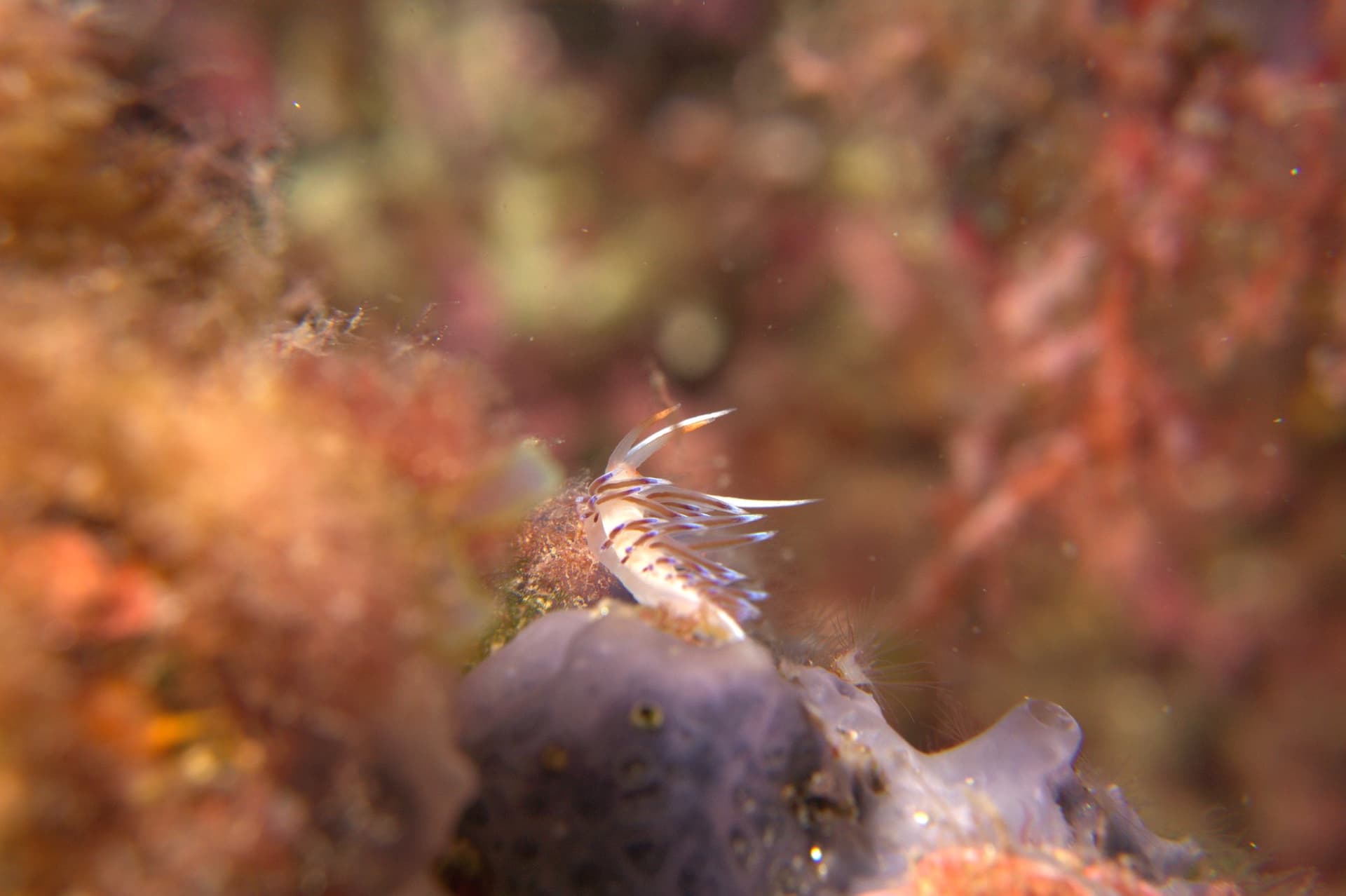
© Jouni Kuisma
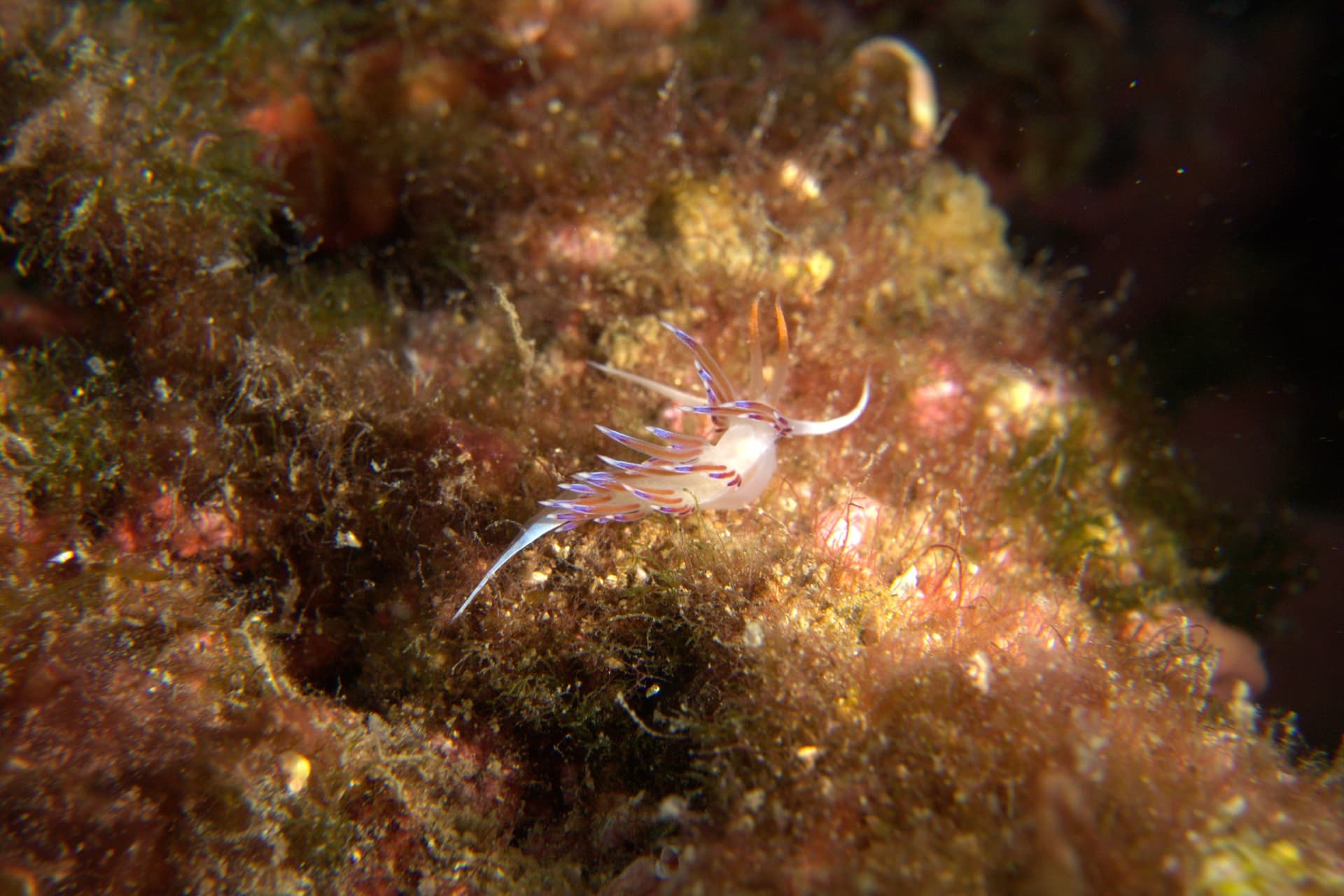
© Jouni Kuisma
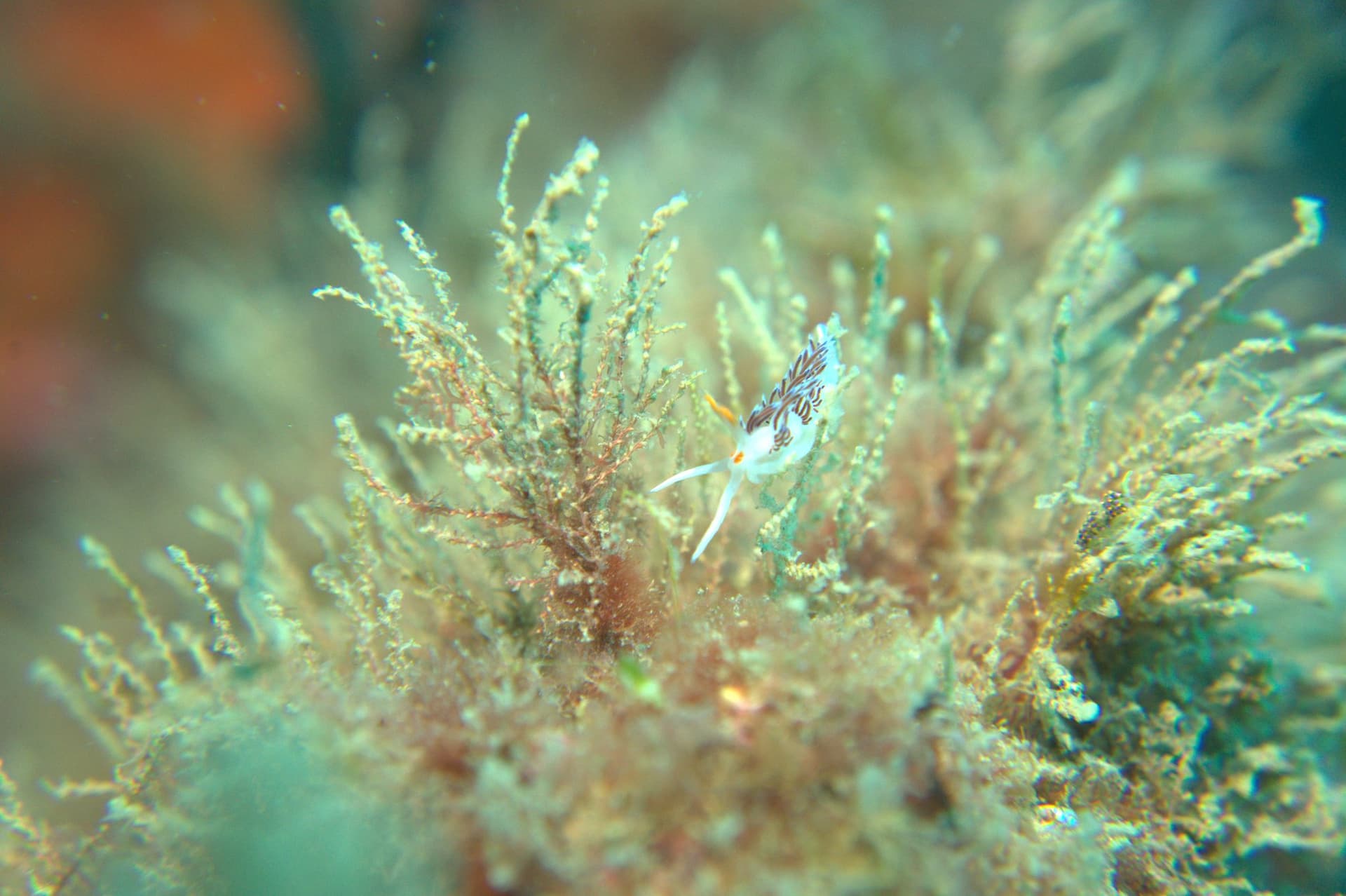
© Jouni Kuisma
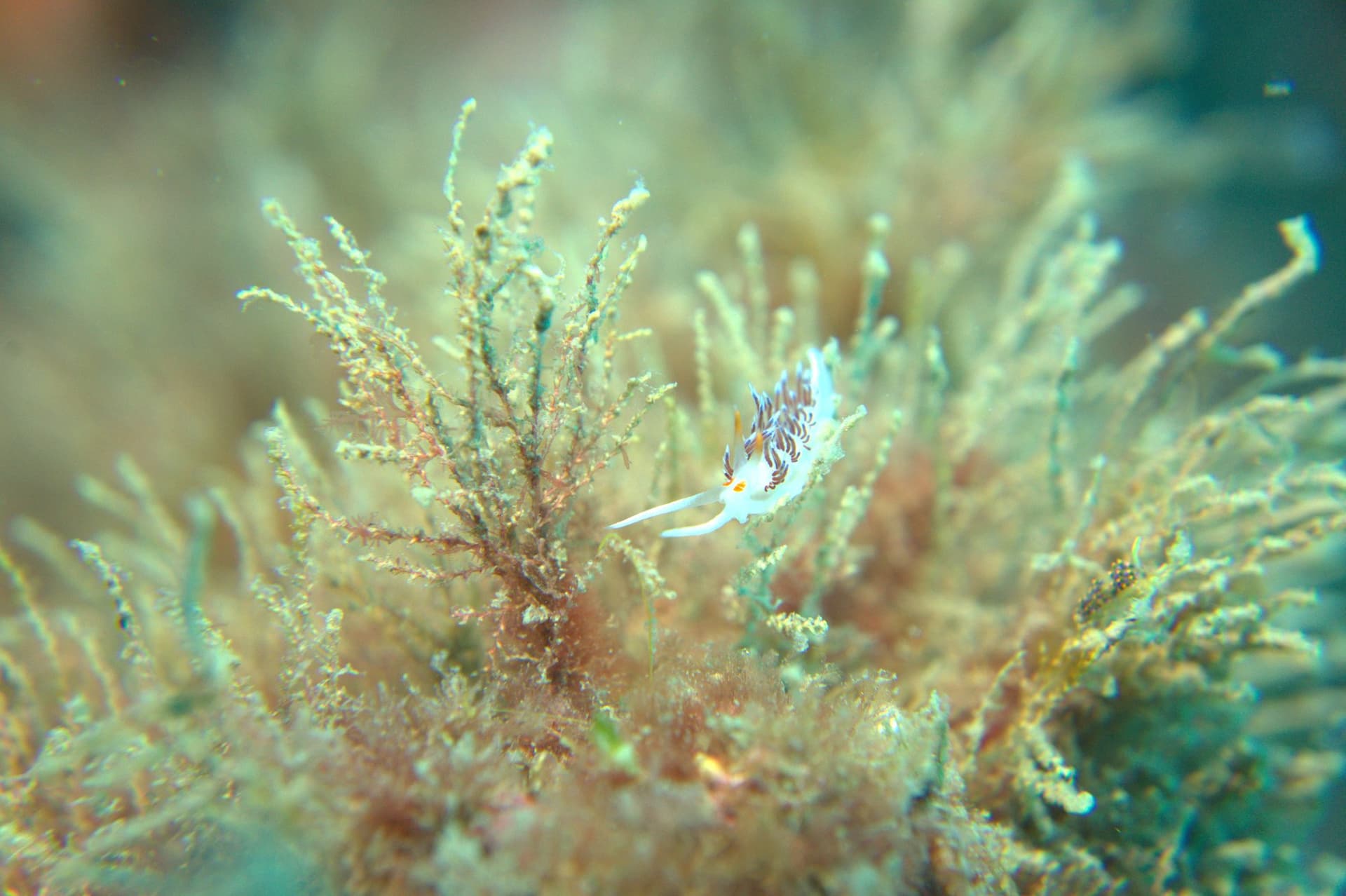
© Jouni Kuisma
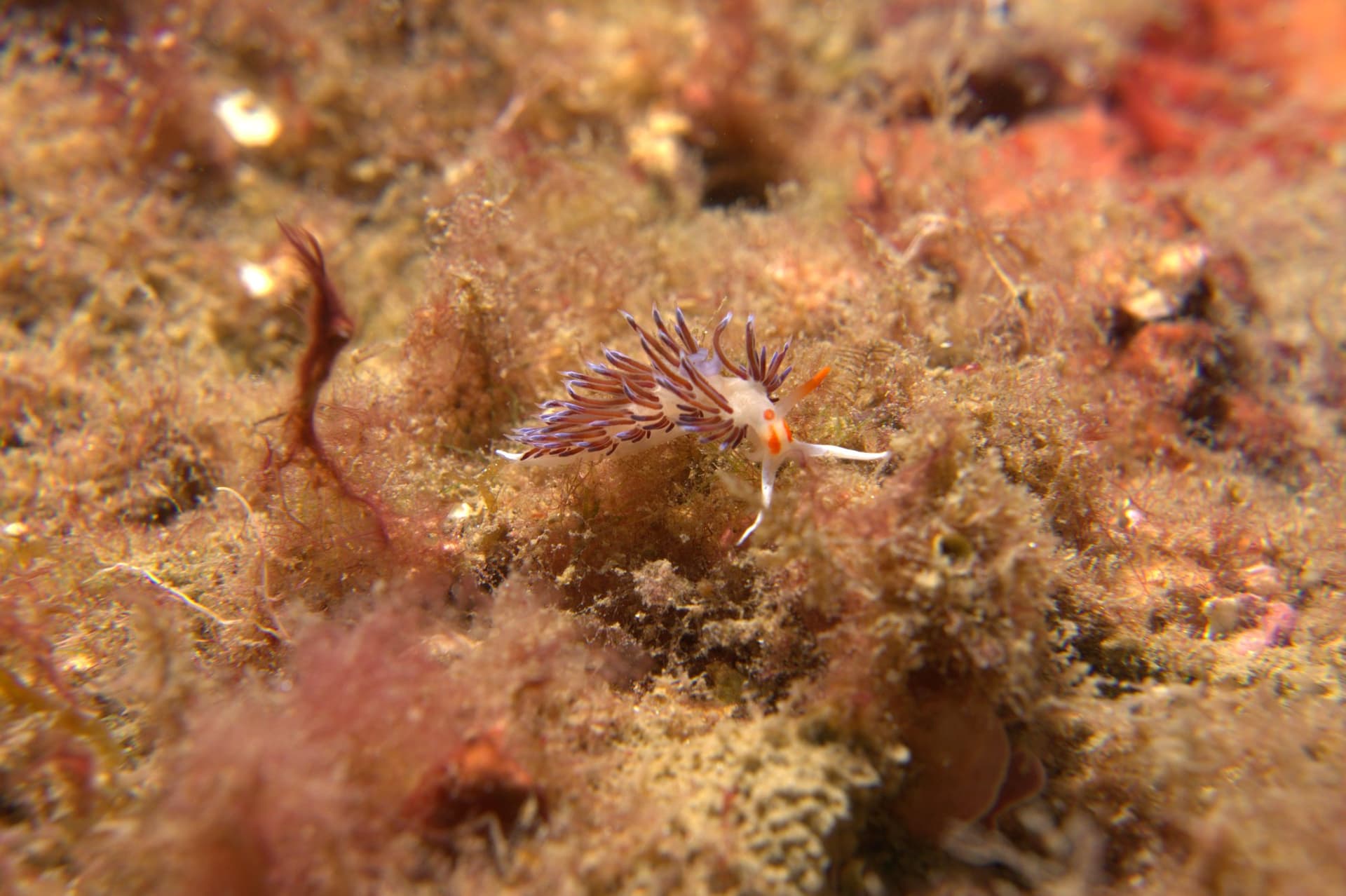
© Jouni Kuisma
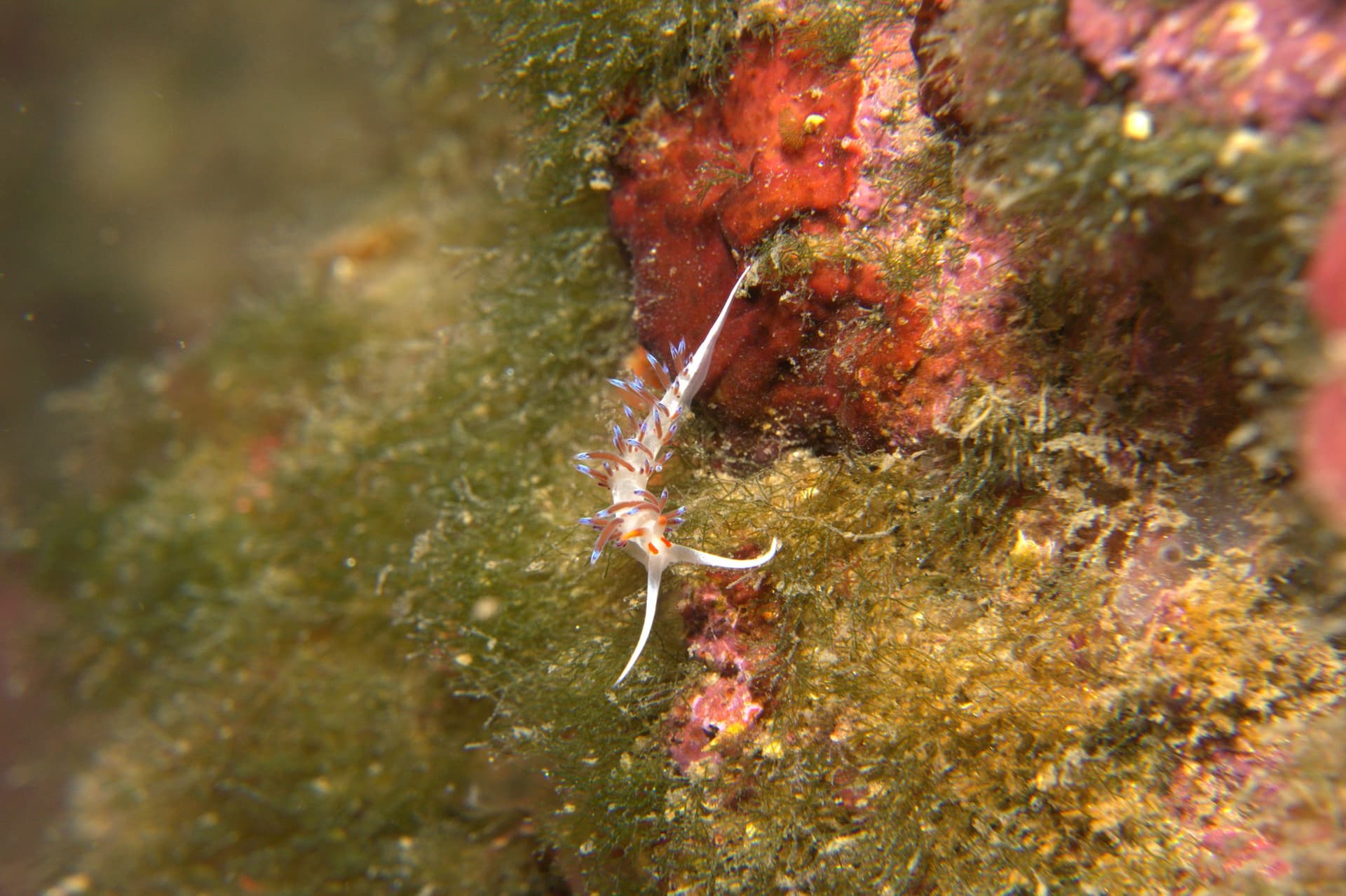
© Jouni Kuisma
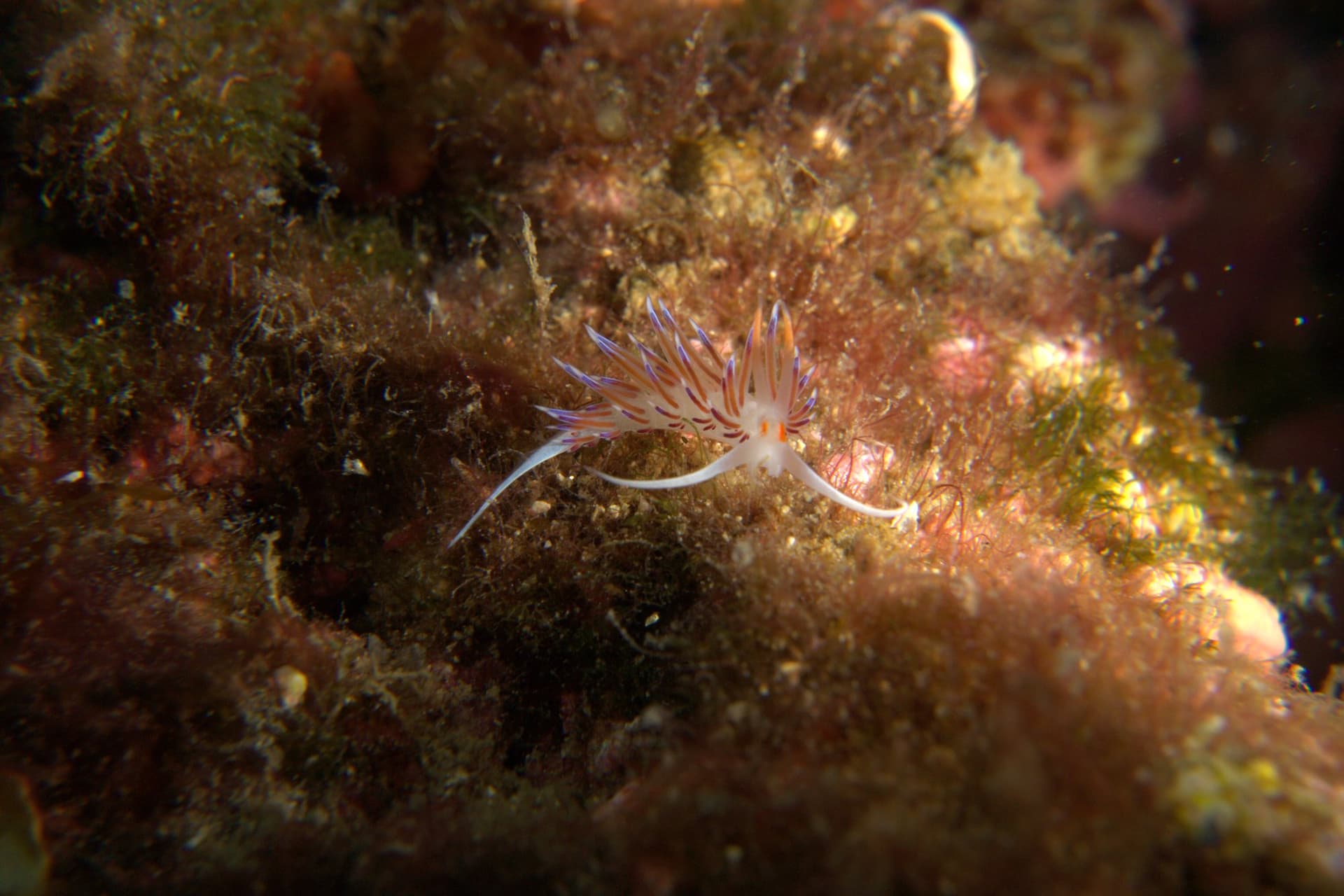
© Jouni Kuisma
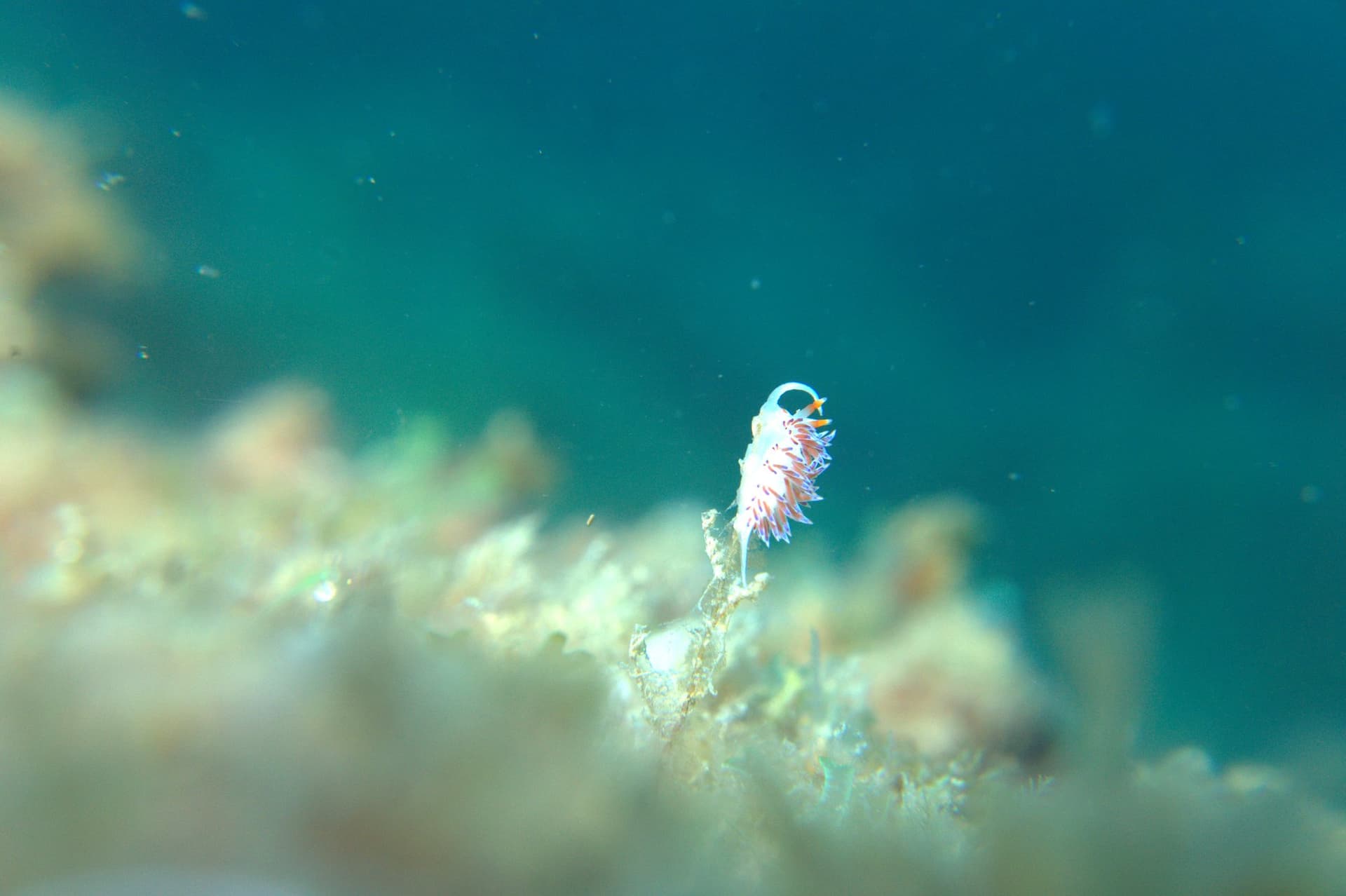
© Jouni Kuisma
© Jouni Kuisma
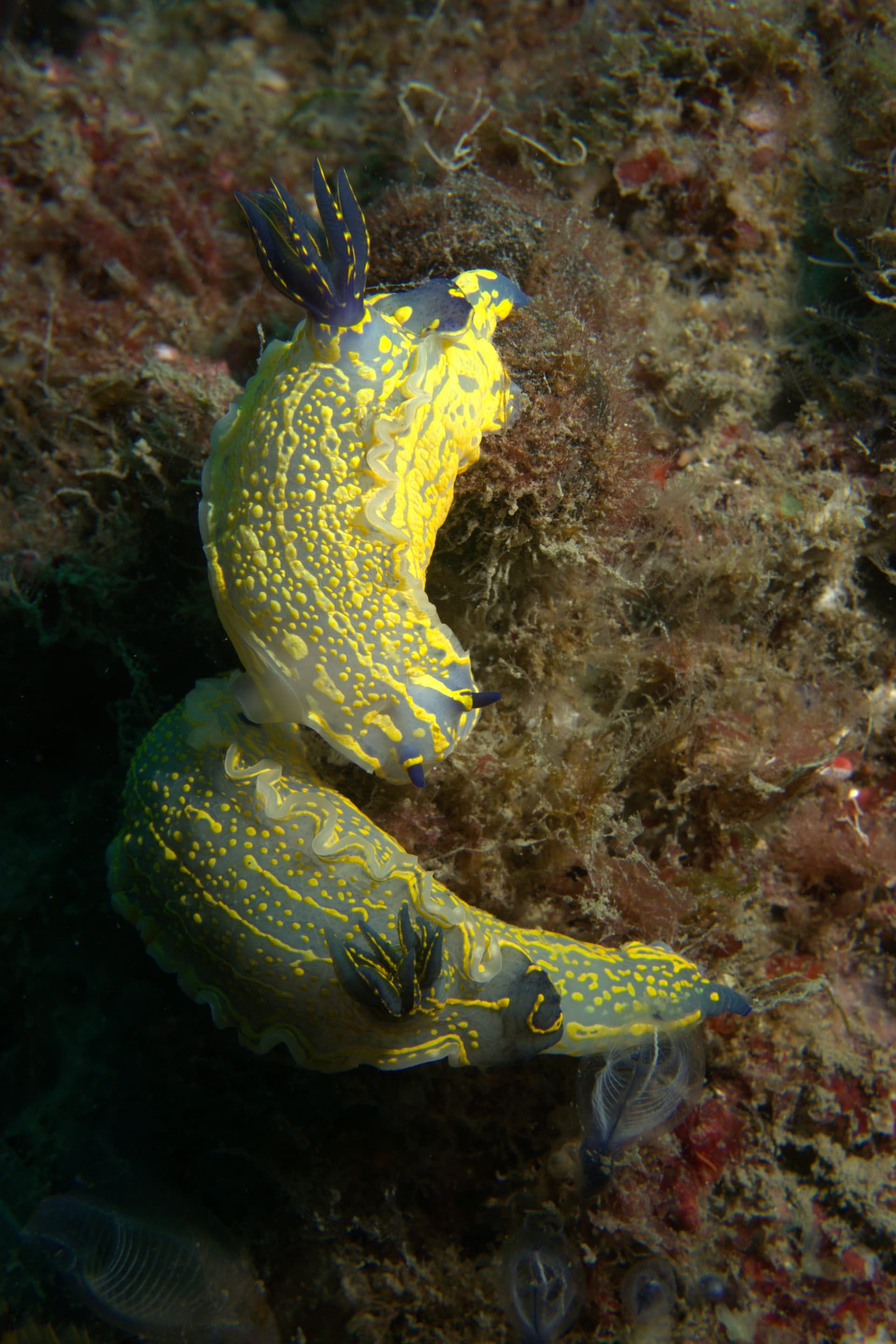
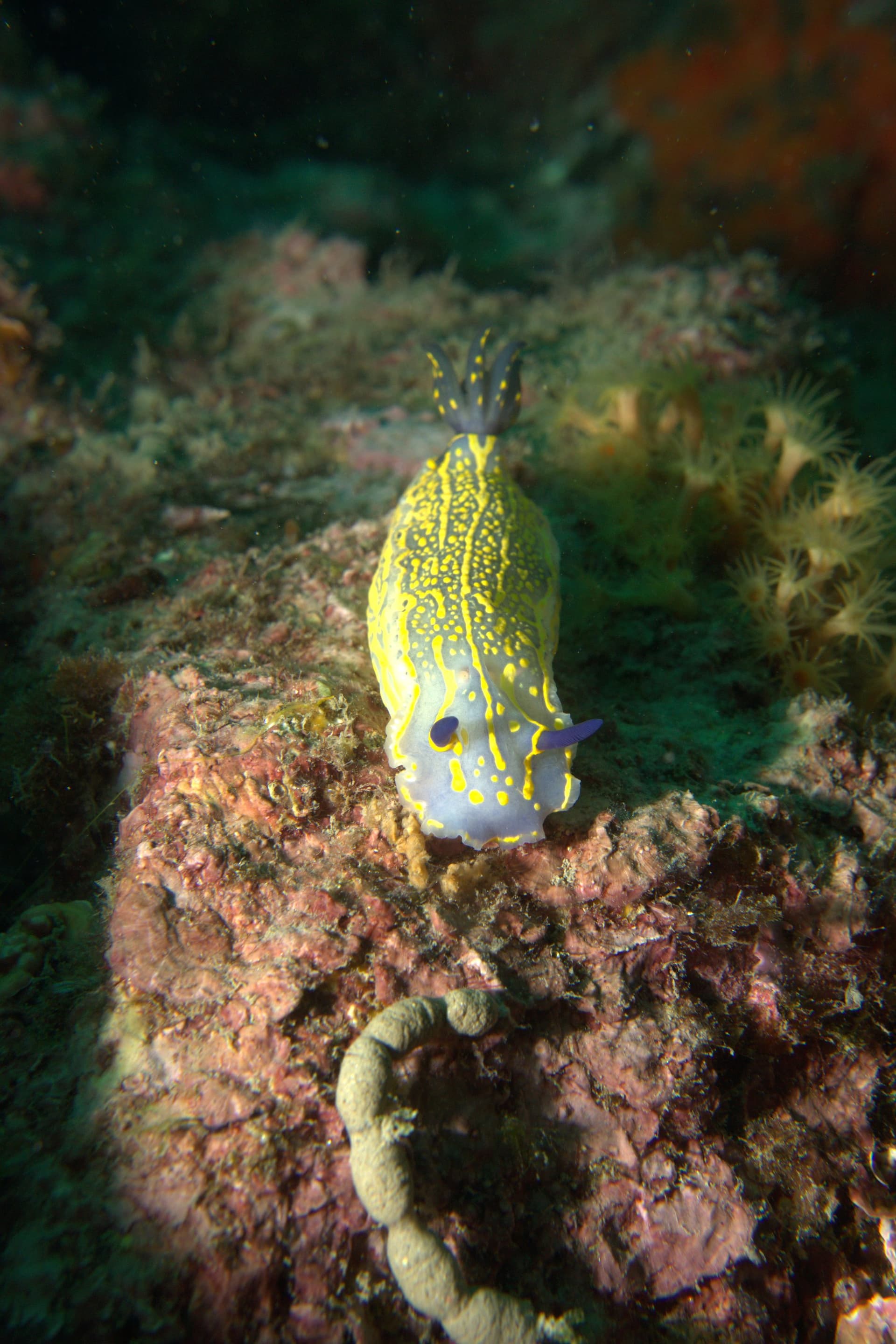
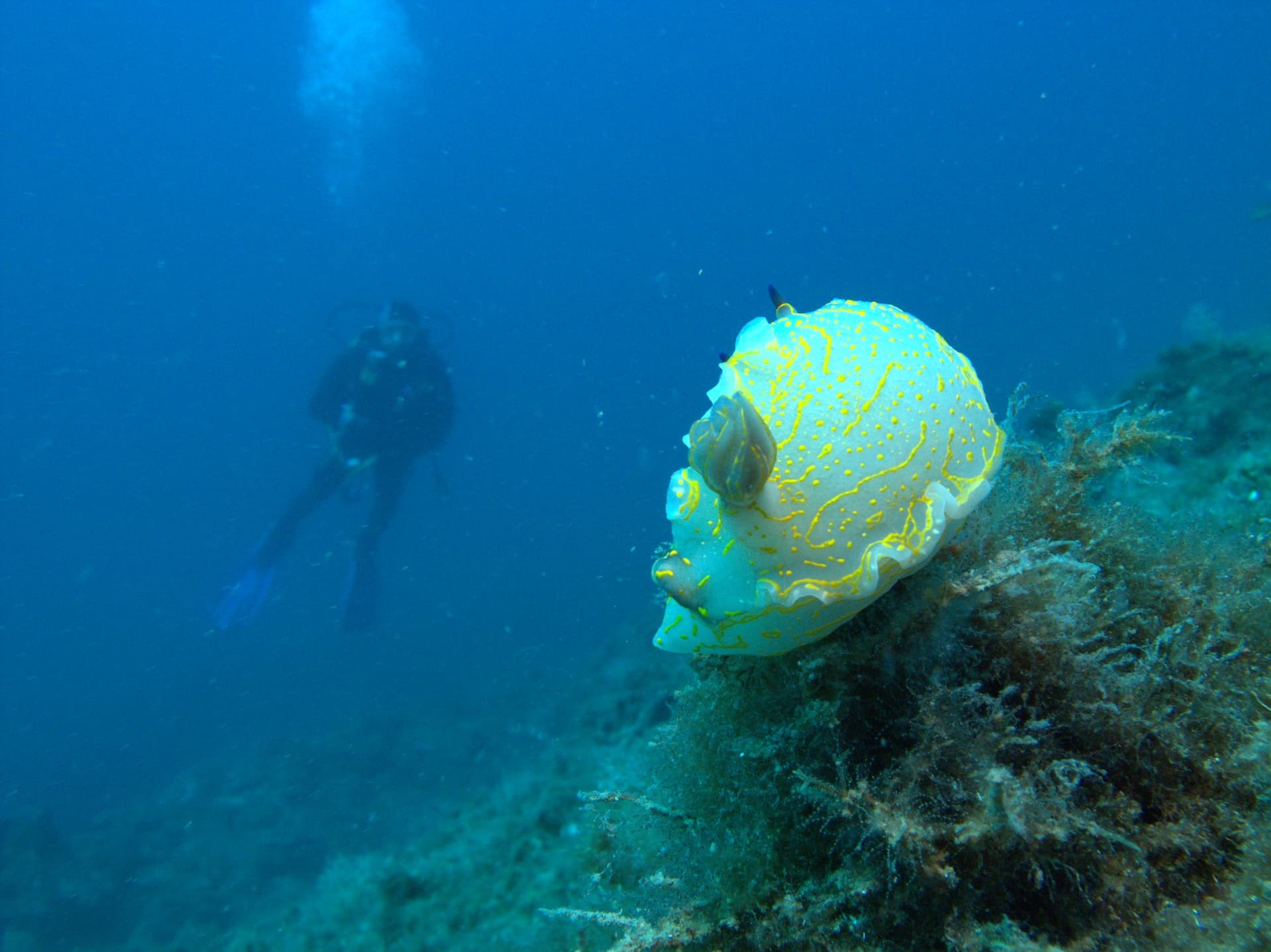
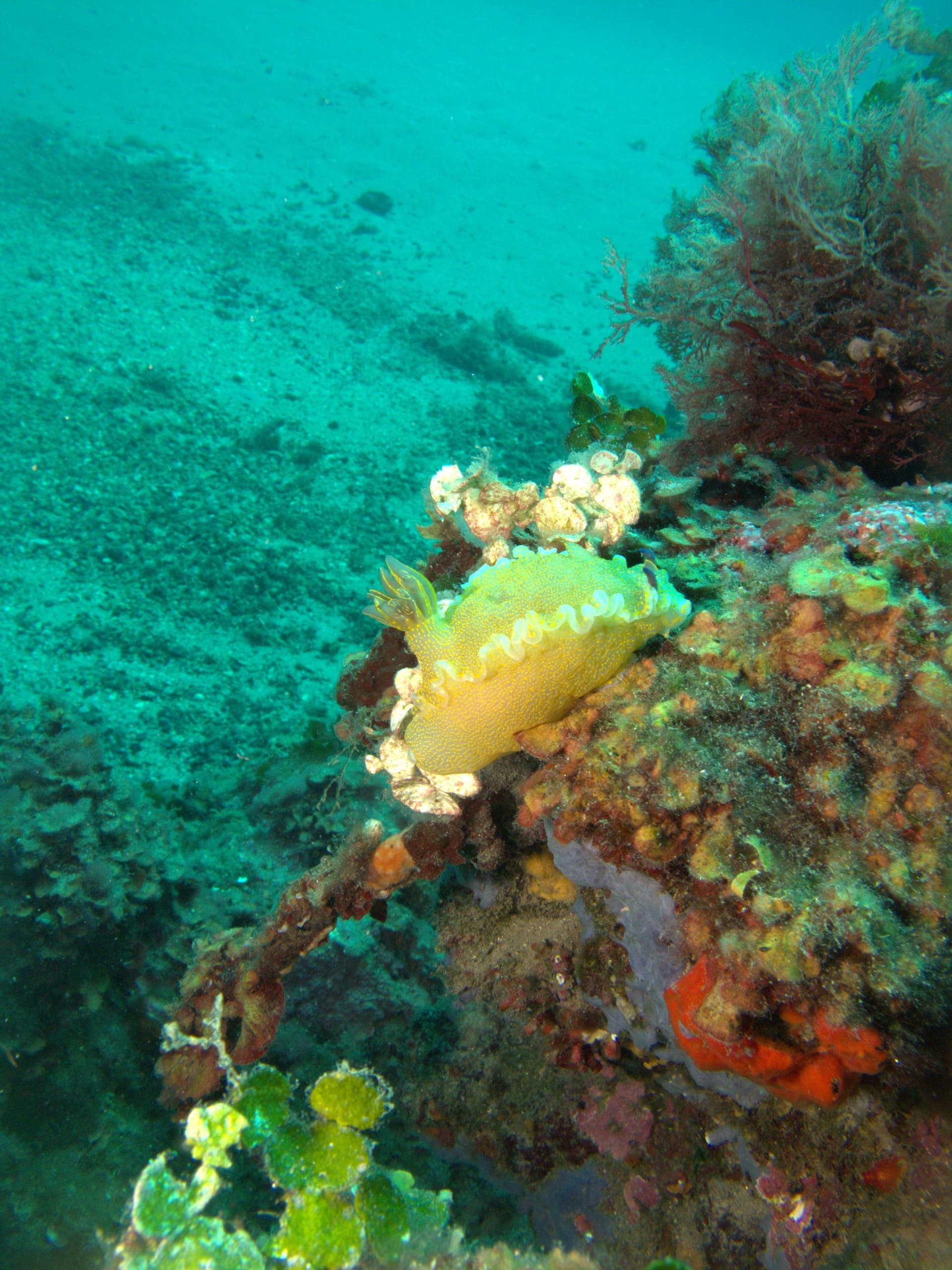
Violet sea slugFelimare picta12 photos
A beautiful nudibranch with a bright blue-purple body edged in yellow-gold, with yellow-tipped rhinophores and gills. One of the Med's most photogenic sea slugs.
Glides slowly over sponge-covered walls — look for the contrasting blue and yellow coloring against dark rock surfaces.
© Jouni Kuisma
© Jouni Kuisma
© Jouni Kuisma
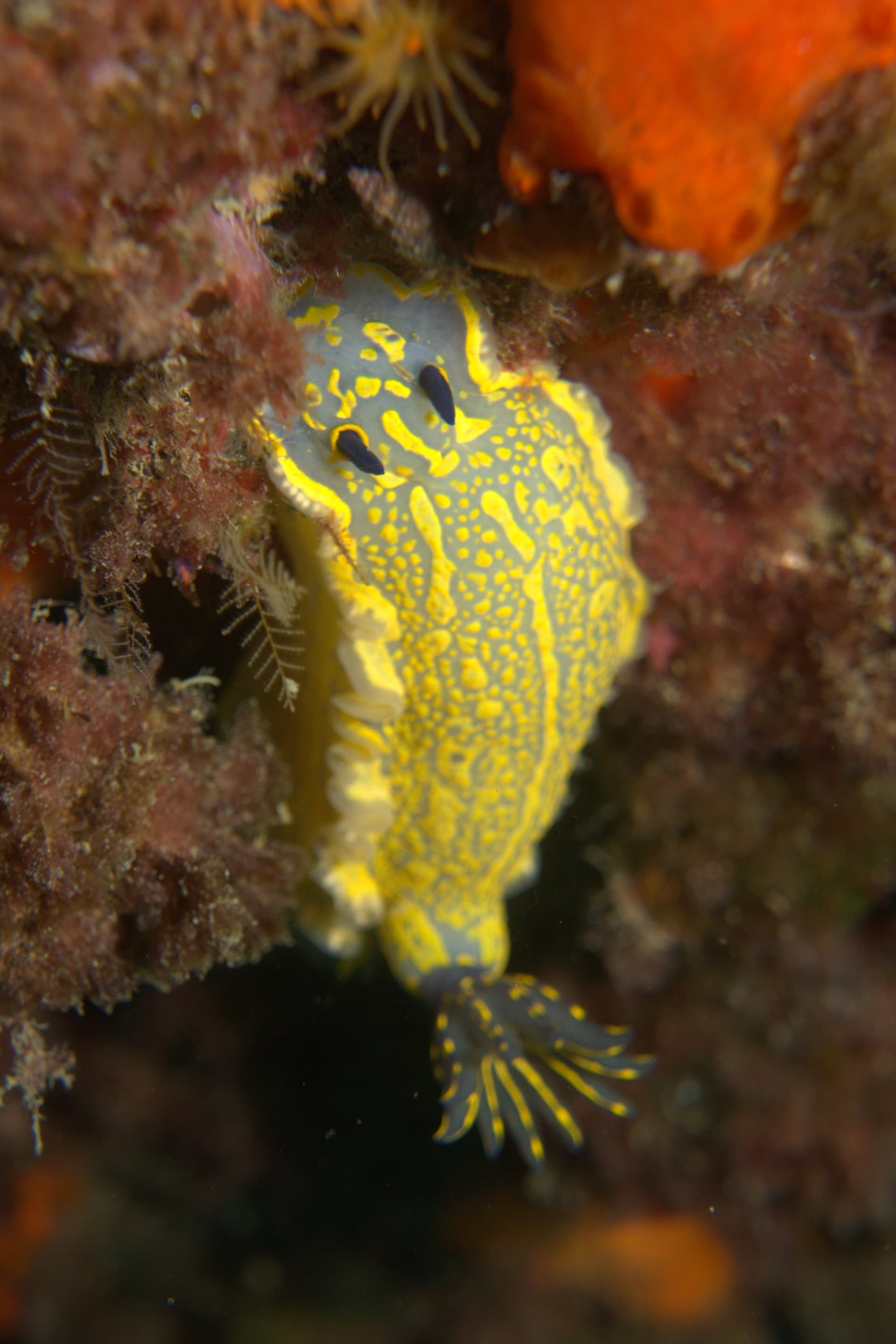
© Jouni Kuisma
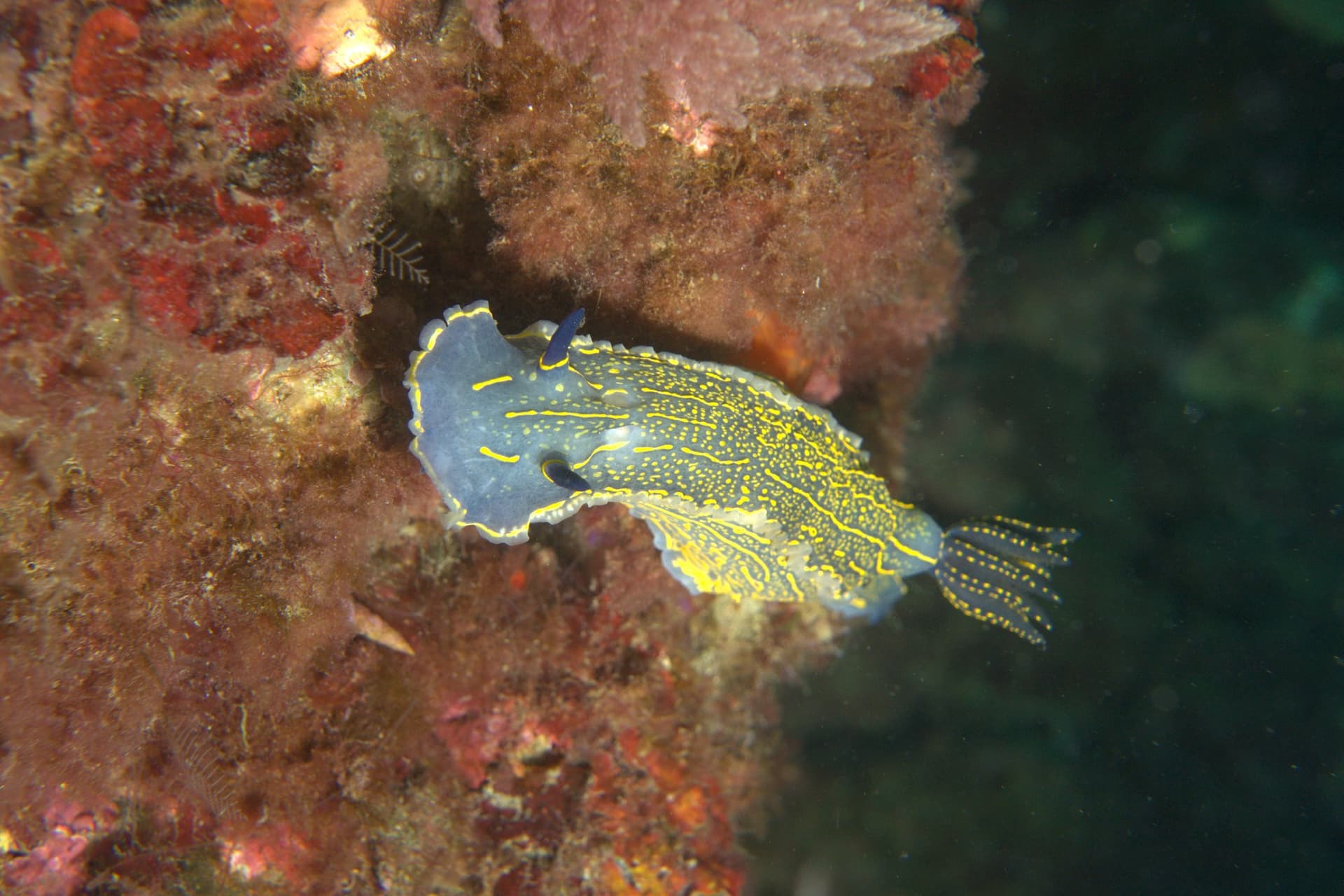
© Jouni Kuisma
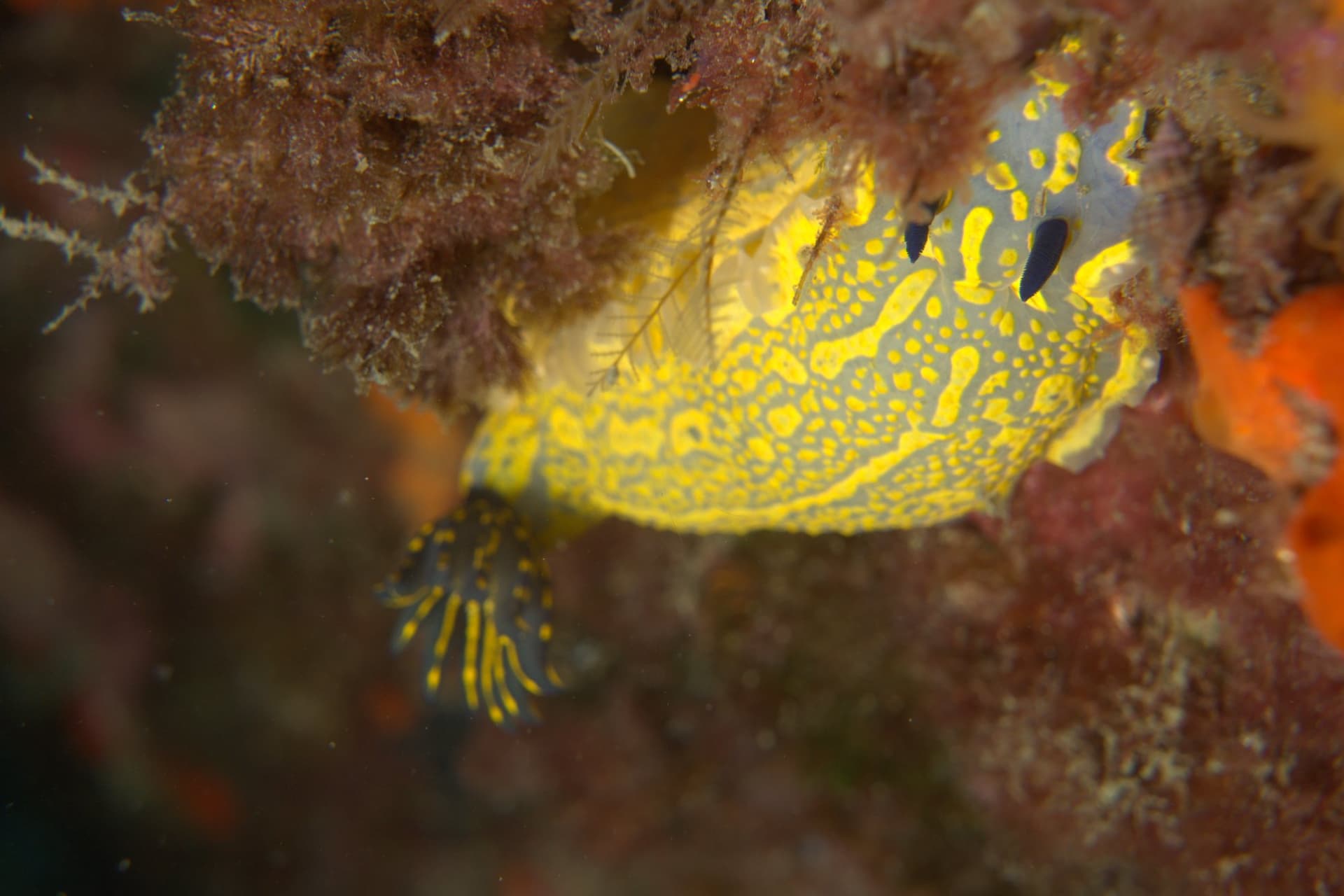
© Jouni Kuisma
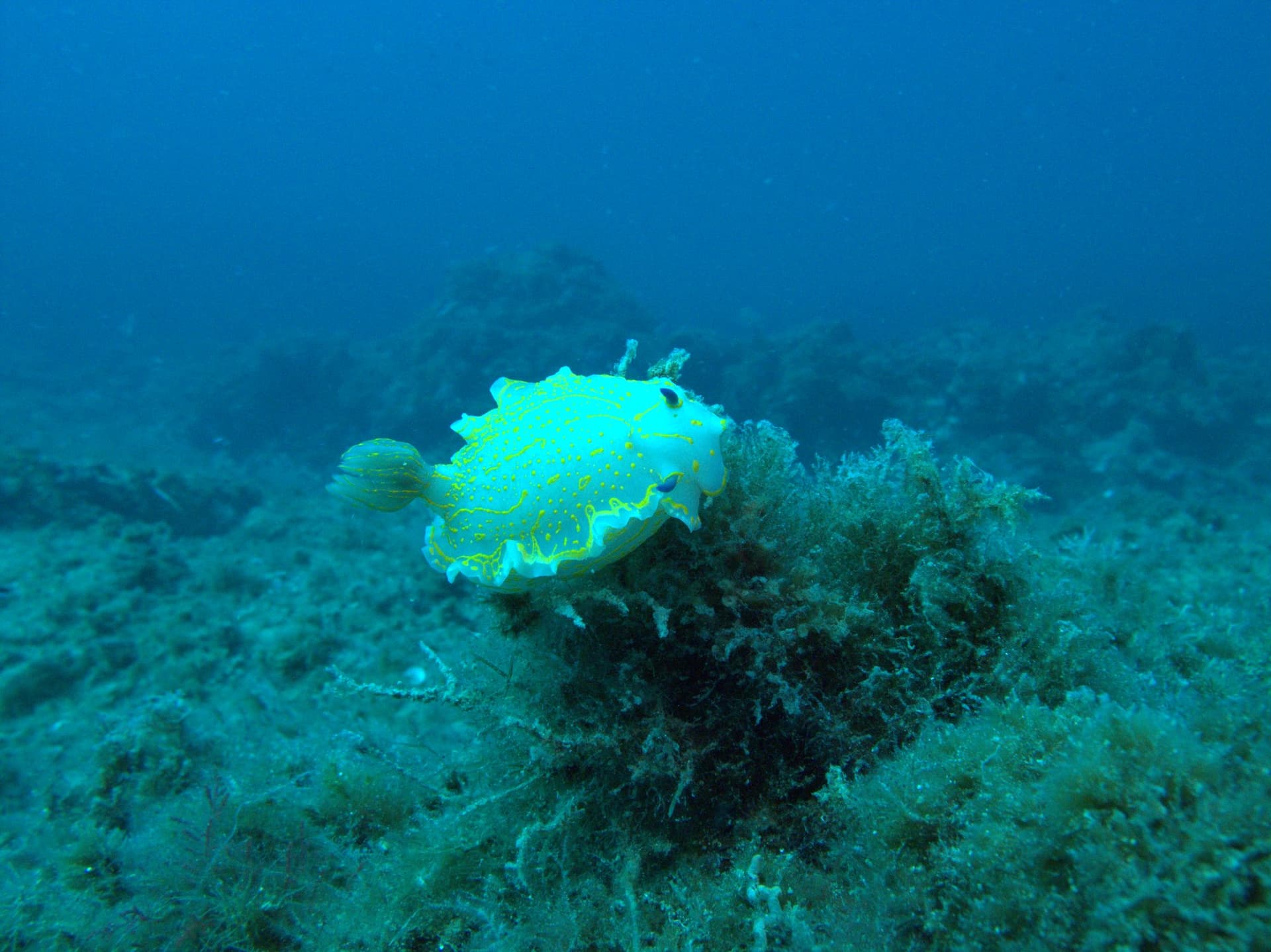
© Jouni Kuisma
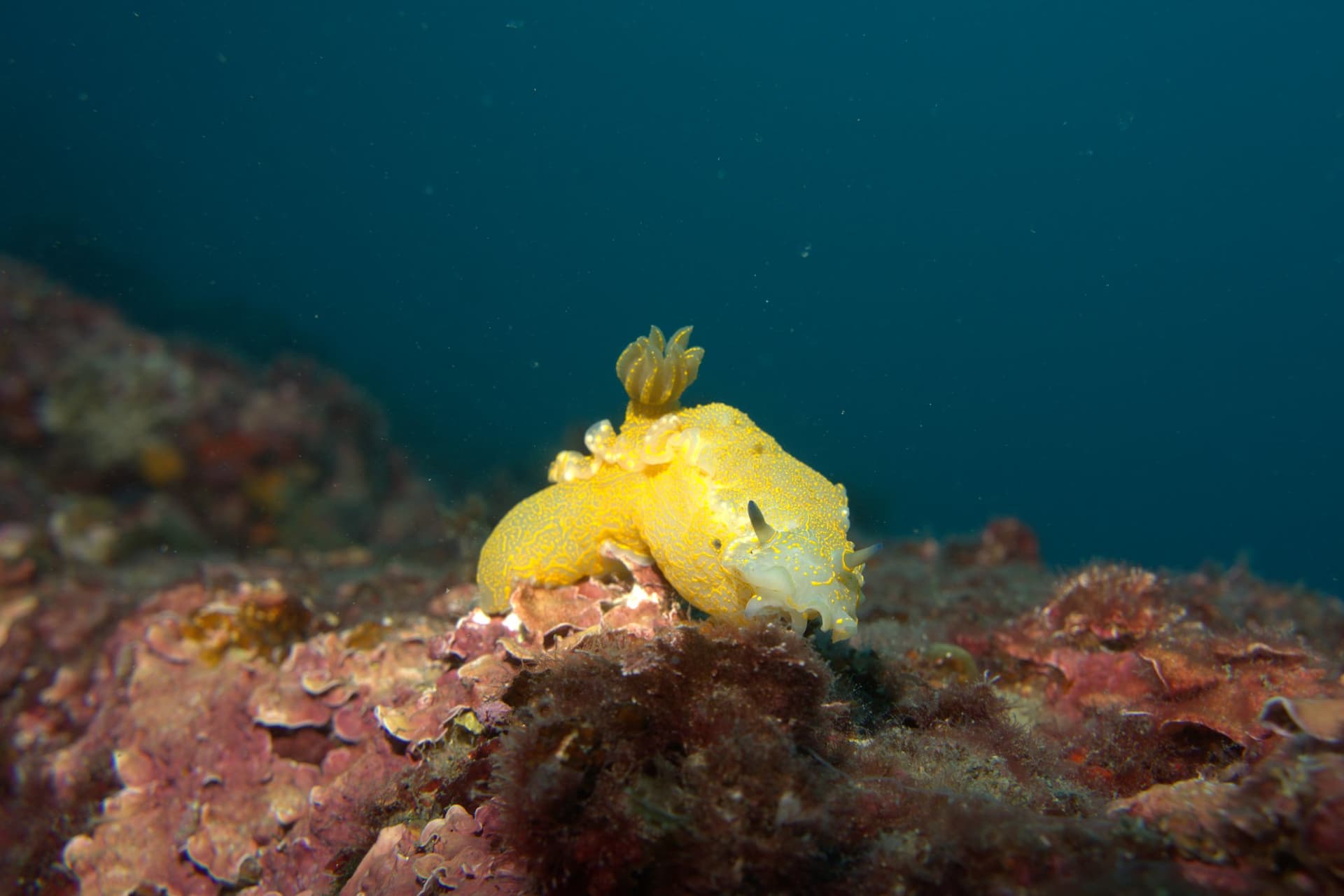
© Jouni Kuisma
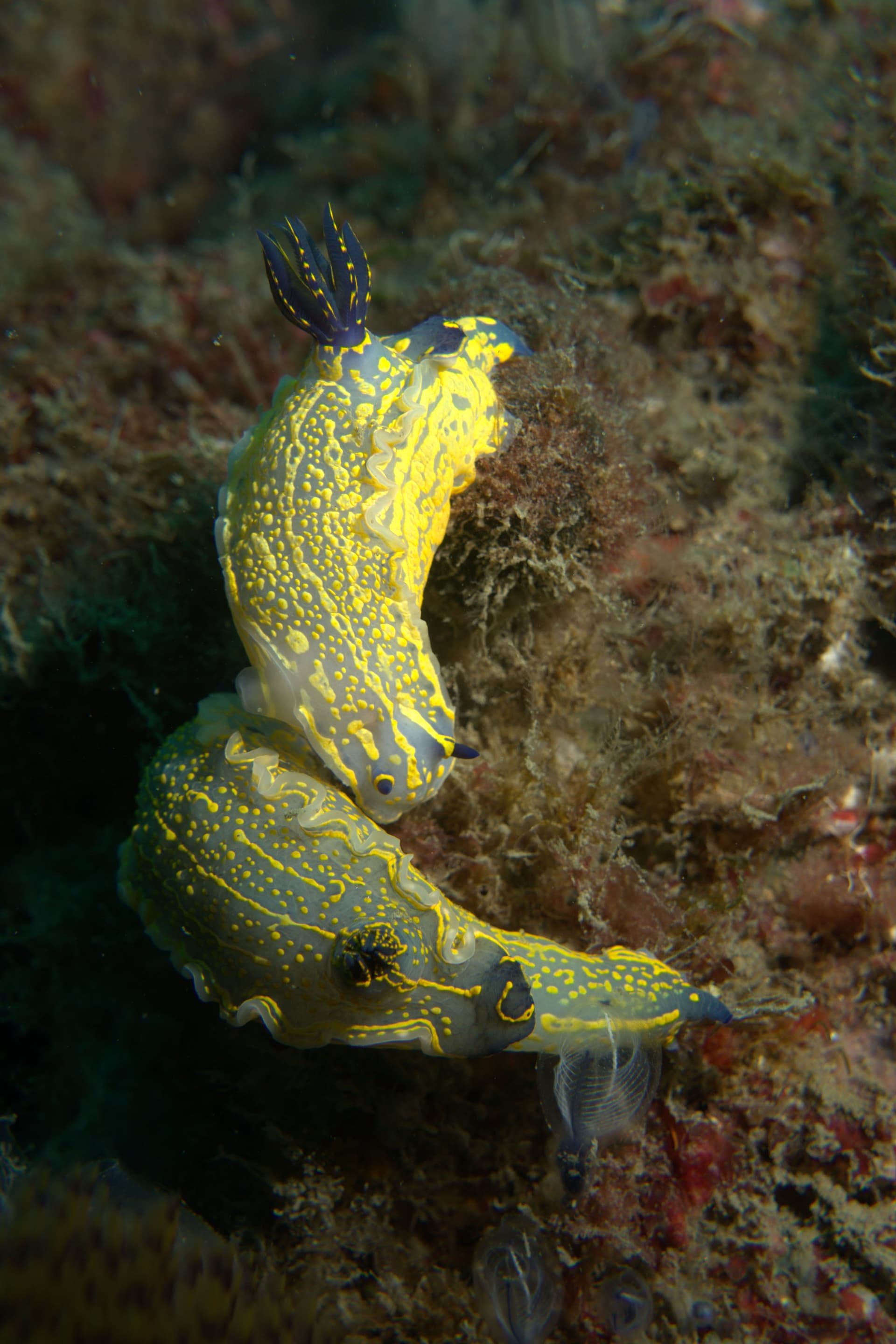
© Jouni Kuisma
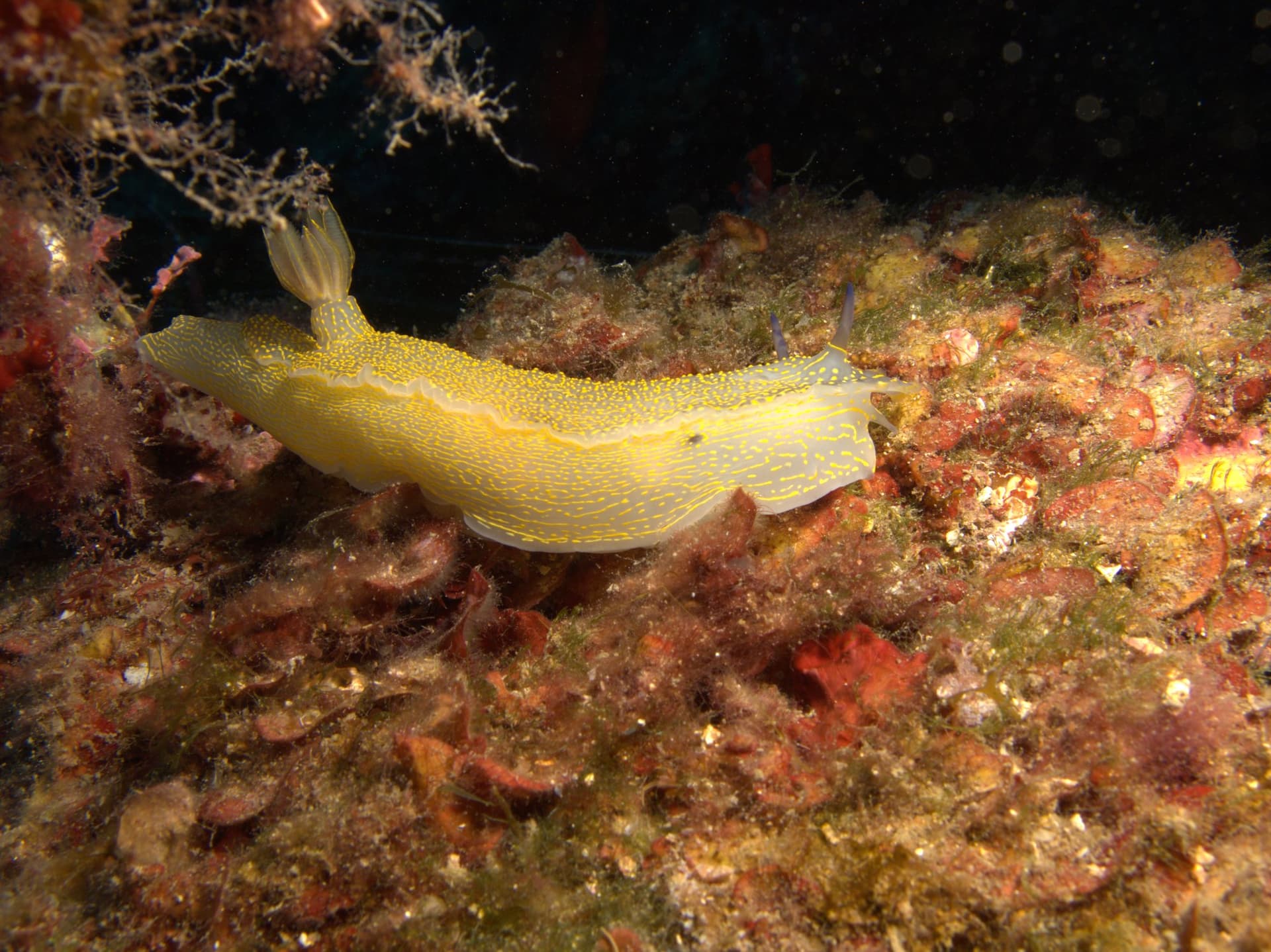
© Jouni Kuisma
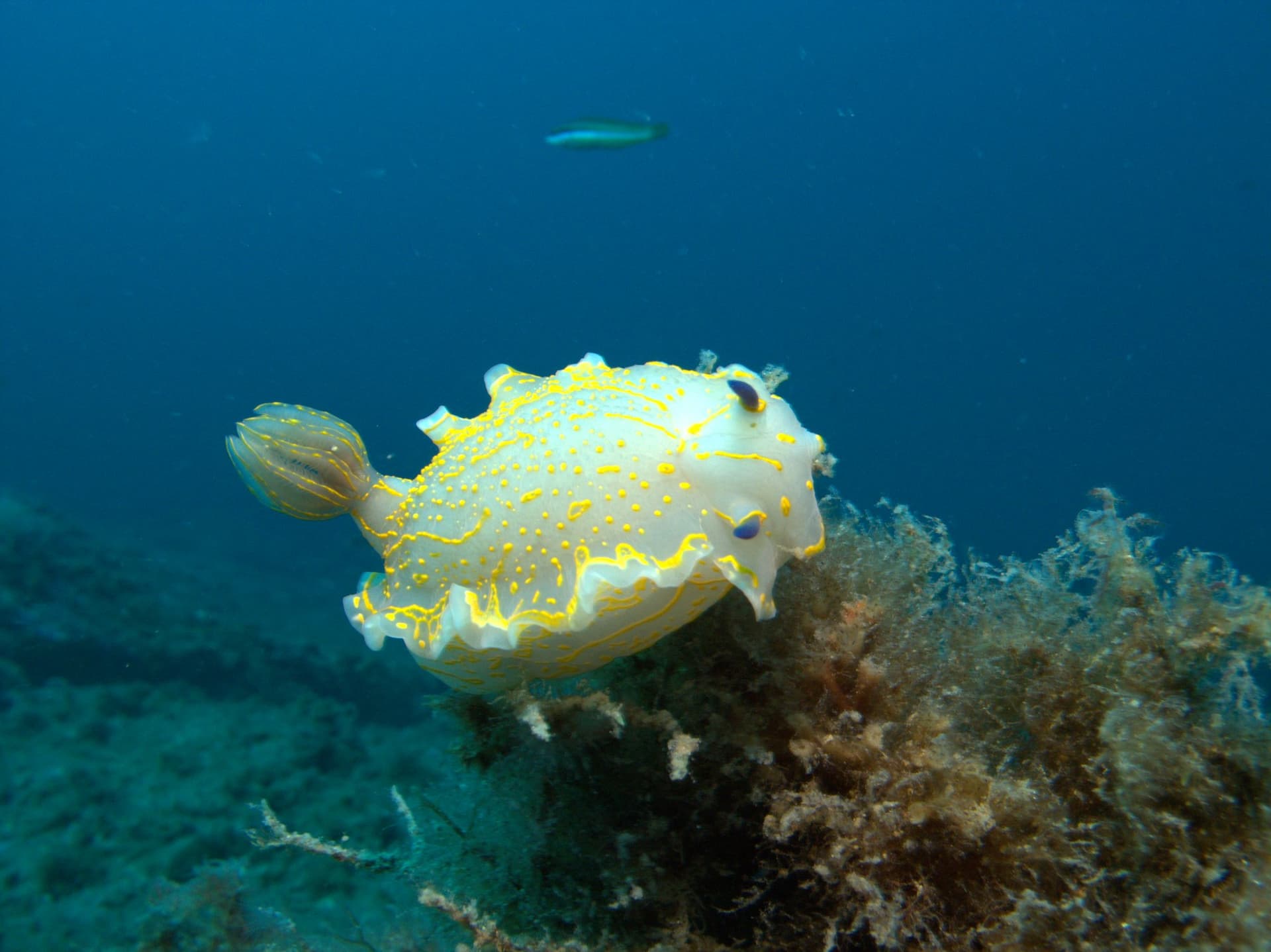
© Jouni Kuisma
© Jouni Kuisma
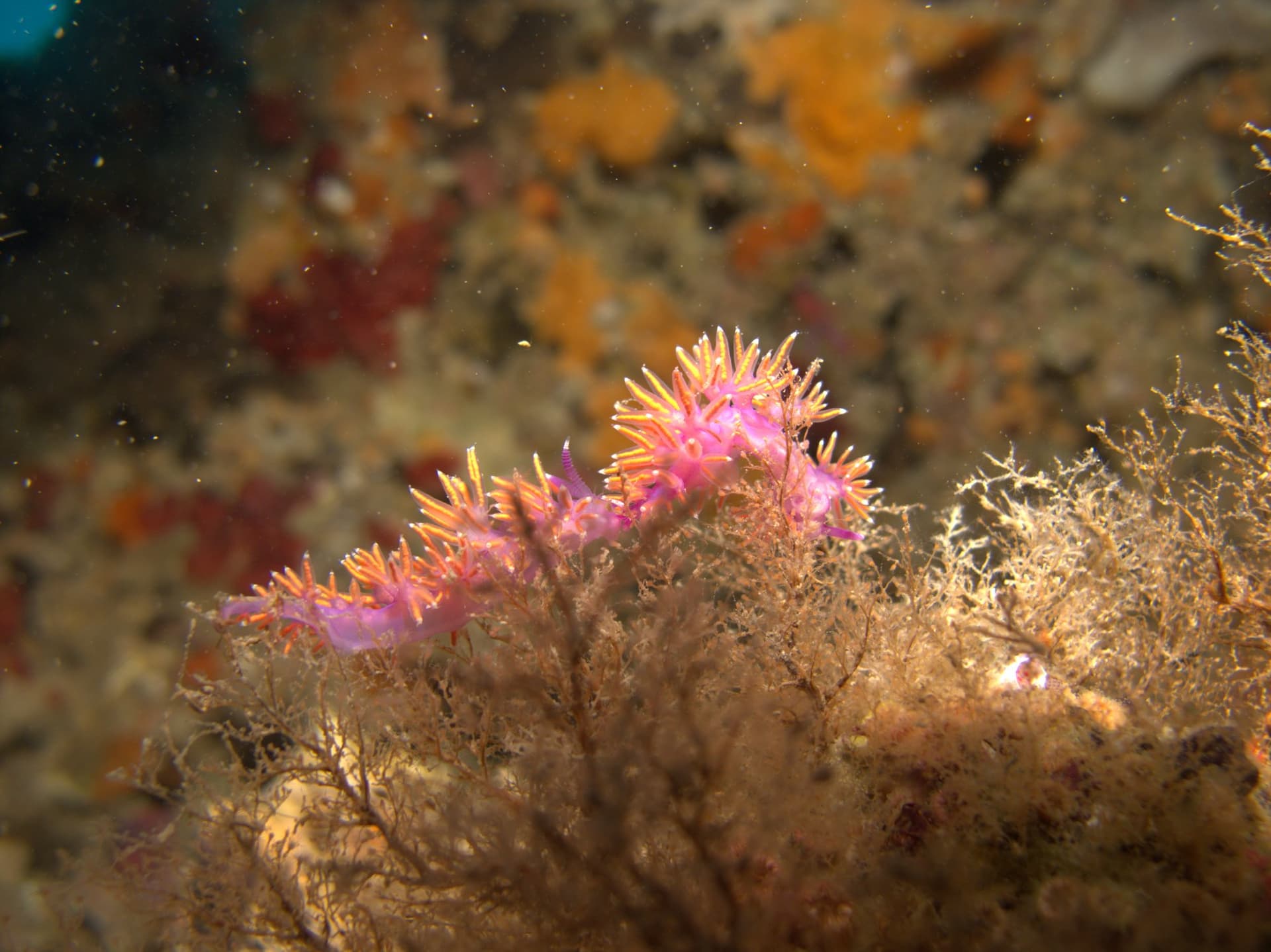
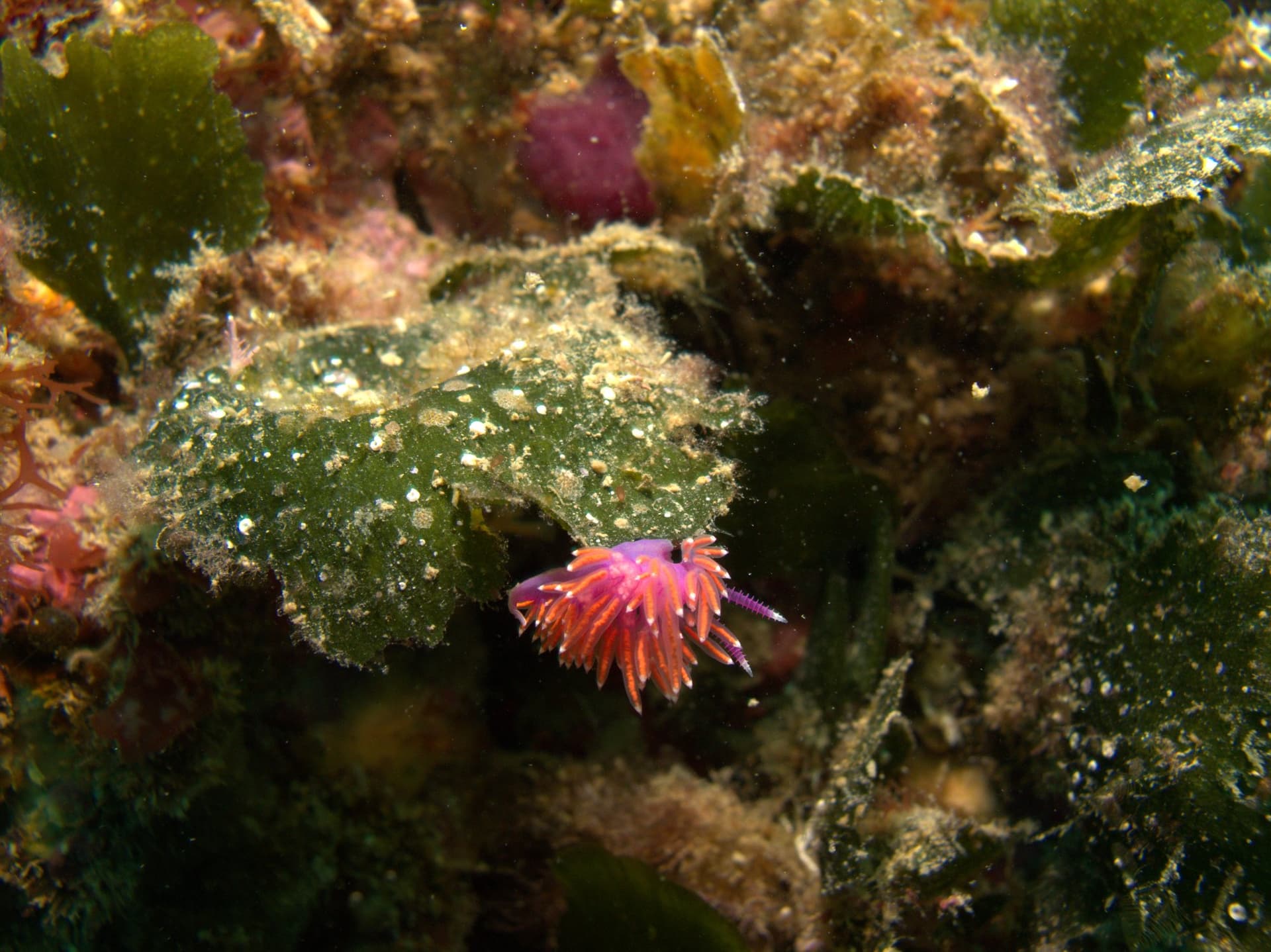
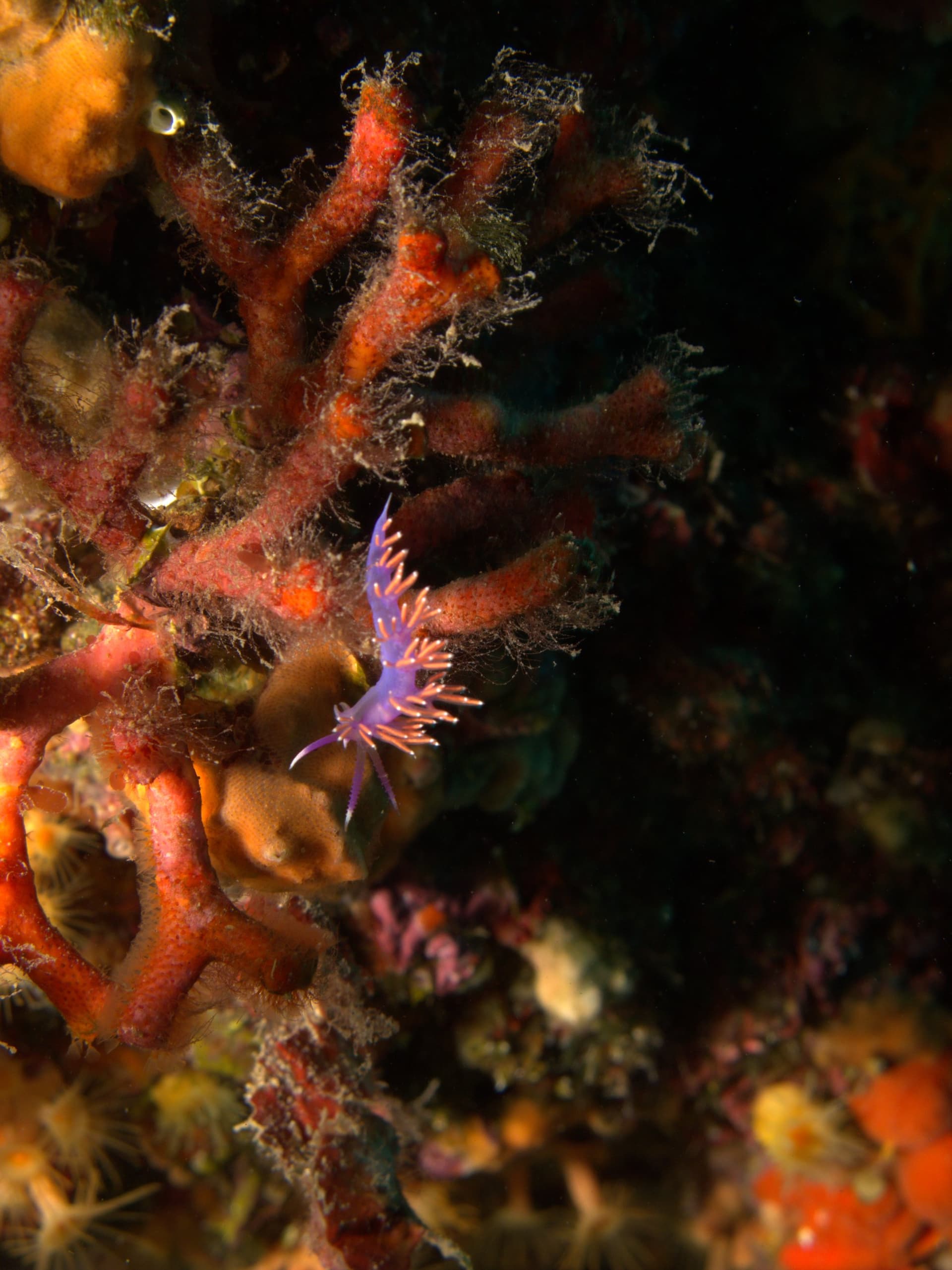
Paraflabellina ischitanaParaflabellina ischitana6 photos
A vivid Mediterranean aeolid nudibranch with a translucent pink-purple body and clusters of cerata tipped in white above an orange band. Named for the island of Ischia.
© Jouni Kuisma
© Jouni Kuisma
© Jouni Kuisma
© Jouni Kuisma
© Jouni Kuisma
© Jouni Kuisma
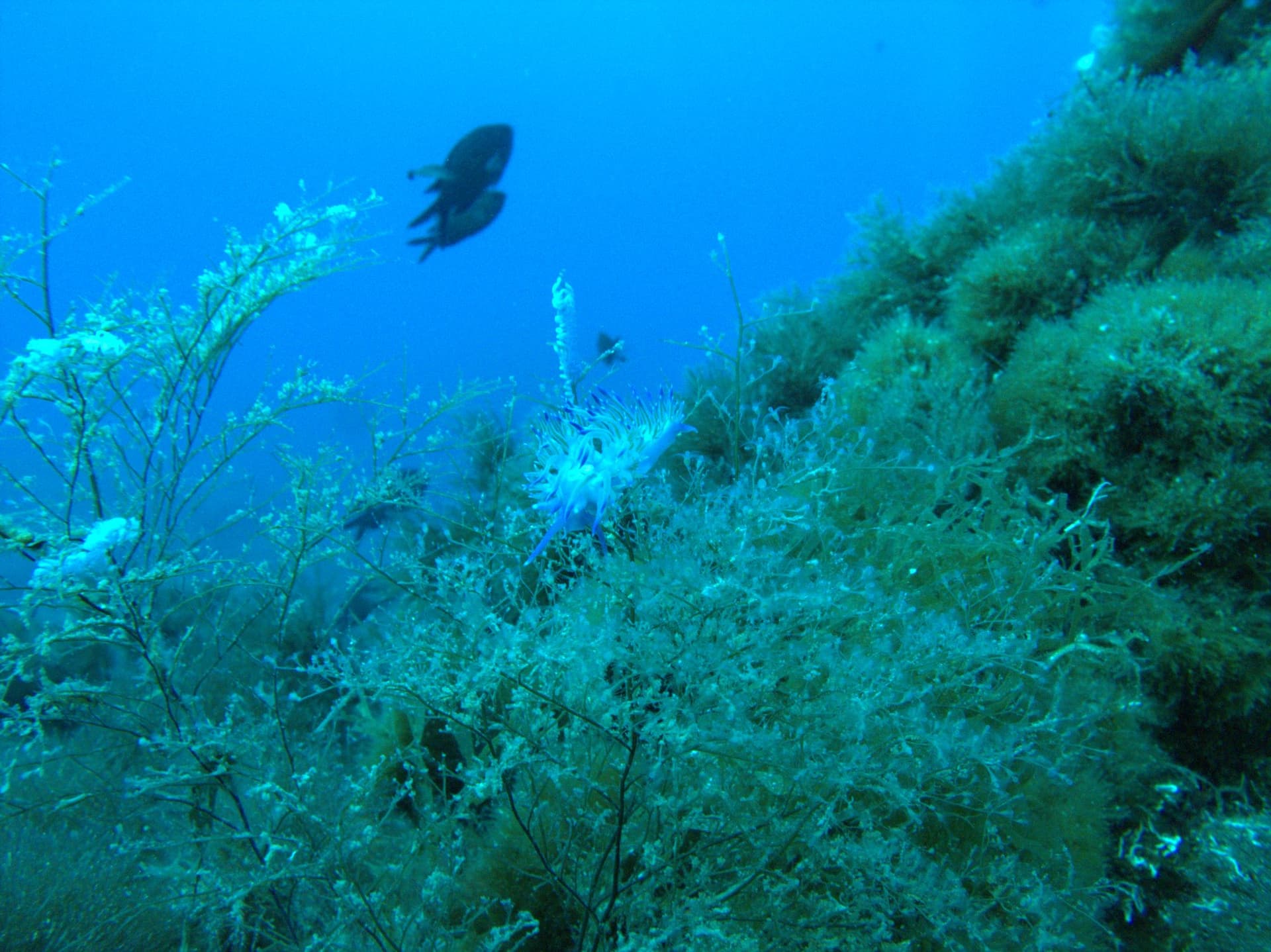
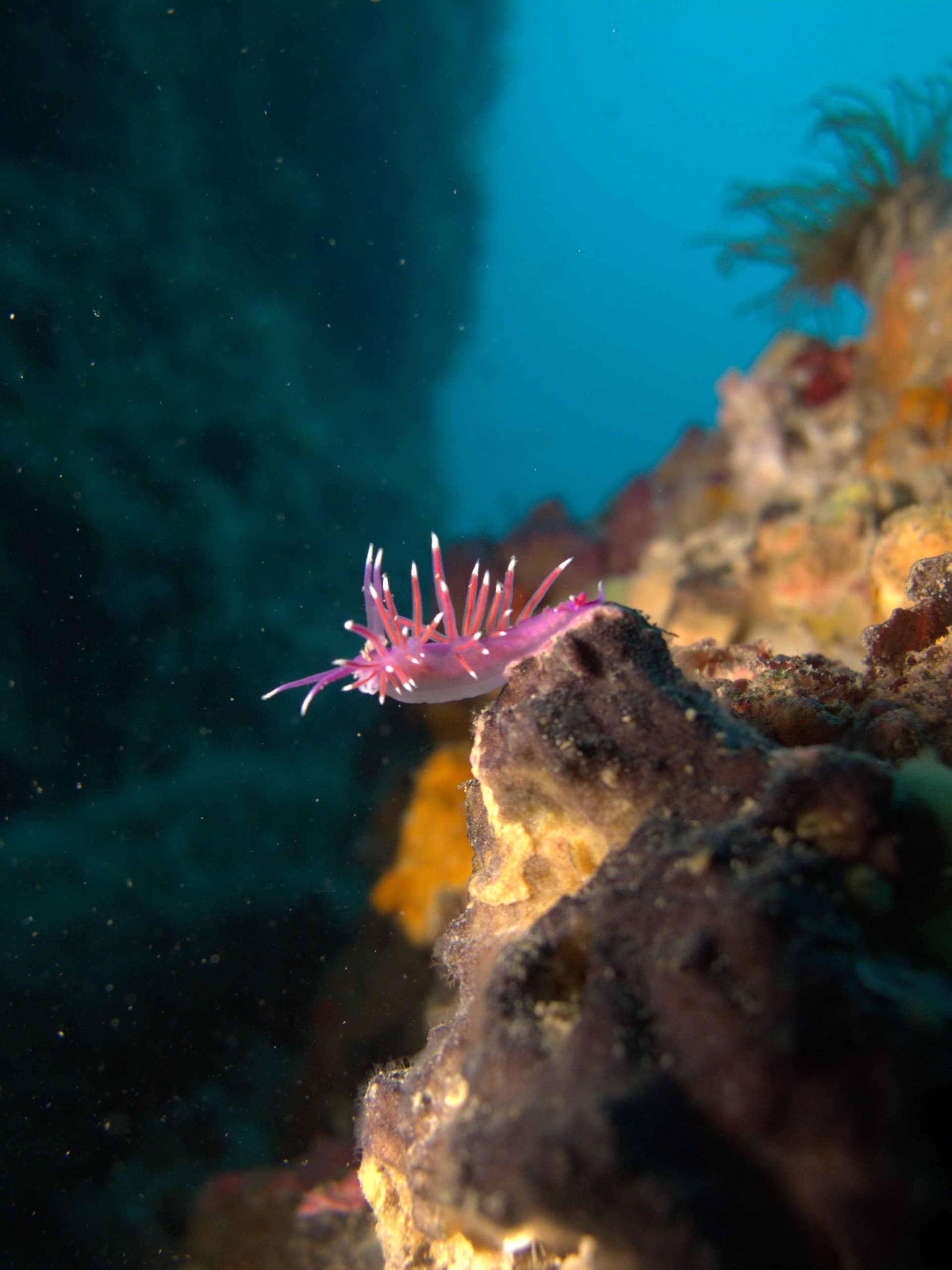
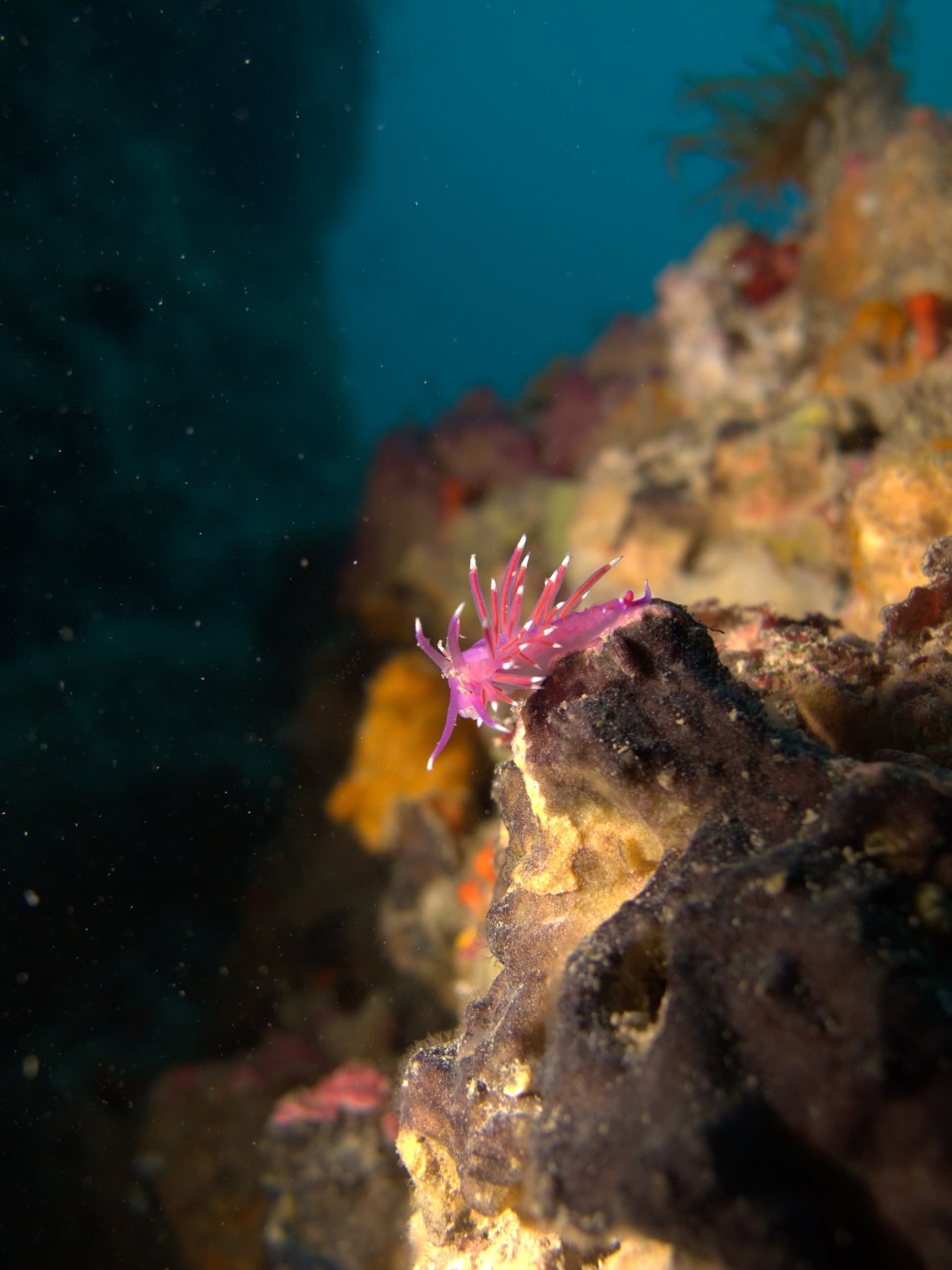
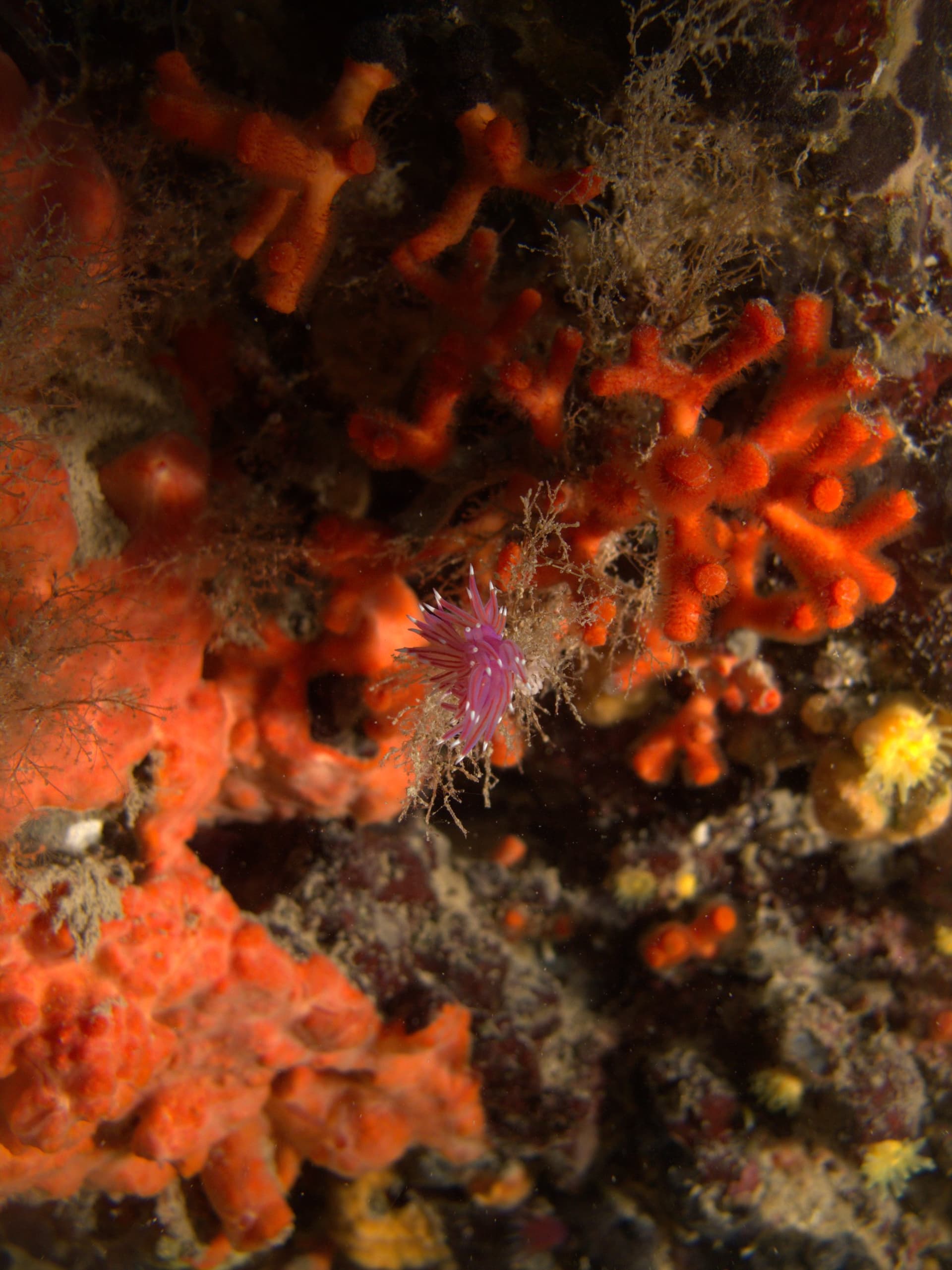
Pink coryphellaEdmundsella pedata5 photos
A small Mediterranean aeolid nudibranch with a translucent violet body and clusters of cerata tipped in orange-red. Slender oral tentacles and rhinophores. Long known as Flabellina pedata and Coryphella pedata.
Feeds on hydroids on rocky walls, typically in shaded areas — often overlooked due to its small size.
© Jouni Kuisma
© Jouni Kuisma
© Jouni Kuisma
© Jouni Kuisma
© Jouni Kuisma
Fontandraui's chromodorisFelimare fontandraui4 photos
A vibrant nudibranch with a blue-white body, two bright yellow dorsal stripes, and yellow-tipped rhinophores. Similar to the violet sea slug but with more pronounced yellow markings.
Found on sponge-encrusted rocky walls in the Mediterranean — a prized macro photography subject.
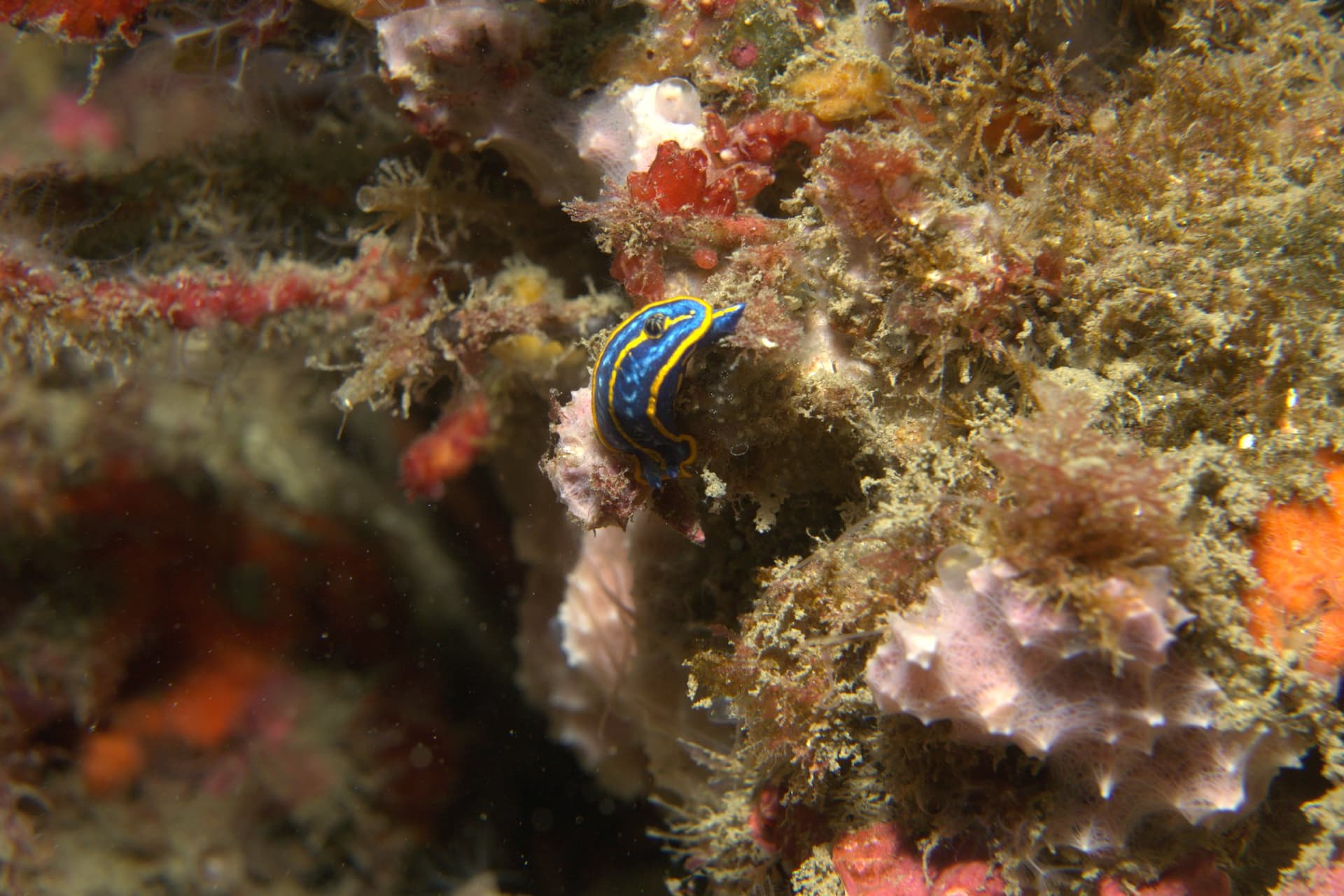
© Jouni Kuisma
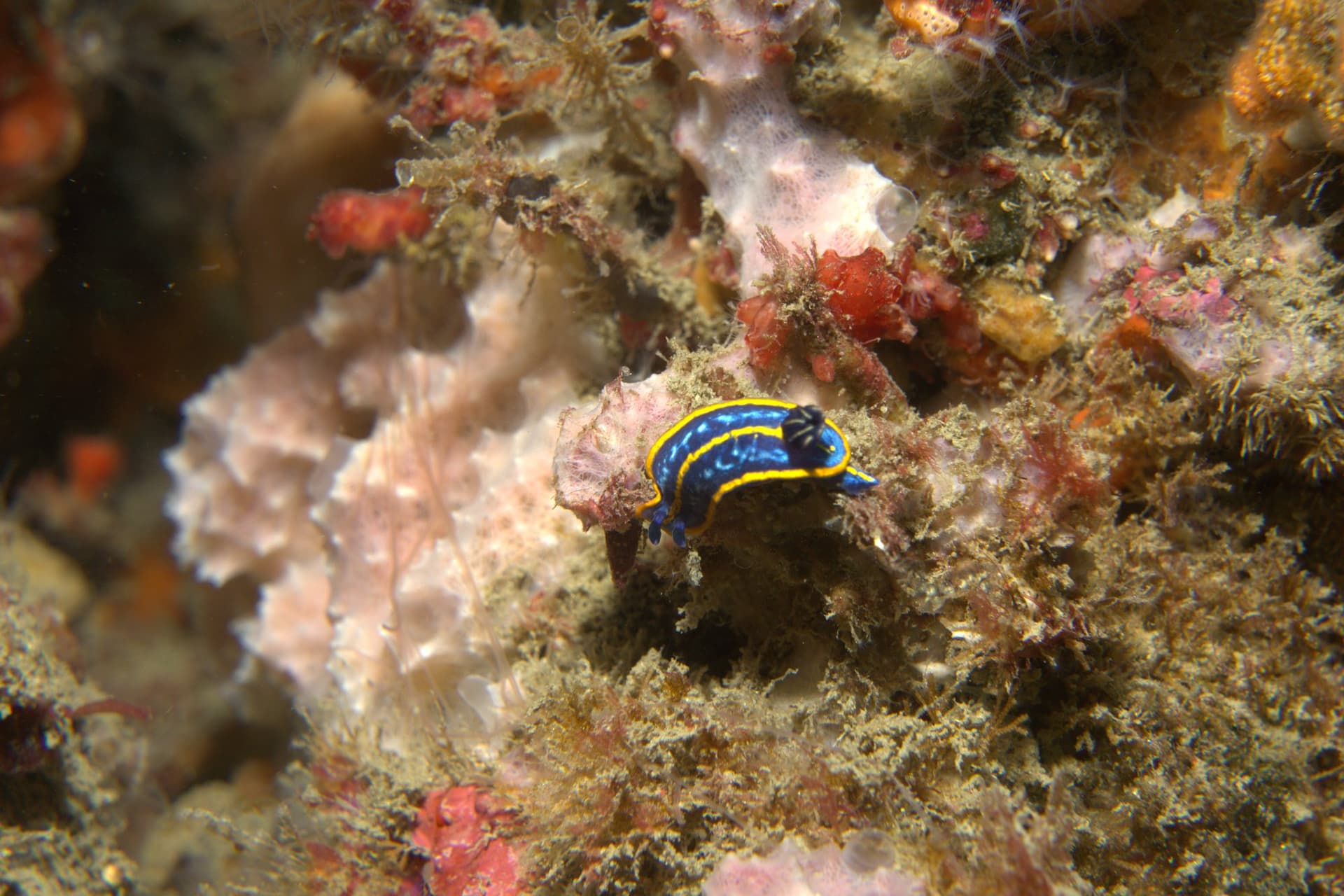
© Jouni Kuisma
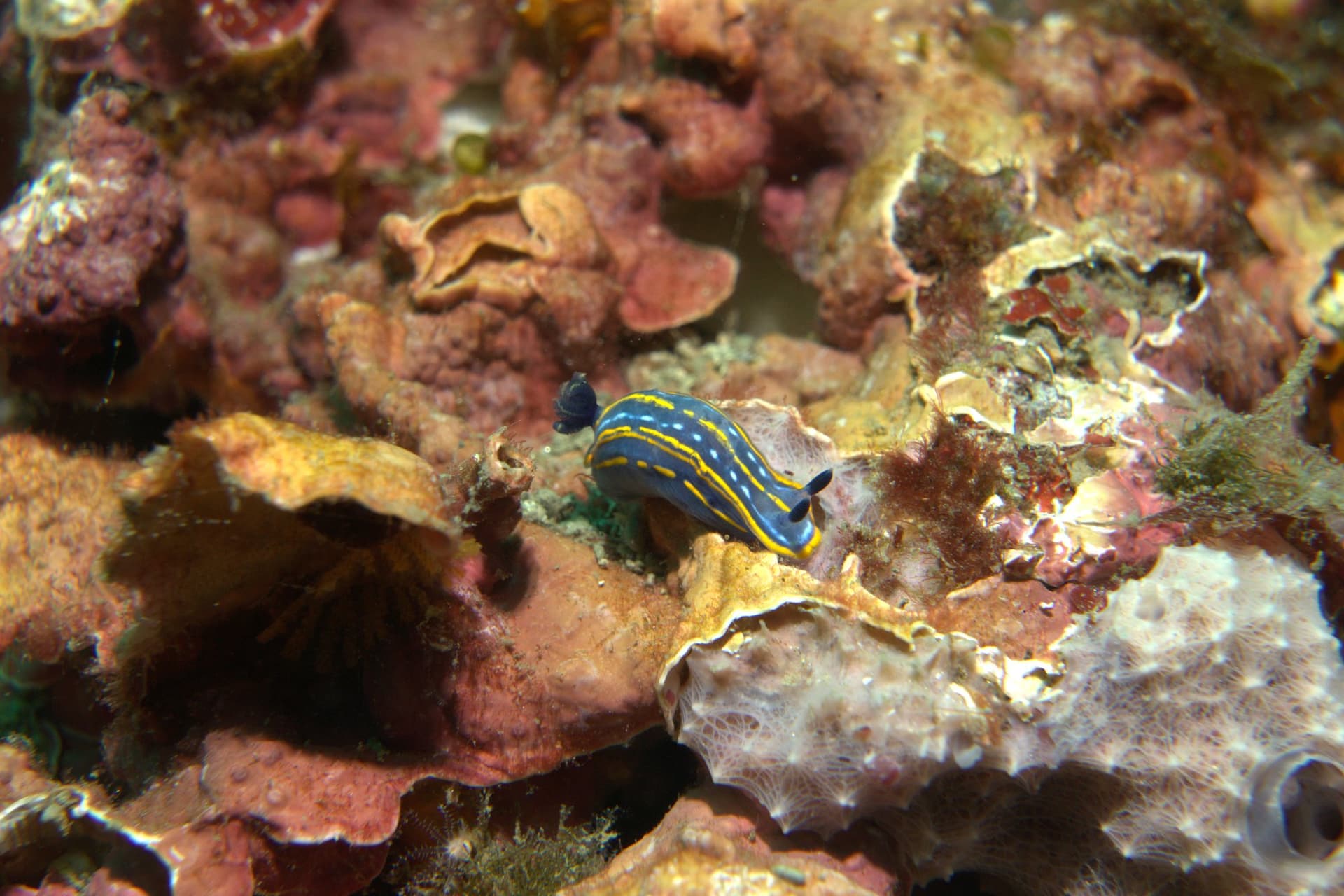
© Jouni Kuisma
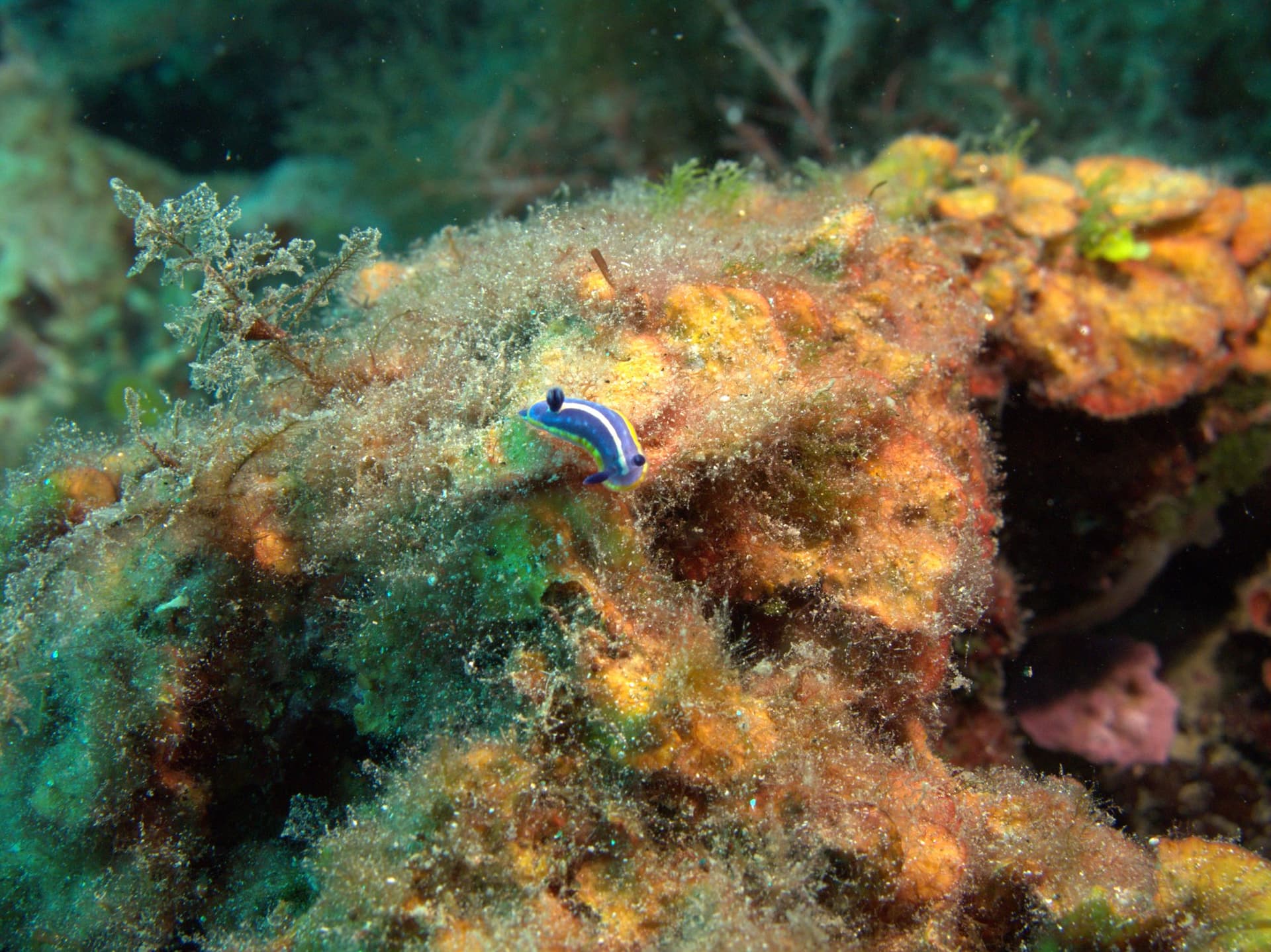
© Jouni Kuisma
Orange godivaNemesignis banyulensis3 photos
A striking aeolid nudibranch with a translucent white body and dense clusters of brown-orange cerata tipped in white. Named after Banyuls-sur-Mer where it was first described.
Feeds on hydroids and anemones on rocky walls — stores stinging cells from its prey in its cerata for self-defense.
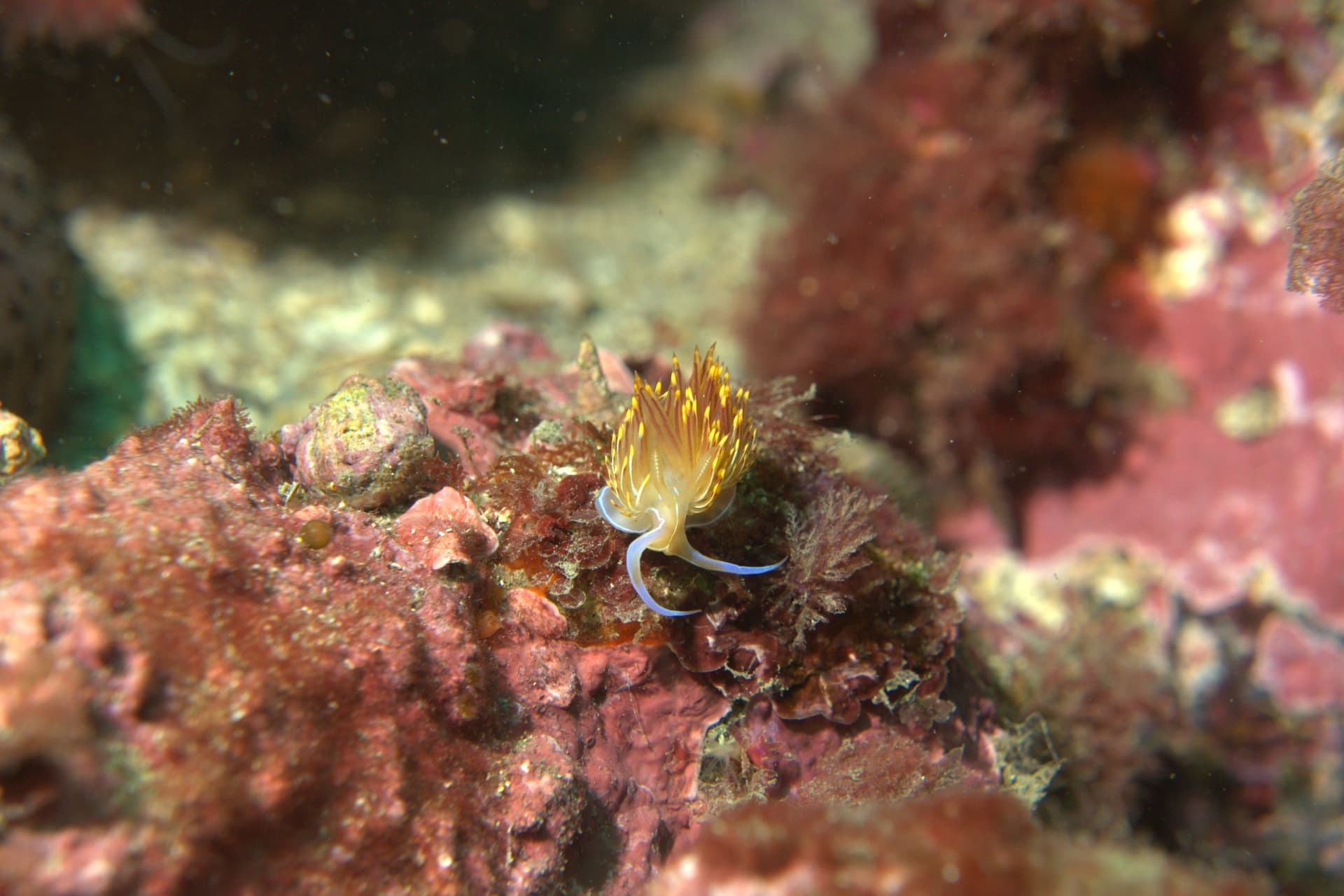
© Jouni Kuisma
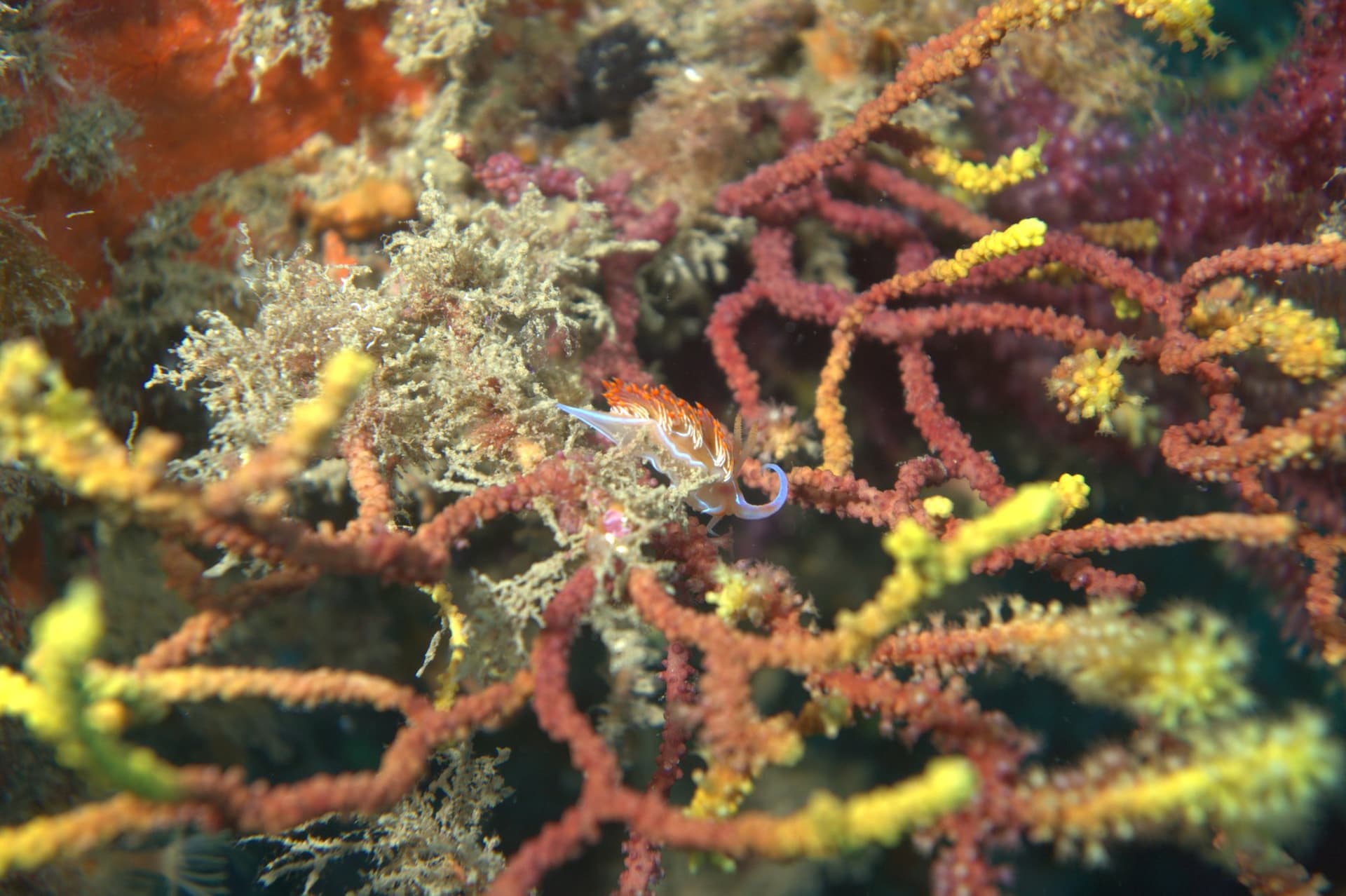
© Jouni Kuisma
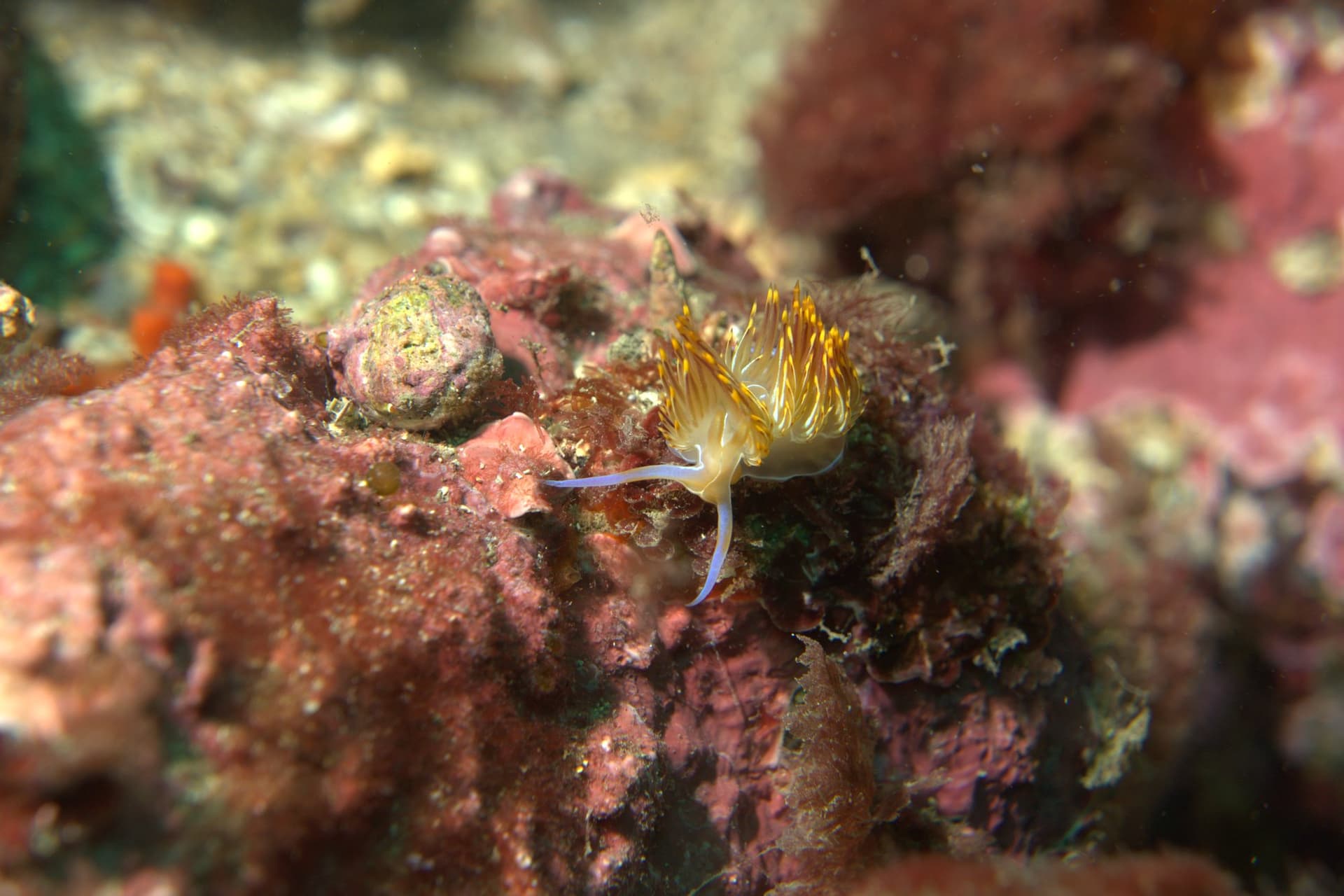
© Jouni Kuisma
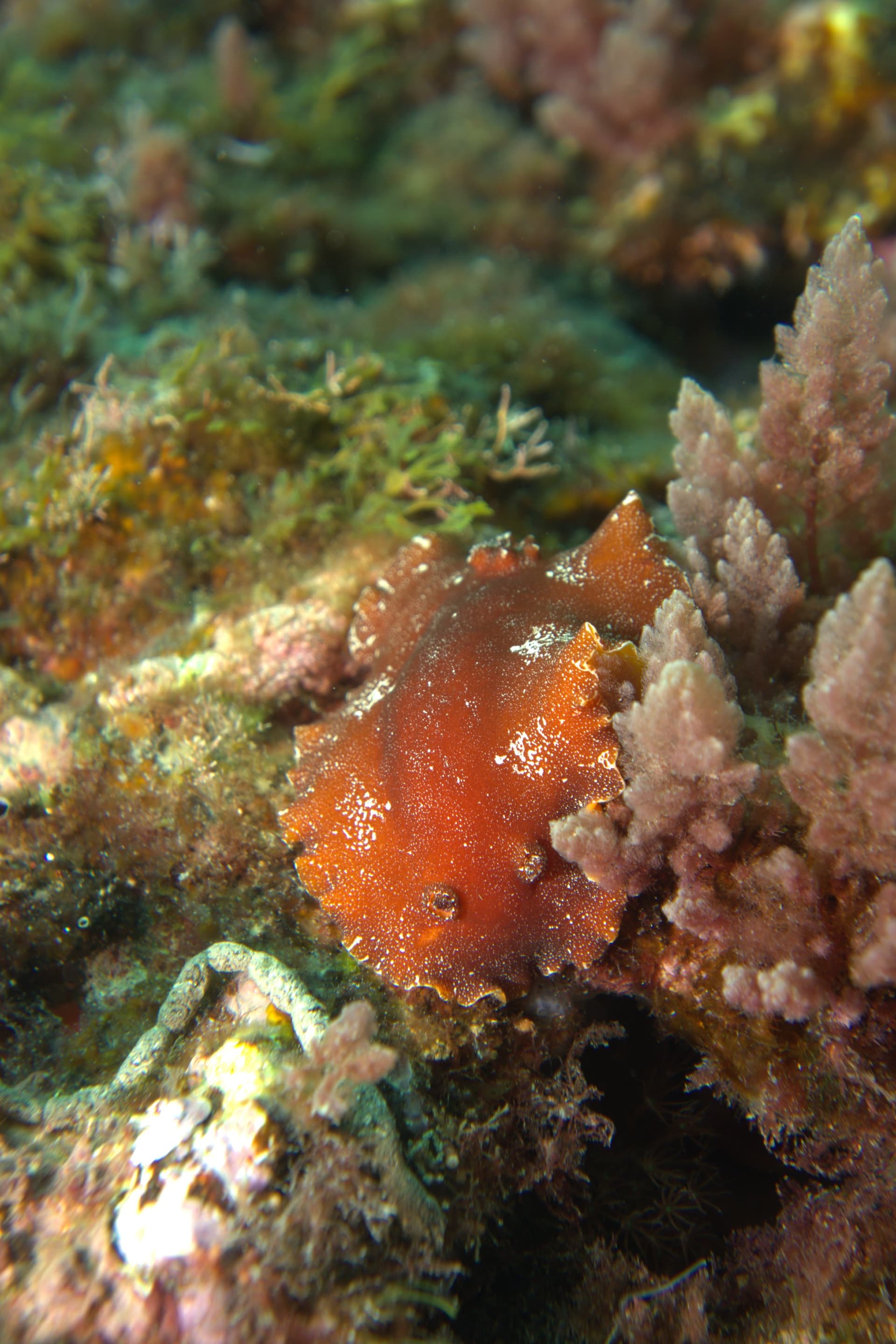
Argo doridPlatydoris argo2 photos
A large, flat dorid nudibranch with a firm, leathery rust-brown to reddish body finely mottled with paler blotches and a granular surface. Mostly shelters beneath stones by day.
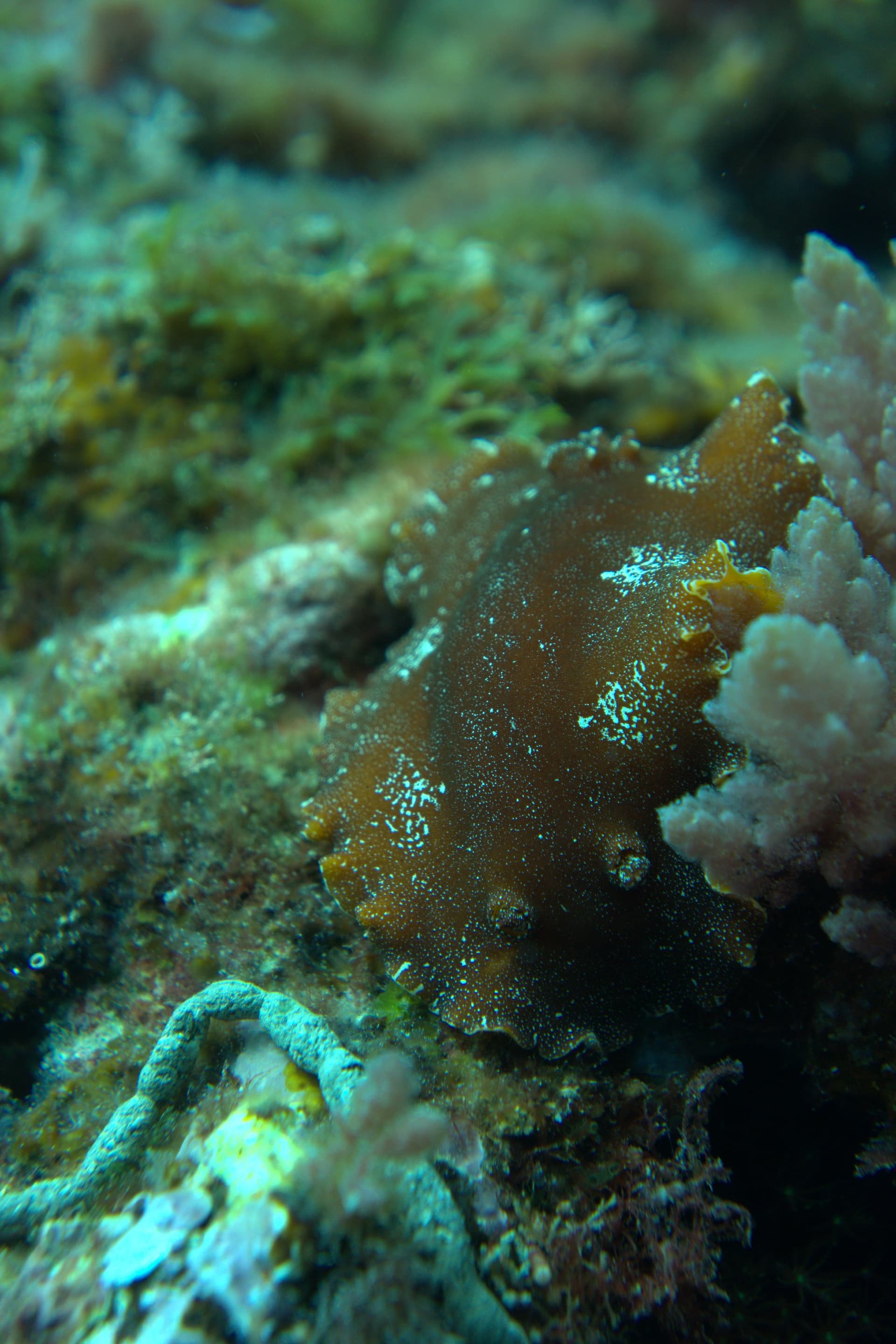
© Jouni Kuisma
© Jouni Kuisma
Observed at
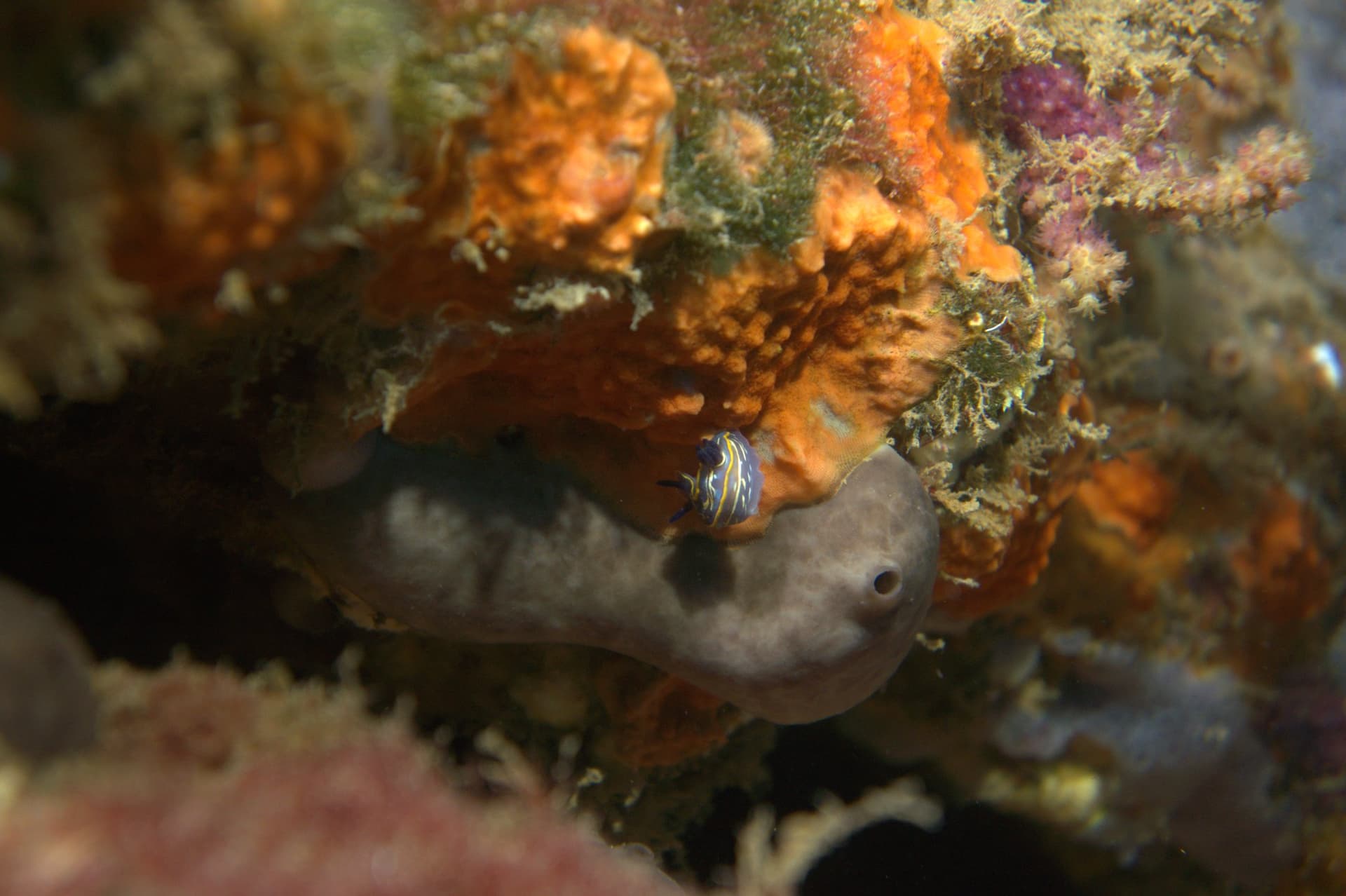
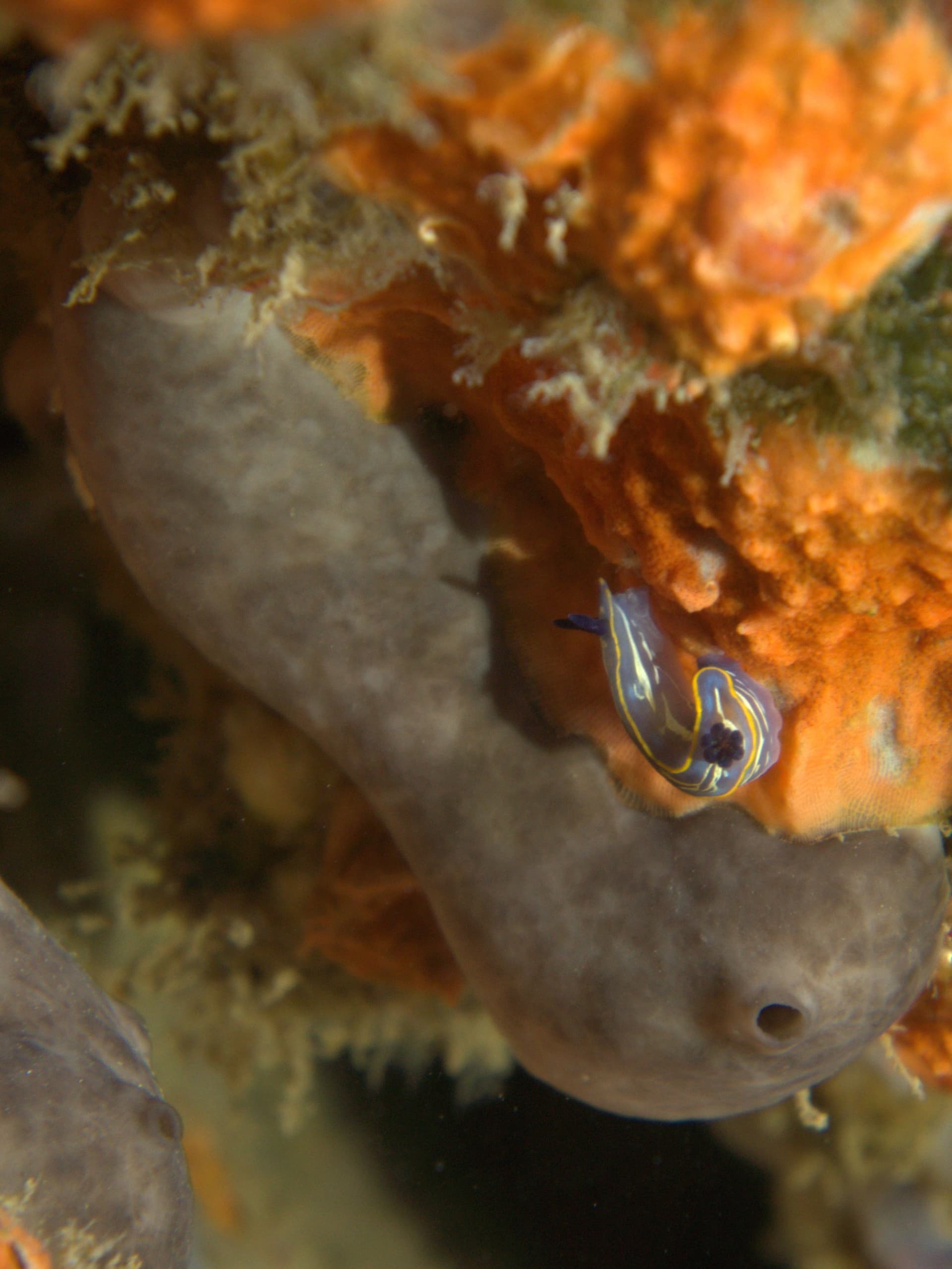
Villafranca sea slugFelimare villafranca2 photos
A small dark-blue chromodorid speckled with rounded yellow spots and rimmed by a yellow margin. A Mediterranean species of rocky reefs and Posidonia meadows.
© Jouni Kuisma
© Jouni Kuisma
Observed at
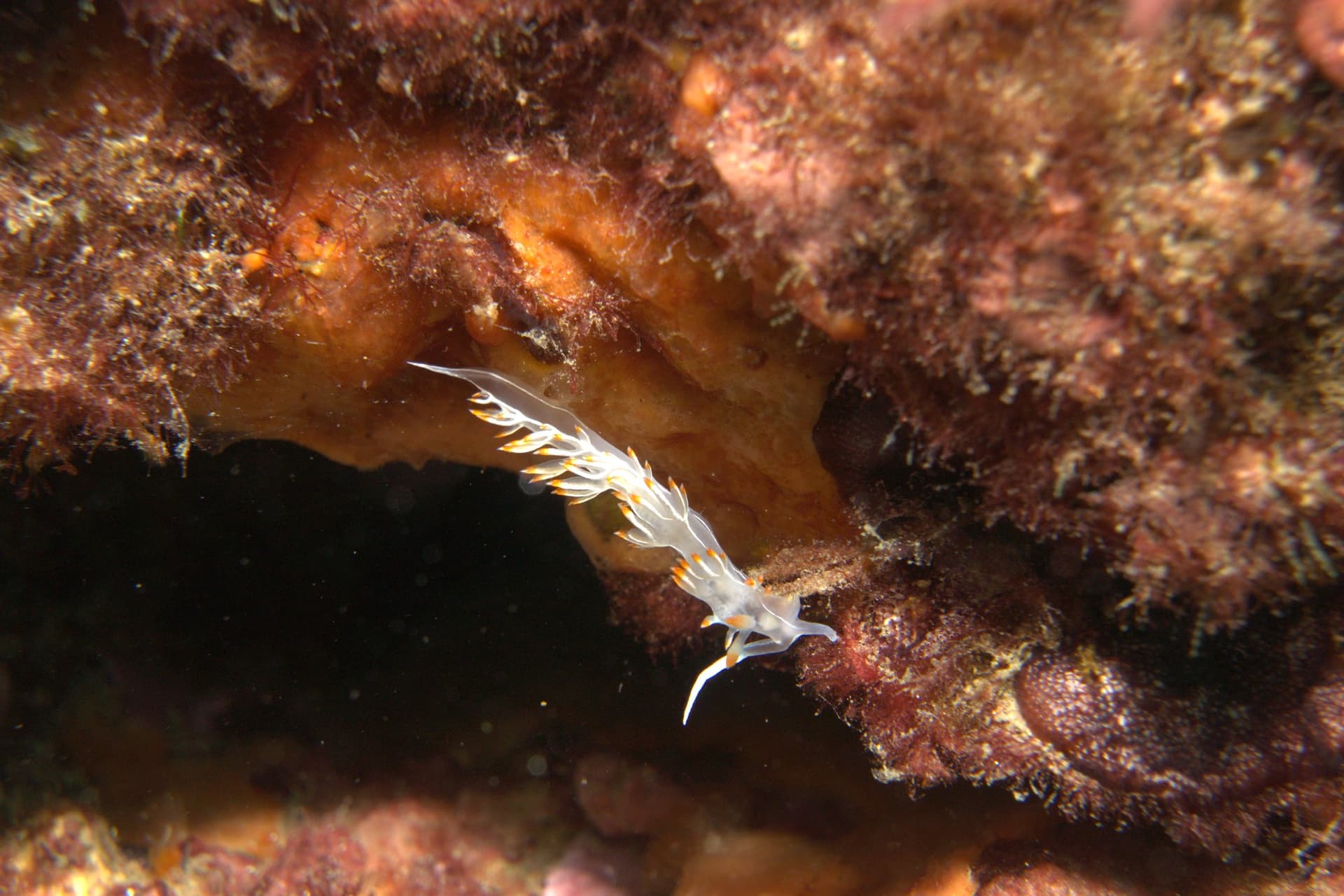
White flabellinaLuisella babai2 photos
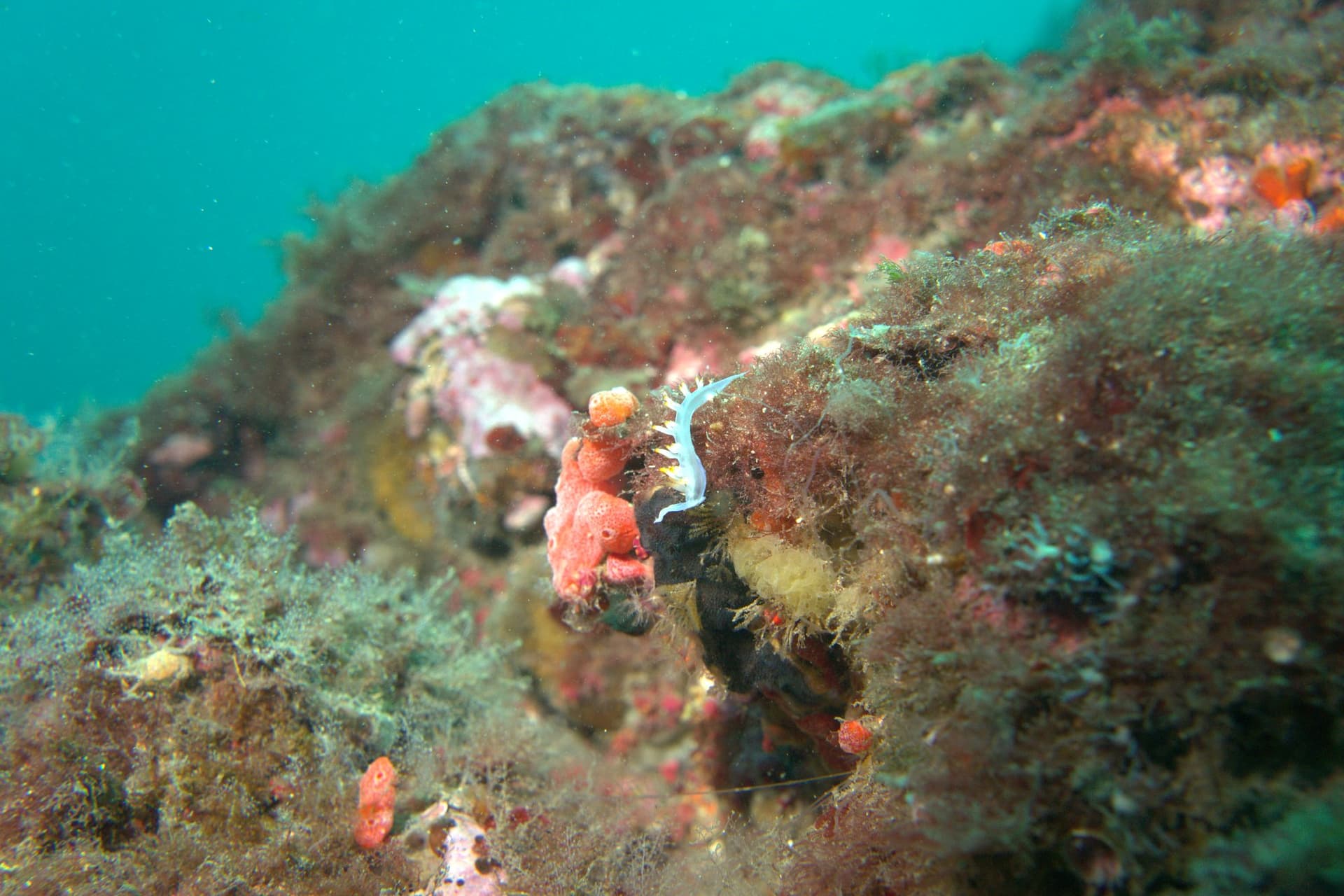
A small, delicate nudibranch with translucent white body and clusters of cerata. Very similar to Flabellina affinis but typically smaller with subtle differences in cerata arrangement.
Found on hydroid colonies on shaded rocky walls — requires close inspection to distinguish from related flabellina species.
© Jouni Kuisma
© Jouni Kuisma
Tricolour sea slugFelimare tricolor2 photos
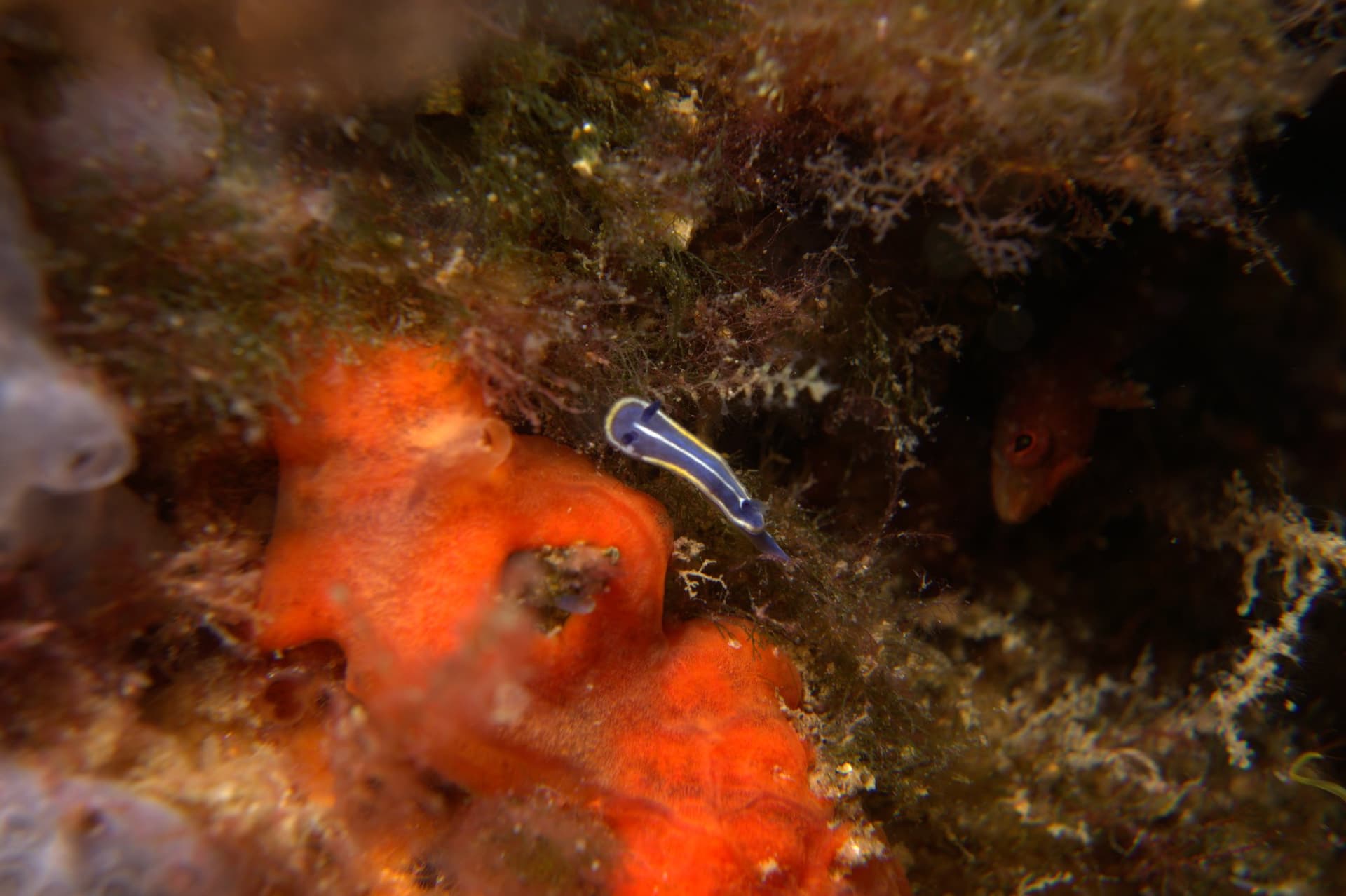
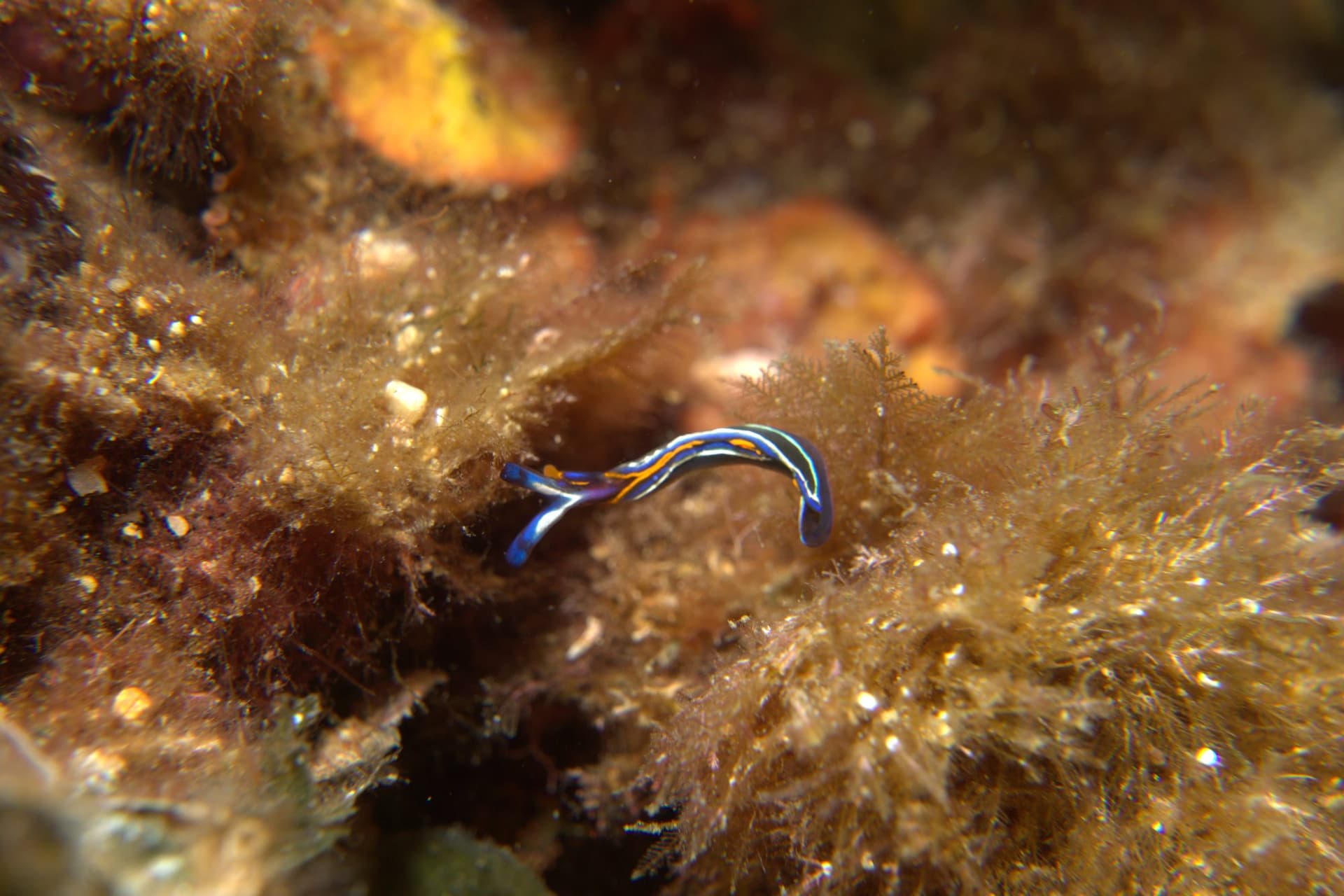
A small Mediterranean chromodorid with a deep blue body crossed by fine cream-yellow longitudinal lines and edged with a bright yellow margin. Slimmer and smaller than the violet sea slug.
© Jouni Kuisma
Cantabrian sea slugFelimare cantabrica1 photos
A blue-bodied Mediterranean and eastern Atlantic sea slug marked with bright yellow longitudinal lines, found grazing sponges on rocky reefs.
© Jouni Kuisma
Observed at
Splendid elysiaThuridilla hopei1 photos
© Jouni Kuisma
Observed at
ArminaArmina tigrina1 photos
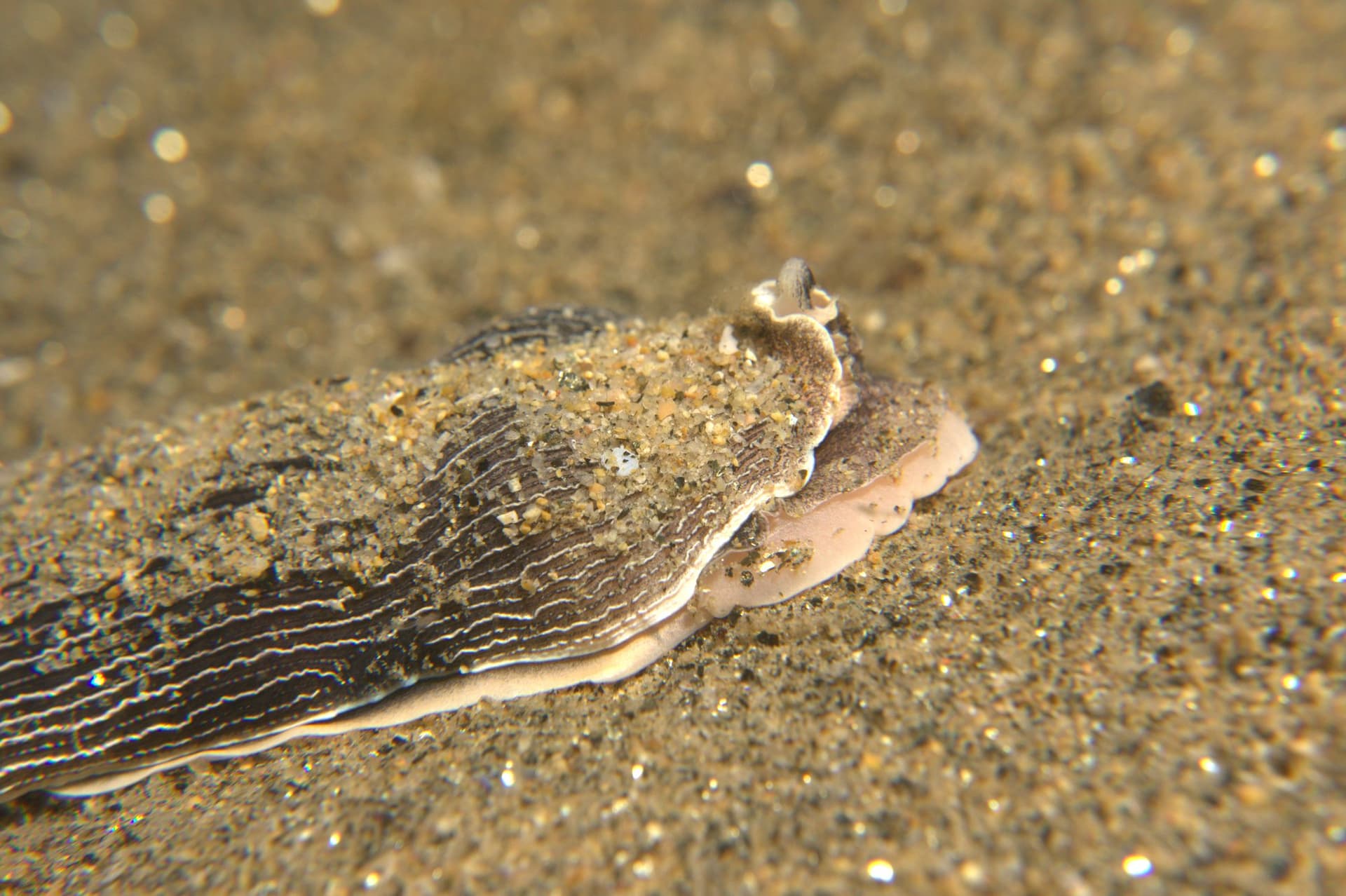
A flattened, elongated nudibranch with a velvety texture and distinctive tiger-stripe pattern — dark lines on a pale body. Has feathery gills on the underside.
Burrows in sandy sediments near rocky reefs — occasionally found on night dives crawling across open sandy areas.
© Jouni Kuisma
Observed at
Orsini sea slugFelimare orsinii1 photos
A small blue-violet chromodorid marked with a fine yellow midline and a yellow margin. One of the smaller Felimare species of the Mediterranean.
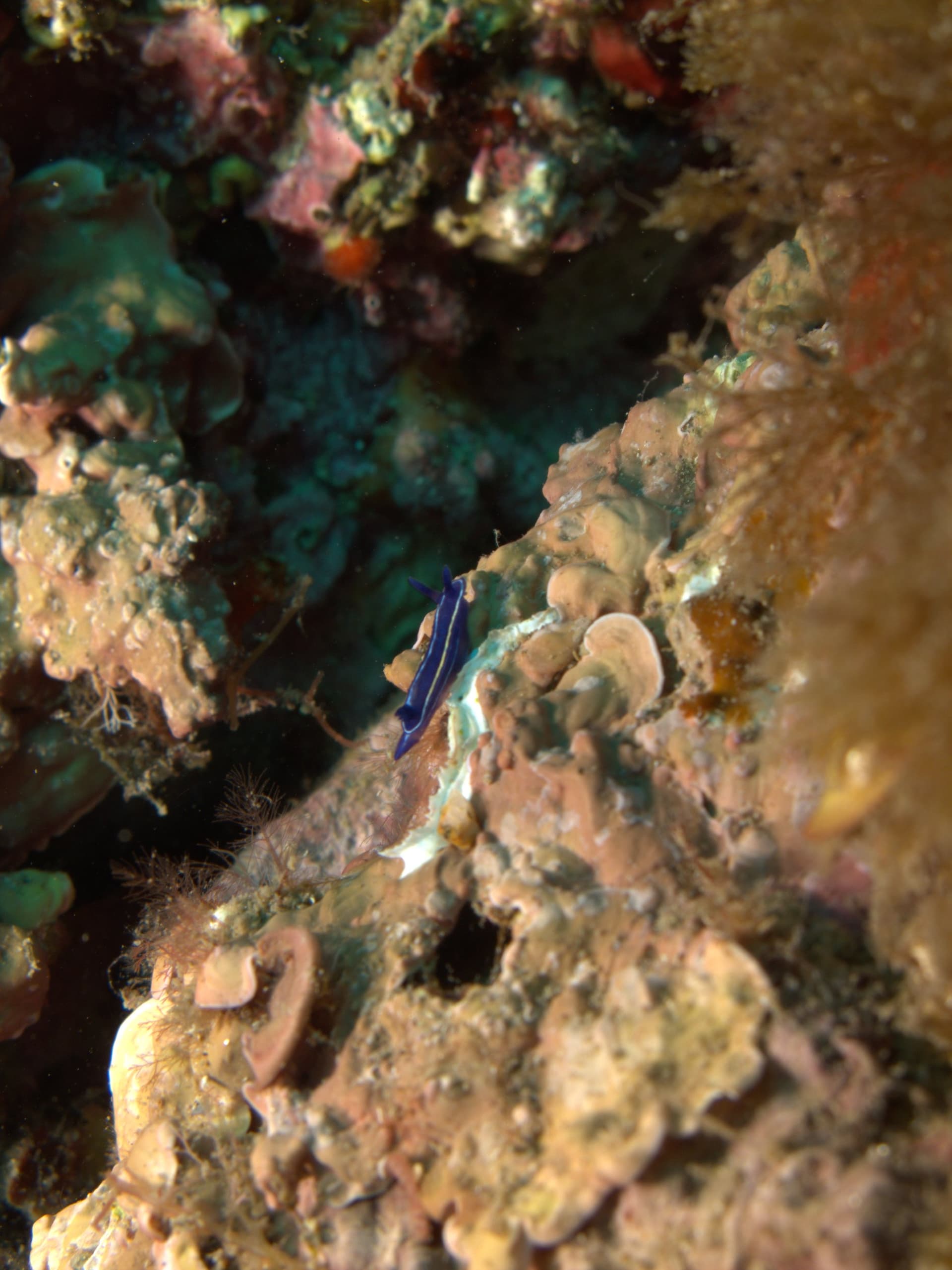
© Jouni Kuisma
Observed at
Every dive has a story. Share yours.
Log your dives - notes, photos, conditions and the marine life you saw - and share them as one public diver profile. What you share helps the next diver, too.
Log every detail
Depth, duration, conditions, gear, buddy, notes — all in one place. Import from Suunto and other dive computers.
Track marine life
Record species sightings on each dive. Build a personal catalogue of everything you've seen underwater.
Your public dive profile
Share your dive history, stats, and experiences with a profile page you control. Show the world where you've been.